
Head bobbing is almost always normal. In most pet birds, bobbing the head up and down is a form of communication, not a sign that something is wrong. That said, context matters a lot, and there is a specific type of bobbing that is a genuine emergency: rhythmic tail AND head movement tied to every single breath. The good news is that once you know what to look for, it is pretty easy to tell the difference between a happy, chatty bird and one who actually needs help.
Why Is My Bird Bobbing Up and Down? Causes and Next Steps

Marcus Chen
21 Apr 2026
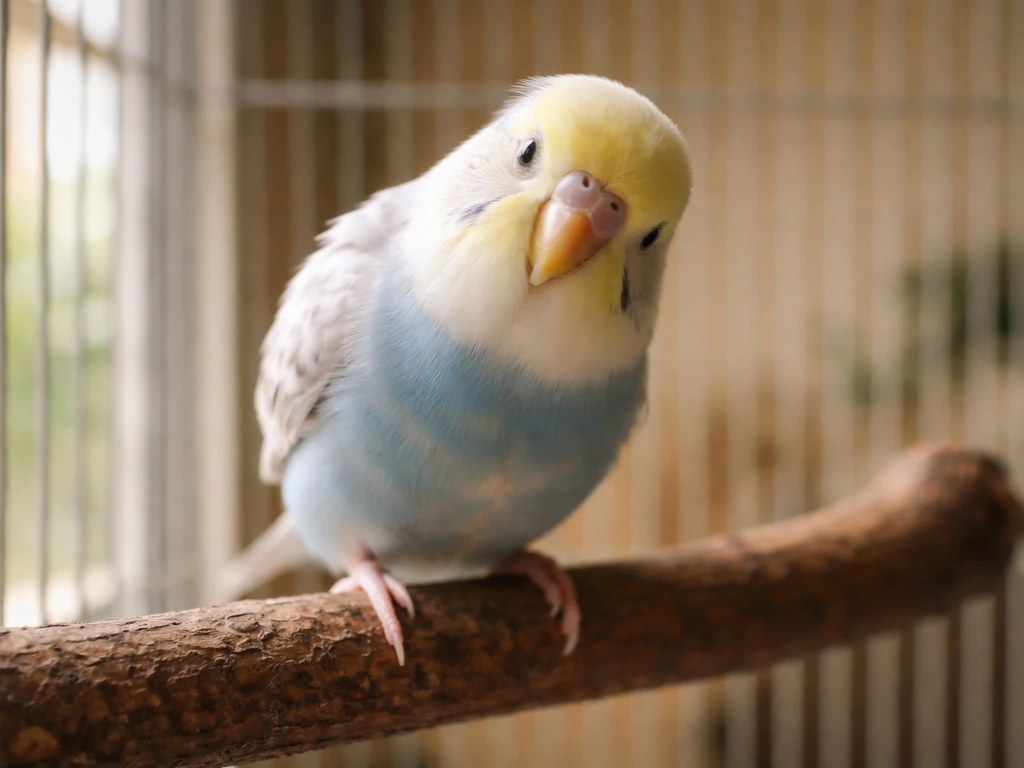
What head bobbing usually means (and when it matters)
The vast majority of head bobbing you will see in a pet bird is behavioral, meaning the bird is trying to communicate something social or emotional. Birds use body movement the way we use words, and the up-and-down bob is one of their most common signals. It is normal, it is healthy, and it often means your bird is engaged and feeling good.
The version that deserves attention is bobbing that happens in rhythm with breathing, particularly when the whole body seems involved. This is not really head bobbing in the social sense. It is the bird working hard to breathe, and the motion is a side effect of that effort. If your bird is walking side to side as well as showing signs like working to breathe, it can be a clue that something medical is going on and you should contact an avian vet. That distinction is the entire foundation of this article, so keep it in mind as you read.
The most common reasons birds bob their heads
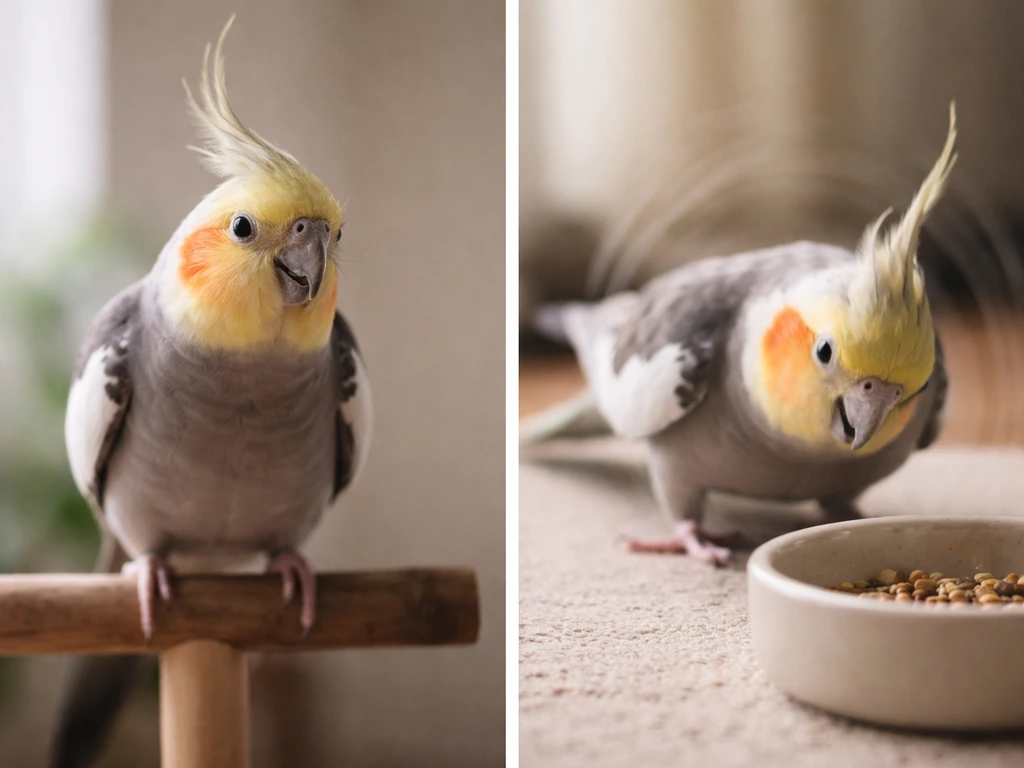
Excitement and attention-seeking
Birds, especially parrots and cockatiels, bob their heads when they are excited, want your attention, or are ready to interact. If your bird bobs at you specifically, it is almost certainly trying to engage with you. Think of it as the bird equivalent of waving hello or saying 'hey, look at me.' This kind of bobbing usually comes with bright, alert eyes, a relaxed posture, and maybe some vocalizing.
Hunger and feeding behavior
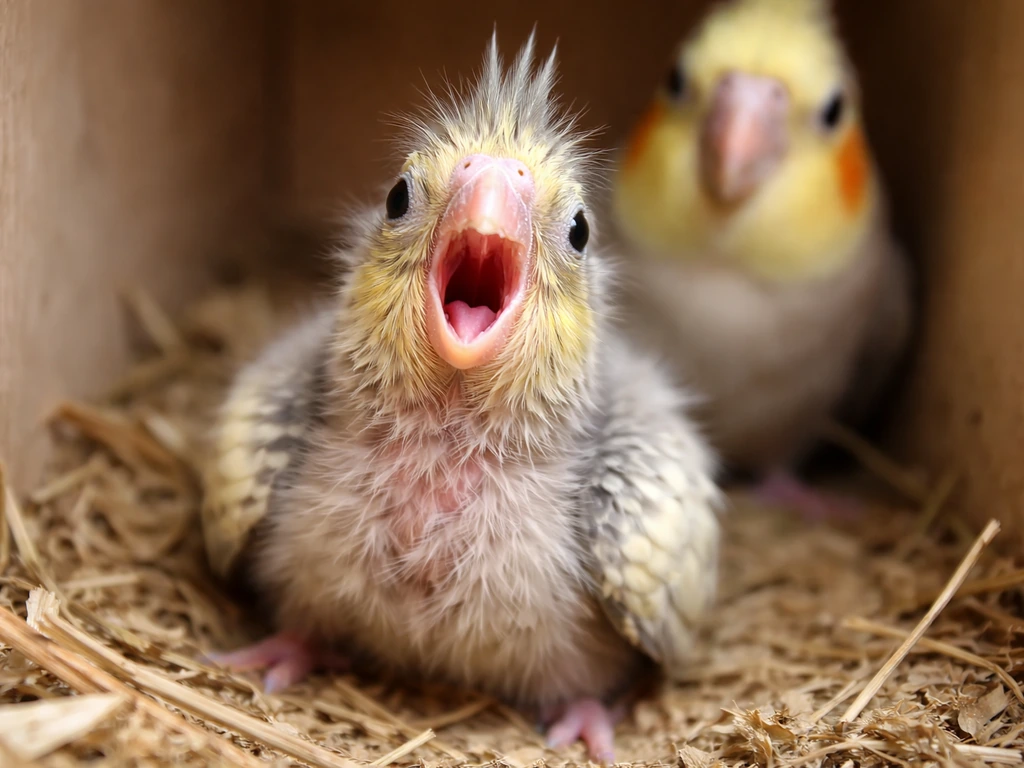
In baby and juvenile birds, head bobbing is a hard-wired begging signal. Young cockatiels and parrots bob rapidly to prompt their parents (or you) to feed them. If you have a bird that was recently weaned or is still being hand-fed, this is almost certainly what you are seeing. Even some adult birds will bob when they know food is coming.
Bonding and regurgitation
Adult birds sometimes bob their heads as a prelude to regurgitating food, which sounds alarming but is actually a high compliment. Regurgitating for a person or a toy is a bonding behavior, something birds do for mates and companions they feel strongly attached to. It is different from vomiting (which is involuntary and messy) and is paired with deliberate, rhythmic bobbing. If your bird does this toward you, it considers you part of its flock.
Courtship and hormonal behavior
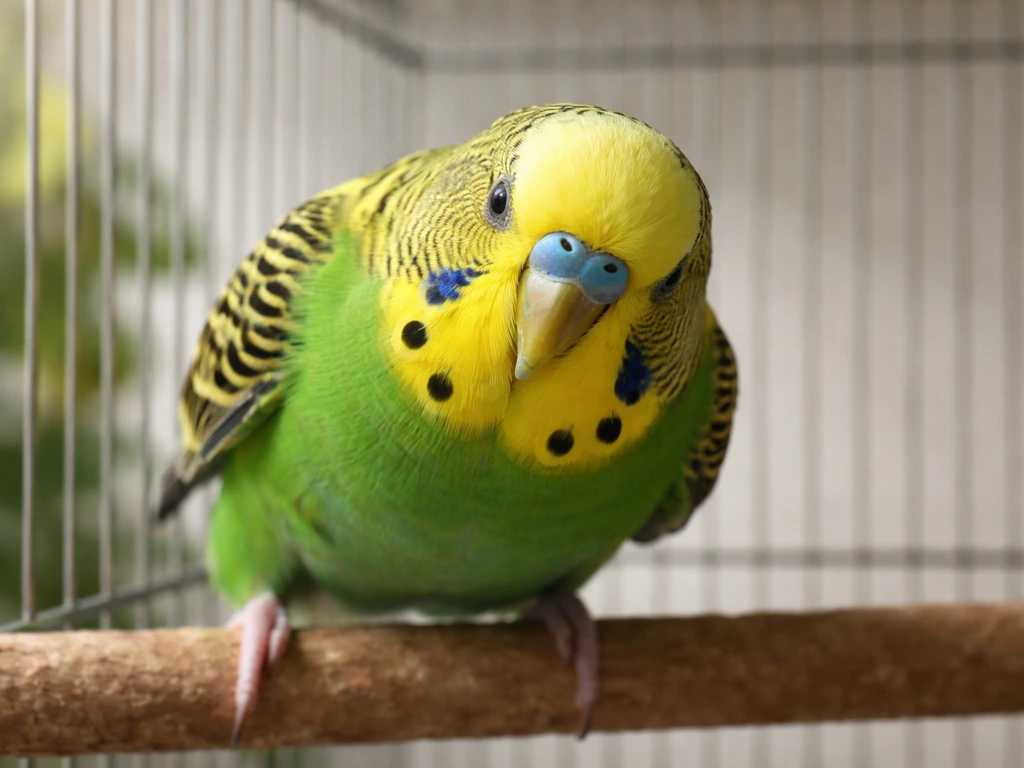
Mature birds, especially during spring and summer, bob as part of courtship displays. Male budgies are classic for this, often pairing head bobbing with eye flashing (the pupils rapidly dilating and contracting) when they are feeling hormonal. Cockatiels do the same. This is normal adult bird behavior, not a health concern.
Music, rhythm, and mimicking you
Some birds are genuinely rhythmic and will bob along to music or mirror movements they see their owners making. If your bird bobs when you nod your head or when a song comes on, it is probably just playing along. This kind of behavior reflects a curious, socially engaged bird.
Wanting to go somewhere
Head bobbing can also signal that a bird is eager to move, to get out of the cage, to fly to you, or to reach something it wants. If your bird keeps flying onto your head, it may simply be eager to interact and get closer to you rather than trying to signal illness eager to move. Think of it as the bird revving up before an action. You will usually see this paired with a bird leaning forward, shifting weight between feet, or looking intently at a target.
Reading the full picture: body language context checklist
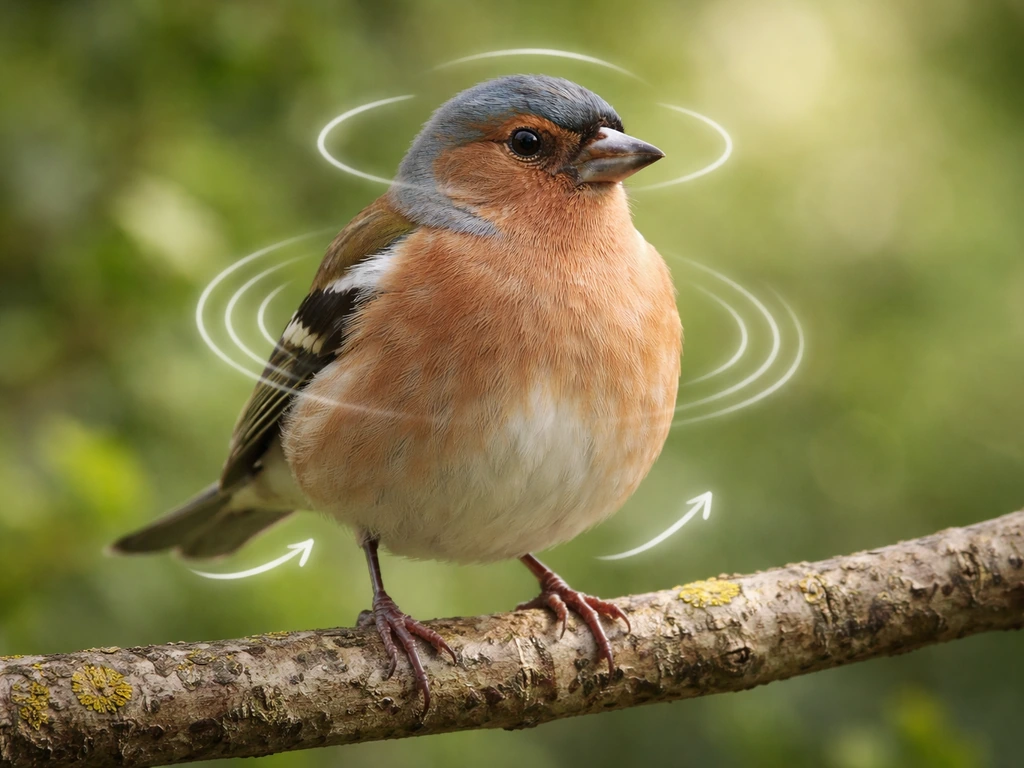
Head bobbing never happens in isolation. The rest of the bird's body tells you everything you need to know about whether that bob is social or concerning. Run through this checklist whenever you are unsure.
| What to look at | Healthy / normal signs | Potentially concerning signs |
|---|---|---|
| Eyes | Bright, open, alert; occasional eye flashing during excitement | Half-closed, sunken, or dull; squinting without apparent reason |
| Posture | Upright, balanced on perch, weight even | Fluffed feathers, hunched, leaning, or sitting on cage floor |
| Breathing | Quiet, invisible effort; beak closed at rest | Open beak at rest, visible chest or tail movement with each breath, audible clicks or wheezing |
| Tail | Still or gently fanning during movement | Bobbing in rhythm with every breath |
| Wings | Held naturally against body | Drooping, held away from body, or pumping with breathing |
| Vocalizing | Chatty, singing, or quiet but alert | Silent when usually vocal, or making clicking/wheezing sounds |
| Activity level | Normal movement, flying, climbing | Sitting still, reluctant to move, not interested in toys or interaction |
| Appetite | Eating and foraging as usual | Ignoring food or eating significantly less than normal |
| Droppings | Consistent color, shape, and frequency for that bird | Runny, discolored, off-smelling, or much fewer droppings (with no diet change) |
A bird that is bobbing its head while also showing several items in the right column needs veterinary attention, not just monitoring. A bird showing only the middle column items alongside its bobbing is most likely just being a bird.
What to watch at home and for how long
If your bird seems otherwise healthy and you are just trying to figure out the pattern, a day or two of casual observation is reasonable. Here is what to actually track:
- When does the bobbing happen? Is it tied to specific triggers like your arrival, mealtimes, music, or cage-door opening? Or does it happen randomly and constantly?
- How long does each episode last? Brief bursts tied to interaction are normal. Continuous, unceasing bobbing is not typical and worth noting.
- Is the tail moving in sync with breathing? Watch for 10 to 15 seconds while the bird is sitting quietly. If you see the tail bob with each individual breath, that is the urgent sign described further below.
- Is the bird eating? Check the food dish morning and evening. A bird that is not touching its food for more than 24 hours needs attention.
- What do the droppings look like? Changes in color (especially red, black, or bright yellow/green urates), very watery consistency, or a strong odor without any diet change are all worth flagging.
- Is the bird as active and social as usual? A bird that suddenly becomes quiet, stops responding to you, or sits fluffed at the bottom of the cage is not doing well regardless of whether it is bobbing.
For normal social bobbing with no other symptoms, you can monitor safely for 24 to 48 hours while making small environmental checks (see the next section). If anything from the concerning column appears or gets worse, shorten that window and call an avian vet.
When head bobbing could actually be a health warning
Here is the scenario that requires you to act fast. When a bird is struggling to breathe, the effort can involve the whole body. You may see the tail pumping up and down with every single breath, the bird breathing with its beak open while at rest, the wings slightly lifted or pumping, and a general look of labored effort. AAVAC’s Avian Respiratory Diseases material notes observable respiratory signs such as open-mouth breathing alongside other clinical respiratory observations the bird breathing with its beak open while at rest. This is sometimes mistaken for head bobbing because the whole body is moving, but look closely: the motion is tied to breathing, not to social signaling.
Birds are very good at hiding illness. By the time visible symptoms appear, they have often been unwell for longer than you realize. This is not meant to scare you, but it does mean you should trust what you see. If your bird looks like it is working to breathe, do not wait it out.
The following signs alongside any bobbing motion are reasons to contact an avian vet the same day, or seek an emergency clinic if outside business hours:
- Open-mouth (open-beak) breathing while the bird is at rest and not overheated
- Tail bobbing that occurs with every breath in a visible, rhythmic pattern
- Audible breathing sounds: clicks, wheezes, rattles, or squeaks
- Fluffed posture combined with lethargy or sitting on the cage floor
- Refusal to eat or drink for more than 24 hours
- Droppings that are runny, discolored, or significantly reduced without a diet change
- Loss of balance, wobbling, or inability to grip a perch properly
- Wing drooping, eyes half-closed, or general unresponsiveness to stimulation
If your bird is showing wobbling or balance problems alongside any of these signs, that points to a potentially neurological or systemic issue. If your bird is also closing its eyes, that can be a sign of breathing trouble or illness rather than typical head-bobbing behavior bobbing motion.
If your bird is wobbling all of a sudden, treat it as a potential warning sign and call an avian vet right away, especially if it also seems to be working to breathe wobbling or balance problems. Side-to-side walking can be another clue that something is off, so compare it with the breathing and balance warnings described in this guide.
Similarly, a bird that has gone from active and vocal to suddenly quiet and still is a bird that may be masking pain or illness, and quiet is not the same as fine.
What to actually do next
If the bobbing looks normal and behavioral
Start by spending more time interacting with the bird on its schedule. If the bobbing happens when you walk in the room or open the cage, lean into that and give it focused attention. If you think it is hunger-driven, check that food is fresh and accessible. If hormonal behavior seems likely (spring/summer, adult bird, eye flashing), reduce extended petting and stick to head scratches rather than body contact, which can overstimulate some birds.
Also check the basics: is the room temperature stable, around 65 to 80 degrees Fahrenheit for most parrots? Is the bird getting roughly 10 to 12 hours of sleep in a quiet, dark space? Environmental stress can make normal communication behaviors more intense or frequent.
If you are uncertain or something feels off
Call your avian vet and describe what you are seeing in plain terms. Before you call, write down: when the bobbing started, how often it happens, what seems to trigger it, whether anything else has changed (diet, droppings, activity, environment), and ideally, a short video clip of the behavior. A video is genuinely useful because vets can often tell immediately from a clip whether the movement is social or respiratory.
If you see breathing-related warning signs
Keep the bird warm and calm while you arrange transport. Place it in a secure, ventilated carrier and avoid drafts. Do not try to force-feed or give water, since a bird in respiratory distress can easily aspirate. Heat helps: a temperature around 85 to 90 degrees Fahrenheit can support a sick bird while you get to a vet. This is supportive care only, not treatment, and it does not replace getting veterinary care quickly.
If you do not yet have an avian vet, the Association of Avian Veterinarians maintains a locator tool to help you find a qualified specialist near you. Not all general practice vets are experienced with birds, and for respiratory emergencies especially, you want someone who regularly sees avian patients.
A quick decision guide
| What you are seeing | What it likely means | What to do |
|---|---|---|
| Bobbing at you during interaction, bright eyes, eating normally | Social communication, excitement, or bonding | Enjoy it. Engage with your bird. |
| Rapid bobbing before meals or in a young bird | Hunger or begging behavior | Check food access; normal for juveniles |
| Bobbing with eye flashing in a mature bird (spring/summer) | Hormonal/courtship behavior | Normal; reduce body petting if it becomes excessive |
| Bobbing plus fluffed feathers, sitting low, quiet | Possible early illness | Monitor closely; call avian vet within 24 hours |
| Rhythmic tail + body movement tied to every breath, beak open | Respiratory distress | Contact avian vet or emergency clinic immediately |
| Bobbing plus no food eaten in 24+ hours, abnormal droppings | Illness likely | Call avian vet today; do not wait |
Most of the time, a bird bobbing its head is simply talking to you the only way it knows how. Learning to read that language, alongside the other signals your bird gives with its eyes, posture, and tail, makes you a much better observer of your bird's health overall. Trust your instincts too: if something feels off about how your bird looks or acts, that feeling is worth a phone call to an avian vet.
FAQ
How can I tell if the head bobbing is “social” or tied to breathing when I’m not sure what I’m seeing?
Do a quick timing check, watch for one complete cycle of the bob and see whether it starts and stops with breaths. Social bobbing usually comes in response to cues like you entering the room, while respiratory effort tends to look continuous and increases when the bird is resting, with other signs like tail pumping or beak-open breathing.
My bird only bobs when perched quietly, does that still count as normal?
It can, especially if the eyes are bright and the posture is relaxed. Still, quiet alone is not enough, confirm there is no breathing work (beak open at rest, wing lift, tail pumping) and no sudden change in droppings, voice, or energy.
What if the bobbing is accompanied by vocalizing, is that always a good sign?
Vocalizing often goes with engagement, but pairing speech with breathing-related motion is a warning combination. If the bird sounds strained, wheezes, or keeps the head bobbing in strict rhythm with breathing, treat it as a respiratory concern rather than “chatting.”
Can head bobbing mean my bird is getting ready to regurgitate, and is it different from vomiting?
Yes, pre-regurgitation bobbing is typically deliberate and rhythmic and often includes bonding context, like doing it toward you or a favored object. Vomiting is usually messy and involuntary, and sick birds often show additional illness cues like fluffing, lethargy, or abnormal droppings.
My bird bobs during spring or summer, should I change anything to prevent hormone problems?
You can reduce overstimulation, limit extended petting, and avoid encouraging nesting-like behavior (extra nesting materials, dark crowded corners). If bobbing escalates with agitation, biting, or aggression, focus on calming enrichment and consider asking your avian vet about hormone management.
Is it okay to wait 24 to 48 hours if my bird seems otherwise normal?
Only if the bobbing is not associated with any breathing effort, balance issues, eye-closing, sudden quietness, or worsening over time. If you notice any concerning signs even once, shorten the observation window and contact an avian vet the same day.
What should I record for the vet besides “it started recently”?
Track start time, frequency (for example, bobs per minute or bursts), triggers (cage opening, feeding, music, handling), and whether it stops when the bird is distracted. A short video from the side, showing tail and beak, is often more helpful than a description alone.
Should I try to stimulate my bird or offer food if I see head bobbing?
Offer normal food if the bird is acting alert and not breathing hard. Avoid forcing, and do not water-feed if there is any sign of respiratory distress, because aspiration risk is real. If the bird is labored or beak-open at rest, focus on warmth and a quick veterinary visit.
Can temperature or lighting changes make normal bobbing look more concerning?
Yes. Cold drafts or unstable room temperature can increase stress and make a bird more likely to show discomfort-related movement. Similarly, insufficient sleep or bright nighttime lighting can change behavior patterns, so confirm stable warmth and a consistent dark, quiet sleep period.
My bird bobs and also wobbles or has side-to-side walking, what does that usually mean?
That combination is more concerning than social bobbing because it can point to neurological or systemic issues. Treat it as a warning sign, especially if it is new or sudden, and contact an avian vet right away rather than monitoring at home.
Could mirror or music-triggered bobbing still be a problem?
Often it is normal, especially if the bird is otherwise healthy and engaged. If the bird starts spending more time doing the movement than usual, becomes quiet, or shows breathing or balance concerns while bobbing, reassess and involve a vet.
Next Articles
Why Is My Bird Making Whimpering Noises? What to Check
Find reasons for whimpering bird noises, quick home checks, and red flags for urgent vet care plus tracking tips.
Why Does My Bird Make Crunching Noises? Causes and What to Do
Learn why your bird crunches, spot normal beak chewing vs breathing or crop issues, and what to do next.
Why Do Guinea Pigs Make Bird Noises? Listen and Look
Learn why guinea pigs make bird like chirps and whistles, how to spot normal vs stress or illness, and when to see a vet