Your bird keeps flying to your head because it is one of the highest, warmest, most interesting spots in the room, and you are the most exciting thing in it. For most birds, this is a normal mix of curiosity, bonding, and the instinct to find a high perch near their flock. That said, "keeps doing it" is worth paying attention to, because repetitive head-landing can also reflect boredom, anxiety, hormonal drive, or occasionally a health issue that needs attention. PetMD also notes that stereotypical or repetitive behaviors, such as pacing and “head swinging” or other abnormal repetitive behaviors, can be signs of anxiety or stress repetitive head-landing can also reflect boredom, anxiety.
Why Does My Bird Keep Flying on My Head? What to Do

Marcus Chen
13 May 2026
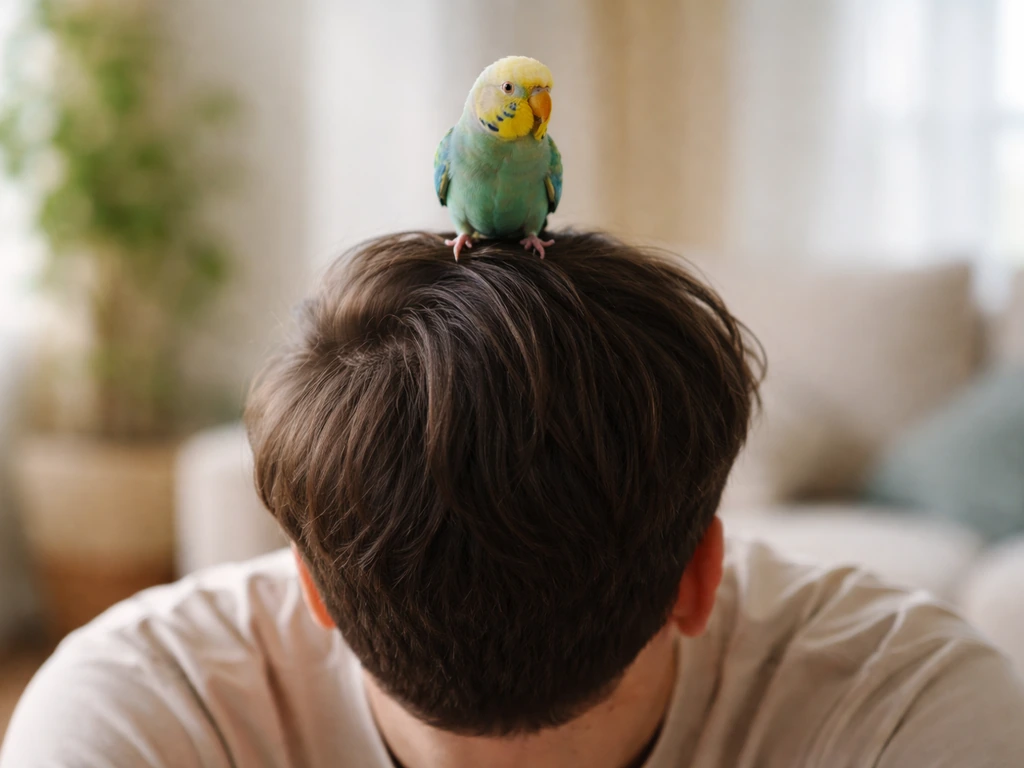
Why birds are drawn to your head in the first place
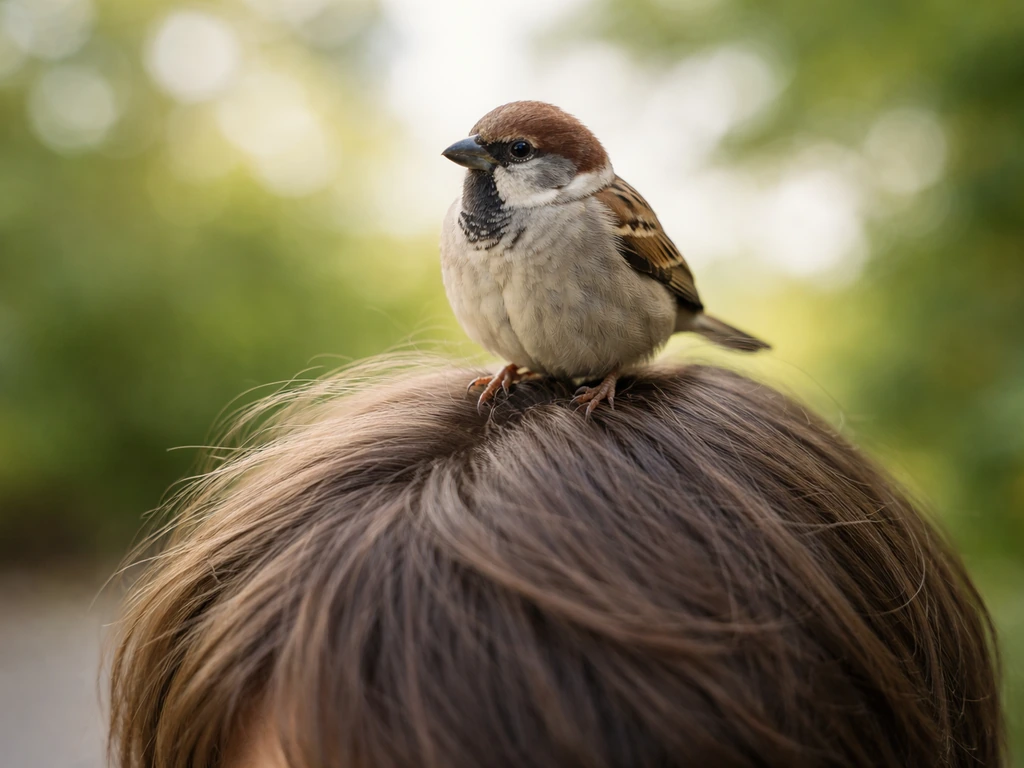
Birds are instinctively height-seekers. In the wild, high perches mean safety, a better view, and proximity to the flock. Your head is usually the highest point they can reach on a living, moving creature, and it checks a lot of boxes at once: warmth from your body heat, movement that keeps them engaged, and closeness to your face and voice. Most companion birds are also flock animals, and being on or near your head puts them as close to "shoulder to shoulder" with their flock mate as they can get indoors.
There are several overlapping reasons this specific behavior develops and sticks. Understanding which one is driving your bird helps you figure out what to do about it.
Common reasons birds land on or near the head
- Height preference: the head is simply the tallest available perch, which signals safety and dominance in bird instinct.
- Warmth and security: your head and neck radiate body heat, which is genuinely comforting to small birds.
- Curiosity: hair texture, glasses, earrings, and head movements are endlessly interesting to an inquisitive bird.
- Bonding and closeness: landing on you keeps them physically near their preferred companion.
- Attention reward: even if you react negatively, any reaction at all reinforces the behavior because attention is the goal.
- Boredom or under-stimulation: a bird without enough mental activity will invent its own entertainment, and flying to you is reliably stimulating.
- Grooming cues: some birds land on heads to preen hair or be close to a face they associate with social grooming.
- Hormonal drive: during breeding season, proximity to a favored person intensifies and head or shoulder perching increases dramatically.
- Environmental factors: a cage placed low, sparse perch options, or lack of out-of-cage time push birds toward you as their best available perch.
Curiosity vs. bonding vs. attention-seeking: how to tell the difference
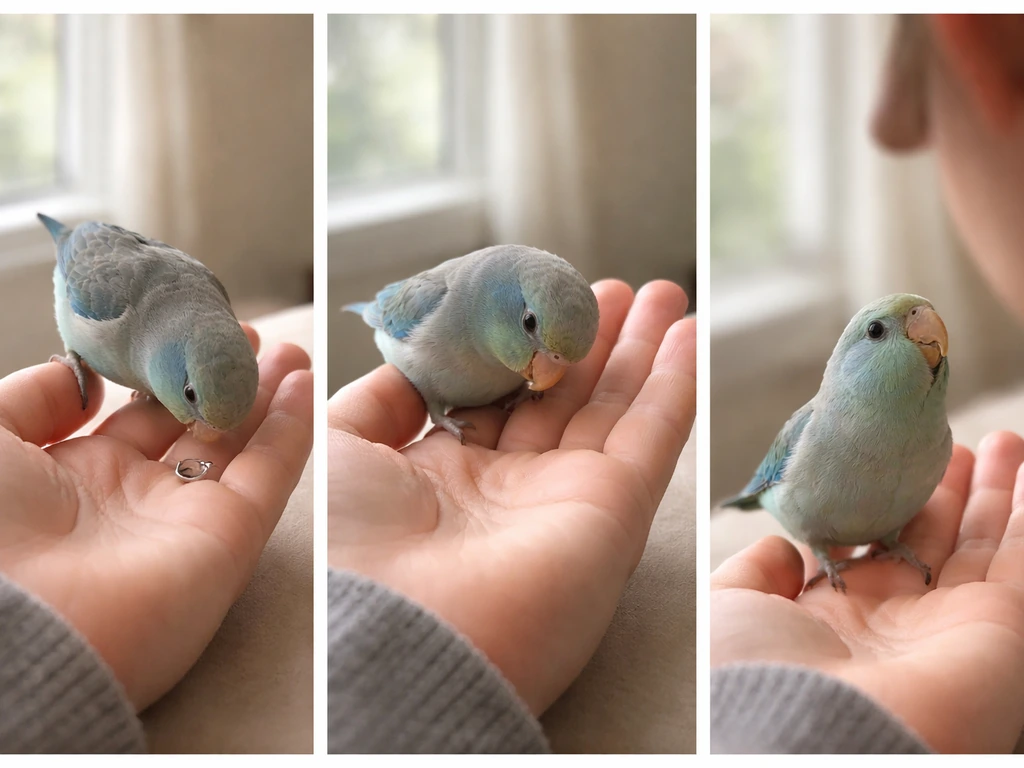
These three motivations look similar on the surface but respond to different fixes, so it is worth separating them.
A curiosity-driven bird lands briefly, explores whatever caught its eye (a shiny earring, a pen in your hand, a new hairstyle), and moves on fairly quickly. It is not fixated on you specifically. It would investigate a new toy or a novel object with the same energy. If you introduce fresh enrichment, the frequency of head visits usually drops on its own.
A bonding-driven bird lands and stays. It settles in, preens your hair, tucks against your neck, or simply sits quietly near your ear. This bird is not anxious or demanding, it is content. The behavior is gentle and calm, and the bird steps off readily when you offer a hand. This is largely healthy behavior, though you still want to manage it so the head does not become the only place the bird feels safe.
An attention-seeking bird is loud, persistent, and escalating. It flies back immediately after being moved, may nip or vocalize when you redirect it, and the behavior intensifies if you are busy or ignoring the bird. The pattern is key here: the behavior gets worse when you are distracted and better when you give focused interaction. This bird needs more structured engagement, not just tolerance of the head-landing.
Stress, fear, or hormonal behavior: signals to watch for
Sometimes what looks like affectionate head-perching is actually driven by anxiety or hormones, and the bird is not as comfortable as it seems. A stressed or fearful bird may land on your head because it is the only place it feels safe, not because it is relaxed and bonded. Watch for these signs alongside the head-flying.
- Puffed or hunched posture when perched on you or anywhere else
- Rapid, repetitive head bobbing or rocking that is not part of normal communication
- Pacing, constant restlessness, or inability to settle on a perch for more than a few seconds
- Screaming or loud vocalizing when you move away even briefly
- Feather destruction, over-preening, or barbering that is new or worsening
- Increased nipping or biting, especially if this is a change from the bird's baseline
Hormonal behavior is its own category. In spring and early summer especially, many birds (both male and female) become more clingy, more territorial about their person, and more insistent about perching close to the head and face. A hormonally driven bird may regurgitate on your head or hair, which is actually a courtship feeding behavior. It may also become nippy if you try to move it. Reducing the triggers for hormonal behavior (long light exposure, excessive petting on the back and tail, nest-like spaces) helps more than any training tweak during this period.
Health and wellness red flags that can come with head-hopping
In most cases, a bird flying to your head is a behavior issue, not a health issue. But it is worth knowing when to look closer. Birds are prey animals and hide illness well. By the time symptoms are obvious, the problem is often advanced. If the head-landing behavior is new, sudden, or accompanied by any of the following, take it seriously.
| Red Flag | What It Can Indicate |
|---|---|
| Fluffed or puffed feathers at rest (not just after a bath) | Illness, infection, or significant stress |
| Tail bobbing or pumping with each breath when at rest | Possible respiratory distress |
| Open-mouth breathing or labored breathing | Respiratory infection or airway problem |
| Sneezing frequently, with nasal discharge | Upper respiratory infection or irritant exposure |
| Changes in droppings (color, consistency, volume) | Infection, dietary issue, or systemic illness |
| Lethargy, sleeping more than usual, or falling off perches | Illness, often already advanced |
| Loss of appetite or weight loss | Wide range of health concerns, vet visit needed |
| Rubbing face or head on surfaces repeatedly | Possible mites, skin irritation, or facial discomfort |
| Sudden increase in biting during handling | Pain or discomfort somewhere in the body |
Mites and other external parasites can cause a bird to rub its face and head repeatedly, which might look at first like the bird is just being active or affectionate. If your bird is walking side to side while head-hopping, that can be a sign of stress, pain, or balance problems that should be checked. Scaly or inflamed areas around the face, cere, or legs are worth having examined.
Similarly, if your bird's head-landing is combined with balance problems or poor coordination, that warrants a vet call, not a training plan. If your bird is wobbly all of a sudden, it is especially important to rule out urgent health problems and consider an avian vet right away why is my bird wobbly all of a sudden.
Head posture and body condition changes are often the earliest visible signs that something is off. If you notice dullness in the eyes, matting around the nostrils or face, or feather condition that has quietly gotten worse over a few weeks, track it and mention it to an avian vet. These observations connect directly to what you might notice if your bird is also showing signs described in related topics like lethargy, eye-closing at odd times, or sudden wobbling.
What to do today: safety, redirecting, and training steps
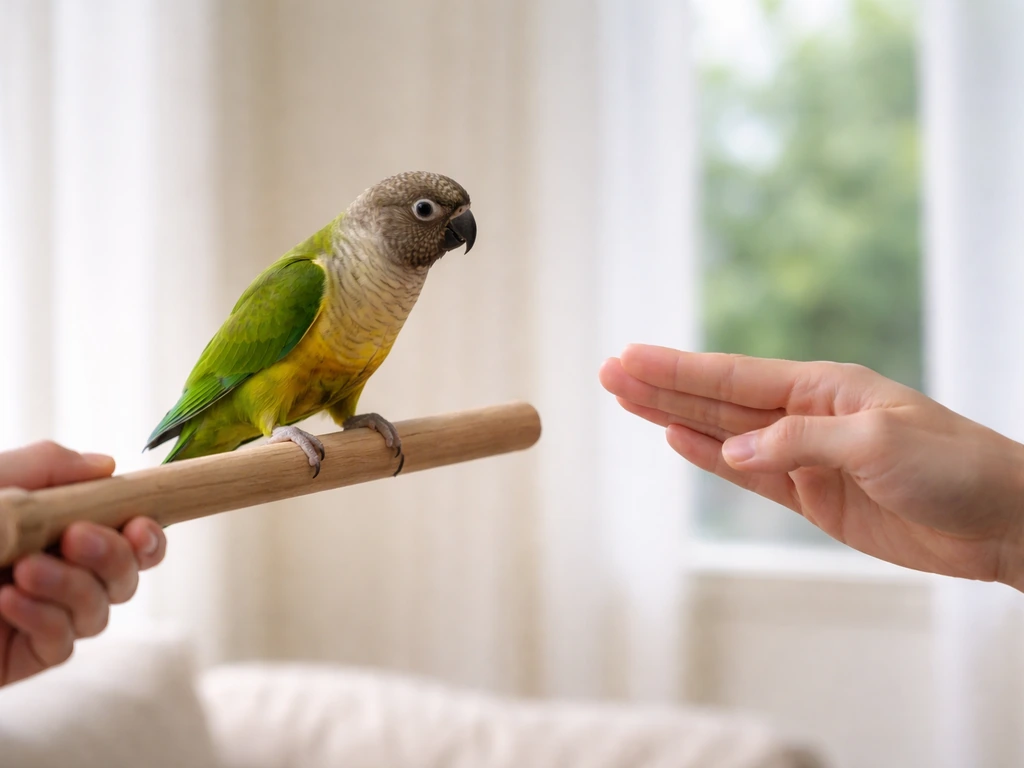
Start with safety. A bird on your head is a bird close to your eyes. Even a gentle bird can cause a serious eye injury with a quick beak movement. If your bird lands on your head, do not jerk or swat, as sudden movements can startle the bird into biting or cause a bad fall. Instead, lower your chin slightly and calmly offer your hand at chest height as a step-up target.
The core training goal is simple: make stepping onto your hand (or a perch) the default response, instead of flying back to your head. Positive reinforcement target training is the most reliable way to do this. Here is a basic approach you can start today.
- Pick a small, obvious target object (a chopstick, a pen cap, a training stick) and reward your bird with a small treat every time it touches its beak to the target.
- Once the bird reliably touches the target, move the target toward a designated hand perch or stand perch, so the bird follows it there and lands.
- Practice the step-up cue separately: hold your finger or hand at the bird's chest level, say "step up," and reward the moment the bird steps on.
- When your bird lands on your head, do not react with excitement or frustration. Calmly present the target or your hand at chest level. When the bird steps down, reward immediately.
- Repeat this consistently. The bird learns that stepping to your hand produces a reward, while staying on your head produces nothing interesting.
Consistency matters more than duration. Five calm, rewarded repetitions per session is more effective than a long, frustrated training attempt. You are building a habit, not correcting a mistake. Avoid scolding or forcibly removing the bird from your head repeatedly, as this adds arousal and often makes the behavior worse over time.
Make the head less "special": enrichment, routines, and perch choices
A bird that has better options will use them. If your head is the most interesting, warmest, highest, and most interactive spot available, of course the bird chooses it. Your job is to create competition.
- Place a tall play stand or T-perch at or slightly above your eye level near where you spend time. A perch that is physically high is genuinely appealing to height-seeking birds.
- Add foraging opportunities: wrap treats in paper, use foraging toys, or hide food in puzzle feeders. A bird that is busy foraging is not flying to your head.
- Rotate toys every few days. Novelty drives curiosity, and a curious bird investigates new objects before seeking you out.
- Schedule predictable out-of-cage time with direct, focused interaction. A bird that gets reliable attention at set times is less likely to demand it constantly.
- Reduce sudden head movements when the bird is nearby. Quick movements trigger flight instinct, and some birds land on your head partly as a response to startling motion.
- If you use mirrors near the bird's space, consider whether they are adding visual stress. Mirrors can trigger territorial or hormonal responses in some birds.
- Keep the cage elevated to a reasonable height (eye level or just below) so the bird does not feel it must escape upward to feel safe.
Routine matters a lot for birds. A bird that knows when it gets out, when it gets fed, when training happens, and when the day winds down is generally calmer and less compulsive about seeking closeness. An unpredictable schedule creates anxiety, and anxious birds seek proximity more intensely.
When to contact an avian vet and what to monitor
If the head-landing is paired with any of the health red flags listed earlier, contact an avian vet rather than working through a training plan. If the bird shows breathing signs like open-mouthed breathing or “flicking” or tail movement with each breath, Avian Welfare recommends looking for possible respiratory distress and contacting an avian vet promptly Signs of Illness. Trying to redirect a sick bird is both ineffective and a delay in care the bird needs.
Before you call, spend a day or two tracking the following observations so you can give the vet useful information at the appointment.
- How often is the behavior occurring, and did anything change around the time it started or intensified (new household member, moved furniture, schedule change, new food)?
- What do the droppings look like? Note color, consistency, and whether urine and feces look normal.
- Is the bird eating and drinking at its normal rate?
- How is the bird sleeping? Is it sleeping more during the day, sleeping in unusual positions, or having trouble staying on its perch?
- Any visible physical changes: feather condition, posture, discharge around eyes or nostrils, any swelling or discoloration?
- Is the bird making any new or unusual sounds, including changes in breathing sounds?
- Has the bird lost weight? If you have a kitchen scale, weigh the bird and note the number.
Even if you are not sure something is wrong, avian vets would rather see a bird that turns out to be healthy than miss an early illness. Birds mask symptoms instinctively, and waiting for obvious signs often means the problem is already advanced. If the behavior is purely behavioral and the bird is otherwise healthy, the vet can confirm that and you can focus entirely on the training and enrichment steps above.
FAQ
Is it ever normal for my bird to land on my head every day?
Yes, occasional head perching can be normal bonding or curiosity, especially if your bird steps off easily and you see calm body language (loose posture, no frantic repeats, no growling). If it becomes constant or the bird seems distressed when you move, that points to attention, anxiety, or hormones rather than simple affection.
What should I do in the moment if my bird keeps landing on my head while I’m not ready?
Avoid jerking, swatting, or immediately grabbing. Lower your chin slightly to reduce eye-level risk, then offer a stable step-up target at chest height (hand or a familiar perch). If your bird repeatedly returns, stop “managing” it and switch to structured redirection with brief rewarded step-ups.
How can I tell curiosity, bonding, attention-seeking, and hormonal drive apart quickly?
Curiosity usually looks like brief land and leave when the object or distraction changes. Bonding is typically calm and stays quiet near your ear, stepping off readily. Attention-seeking escalates with loud persistence, especially when you’re busy, and improves when you give focused interaction. Hormonal drive often ramps up seasonally and may include courtship feeding behaviors like regurgitation, plus nippiness when moved.
My bird preens or cuddles on my head, but sometimes it suddenly gets nippy. What does that mean?
That pattern often means a bonding bird is shifting into hormonal or territorial mode, especially during long daylight months. Try reducing triggers like extra tail or back petting and any nest-like hiding spots, and use step-up training instead of letting the head become the only “go-to” safe perch.
Will covering mirrors or lowering light exposure help if hormones seem to be the cause?
It can. Many birds react to reflective cues and extended daylight. If you notice spring or early-summer clinginess, consider adjusting the light schedule toward a consistent shorter “night” period and limit mirror time, while also removing nest-like areas that invite egg-laying behavior even without actual eggs.
How do I prevent my bird from learning that landing on my head gets me to react?
Make the head-landing not yield high attention. When it happens, stay calm, do not scold, and immediately redirect to the hand/perch for a reward. Over time, reward stepping up, not being on your head, and avoid repeating the same removal routine that increases arousal.
My bird seems comfortable on my head, but it also scratches its face. Could that still be behavioral?
Face scratching plus repeated head-hopping can be irritation or parasites rather than bonding. Watch for side-to-side walking, inflamed or scaly skin around the face or cere, feather or skin changes, or any balance concerns. Those are strong reasons to contact an avian vet rather than treating it as pure training.
What balance or coordination signs mean “call the vet now” instead of waiting?
Call promptly if head-landing is paired with new wobbling, slipping, trouble perching, obvious clumsiness, or sudden changes in posture. Birds can hide illness, so if coordination looks off or it comes on suddenly, prioritize ruling out neurological, pain-related, or vestibular issues.
How long should I stick with the step-up training before I change tactics?
Give it a few short sessions using consistent, calm repetitions (about five rewarded reps per session). If the bird escalates (more nipping, louder calls, frantic returns) rather than gradually redirecting, reassess the motivation (attention, hormones, anxiety) and re-check for health signs, since persistent escalation can indicate stress or an underlying problem.
What enrichment reduces head visits without making my bird more bored?
Rotate novel, safe items that let them investigate without needing your head as the “only” destination, such as foraging toys, chewable items, and predictable snack puzzles. Keep novelty frequent, and pair it with a clear step-up routine so your bird learns there are other high-value perches and activities.
Does my bird prefer my head because it’s warm, or can it be triggered by movement and voice?
Usually it’s a mix. Warmth matters, but movement and your face proximity also capture attention and make them feel “in the flock.” If you want to reduce the behavior, offer a nearby perch that matches the same advantages (height, visibility, and closeness) so the bird still gets the benefits without using your head as the primary landing spot.
Next Articles
Why Is My Bird Bobbing Up and Down? Causes and Next Steps
Why your bird bobs head up and down: meanings, body language to check, and steps to rule out health issues.
Why Is My Bird Making Whimpering Noises? What to Check
Find reasons for whimpering bird noises, quick home checks, and red flags for urgent vet care plus tracking tips.
Why Does My Bird Make Crunching Noises? Causes and What to Do
Learn why your bird crunches, spot normal beak chewing vs breathing or crop issues, and what to do next.