If your bird is closing one eye repeatedly, keeping it shut, or squinting on one side, that's a sign something is bothering that eye specifically. It could be as simple as a dust particle or as serious as a corneal injury or early respiratory infection. The one-eye detail matters a lot here: normal sleepy blinking happens with both eyes together. One eye staying closed while the other stays open is almost always your cue to take a closer look right now.
Why Is My Bird Closing Its Eyes? One Eye at a Time Guide

Marcus Chen
20 May 2026
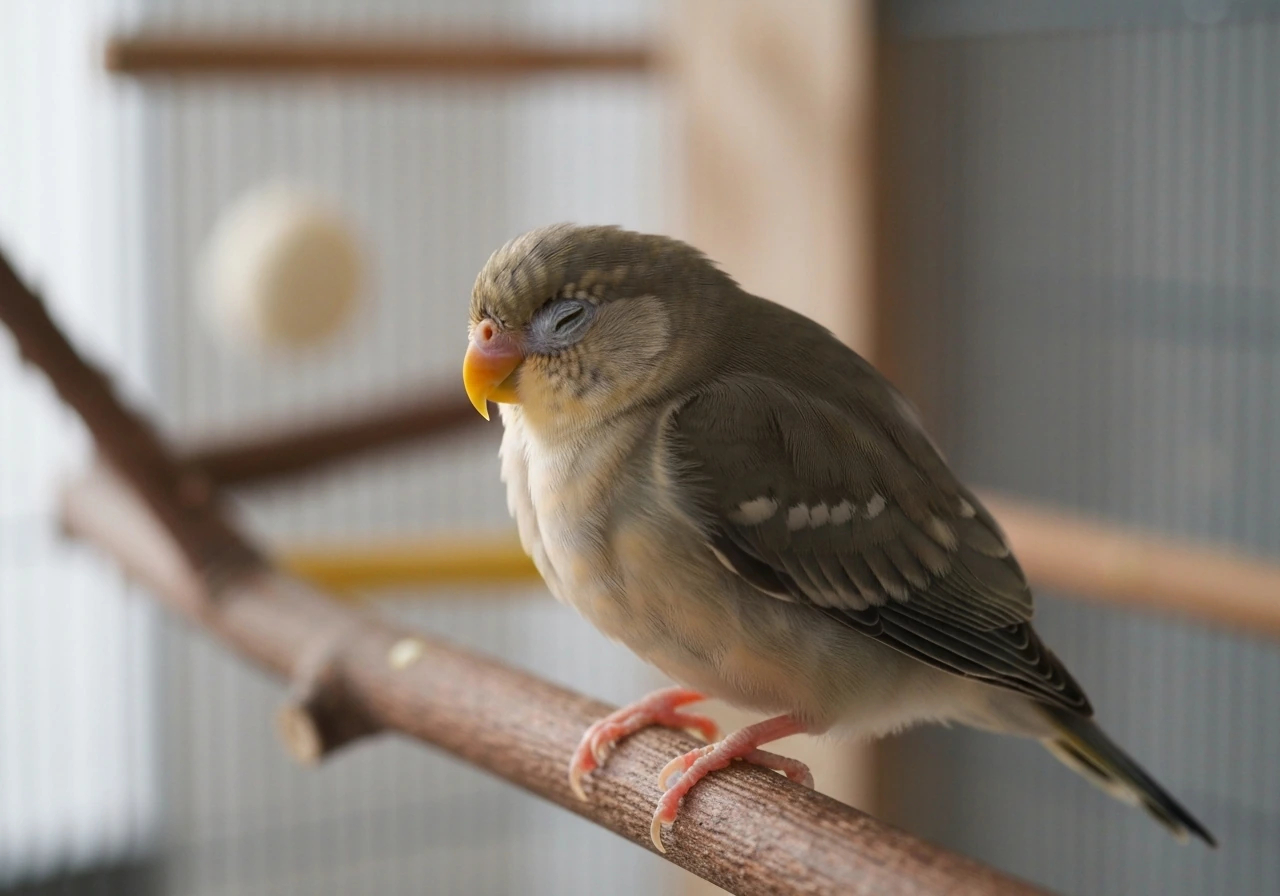
Normal eye closing vs. one-eye-closed behavior
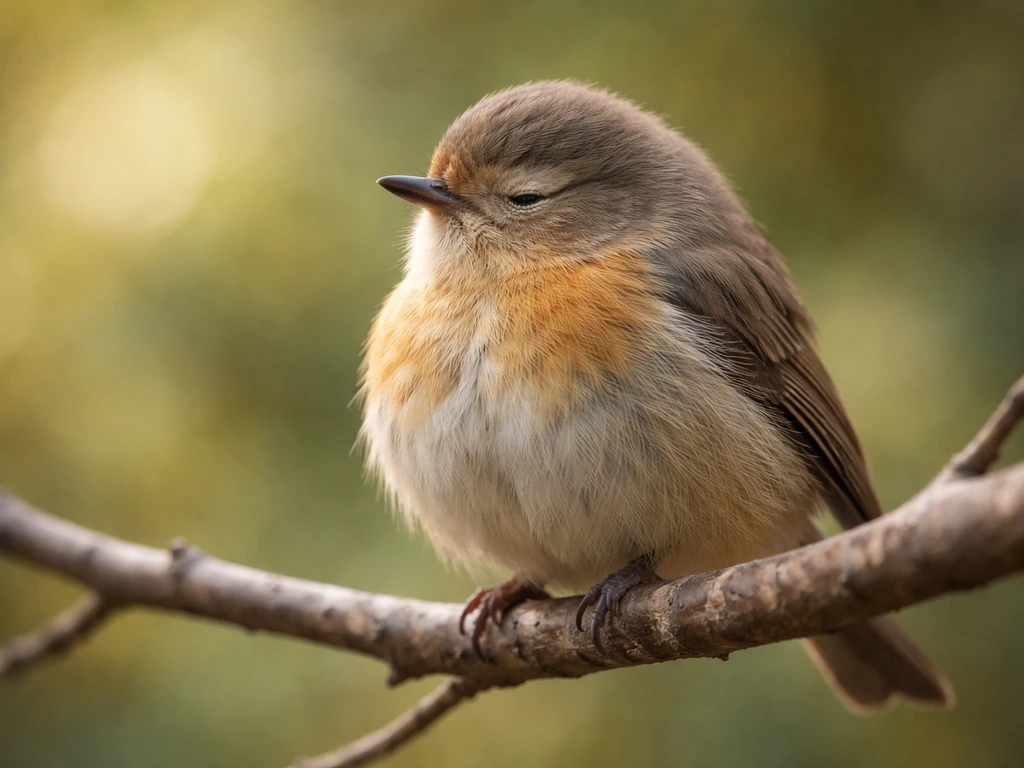
Birds close their eyes for completely normal reasons all the time. When a bird is relaxed, content, or drifting into sleep, it typically closes both eyes slowly and simultaneously. During deep slow-wave sleep, the bird stays relatively still, both eyes are fully closed, and it may even tuck its beak into its feathers. Research on avian sleep describes slow-wave sleep as periods when birds remain immobile with eyes closed and eye movements occurring at the lowest frequency Sleep patterns in the bird Aratinga canicularis. You'll notice the bird is calm, balanced, and resumes normal alertness quickly when you approach or make a sound.
One-eyed closing is a different pattern. A healthy, alert bird may briefly close one eye in a slow blink as a sign of comfort or trust, especially toward a person it bonds with. That's fine and nothing to worry about. The red flag is when one eye stays closed for minutes at a time, keeps closing repeatedly throughout the day, or the bird seems to be squinting, flinching, or rubbing at that side of its face. That kind of one-sided, sustained closure is the bird telling you something is wrong with that eye.
| Behavior | What it usually means | Action needed |
|---|---|---|
| Both eyes slowly closing, bird calm and balanced | Normal rest or sleep | None |
| One slow blink toward you, eye reopens fully | Contentment or trust signal | None |
| One eye held closed for several minutes, bird otherwise alert | Irritation, discomfort, or early pain | At-home check now |
| One eye closed with puffing, hunched posture, or lethargy | Illness or significant pain | Avian vet today |
| One eye closed with discharge, swelling, or rubbing | Infection, injury, or lesion | Avian vet urgently |
Common reasons a bird keeps one eye closed
Eye irritation from a foreign body is one of the most frequent causes. Dust from certain substrates, feather dander, seed husks, or even a small fiber from a toy can lodge under the eyelid and cause persistent squinting on one side. The bird will often rub its face against a perch or its own wing to try to relieve it.
Corneal irritation or a corneal abrasion is more serious. This happens when something scratches the surface of the eye, which can occur during handling, a collision with cage bars, or a scuffle with another bird. The eye will look watery or cloudy, and the bird will strongly resist opening it because light and air make it painful.
Eye infections, including conjunctivitis, are common in pet birds and can affect just one eye or both. You'll often see redness, puffiness around the eyelid, or a wet or crusty discharge in the corner of the eye. Importantly, an eye infection in a bird can also be a symptom of a broader respiratory illness, meaning the problem may not be limited to the eye itself.
Respiratory infections with facial involvement are something to take seriously. Conditions like Mycoplasma, Chlamydiosis (psittacosis), or other bacterial infections can cause swelling around the eye, sinus pressure behind the eye socket, or discharge that makes the bird keep that eye closed. If you're also noticing sneezing, nasal discharge, or a change in the bird's breathing, this combination pushes the situation into urgent territory.
Trauma and pain from an injury are less obvious but real possibilities. If the bird flew into a window, had a fall, or was handled roughly, blunt impact near the eye can cause swelling or internal bruising. The bird may show no other visible wound but will keep the affected eye closed and may tilt its head or seem off-balance.
Environmental irritants are worth ruling out early. Cigarette smoke, aerosol sprays, scented candles, non-stick cookware fumes (PTFE/Teflon), strong cleaning products, or even heavy dust from a recent home renovation can inflame a bird's eyes and respiratory tract. Birds have extremely sensitive airways and eyes compared to mammals.
Eyelid abnormalities or eye lesions, though less common, can also cause the bird to hold an eye closed. These include cysts, abscesses, or growths on or near the eyelid that create physical discomfort. These generally require veterinary diagnosis and cannot be assessed reliably at home.
Quick at-home checks you can do right now
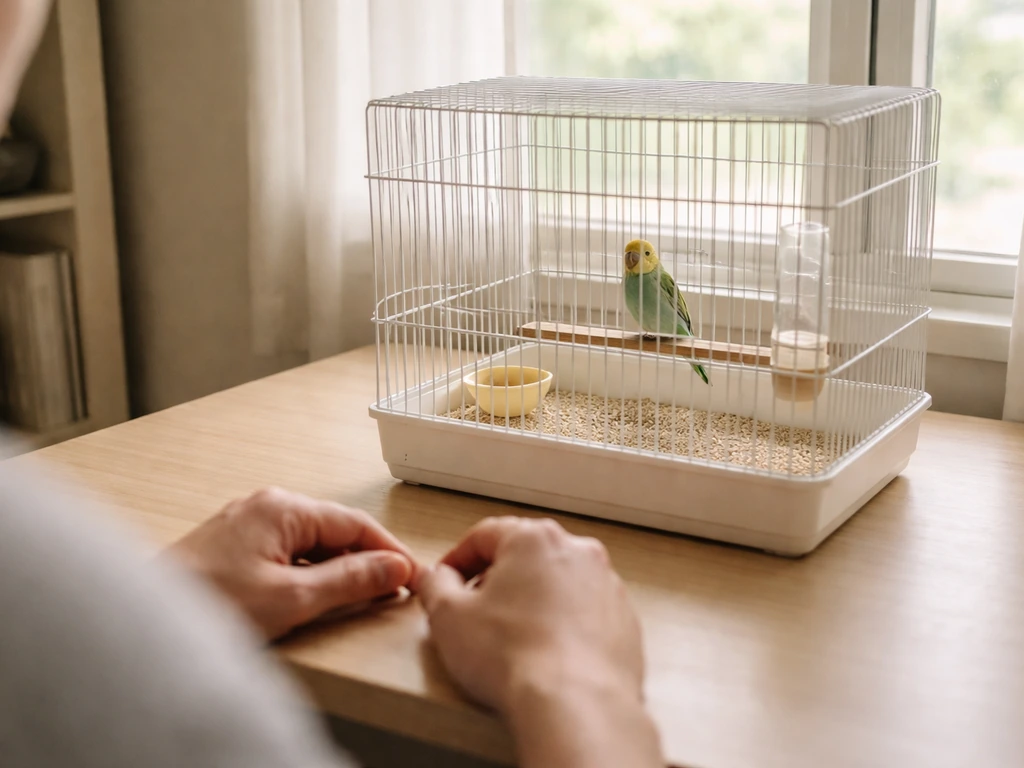
Start with the environment, not the bird. Walk around the room where the cage sits and ask yourself a few questions: Was anything sprayed, burned, or cooked in the last few hours? Did you clean the cage with a new product? Is there visible dust in the air or on cage surfaces? Is the cage in direct sunlight or near a heat source that could dry the air? Environmental triggers often explain sudden-onset one-eye squinting, and removing the cause can bring fast relief.
Next, look at the affected eye from a comfortable distance (don't stress the bird by forcing a close-up look). Under good natural or bright lamp light, check for these things:
- Discharge: Is there anything wet, crusty, or colored in the corner of the eye or on the feathers around it?
- Swelling: Does the eyelid or the tissue around the eye look puffed up or uneven compared to the other side?
- Cloudiness: Does the surface of the eye look milky, hazy, or different in color compared to the other eye?
- Redness: Is the skin or membrane around the eye visibly red or inflamed?
- Rubbing behavior: Is the bird actively scratching at that side of its face against a perch or with its foot?
- Head tilt: Is the bird consistently tilting its head toward the closed-eye side?
Also check the bird's general body language. A bird that keeps one eye closed but is still eating, vocalizing normally, perching upright, and engaging with its surroundings is in a better position than one that's puffed up, silent, sitting low on the perch, or reluctant to move. The broader picture tells you how urgent the situation is.
Review recent handling and grooming history. Did anything happen near the bird's head in the last day or two? Wing clipping, nail trimming, a visit from someone new, or even aggressive play with a cage mate can cause trauma or stress-triggered symptoms that show up hours later.
What you can safely do right now
If you suspect an environmental irritant, move the bird to a clean, well-ventilated room away from any potential source. Fresh air without drafts is ideal. This is the single most useful immediate step and can make a real difference within 30 to 60 minutes if the cause is airborne.
If the feathers around the eye are crusted or dirty, you can gently clean the area around (not inside) the eye using a clean cotton pad or soft cloth dampened with plain saline solution or plain lukewarm water. Wipe outward from the eye, never inward. Do this once and do not repeat excessively. Do not use any medicated eye drops, antibiotic ointments, or human eye products unless an avian vet has specifically told you to.
Keep the bird calm and reduce stimulation. Cover part of the cage, keep noise and household traffic low, and avoid unnecessary handling. Stress slows recovery and can make a bird that's already masking pain deteriorate faster.
Make sure the bird has easy access to water and food. A bird in discomfort may not seek these out actively, so placing a water dish and soft food close to where the bird is perching is a simple way to support it.
What not to do: Do not flush the eye with tap water. Do not try to open the eyelid manually to inspect it. Do not apply any oil, honey, or home remedy directly to the eye. Do not assume the problem will resolve on its own if you're seeing discharge, swelling, or the behavior is still present after a few hours of improved environment.
Warning signs that mean you need an avian vet today
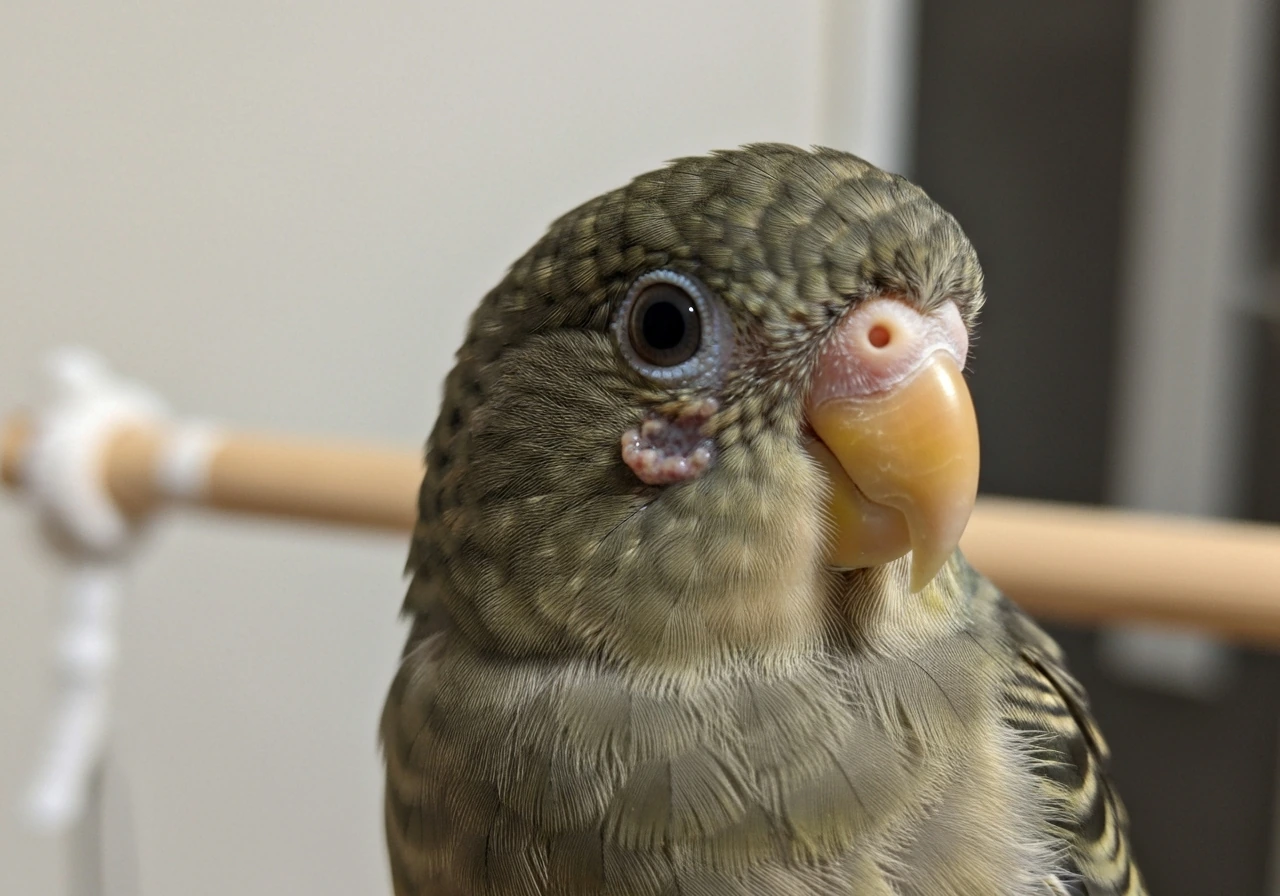
Birds are wired to hide illness. By the time a bird looks obviously sick, it has often been struggling for longer than you'd expect. That makes any eye symptom worth taking seriously sooner rather than later. If your pet bird has swelling, redness, discharge from the eye, excessive blinking, or is holding the eye(s) closed, consult a veterinarian immediately any eye symptom worth taking seriously sooner rather than later. These are the signs that mean don't wait:
- Any visible discharge from the eye, whether watery, cloudy, yellow, or crusty
- Swelling of the eyelid or the tissue surrounding the eye
- A cloudy, milky, or discolored appearance on the surface of the eye itself
- The bird is keeping the eye completely shut and cannot or will not open it
- The eye is being rubbed or scratched repeatedly and aggressively
- The bird is puffed up, lethargic, not eating, or sitting on the cage floor
- You're also noticing sneezing, nasal discharge, labored breathing, or clicking sounds
- The bird appears to be in pain, is flinching when touched near the head, or has a head tilt
- The one-eye closure has been present for more than a few hours with no improvement after removing irritants
- The bird has been in contact with a sick bird recently or was recently acquired
Any one of these alone is enough reason to call an avian vet. Multiple signs together mean this is an emergency. Eye problems in birds can escalate quickly, and an eye that's infected or injured won't heal on its own without proper treatment.
When the cause is environment, stress, or handling: how to prevent it happening again
If your vet or your own investigation points to an environmental or stress-related cause, a few changes to routine can make a real difference. Dust is one of the biggest culprits in multi-bird homes. Some substrate types, certain dry pelleted foods, and even some bedding materials generate significant particulate matter. Switching to a lower-dust substrate and rinsing seed before offering it can reduce ongoing eye irritation.
Cooking fumes are a serious and underappreciated danger for birds. Non-stick cookware at high heat can release fumes that are toxic to birds within minutes. Even regular cooking smoke, strong spices heated in oil, and burnt food can irritate eyes and airways. Keep birds out of or well away from kitchens, and ventilate cooking spaces thoroughly.
Aerosols of any kind should be avoided around birds entirely. This includes air fresheners, hairspray, perfume, cleaning sprays, and insect repellents. Diffused essential oils are also risky and should not be used in rooms where birds live.
If stress or handling was the trigger, think about how the bird is approached and handled, especially around the head and face. Sudden movements near the face, improper restraint during grooming, or being housed with an aggressive cage mate can all lead to trauma and fear-based behavioral changes that compound any physical symptoms.
If your bird is showing unusual movement patterns alongside the eye issue, things like wobbling, side-stepping, or balance problems, those behaviors are worth tracking separately as they can point to neurological or inner ear involvement. If your bird is also suddenly wobbly or off balance, that can be an extra sign that the problem is more than just irritation and should be checked promptly.
If your bird is also walking side to side, that can help point to a balance issue or neurological problem along with the eye irritation. Head bobbing can happen for other reasons too, so it helps to compare that behavior with what the bird is doing with its eyes why is my bird bobbing his head up and down.
Clean the cage and surrounding area regularly to prevent buildup of droppings, mold, or mildew, all of which can contribute to eye and respiratory irritation. Good hygiene and fresh air circulation in the room go a long way toward keeping a bird's eyes and respiratory tract healthy.
How to monitor your bird and what to record before the vet visit
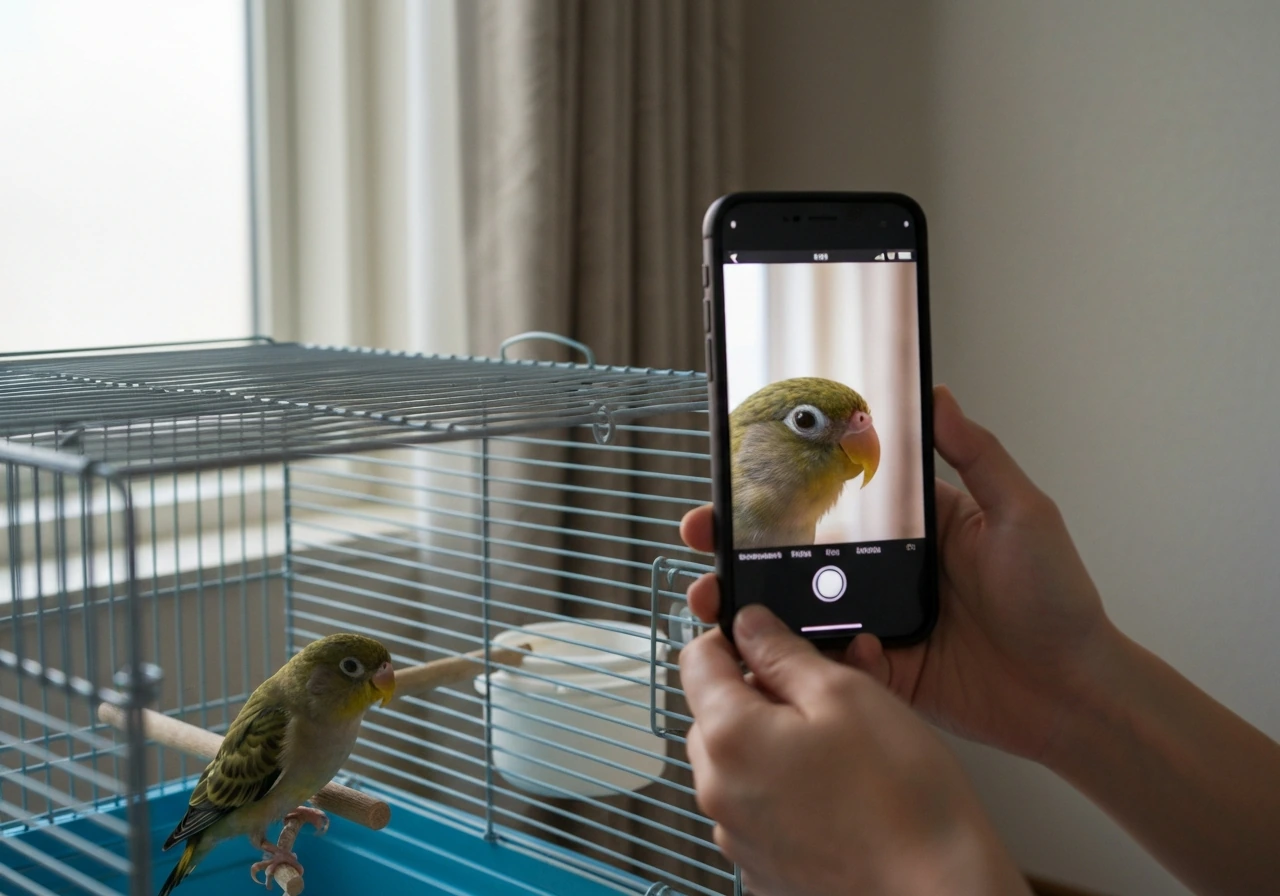
If you're heading to the vet, or even just deciding whether to go, good documentation makes the appointment far more useful. Vets rely heavily on owner observations for eye problems because what you saw at home, before stress of transport changed the bird's behavior, is often the most informative snapshot.
Take a short video of the bird in its cage showing the eye behavior. A 30-second clip that clearly shows which eye is affected, how long it stays closed, and what the surrounding tissue looks like is more useful than any description you can give verbally. Take a still photo in good lighting from multiple angles if the bird will allow it.
Write down or note on your phone the following information before you go:
- When you first noticed the eye closing behavior (date and approximate time)
- Which eye is affected and whether it has ever switched sides or involved both eyes
- Whether the behavior is constant or comes and goes, and how long each episode lasts
- Any other symptoms you've noticed, even minor ones like sneezing, a change in droppings, or reduced vocalization
- Recent changes in the home: new cleaning products, new foods, new cage furniture, renovation work, new pets
- Whether the bird has been around other birds recently
- The bird's diet, including any recent changes
- Any handling or grooming in the days before symptoms appeared
- Whether the bird is current on any veterinary care and what its last checkup showed
This information helps the vet narrow down whether the problem is local to the eye, systemic, or environmental, and it speeds up the path to treatment significantly. A bird that comes in with documented history gets better care faster than one where the owner can only say 'I noticed it this morning.'
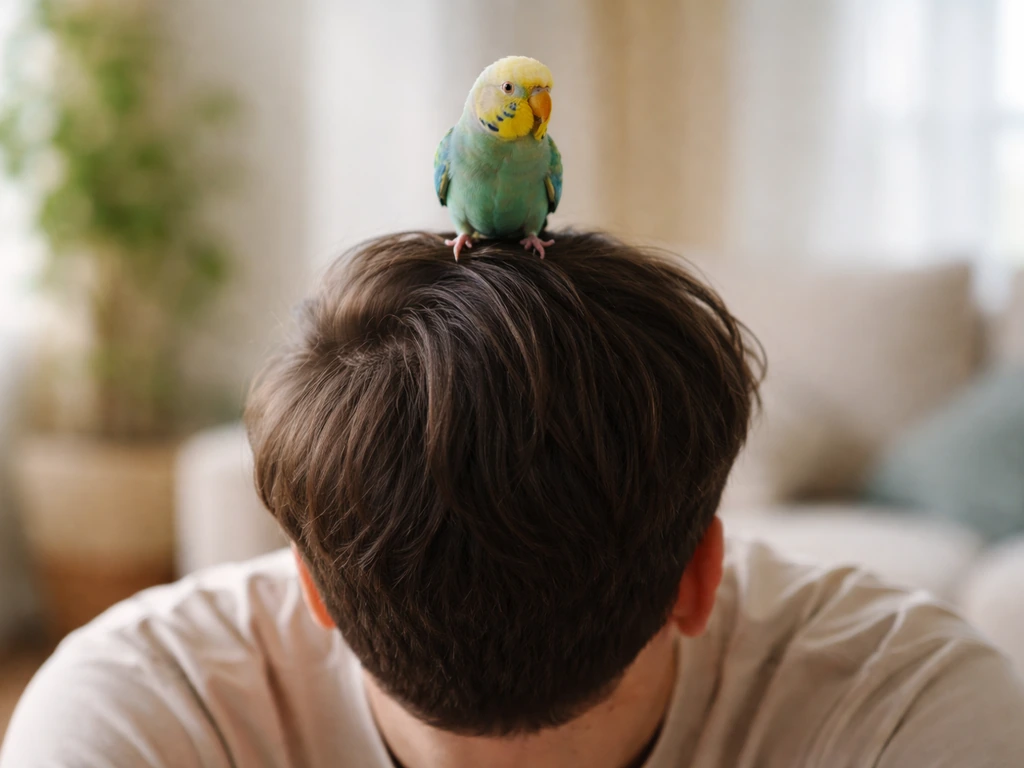
One last thing: keep watching the bird while you wait for your appointment or decide your next step. If your bird keeps flying onto your head, that can also be linked to eye discomfort, stress, or irritation rather than just normal curiosity. Improvement within an hour of removing a suspected irritant is a reassuring sign. No improvement, or any worsening of posture, energy, or the appearance of the eye, means move the vet visit up to today rather than tomorrow.
FAQ
How can I tell the difference between normal sleep-related blinking and a problem with one eye?
Normal sleep or drowsiness usually involves both eyes closing together, with the bird staying calm and still. Concerning eye behavior is when the same eye stays closed or squinted for minutes, keeps recurring, or comes with watery or cloudy appearance, discharge, or the bird rubbing that side.
My bird closes one eye briefly during interaction, should I still worry?
A brief slow blink with one eye, especially when the bird is otherwise relaxed and responsive, can be a comfort or bonding behavior. Watch for duration and frequency, if it becomes sustained (minutes), increases over the day, or the bird avoids light or rubs the face, treat it as an eye issue rather than normal behavior.
What does watery eyes versus thick discharge suggest?
Watery tearing can happen with mild irritation, but cloudy fluid, redness, swelling, or crusting suggests corneal damage or infection. Thick discharge that reappears after wiping, especially with puffiness of the eyelids, is a stronger reason to contact an avian vet promptly.
Is it safe to put my finger near the eye or try to open the eyelid to look?
No. Manually opening the eyelid can worsen pain and potentially cause further injury. Instead, observe from a comfortable distance in bright natural or lamp light, note what you see, and let a vet perform any detailed exam.
Can I use saline and gently clean the eye every time it looks dirty?
Clean only once using a soft cloth or cotton pad dampened with plain saline or plain lukewarm water, wipe outward from the eye, and avoid repeated wiping if discharge continues. Repeated cleaning without improvement can irritate tissue further, and persistent crusting is a reason for a veterinary look.
Why is removal of an environmental irritant sometimes enough within an hour?
Airborne irritants can inflame the eye surface and airways quickly. If the eye behavior improves in 30 to 60 minutes after moving the bird to fresh, clean ventilation away from the suspected trigger, that supports an environmental cause. If there is no improvement or worsening, escalation to a vet visit is needed.
What if both eyes start closing, but it started as one eye?
That pattern can mean the issue is progressing from local irritation to infection or inflammation, or that the underlying trigger is affecting the whole respiratory system. Even if it starts one-sided, spreading symptoms plus discharge or breathing changes are reasons not to delay veterinary assessment.
Does a one-eye problem always mean an eye problem only?
Not necessarily. Birds can show eye-related signs as part of respiratory infections, because inflammation and sinus pressure can affect the tissues around the eye socket. If there is sneezing, nasal discharge, open-mouth breathing, or reduced stamina, assume it may be systemic and seek avian veterinary care.
How do I decide how urgent this is if my bird is otherwise acting normal?
If the bird is eating, perching upright, and vocalizing normally, urgency may be lower than when it is puffed up, quiet, or reluctant to move. Still, persistent one-eye closure, squinting, visible redness or cloudiness, or continued behavior after you remove suspected irritants should prompt same-day or prompt avian vet contact.
Should I avoid all cleaning products around my bird if the cage is in a different room?
Yes, fumes can travel even when the bird is not in the same area. Strong cleaners, aerosols, scented candles, and smoke can irritate sensitive avian eyes and airways, and non-stick cookware fumes can be especially risky. Keep birds away from kitchens and product use, and ventilate when cleaning.
What kind of documentation helps the vet most for eye symptoms?
A short video is especially useful, 30 seconds is often enough, showing which eye is affected, how long it stays closed, and the eyelid or surrounding tissue appearance. Add a simple timeline of when you first noticed it, any suspected exposures (sprays, cooking, new toys or bedding), and whether discharge or cloudiness is present.
My bird rubbed its face on the perch. Could that be from dust?
Yes, face rubbing or rubbing against a wing can occur with foreign-body irritation like dust, seed husks, feather dander, or small fibers under the eyelid. If the eye remains closed or squinted after you remove the dusty environment, treat it as more than mild irritation and get an avian exam to rule out corneal injury.
What is the biggest mistake to avoid while deciding whether to treat at home?
The most common mistake is trying human eye products, medicated drops, or home remedies without avian guidance. Another is flushing with tap water or forcing the eyelid open. If you see swelling, discharge, cloudy tissue, or sustained closure, focus on environment changes and arrange avian veterinary evaluation rather than DIY medication.
Next Article
Why Does My Bird Keep Flying on My Head? What to Do
Bird keeps landing on your head? Causes from bonding to stress, plus safe fixes and when to call an avian vet.