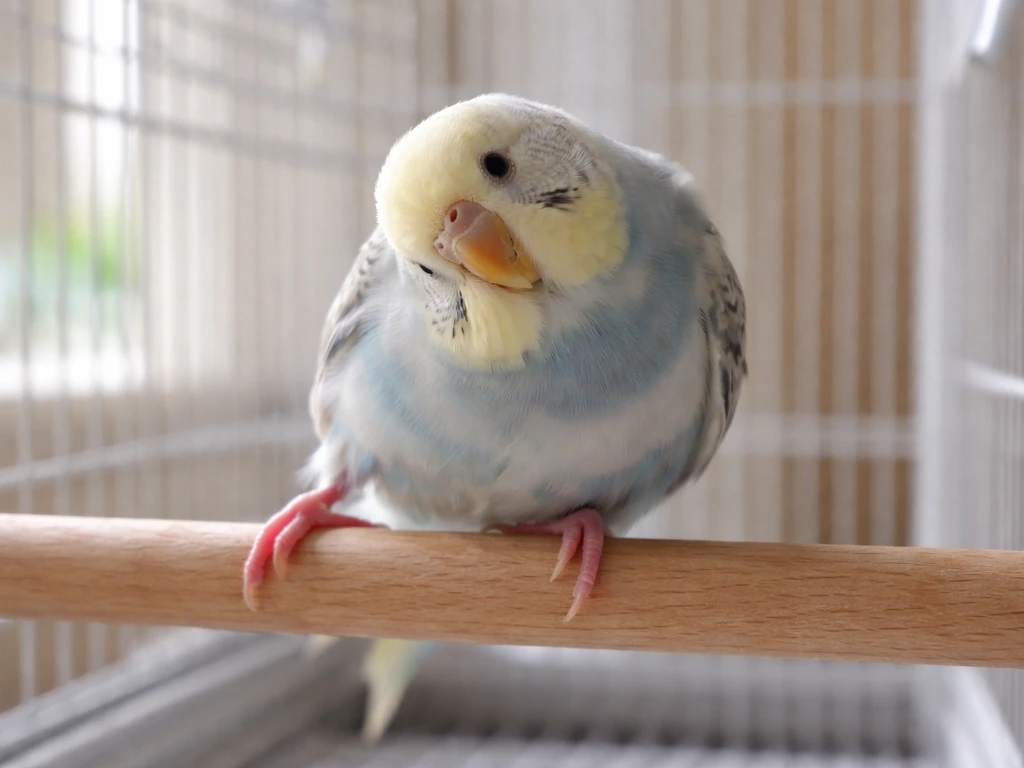
A bird falling off his perch once is probably nothing. A bird falling repeatedly is a real signal that something is wrong, and you need to figure out what it is today. The cause could be as simple as a slippery perch or debris on his feet, or it could point to something more serious like a neurological issue, illness, or pain that's affecting his grip and balance. This guide walks you through how to tell the difference, what to check right now, and when to call an avian vet.
Why Does My Bird Keep Falling Off His Perch? Causes and Steps

Marcus Chen
12 Jun 2026
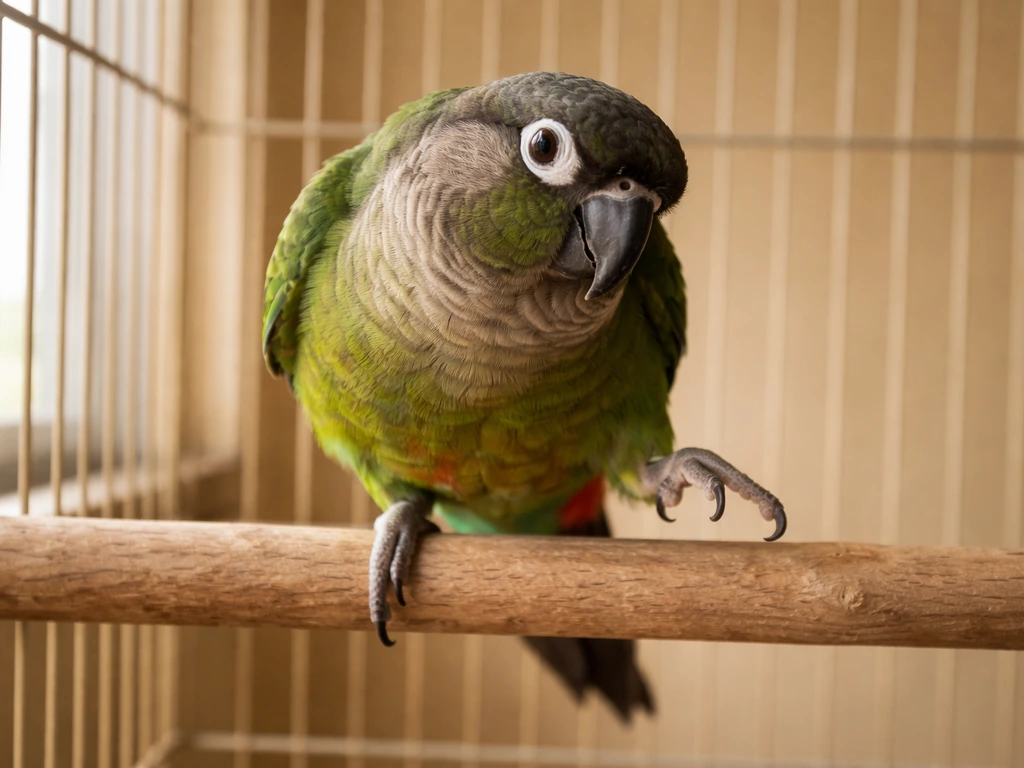
Is it normal clumsiness or a red flag
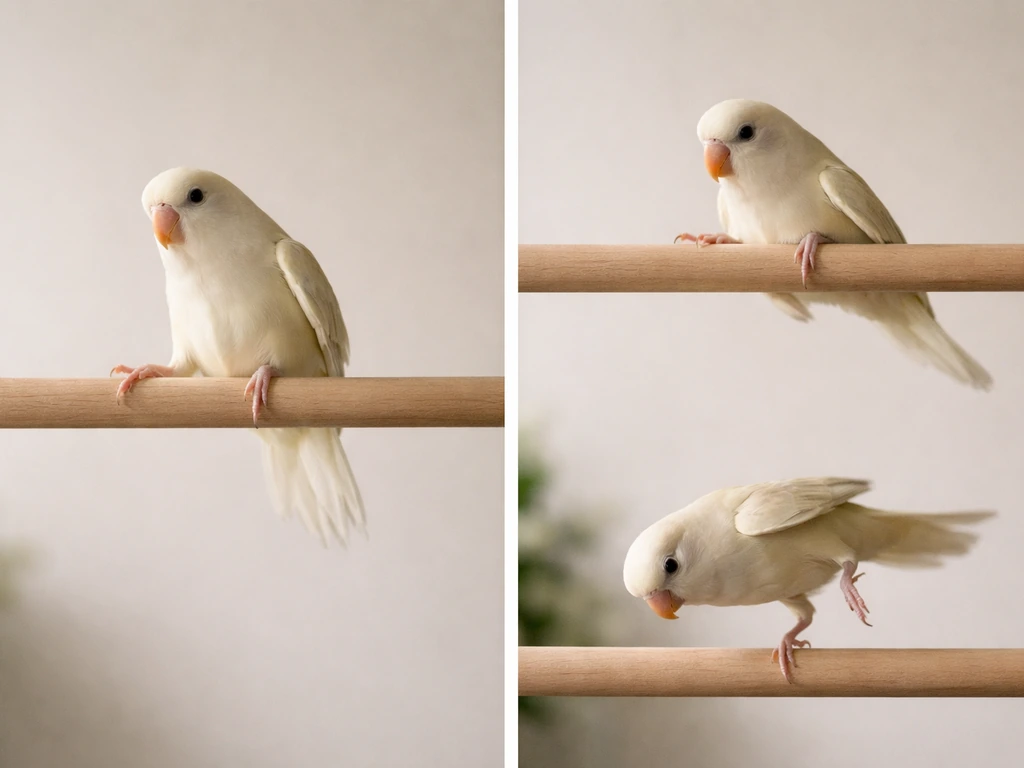
Every bird has an off moment. A startled bird, a bird who lunges for a toy and misses, or a young bird still getting coordinated will occasionally lose his footing. That's normal. What isn't normal is repeated falling, falling without an obvious trigger, falling paired with other symptoms, or a bird who can't seem to get back up and grip properly after the fall.
Ask yourself these questions. Is he falling multiple times a day or in quick succession? Is he sitting fluffed at the bottom of the cage and not trying to climb back up? Does he look wobbly or off-balance even when he's on the perch? Is his posture different, like leaning to one side or holding a wing low? Is he breathing differently, eating less, or passing unusual droppings? Any yes answer moves this from "watch and wait" to "act now."
Frequency and recovery speed are your two biggest clues. A bird who falls once, looks briefly startled, and climbs right back up is probably fine. A bird who falls and stays at the bottom, struggles to regain his grip, or shows any of the paired symptoms above needs more attention.
Quick at-home checks to figure out why it's happening
Before you do anything else, just observe him for a few minutes without interacting. Watch how he's gripping the perch. Are all toes wrapping around it normally? Is he using both feet equally, or is one leg doing most of the work? Is he swaying or compensating to stay upright? If he's at the bottom of the cage, watch how he moves around.
Then go through this quick checklist:
- Feet and toes: Look at both feet closely. Check for swelling, redness, crusty buildup, sores on the bottom of the feet (bumblefoot), broken or overgrown nails, or anything tangled around the toes like a loose cage fiber or thread.
- Perch surface: Run your finger along the perches. Are they wet, oily, covered in droppings, or worn smooth? A slippery surface is one of the most common and easily fixed causes.
- Grip test: Gently let him grip your finger. Does he grip firmly with both feet, or does one foot feel weak or oddly placed?
- Posture check: Is he holding his body level? A bird leaning noticeably to one side or tilting his head is showing a balance-related symptom worth taking seriously.
- Breathing: Count his breaths or watch his tail. Any tail bobbing with each breath, open-mouth breathing, or clicking sounds are emergency signs.
- Droppings: Have his droppings changed color, consistency, or volume? Yellow-green urates, watery droppings, or almost no droppings are all red flags.
- Appetite: Has he been eating and drinking at his normal rate? A bird who's stopped eating is telling you something is wrong.
If you can, take a short video of him on the perch and one of him falling or struggling to grip. You'll want this for the vet and it helps you compare his condition over time.
Perch and cage setup fixes to stop the falls today
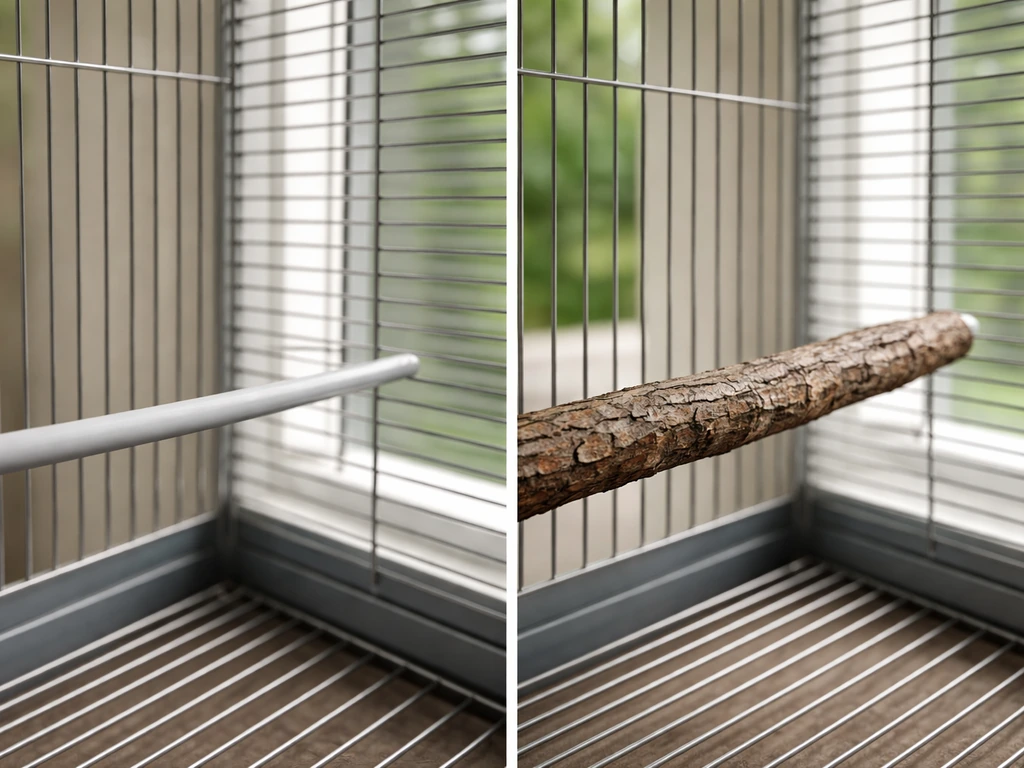
Before assuming the worst, fix the environment. A surprising number of falling cases come down to perch problems, not health problems. Here's what to look for and fix right now.
Perch size and texture
A perch that's too narrow forces a bird to grip too tightly, fatiguing the muscles. A perch that's too wide means his feet can't wrap around properly for a secure grip. As a rough guide, when a bird grips correctly, his toes should wrap about three-quarters of the way around the perch. Smooth wooden or plastic dowel perches also become slippery over time, especially if soiled. Replace smooth perches with natural wood branches or rope perches that have some texture and variation in diameter.
Perch placement and height
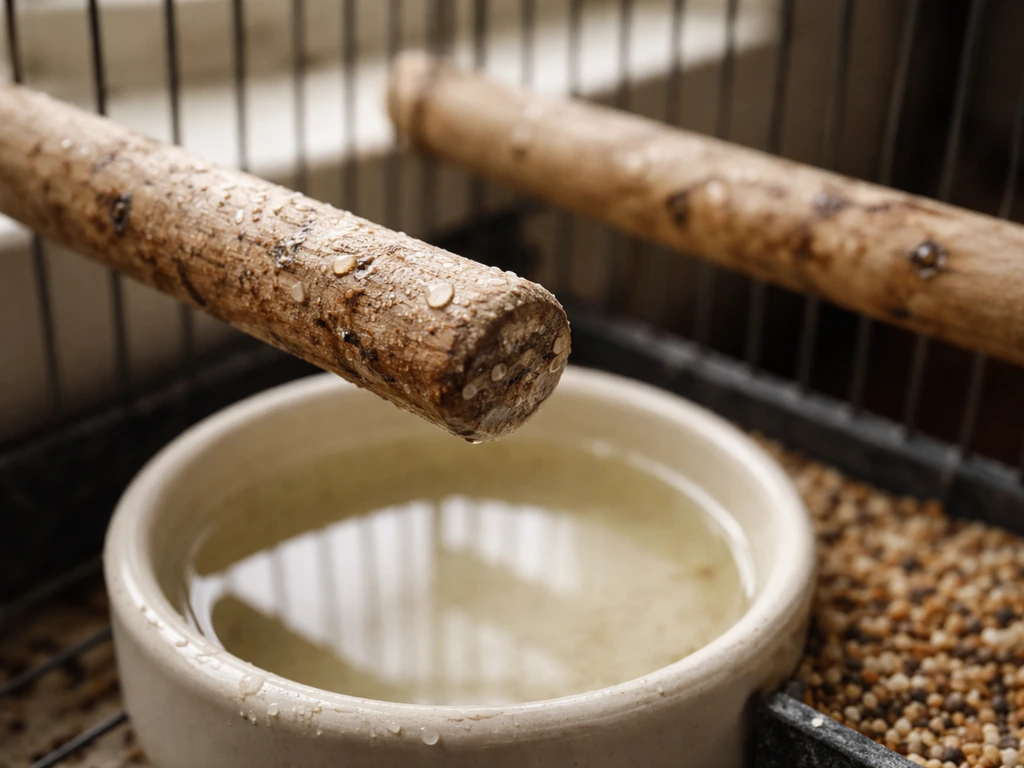
Perches placed too close together can cause a bird to overreach and lose balance. Perches right above a water or food dish will get covered in droppings and become slippery. Perches that wobble or aren't properly secured are an obvious hazard. If your bird has been falling repeatedly, temporarily lower his main perches to reduce the fall distance and add soft bedding or a towel at the cage bottom to cushion any falls while you work out the cause.
Wet or dirty feet
Birds who bathe frequently or splash in their water dish can have wet feet that simply don't grip as well. Food debris, especially sticky fruit or soft food stuck to the feet, has the same effect. Check his feet and dry them gently if needed.
Health causes: feet, legs, pain, and gripping problems
If the cage and perch setup looks fine, you need to think about physical health. Pain or physical discomfort in the feet and legs is one of the most common medical reasons a bird loses his grip.
Bumblefoot
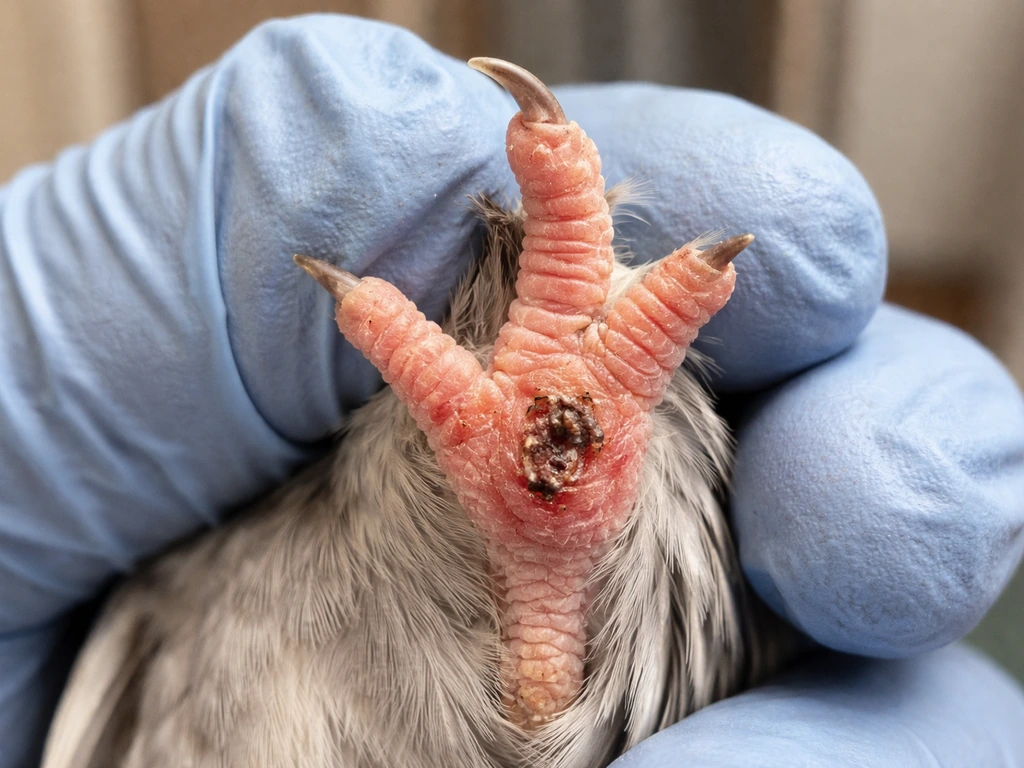
Bumblefoot (pododermatitis) is an infection and inflammation of the bottom of the foot. It starts as redness and swelling and can progress to open sores. A bird with bumblefoot will grip poorly because it's painful to apply pressure to the foot. Look at the bottom of both feet. Healthy foot pads should be smooth and slightly textured. Anything red, swollen, cracked, or crusty needs veterinary attention.
Overgrown or broken nails
Very long nails can hook onto the cage or perch unexpectedly, causing a bird to be yanked off his footing. A broken nail is painful and will make a bird reluctant to grip. Trim overgrown nails carefully or have your vet do it.
Arthritis and joint pain
Older birds can develop arthritis in their feet, ankles, or legs. A bird in joint pain will grip weakly and tire quickly on the perch. You might notice him sitting low on the perch rather than perching upright, or shifting weight repeatedly. This is a vet conversation, not a home fix.
Nutritional deficiencies
Vitamin E deficiency can cause muscle weakness and poor coordination in birds. Vitamin B1 (thiamine) deficiency is associated with neurological symptoms including weakness and falling. These deficiencies are more common in birds on a seed-only diet. If your bird lives primarily on seeds without pellets, fresh vegetables, or supplements, diet is a real suspect here.
Balance, neurological, and weakness causes
Some of the most serious causes of falling off a perch involve the nervous system or overall body weakness. These are the ones you really don't want to delay on.
Seizures
A bird having a seizure will often lose grip and fall from the perch. During a seizure, you might see convulsing, loss of muscle control, wing flapping without purpose, or a bird lying on the cage floor unable to right himself. After the episode, he may seem confused or dazed for a few minutes before returning to normal. If you witnessed something that matches this description, it's an urgent vet visit, full stop. Remove any sharp objects or hazards from the cage floor immediately to prevent injury during future episodes.
Head tilt and loss of coordination
A bird who's tilting his head persistently, rolling, or circling is showing vestibular or neurological signs. A head tilt or leaning to one side can point to vestibular or neurological problems and needs careful evaluation. This is different from a bird naturally bobbing his head in curiosity. A pathological head tilt is constant, pronounced, and paired with an inability to balance. This can be caused by inner ear infections, toxin exposure, certain viral infections, or brain-related illness. blank" rel="noopener noreferrer">It needs same-day veterinary evaluation.
General weakness from illness
A bird who is systemically ill, whether from an infection, organ disease, or respiratory illness, often becomes too weak to maintain his perch. You'll typically see this alongside lethargy, fluffed feathers, reduced appetite, and changes in droppings. A bird who is weak enough to keep falling off his perch due to illness is not in a stable condition and needs to be seen.
Toxin or medication effects
Recent exposure to household toxins (non-stick cookware fumes, aerosol sprays, scented candles, smoke) can cause sudden neurological and respiratory symptoms including loss of balance. If your bird recently started a medication and the falling began afterward, that's worth flagging to your vet. Both situations need prompt attention.
Stress, behavior, and fear-related falling
Not every fall has a medical cause. Sometimes a bird falls because he's scared, overstimulated, or acting out hormonally. Figuring out whether a behavioral trigger is involved can save you unnecessary worry, but only after you've ruled out the physical causes above.
A startled bird will sometimes launch off a perch suddenly and crash land. This can happen from a sudden loud noise, a new object near the cage, another pet approaching, or even a shadow passing by. If the falling happens at specific, predictable moments and he recovers quickly and completely, a startle response is a reasonable explanation.
During breeding season or hormonal periods, some birds become more agitated, restless, and physically reactive. They may thrash around in the cage, hang in unusual positions, or lose their footing in the middle of frantic activity. You might also notice more territorial behavior or aggression. This is related to the same hormonal intensity behind some birds hanging upside down or engaging in other unusual physical behaviors.
High stress from environmental changes, a new bird in the home, a recent move, or a major routine disruption can also cause a bird to be less coordinated. Chronic stress weakens birds generally, and a stressed bird may sleep poorly and have less muscle control as a result. If you've recently changed something significant in his environment, consider that context.
When to call an avian vet urgently and what to tell them
Some situations can't wait for a regular appointment. Contact an avian vet the same day if your bird is showing any of the following:
- Collapse or inability to stand at all
- Suspected seizure activity (convulsing, loss of muscle control, falling followed by confusion)
- Open-mouth breathing, labored breathing, or tail bobbing with every breath
- A persistent head tilt, rolling, or spinning
- Obvious trauma such as bleeding, a broken bone, or an impact injury from a fall
- Sudden onset of one-sided weakness, one leg not working, or one wing hanging low
- Complete refusal to eat or drink for more than 12 to 24 hours
- Unusual droppings combined with any other symptom
- Suspected toxin exposure from fumes, smoke, or household chemicals
When you call, the more specific you can be, the better. Tell the vet how long the falling has been happening, whether it's getting worse or staying the same, and what else you've noticed. Describe his diet, any recent changes to his environment or routine, and whether he's on any medication. Bring or send the video you took earlier. That video is genuinely useful because it shows a vet exactly what's happening in a way that a description alone can't.
Here's a summary of what to have ready when you call or arrive:
- Timeline: When did the falling start, how often is it happening, and has it changed in frequency or severity?
- Diet details: What does he eat daily, including pellets, seeds, fresh food, and any supplements?
- Environment notes: Any new items in the cage, cleaning products used nearby, new pets in the home, or changes to his room?
- Other symptoms: Droppings changes, appetite changes, breathing changes, posture changes, or behavioral shifts.
- Video and photos: Any footage of the falls or his current posture and movement.
- Medication history: Anything he's currently taking or was recently given.
The most important thing to take away from all of this is that repeated falling is your bird telling you something. If you're trying to answer why is my bird falling over, focus first on how often it happens and whether he seems wobbly or ill even between falls. It's worth taking seriously, running through the environment checks today, and not waiting too long if the physical signs are there. Birds are good at masking illness, so by the time they're visibly struggling on a perch, the problem often has some history behind it. Acting quickly gives you the best outcome.
FAQ
How can I tell if this is balance problems versus foot grip problems?
Watch what happens right after the fall. If he tries to grab the perch but his toes do not close around it, or you see one foot used differently, think foot pain, nail issues, or wet or sticky debris. If his feet are fine but he sways, tilts, circles, or loses balance even while standing normally, balance or neurological/vestibular issues are more likely.
My bird falls but doesn’t seem sick. Should I still worry?
Yes, if it is repeated, because birds often hide illness until it affects basic function like perching. If he is fluffed, breathing differently, eating less, has abnormal droppings, or cannot recover his footing quickly, treat it as more than a normal slip and arrange an avian vet visit.
What should I do immediately during or after a fall to keep him safe?
Move hazards off the cage floor (no sharp parts, no loose toys that can snag feet). Add soft, clean bedding or a towel under the main perches to cushion impact while you troubleshoot. Keep handling minimal for the first few minutes so you can accurately observe his grip and balance.
Could lighting or camera/visual stress cause repeated falling?
It can. Bright glare on the perch, shadows that move quickly, or startling reflections can cause repeated missed landings, especially if the timing is consistent. If the pattern matches specific times or lighting changes, reduce glare, cover reflective surfaces, and keep the area around the cage calm while you still rule out health issues.
How do I know whether the perch size is wrong even if it looks “about right”?
Check the toe wrap. If his toes do not wrap around roughly three-quarters of the perch diameter, he may lack secure traction. Also look for abnormal gripping, like straining tightly, slipping during normal standing, or fatigue quickly after perching. Adjust diameter and spacing, then reassess falling frequency over 24 to 48 hours.
My bird’s feet look dirty. Could cleaning solve the problem?
Yes in some cases. Food residue and wetness reduce grip, so gently inspect both feet after removing him from wet areas. Clean sticky debris carefully and ensure perches and water dishes are not causing constant splashing. If redness, swelling, crusting, or cracking is present, do not rely on cleaning alone and seek veterinary evaluation for foot disease.
Should I trim nails myself if his nails seem long?
Be cautious. Overgrown nails can catch, but trimming the wrong amount can cause bleeding and pain, which worsens grip reluctance. If you have any doubt, ask a vet to trim and evaluate for broken or sensitive areas, especially if you notice him favoring one foot.
Is wet feet from bathing definitely the cause?
It can contribute, but it should not be your only conclusion if falling is frequent. Wet feet often increase slipping, yet repeated falling paired with wobbly posture, abnormal breathing, or persistent head tilt points to a deeper medical issue. Dry the feet gently after splashing and confirm whether falling still happens once the environment is corrected.
Could my bird be having seizures or something else I’m missing?
Possible if falls are sudden and paired with uncontrolled movements, wing flapping without purposeful activity, loss of muscle control, or a brief period of dazed behavior afterward. If you observe any seizure-like episode, treat it as urgent and call an avian vet the same day, and clear the floor hazards immediately.
My bird started falling after a medication change. What should I tell the vet?
Report the exact medication name, dose, start date, and when the falling began relative to starting or changing it. Also note any other new symptoms (sleepiness, appetite change, breathing change, head tilt). Keep the packaging if possible, because medication timing can change the likely causes and the urgency.
When should I choose an emergency visit versus a regular appointment?
Choose same-day or emergency care if falling is worsening, happening repeatedly with inability to right himself, or paired with neurologic signs (constant head tilt, circling), seizure-like events, or systemic signs (lethargy, fluffed posture, reduced appetite, abnormal droppings). If he is stable between falls and recovery is quick, you still should act, but it may be appropriate to schedule promptly while you fix perch and cage hazards today.
What information should I prepare to speed up diagnosis?
Bring a short video showing him on the perch and a separate clip of a fall or struggle, if possible. Also prepare his diet details (seed only versus pellets and fresh foods), recent environmental changes (new sprays, fumes, moved cage), any medications or supplements, how long this has been happening, and whether one foot seems to be used differently.
If I lower perches to reduce injury, how long should I wait before calling the vet?
If you see repeated falls, worsening recovery, or any paired symptoms, do not delay. If it is mild and you make perch and safety adjustments today, reassess over the next 24 hours, but call an avian vet immediately if falling continues at the same rate or any neurologic or systemic signs appear.
Next Article
My Bird Is Losing His Balance: Causes and What to Do
Learn why your bird loses balance and what to do now, from safe checks to urgent vet when to seek care.