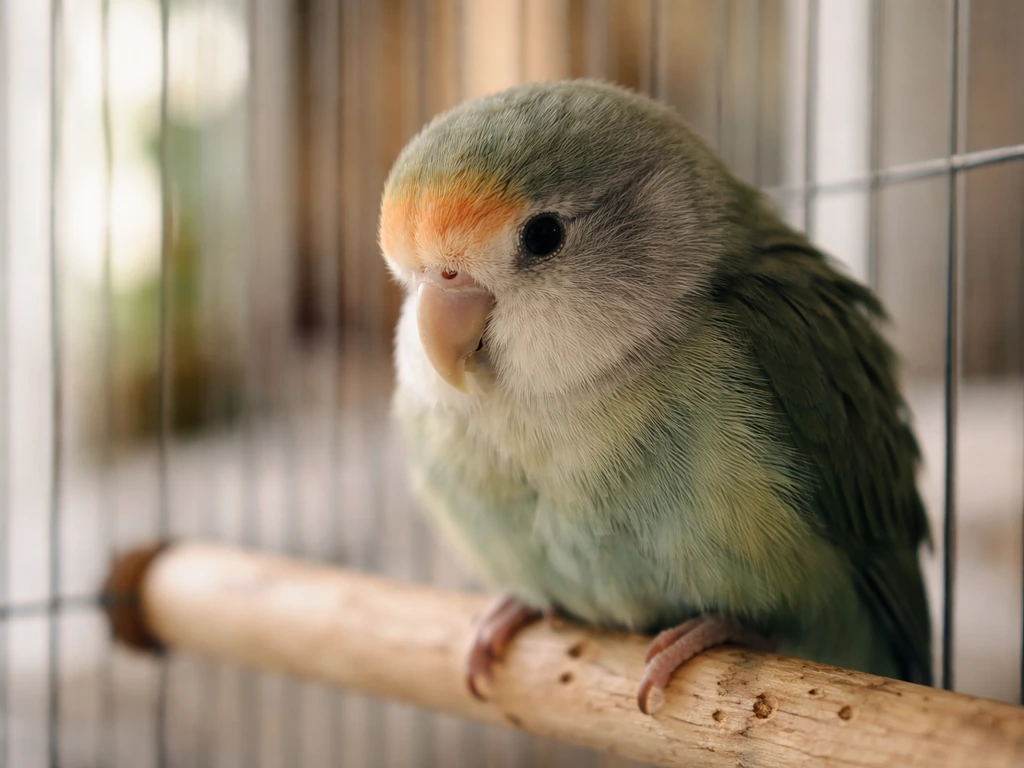
Most of the time, a bird hanging upside down is doing exactly what birds do: exploring, playing, stretching, or getting comfortable. It is a completely normal behavior for many species, especially parrots, budgies, and cockatiels. That said, upside-down posture can occasionally signal a balance problem, weakness, or something more serious, so it is worth spending two minutes watching your bird closely before you decide whether to relax or act.
Why Does My Bird Hang Upside Down? Causes and What to Do
Marcus Chen
30 Apr 2026
Normal reasons birds hang upside down
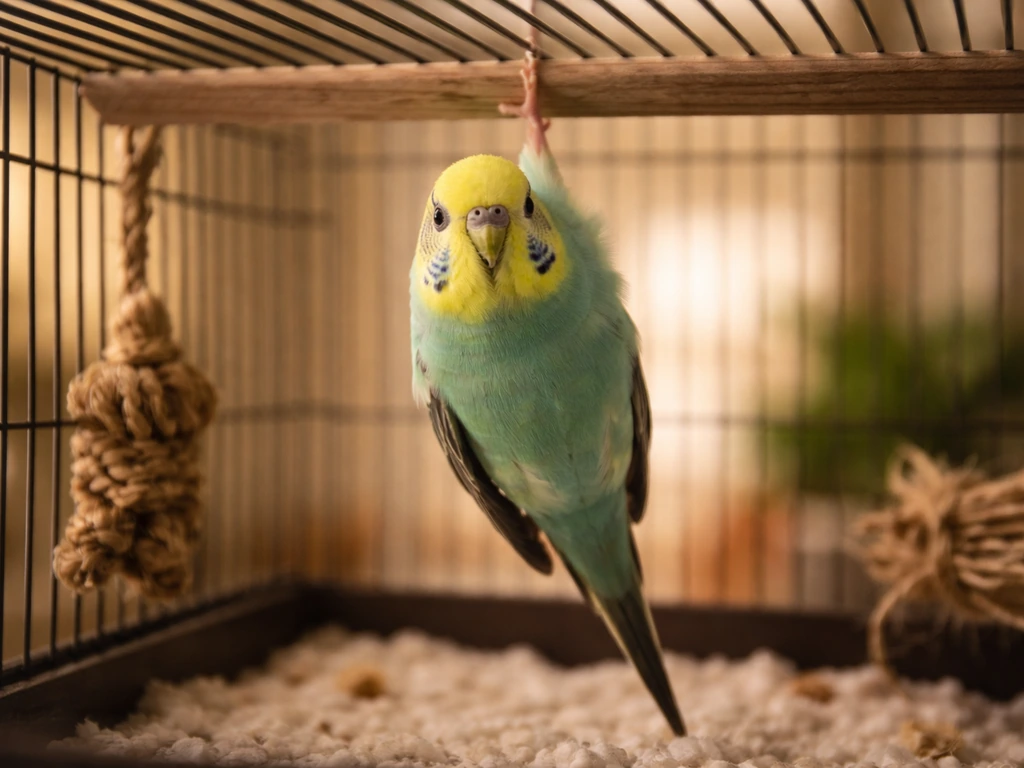
The vast majority of birds that hang upside down are just being birds. Here are the most common benign reasons it happens.
They are playing and exploring
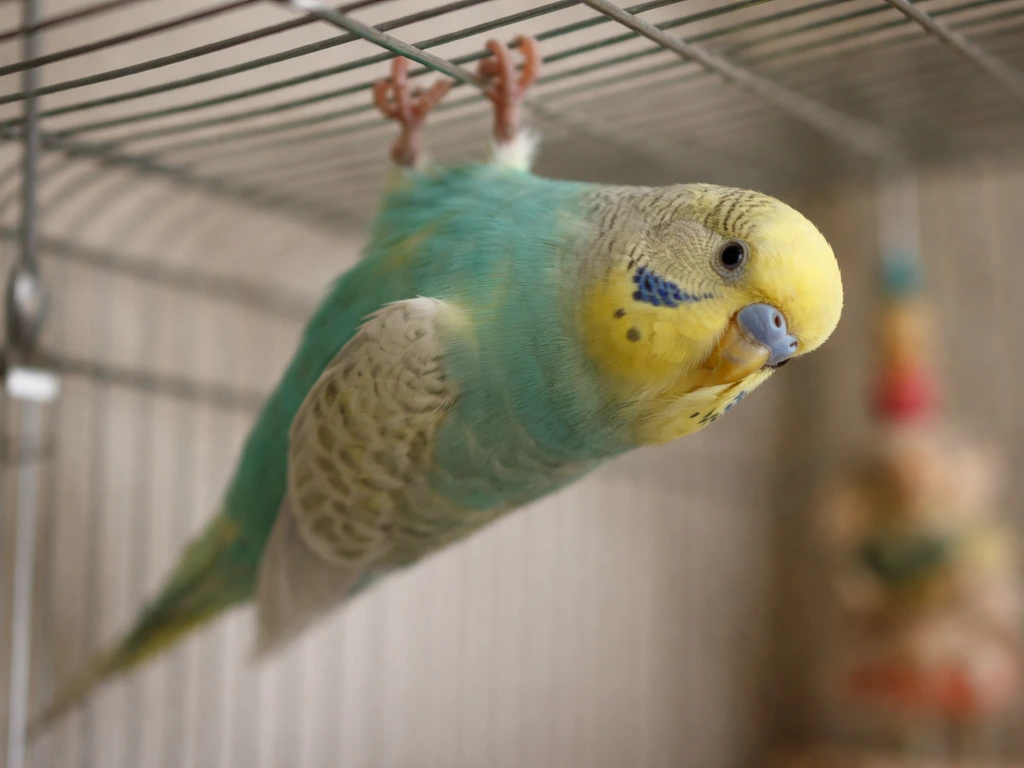
Parrots and budgies are naturally curious climbers. Hanging upside down from cage bars, perches, or hanging toys is a typical part of their daily activity. If your bird is chattering, making contact calls, moving around freely, and flipping back upright without any struggle, this is playful behavior and nothing to worry about.
They are stretching
Budgies in particular are well known for wing and leg stretching routines. Sometimes the stretch puts them in a sideways or briefly inverted position. You will usually see the wings flare out slightly and the bird return to a normal posture within seconds. This is a relaxed, healthy behavior.
It is their version of a comfortable resting spot
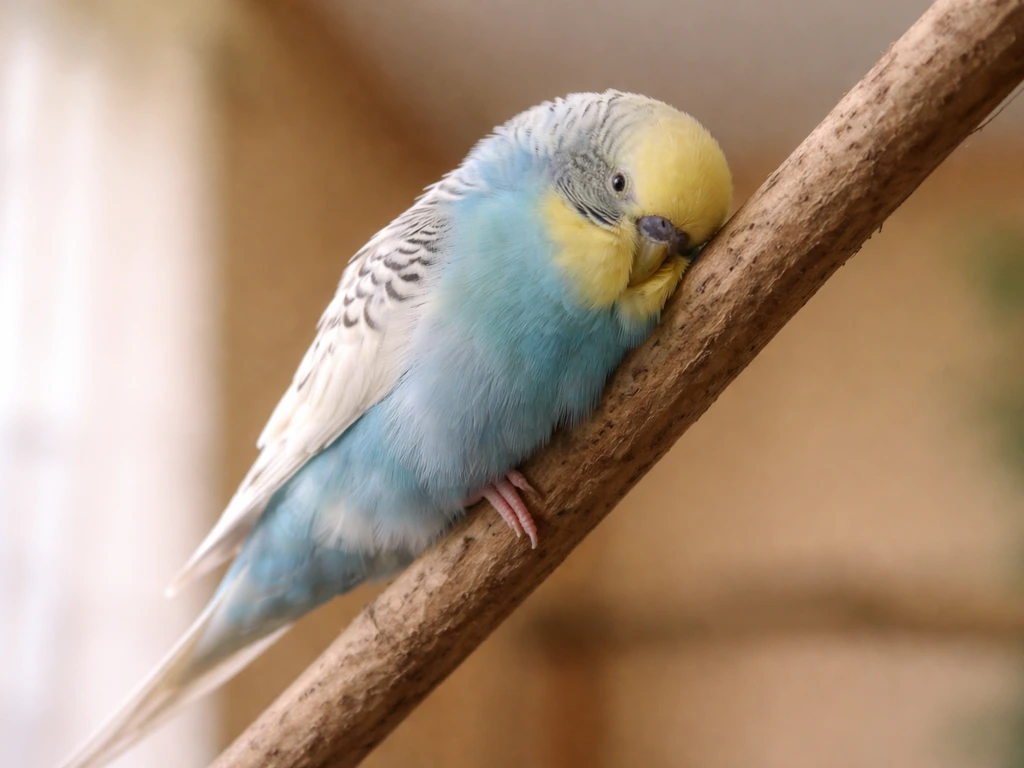
Some birds genuinely prefer hanging or gripping at an angle when they rest or even sleep. Budgies have been observed sleeping in unusual positions, including inverted or semi-inverted postures, especially if they have a favorite corner of the cage or a particular bar they like. A bird in this situation will look relaxed, with smooth or lightly fluffed feathers, and will wake and respond normally when you approach.
It is species-typical behavior
Hanging upside down is described in parrot behavior literature as a natural part of the behavioral repertoire for many species. Lories, conures, lorikeets, and hanging parrots (the clue is in the name) hang inverted as a matter of habit. If you have one of these species, upside-down behavior is simply normal.
When upside-down hanging becomes a warning sign

The posture itself is rarely the problem. What you are watching for is what goes along with it. Any of the following alongside upside-down hanging should put you on alert. If your bird is leaning to one side, that can point to a different set of balance or neurological concerns than upside-down hanging why is my bird leaning to one side.
- Tail bobbing with each breath: this is one of the clearest signs of respiratory distress in birds. If the tail is pumping in rhythm with breathing, treat it as urgent.
- Open-mouth breathing: a bird breathing with its beak open while at rest (not after vigorous activity) is working hard to get air and needs attention today.
- Noisy breathing: wheezing, clicking, or any audible effort on inhale or exhale is a red flag.
- Inability to right itself: if your bird is hanging upside down and struggling to get back upright, or keeps slipping and cannot grip properly, that is not play.
- Weakness or limpness: a bird that appears to have little grip strength or is limp while hanging may be very unwell.
- Fluffed feathers combined with inactivity: a fluffed-up bird that is not eating, not vocalizing, and not moving much is a classic sign of illness, not relaxation.
- Discharge from eyes or nostrils: any wetness, crustiness, or swelling around the face alongside postural changes is worth a vet call.
- Sitting on the cage floor: birds instinctively stay elevated when healthy. A bird on the floor is often a bird that is already quite sick.
- Loss of coordination or falling: if the bird is losing grip, falling off perches, or has a wide-legged unsteady stance, that points toward a neurological or balance problem.
Balance-related issues, where a bird cannot coordinate movement or keep its grip, can be signs of ataxia, which is an inability to control movement properly. This is something an avian vet needs to evaluate promptly. If your bird is also falling off its perch or seems unable to stand steadily, those behaviors are closely connected and worth investigating together. If you notice that your bird is losing his balance, treat it as a possible warning sign rather than normal upside-down hanging.
Quick check right now: environment, cage, and context
Before deciding what to do, spend five minutes going through this checklist. The answers will tell you a lot. PetMD’s overview of psittacine beak and feather disease describes clinical signs such as changes in feather growth or appearance and premature molting.
- Look at what the bird is hanging from. Is it a toy, a bar, or is a foot or leg possibly caught? Entrapment in toys, cage bars, or leg bands can look like hanging but is actually a trapped bird in distress. Check carefully.
- Watch the breathing. Count the breaths for 15 seconds. Is the tail moving with each breath? Is the beak open? Is there any noise?
- Check the bird's eyes. Are they open, bright, and responsive? Or are they partially closed, dull, or showing discharge?
- Look at the nostrils. Any wetness, crust, or asymmetry?
- Check the feathers. Smooth and sleek usually means calm. Puffed up and held tight to the body while inactive can mean the bird is trying to conserve heat because it is unwell.
- Watch what happens when you approach or speak. A healthy bird will react, look at you, chirp, or move. A bird that does not respond normally even when you are right there is a concern.
- Has anything changed recently? New cage location, new toys, new food, a loud event, a new pet, or a temperature drop can all trigger stress-related posture changes.
- Check the food and water. Has the bird been eating and drinking? Empty dishes plus unusual posture equals a vet call.
Stress vs discomfort vs illness: how to read what you are seeing
These three states look different if you know what to watch for. A stressed bird is alert and reactive but may be screaming more than usual, feather-flicking, pacing, or showing exaggerated or repetitive behaviors. It will still eat, drink, and respond to you. A bird in physical discomfort may be unusually quiet, may be protecting a specific body part, or may be shifting weight repeatedly. It is less engaged but not collapsed. A sick bird often goes quiet, stops vocalizing normally, becomes less active, fluffs its feathers, and stops eating. Birds are wired to hide illness, so by the time you clearly notice these signs, things may already be further along than they appear.
One useful rule of thumb: do not confuse sleep with lethargy. A bird that is sleeping will wake up and act normally when disturbed. A lethargic bird will stay dull and unresponsive even when you interact with it. Appetite changes are another clue that often gets dismissed, but any meaningful reduction in eating or drinking is worth a vet visit regardless of whether it seems stress-related or not.
| What you observe | Most likely explanation | Urgency |
|---|---|---|
| Hanging upside down, chattering, moves freely, eats normally | Normal play or exploration | None, just enjoy watching |
| Hangs inverted to rest or sleep, responds when disturbed | Normal resting posture preference | None |
| Hanging, fluffed feathers, quiet, not eating | Possible illness | Call vet today |
| Hanging, tail bobbing with each breath, open-mouth breathing | Respiratory distress | Emergency, act immediately |
| Cannot right itself, slipping, weak grip | Weakness, injury, or neurological issue | Emergency, act immediately |
| Foot or leg appears caught in toy or bar | Physical entrapment | Address immediately, minimize stress |
| Upside down, decreased vocalization, appetite change | Illness or stress, unclear which | Call vet for guidance today |
What you can do right now at home
If your bird looks healthy based on the checklist above, there is usually nothing to do except make sure the environment is supporting normal behavior. Here are practical adjustments that help.
- Check for entrapment first. Before doing anything else, confirm no foot, leg, or toe is caught. If something is caught, stay calm and work slowly. Struggling against a trapped limb is dangerous for the bird, so minimize any extra stress while you free it.
- Review cage setup. Make sure perches are stable, appropriately sized for the bird's feet, and placed so the bird can grip and move comfortably. Perches that are too wide or too smooth make it harder for birds to maintain their grip.
- Remove anything the bird could get caught in. Toys with open rings, loose threads, or small loops are entrapment risks. Swap them out for safer options.
- Reduce sudden stressors. If the cage is near a drafty window, loud TV, or a spot with heavy foot traffic, move it somewhere quieter and more stable in temperature.
- Keep the environment warm. If you suspect your bird is unwell, a slightly warmer ambient temperature (around 85 to 90 degrees Fahrenheit for a sick bird) can help while you arrange vet contact. Avoid direct heat sources.
- Minimize handling. If the bird seems off, resist the urge to pick it up repeatedly for inspection. Excessive handling adds stress on top of whatever else is going on.
- Observe from a short distance for 10 to 15 minutes. Quiet observation gives you much more accurate information than prodding the bird repeatedly.
When to call an avian vet and what to say
Call an avian vet the same day if your bird has any of these: open-mouth breathing at rest, tail bobbing with each breath, noisy or labored breathing, inability to right itself or maintain a grip, visible weakness, discharge from eyes or nostrils, sitting on the cage floor, a suspected entrapment injury, or sudden changes in eating and vocalizing alongside the posture change. PetPlace notes that dyspnea signs can include whole-body effort and tail bobbing, where the tail moves up and down with each breath tail bobbing with each breath. If the bird shows blue or gray discoloration around the beak or face, is collapsed, is having seizures, or has been exposed to fumes, smoke, or a toxin, treat that as a genuine emergency and get to an avian emergency clinic immediately without waiting.
When you call, be ready to describe these things clearly: the species and approximate age of your bird, exactly what the posture looks like and how long it has been happening, whether the bird is eating and drinking, whether you see tail bobbing or open-mouth breathing, whether anything changed recently in the environment or diet, and whether there is any discharge, swelling, or visible injury. That information helps the vet triage over the phone and tell you whether to come in urgently or monitor and book an appointment.
If you do not already have an avian vet, now is a good time to find one. Not all general veterinary practices see birds, and avian medicine is a specialty. Keep the contact details somewhere easy to find, ideally alongside a small emergency kit with a carrier and a contact for an after-hours avian emergency clinic in your area. Birds hide illness well and can decline quickly, so having a plan before you need it matters.
FAQ
How long is it normal for my bird to hang upside down?
Play or stretching behavior often lasts seconds to a short session, and the bird usually flips back upright smoothly. If the inverted posture persists for a long stretch without normal movement, gripping, and responsiveness, it is safer to treat it as a possible balance or weakness issue and contact an avian vet.
What should I watch for to tell playful upside down hanging from balance problems?
Check whether your bird can coordinate, maintain a firm grip, and right itself without hesitation. Warning signs include stumbling, leaning strongly, struggling to regain an upright position, increased falling, tail bobbing, or open-mouth breathing. Those suggest more than simple exploration.
Does upside-down sleeping mean my bird is sick?
It can be normal if the bird looks relaxed (smooth or lightly fluffed feathers), is breathing comfortably, and wakes and responds normally when you approach. If your bird stays inverted and dull, stops eating, or cannot reposition itself when disturbed, that shifts the concern toward illness.
Can one-off upside-down hanging be normal even if my bird usually does not do it?
Yes, a brief new behavior can happen with stretching, new toys, or a favorite perch corner. The key is the overall pattern, if it is brief, the bird eats and calls normally, and it returns to normal posture quickly, monitoring is reasonable. If it becomes frequent or comes with appetite change or respiratory signs, call a vet.
My bird hangs upside down but seems to be holding on differently. Is that a concern?
Yes, difficulty gripping or a changing hold (slipping, repeatedly re-gripping, or losing balance when the posture changes) can indicate coordination or weakness rather than playful inversion. If gripping looks unstable, contact an avian vet promptly.
What if my bird hangs upside down only after eating or while chewing?
If the behavior is immediately followed by tail bobbing, open-mouth breathing, coughing, gagging, or regurgitation, treat it as a potential swallowing or breathing problem, and contact an avian vet the same day. If there are no breathing or swallowing signs and the bird acts normally afterward, it may still be exploration, but keep an eye on frequency.
Could toxins or fumes cause upside-down behavior, and how quickly should I act?
Yes, exposure to smoke, fumes, or toxins can cause weakness, abnormal coordination, and rapid decline. If you suspect any exposure and your bird looks unwell or collapses, go to an avian emergency clinic immediately rather than waiting for symptoms to worsen.
Does feather condition tell me whether this is stress, discomfort, or illness?
Often, yes. A stressed bird may still look alert and active but may show repetitive behaviors like pacing. Physical discomfort can look like reduced engagement or protecting a specific area. A sick bird commonly fluffs feathers and becomes quiet and inactive. If feather changes come with reduced eating or abnormal breathing, prioritize a vet call.
How can I distinguish sleep from lethargy more reliably?
Try a gentle disturbance and observe the response. A sleeping bird should wake and act normally, while a lethargic bird tends to stay dull and unresponsive. Also compare eating and drinking before and after, meaningful appetite reduction is a red flag in either case.
What information should I write down before calling the vet?
Note the species and approximate age, how the upside-down posture looks (feet on bars, from toys, partial inversion), how long it has been happening, whether the bird is eating and drinking, and whether you see tail bobbing or open-mouth breathing. Also record any recent diet or environment changes, plus any discharge, swelling, or suspected injury.
If my bird looks mostly normal but hangs upside down a lot, should I still go to the vet?
If the bird remains bright, eats, drinks, and rights itself without trouble, monitoring may be appropriate. Still, frequent inversion that is unusual for your specific bird, especially if it is paired with reduced activity or repeated imbalance, is worth discussing with an avian vet so they can rule out subtle balance or neurological problems.
Are there cage setup changes I can make to make upside-down hanging safer?
If your bird is doing normal playful inversion, ensure there are no hazards where it could get its feet or toes trapped, avoid unstable perches, and check that hanging toys are securely attached. Use a quick safety scan for entrapment risks, then monitor grip and balance, if safety adjustments do not improve stability, seek veterinary advice.
Next Article
Why Is My Bird Making Whimpering Noises? What to Check
Find reasons for whimpering bird noises, quick home checks, and red flags for urgent vet care plus tracking tips.