
A bird on the bottom of the cage can mean something as simple as a nap in a preferred spot, or it can be one of the earliest warning signs that something is medically wrong. The key is knowing what else to look for. If your bird is alert, moving around, and acting normally otherwise, there's a good chance this isn't urgent.
Why Is My Bird on the Bottom of the Cage? Causes & Fixes

Marcus Chen
21 Jun 2026
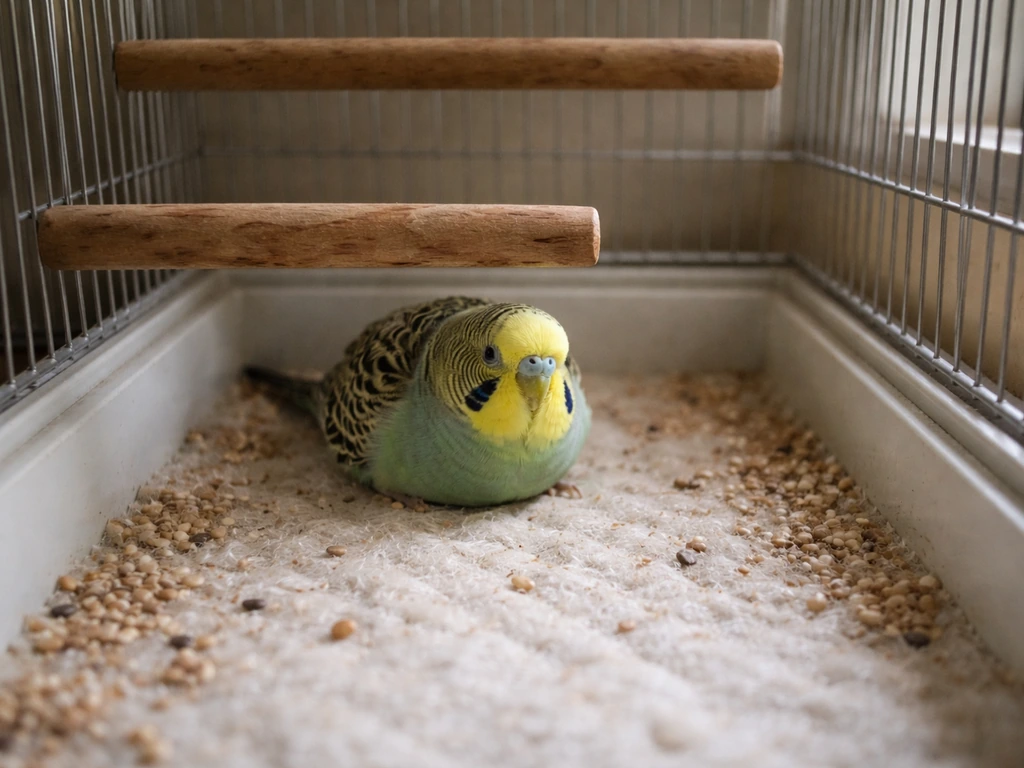
Parrot rescue educational material also lists “lying on the bottom of the cage” as an illness or injury sign to take seriously, especially when paired with difficulty breathing and other red flags acting normally otherwise. If your bird is fluffed up, eyes closed, breathing hard, or not responding to you, treat it as an emergency and contact an avian vet today.
What it actually means when your bird is on the bottom of the cage
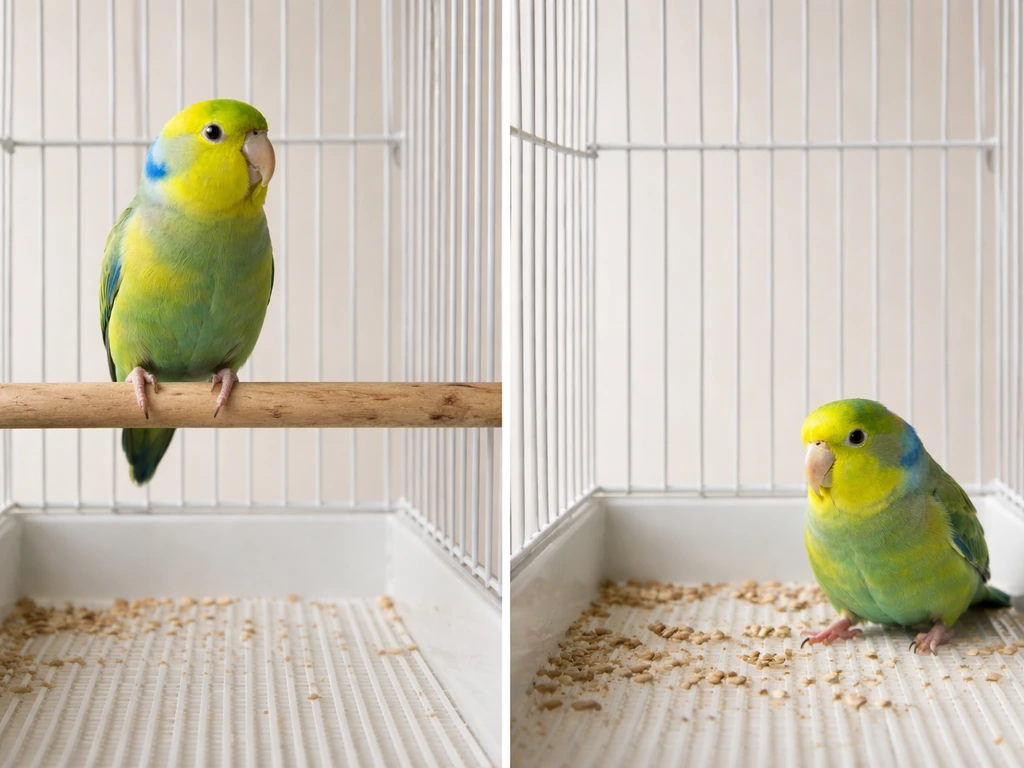
Birds don't naturally belong on the floor of a cage. In the wild, staying low makes a bird vulnerable to predators, so most healthy pet birds prefer to perch as high as possible. When a bird chooses the bottom of the cage, it's telling you something, but the range of reasons stretches from totally harmless to genuinely life-threatening. That kind of behavior can be especially scary for a bird, so it's helpful to consider how a bird may feel in a cage and take action early how does a bird feel in a cage.
Context matters enormously here. A young bird still getting its footing, a bird that just woke up from a deep sleep, or a bird that simply found a dropped piece of food is very different from a bird that has been sitting hunched on the cage floor for hours and isn't responding to your voice. If your bird is sleeping hanging on the cage, it can be a clue that something is off, and you should check for stress or health problems why does my bird sleep hanging on the cage. Before you panic or dismiss it, take a few minutes to do a proper look-over using the checklist below.
Non-serious reasons your bird might be on the cage floor
Most of the time, when an otherwise healthy bird spends some time at the bottom of the cage, it's one of these everyday explanations.
- Resting or sleeping: Some birds, especially smaller species, occasionally nap on the cage floor. If your bird is sleeping there but bounces back to its perch when you come over and is acting normally otherwise, this is usually fine. There's a related issue worth knowing about: some birds develop a habit of sleeping at the bottom of the cage consistently, which can signal a comfort or safety concern worth addressing.
- Foraging behavior: Birds that are searching for dropped seeds, pellets, or treats will naturally head to the floor. This is completely normal and actually a sign of a curious, engaged bird.
- Boredom or understimulation: A bird with nothing interesting in its environment may wander to the bottom out of sheer lack of anything better to do. This is more of a quality-of-life flag than a health emergency.
- Stress or a change in routine: New cage, new home, new person, rearranged furniture, a loud noise — any of these can cause a bird to retreat to lower ground. Stressed birds sometimes hide in corners or crouch near the floor.
- Temperature or drafts: If the cage is positioned near a vent, window, or air conditioner, a bird may drop to the bottom to escape a cold draft or, conversely, to get away from rising heat near the top of the cage.
- Foot soreness or perch discomfort: If perches are the wrong diameter, texture, or positioned in a way that puts constant pressure on the same part of the foot, your bird may prefer the flat cage bottom. Bumblefoot (pododermatitis) can also cause a bird to avoid perching.
- Social or dominance dynamics: In multi-bird households, a lower-ranking bird may be pushed off perches by a more dominant cage-mate and end up spending time on the floor.
- Female birds near laying time: Hens sometimes spend more time on the bottom of the cage before laying eggs. This alone isn't alarming, but it's worth watching closely because egg binding (a serious complication) can look similar at first.
Health red flags that can put a bird on the cage floor
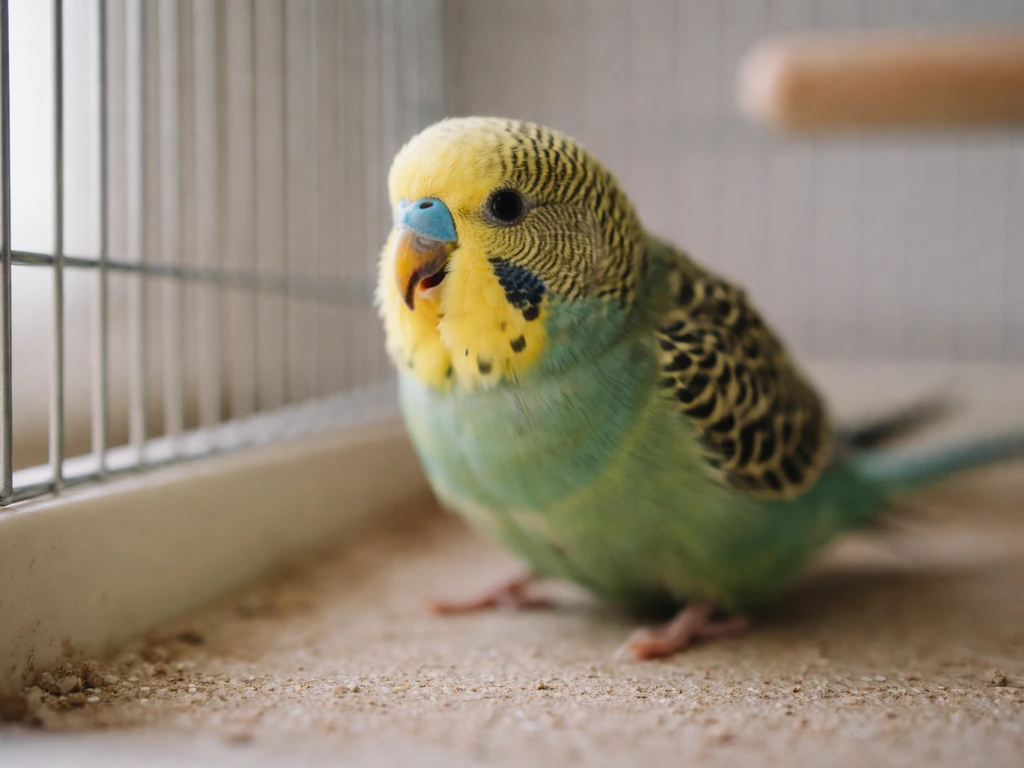
Birds are prey animals, which means they are wired to hide signs of illness for as long as possible. By the time a bird looks obviously sick, it has often been unwell for a while. Bottom-cage behavior combined with any of the following signs is a red flag that needs veterinary attention, not a wait-and-see approach. Petco notes that if a parakeet is puffed up on the cage floor for long periods, it should be checked by a vet for illness or other causes.
- Respiratory distress: Open-mouth breathing, tail bobbing with each breath, wheezing, clicking, or gasping are all serious signs. Birds breathe differently from mammals and any visible effort to breathe is abnormal.
- Lethargy and fluffed feathers: A bird that is puffed up, eyes half-closed, and unresponsive to stimulation is a classic presentation of a sick bird. Fluffing feathers is how birds conserve heat when they feel unwell.
- Weakness or inability to perch: If your bird is physically unable to grip a perch and keep itself upright, that's a neurological, metabolic, or injury-related concern that needs urgent assessment.
- Illness or infection: Bacterial, viral, and fungal infections can all cause rapid decline in birds. General signs include lethargy, appetite loss, weight loss, and changes in droppings.
- Gastrointestinal problems: Vomiting (as opposed to regurgitation, which can be a bonding behavior), diarrhea, undigested food in droppings, or droppings that are extremely watery can all indicate GI disease or infections like Proventricular Dilatation Disease (PDD).
- Egg binding: A female bird sitting on the cage floor with a visibly swollen abdomen, straining to defecate, passing bloody droppings, or showing tail bobbing may be egg-bound. This is a life-threatening emergency.
- Pain or injury: Foot injuries, internal pain, or trauma from a fall can all cause a bird to stay low. Check for any visible wounds, swelling, or asymmetry in how it holds its wings or feet.
- Neurological issues: Seizures, loss of balance, tremors, or head tilting followed by collapsing to the floor are neurological red flags that require immediate veterinary care.
- Dehydration or overheating: A bird that has been without clean water, or that is in a hot environment, may be weak and unable to maintain its usual position on a perch.
- Hypothermia: Conversely, a bird that is too cold may crouch at the bottom of the cage, shivering, and unable to maintain body temperature.
How to do a quick at-home assessment right now
Before you do anything else, observe your bird from a short distance without disturbing it. Birds often mask symptoms when they sense attention on them, so a quiet observation from across the room gives you the most honest picture. Here's what to check:
- Alertness and responsiveness: Does your bird notice you and react, or does it seem unaware of your presence? A healthy bird should track your movement and respond to your voice. A bird that doesn't react is a concern.
- Posture: Is the bird sitting upright with feathers flat, or is it hunched over with feathers puffed out? Fluffing + hunching is the single most consistent visual sign of illness in pet birds.
- Breathing: Watch the chest and tail area. Are you seeing any tail bobbing with each breath? Any open-mouth breathing or audible sounds? Breathing should be silent and invisible.
- Movement and balance: Can the bird move around the cage floor, and does it seem coordinated? Is it favoring one foot, dragging a wing, or tilting to one side?
- Appetite and water intake: Has your bird eaten or drunk anything recently? Check food and water levels. A bird that hasn't touched food or water is a significant concern.
- Droppings: Look at what's on the cage floor. Normal droppings have three parts: a dark green or brown solid portion, white or cream-colored urates, and a small amount of clear urine. Watery droppings, bright red or black coloring, undigested seeds, or a complete absence of droppings are all warning signs.
- Eyes and nares: Are the eyes clear and bright, or dull, partially closed, or swollen? Are the nostrils (nares) clean, or is there discharge or crustiness?
- Crop: If your species has a visible crop, check that it appears to be emptying normally and isn't distended or doughy to the touch.
Once you've observed from a distance, if your bird seems alert and responsive, you can gently approach and do a closer visual check. Do not restrain or handle the bird beyond what's necessary at this stage, especially if you suspect respiratory distress. Handling a bird in respiratory crisis can make things worse very quickly.
What you can do right now, today
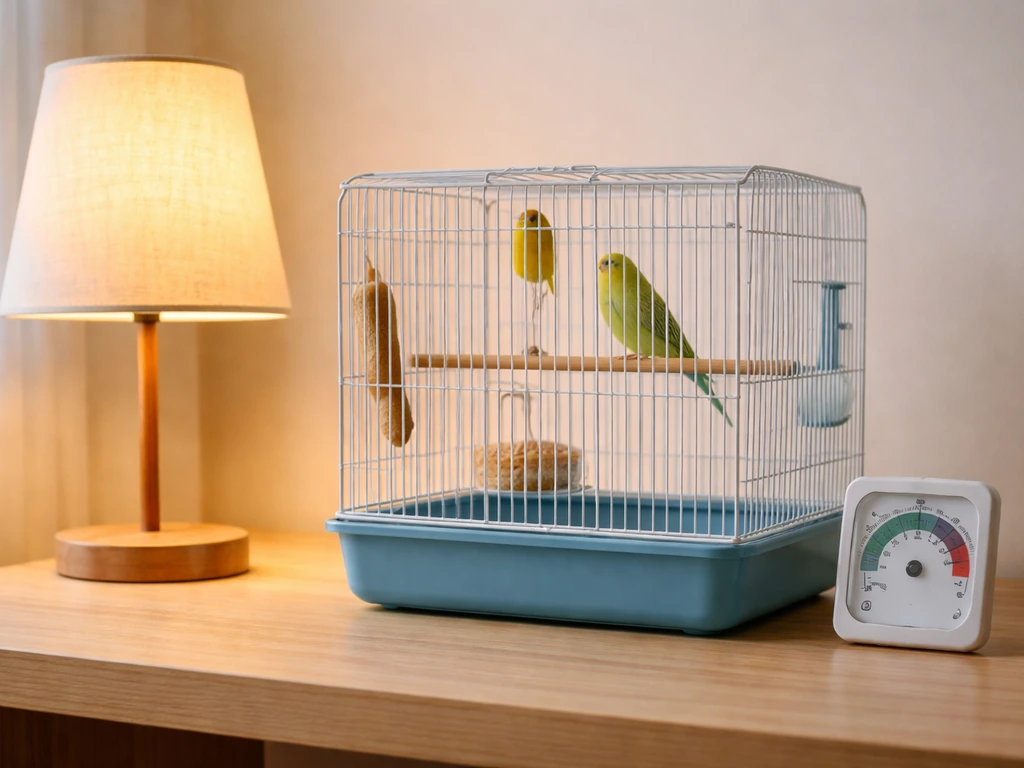
If your bird doesn't appear to be in immediate crisis but something feels off, here are the steps to take while you monitor and decide on next steps.
Provide gentle warmth
Warmth is one of the most supportive things you can do for a bird that seems unwell. A sick bird loses its ability to regulate body temperature efficiently. Place a heat source (a heating pad set to low, covered with a towel, or a ceramic heat emitter) on one side of the cage or carrier, not all the way around, so the bird can move away from it if it gets too warm. A target temperature of around 85°F (29.4°C) is often cited in avian first-aid guidance. Do not use hot lamps positioned too close, and do not wrap the bird in blankets or towels unless instructed by a vet.
Check and adjust the environment
Look at where the cage is positioned. Is there a vent, fan, window draft, or air conditioner nearby? Move the cage to a draft-free, stable-temperature area. Remove any new items you recently added to the cage that could be causing stress. If you have multiple birds and you suspect the bird on the floor is being bullied or pushed off perches, consider separating them temporarily.
Reduce stress and minimize handling
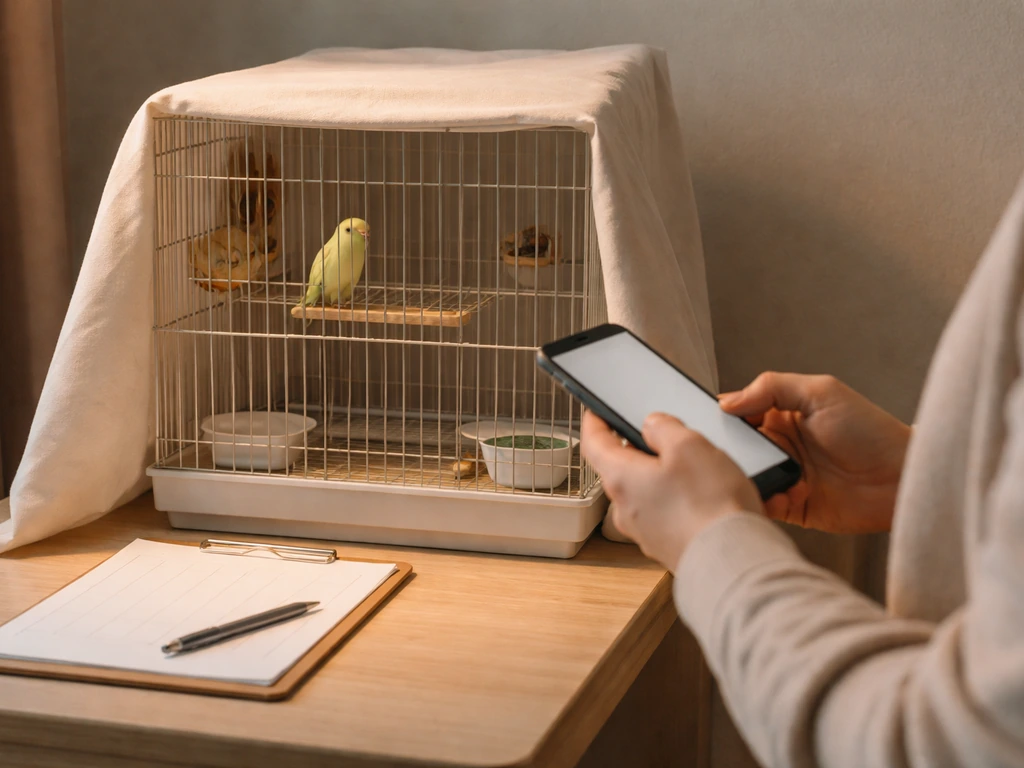
Keep the environment calm. Lower voices, reduce foot traffic near the cage, dim bright lights, and cover part of the cage to give your bird a sense of shelter. Avoid unnecessary handling. If your bird is sick, stress from being picked up can worsen its condition rapidly.
Set up a monitoring plan
Check on your bird every 30 to 60 minutes. Track whether it's moving more or less, whether it's eating or drinking, and whether droppings look normal. If things are staying the same or getting worse after a couple of hours, that's your cue to call a vet.
What not to do
- Do not force food or water into the bird's mouth. If the bird can't swallow properly, this can cause aspiration.
- Do not give any medication, supplements, or human remedies unless directed by an avian vet.
- Do not place the bird in a completely sealed, airtight container — it needs airflow.
- Do not assume it will just get better on its own if the bird has been on the floor for several hours and shows any of the red-flag signs above.
When to call an avian vet urgently
Some situations cannot wait. If you see any of the following, stop reading and contact an avian vet or emergency animal clinic now.
- Open-mouth breathing, tail bobbing with each breath, wheezing, or gasping — these are signs of respiratory distress, which can deteriorate in minutes
- Fluffed feathers combined with lethargy and no response to your voice or presence
- Inability to perch, loss of balance, tremors, or seizure-like movements
- Visible bleeding, trauma, or a broken bone
- A female bird on the cage floor with a distended abdomen, straining, or bloody droppings (possible egg binding)
- Vomiting (not regurgitation), persistent diarrhea, or complete absence of droppings for more than 24 hours
- Complete refusal to eat or drink for more than 24 hours
- Rapid decline in condition over a few hours — if your bird looked okay this morning and now looks much worse, don't wait
- Any visible swelling, discharge from the eyes or nares, or a crop that has not emptied
When you transport a sick bird, keep it warm, minimize handling, keep the environment quiet and dim, and make sure there's ventilation. Do not put pressure on the chest, birds breathe using their entire body wall and chest compression can make respiratory distress fatal very quickly.
How to set up the cage so your bird never needs to hide on the floor
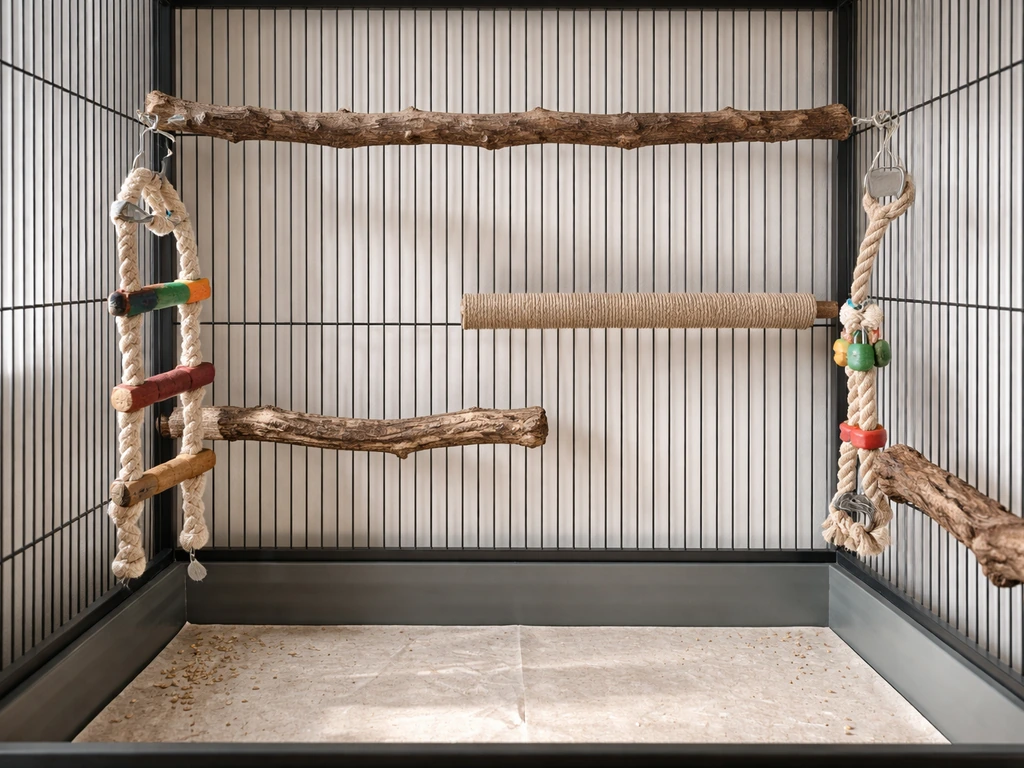
Prevention comes down to making sure your bird has a cage environment that meets all its physical and psychological needs. A bird that feels safe, comfortable, and stimulated will have no reason to retreat to the bottom of the cage.
Perches: variety and placement matter
Offer at least two or three perches of different diameters and textures. Rope perches, natural wood branches, and textured concrete perches each put pressure on different parts of the foot, reducing the risk of soreness and bumblefoot. Position them at different heights but make sure the highest perch doesn't put the bird's head against the cage top. Never use sandpaper-covered perch covers, these abrade the feet without actually filing nails.
Temperature and humidity
Keep the room temperature stable, ideally between 65°F and 80°F (18°C to 27°C) for most common pet bird species. Avoid positioning the cage near windows with direct sun, heating vents, air conditioner outputs, or exterior walls that get cold in winter. Humidity between 40% and 60% is comfortable for most species and helps with respiratory health.
Enrichment and mental stimulation
Boredom can drive birds to do unusual things, including spending time wandering the cage floor. Rotate toys every week or two so novelty stays high. Foraging toys that require the bird to work for its food are particularly valuable because they engage natural instincts and keep birds occupied. A mentally stimulated bird is less likely to develop stress behaviors or show signs of depression.
Cage placement and a sense of security
Birds feel safer when at least one or two sides of the cage are against a wall rather than exposed on all sides. Placing the cage at approximately eye level (or slightly above) rather than on the floor lets the bird feel elevated and in control of its environment. Covering part of the cage at night with a breathable cloth helps birds feel sheltered and sleep more soundly. A bird that feels secure in its environment is much less likely to retreat downward out of anxiety.
Managing multi-bird dynamics
If you have more than one bird sharing a cage, make sure there are enough perches, food stations, and water sources so subordinate birds aren't competing constantly. A bird being pushed to the cage floor by a dominant cage-mate needs either a larger cage with better resource distribution or its own separate space.
Regular health monitoring as a habit
The best way to catch a problem early is to know what normal looks like for your specific bird. Weigh your bird weekly on a small kitchen scale (a sudden drop of even a few grams in a small bird is significant), check droppings daily, and do a quick visual assessment each morning. Annual checkups with an avian vet are the single most effective prevention tool available, many problems caught early are fully treatable, while the same problems caught late are not.
FAQ
How long is too long for my bird to stay on the bottom of the cage before I call a vet?
If the bird is perching normally in between, only occasionally goes to the bottom, and still eats, drinks, and responds, it is often not urgent. However, if it stays on the floor more than a few hours, is repeatedly fluffed, or is not stepping up when offered your finger or a perch, you should treat it as potentially sick and contact an avian vet.
Could it be normal floor foraging if my bird looks interested in food?
Yes, a dropped or stale food item can trigger brief floor foraging, but a food-related cause usually looks like normal alert behavior (moving, exploring, and then returning upward). If the bird is hunched and breathing heavily or not engaging with food, assume illness rather than digestion or appetite and get avian guidance.
What respiratory signs should make me act right away when my bird is on the cage floor?
Check for respiratory distress first. Signs include open-mouth breathing, tail bobbing, clicking or wheezing, and fast or labored breathing. If any of these are present, keep handling to a minimum, warm the bird on one side, and call an avian vet immediately, because respiratory issues can worsen quickly.
If my bird is also weak or slipping, should I try to pick it up and place it on a perch?
If your bird seems weak, slippery, or unable to hold onto perches, avoid “testing” it with repeated handling. Instead, offer a low, secure perch or place familiar food and water nearby, and focus on warmth and calm while you contact an avian vet. Fragile conditions like injuries or severe illness are easy to worsen with extra handling.
What is the safest way to do a visual check when my bird is on the floor?
You can safely do a light, non-constraint visual check, but do not force it to stand. Look at posture, breathing effort, eye openness, and droppings from a short distance, then only move the bird if necessary for transport or to remove immediate hazards. If you suspect breathing trouble, skip manual positioning.
Could bullying or competition in a shared cage explain why one bird is on the bottom?
Multiple birds can make floor-sitting look like illness when it is actually social displacement. Look for a pattern, for example one bird consistently on the bottom while another guards perches, food, or water. Temporarily separate, add extra feeding and watering points, and increase perch availability while you monitor for true medical signs.
Is it safe to use a heating pad or heat lamp for a bird sitting on the bottom?
No. Birds typically need warmth when they are unwell, but overheating can also be dangerous. Use a low heat source on one side only, watch the bird’s behavior (it should be able to move away), and avoid hot lamps positioned close to the body. If the bird becomes more distressed or extremely lethargic, stop and seek veterinary advice.
Can cage placement near a draft or AC cause this behavior, and how quickly should I see improvement?
Yes, drafts can contribute quickly, especially for birds that already run warmer than the room. Move the cage away from vents, fans, air conditioners, and cold exterior walls, then re-check within 30 to 60 minutes. If breathing looks worse after moving to a warmer, draft-free spot, contact a vet.
Could household fumes or cleaning products cause a bird to sit on the bottom of the cage?
Sudden weather or temperature changes, new cleaning products, strong fragrances, aerosols, and smoke can irritate airways and stress birds. Remove scented items, stop using sprays, and ensure good ventilation without direct drafts. If the bird’s breathing is labored, treat it as urgent rather than waiting for symptoms to pass.
How can I tell if floor-sitting is pain or injury rather than simple stress?
Many birds show pain or illness by going low and changing their posture, including hunched sitting. If the bird is not perching, is reluctant to move, has an abnormal gait, or droppings look abnormal, that can point to pain, injury, or systemic illness. Because these are harder to diagnose at home, err on the side of avian vet contact.
When is floor-sitting most likely sleep, and how do I differentiate it from being unwell?
Some birds sleep low, especially after a deep rest or if a favorite corner is available, but true sleep usually looks relaxed (eyes may be closed briefly, breathing is quiet, and posture is normal) and the bird can be roused. If it is difficult to get attention, seems unresponsive, or is breathing hard, assume illness and seek help.
What monitoring should I do at home, and what trend means I should escalate to a vet?
Start with a quick baseline. Weighing weekly is ideal, but during concern you can also note whether the bird is eating and drinking, how droppings look, and whether the bird becomes more active after warmth and a calm environment. A clear trend toward decline over a couple of hours is a reason to call.