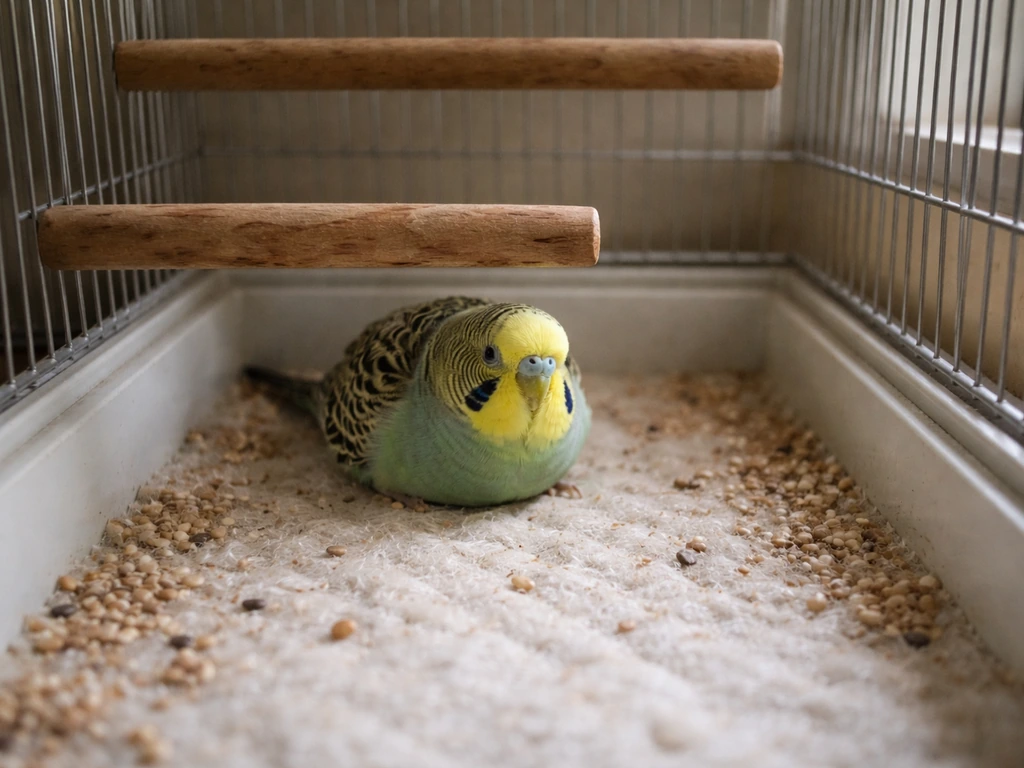
A bird sitting in the corner of his cage is doing one of two things: finding a spot that feels safe and comfortable, or hiding because something is wrong. The tricky part is that both look nearly identical at first glance. Your job right now is to watch him for a few minutes and check a handful of quick clues that will tell you which situation you're actually dealing with.
Why Is My Bird in the Corner of His Cage? Causes and Steps

Marcus Chen
3 Jul 2026
Common reasons a bird ends up in the corner (and which ones are fine)
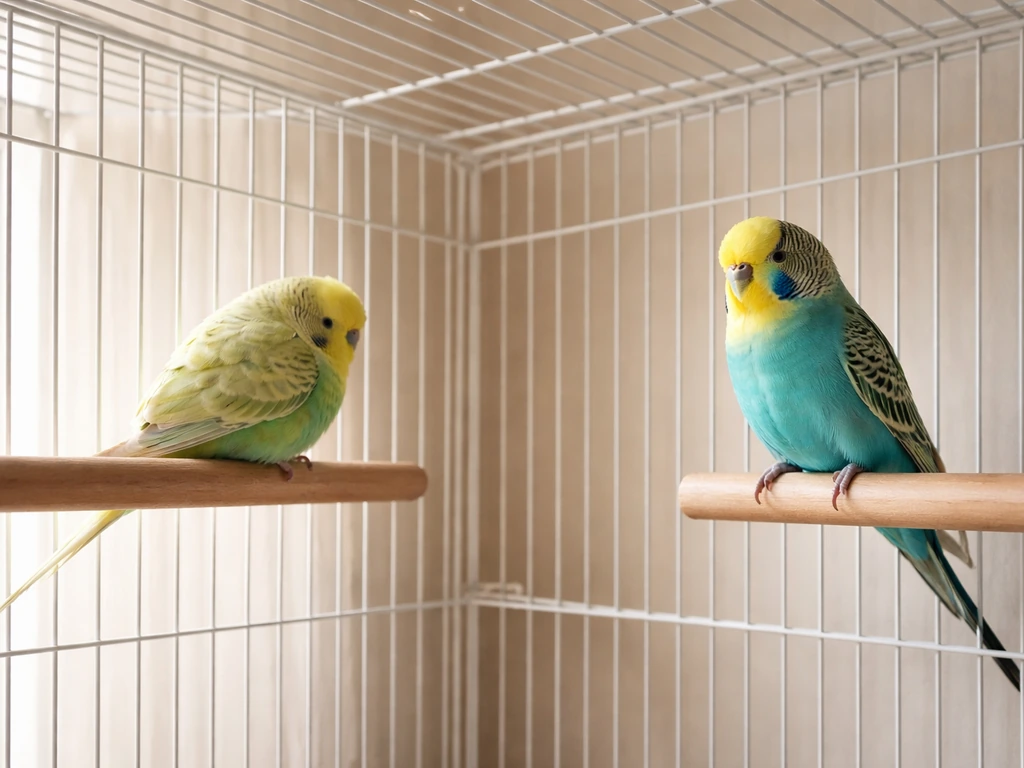
Corners offer something most of the cage doesn't: a wall on two sides. That feels secure to a prey animal. Many birds, especially budgies and cockatiels, choose corners for napping, winding down at dusk, or just watching the room from a less exposed spot. If your bird looks relaxed, has smooth feathers, and is making normal sounds (or quiet resting sounds), there's a good chance he simply likes that corner.
Here's a quick breakdown of the common reasons, sorted from least to most concerning:
| Reason | Typical Signs | Concern Level |
|---|---|---|
| Resting or napping | Eyes partly or fully closed, feathers lightly fluffed, upright posture | Normal |
| Observing the room | Alert eyes, head turning, normal feather position | Normal |
| Temperature seeking | Moving to a corner away from a vent or window | Low (fix the draft) |
| Sleep routine/light | Consistent timing at dusk or after lights dim | Normal |
| Mild stress or new environment | Quieter than usual, watching but responsive | Low to moderate |
| Fear (new pet, person, object) | Puffed feathers, wide eyes, leaning away | Moderate |
| Illness or pain | Fluffed and hunched, tail bobbing, not eating, unusual droppings | High — act today |
| Egg binding (female birds) | Straining, fluffed, sitting low, not eating | Urgent — call vet now |
Body language clues that tell you how serious it is
You don't need to handle your bird to read what's going on. Stand a few feet away and just watch him for two or three minutes. The body language will tell you a lot.
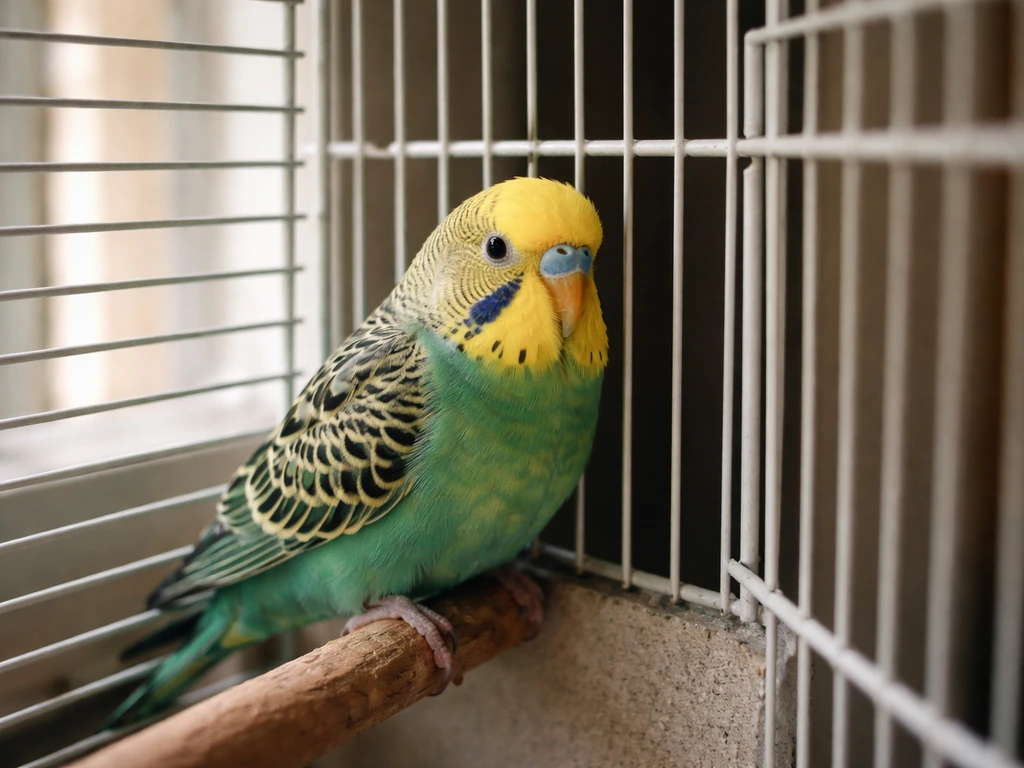
A healthy, comfortable bird in the corner looks relaxed. His feathers lie flat or are just very slightly puffed in a loose, soft way. He may have one foot tucked up, which is completely normal for resting. His eyes are bright, and if you make a small sound or movement, he tracks it. His breathing is invisible, you shouldn't see his body or tail moving with each breath.
A bird who is stressed or unwell looks different. The feathers are noticeably puffed or ruffled. He may be hunched over with his head tucked down rather than held up. His eyes may be partially closed even during the day. He's not reacting much to sounds or movement around him. These are the signs Lafeber, VCA, and other avian resources consistently list as illness indicators, and they should not be dismissed as the bird just being tired.
The single most urgent sign to look for is tail movement. If his tail bobs up and down with every breath, that's a respiratory warning sign. It means he's working hard to breathe. Add open-mouth breathing to that, and it becomes an emergency. Open-mouth breathing in a bird at rest is not normal under any circumstances.
- Feathers flat and posture upright = likely fine
- Lightly puffed, one foot up, eyes blinking slowly = resting normally
- Heavily fluffed, hunched, eyes half-closed during active daytime = concerning
- Tail bobbing with each breath = urgent warning sign
- Open-mouth breathing = treat as emergency
- Discharge from nostrils or eyes = see a vet
- Not reacting to movement or sound = very concerning
Stress, fear, and environment: the hidden corner triggers
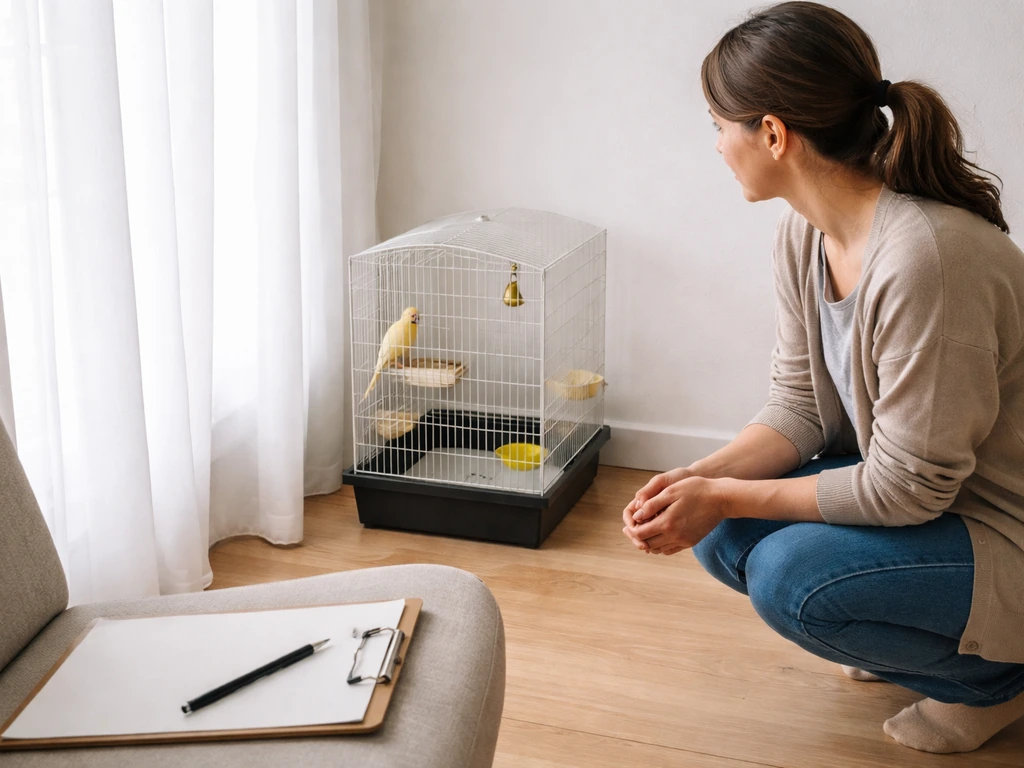
If the body language check above didn't raise red flags but your bird is still spending a lot of time in the corner, the environment is often the culprit. When a bird is constantly retreating to that sheltered spot, it can be a sign of how fearful or stressed it feels in a cage spending a lot of time in the corner. Birds are sensitive to changes that we barely notice.
Think about what changed in the last few days. Did you rearrange furniture, bring in a new pet, start working from home, or move the cage? Even a new toy hung in the cage can spook some birds. A mirror that reflects another bird image can trigger territorial or nesting behaviors that make a bird retreat. Loud, unpredictable noise, whether from a TV, children, or a dog barking, can push a bird to the most sheltered spot he can find.
Handling can also play into this. If a bird has been grabbed, chased, or handled roughly (even unintentionally), he may be associating the open parts of the cage with that experience and retreating to a corner where he feels less approachable. Back off handling for a day or two and let him settle.
Other pets are a big one. Even if your cat or dog can't reach the cage, their presence nearby is genuinely frightening for a bird. Birds are hardwired to recognize predator shapes and movements. If the cage is at floor level or near where the cat likes to sit and stare, the corner retreat is a stress response, not comfort.
Routine disruption also matters more than people expect. Birds thrive on consistent schedules for feeding, light cycles, and interaction. A suddenly irregular routine can cause low-level chronic stress that shows up as corner-sitting, reduced vocalization, or reduced appetite.
Health red flags: when corner-sitting means something is medically wrong
Sick birds hide their illness instinctively. In the wild, showing weakness attracts predators, so birds mask symptoms until they physically can't anymore. By the time a bird looks obviously unwell, he may already be significantly ill. This is why it's important to treat early, subtle signs seriously.
Respiratory problems

Respiratory illness is one of the most urgent possibilities. Signs include tail bobbing with each breath, open-mouth breathing, clicking or wheezing sounds, and labored breathing visible in the chest or sides. These signs, especially tail bobbing and open-mouth breathing, are consistently flagged as serious by avian veterinarians. The Merck Veterinary Manual advises that owners observe respiratory effort and signs like open-mouth breathing and tail bobbing, and recommends placing a bird with respiratory distress in a warm, oxygenated incubator before restraint blank" rel="noopener noreferrer">placing a bird showing respiratory distress in a warm, oxygenated incubator before restraint. If your question is specifically about your bird sitting at the bottom, the same body-language clues and red flags can help you figure out whether it is stress, a health issue, or something in the environment why is my bird on the bottom of the cage. Fumes from overheated nonstick (PTFE/Teflon) cookware are a known cause of sudden, life-threatening respiratory distress in birds. If your bird is near the kitchen and suddenly showing respiratory signs, move him to fresh air immediately and call an avian vet.
Digestive and GI illness
Changes in droppings are one of the most reliable early illness signals. Normal bird droppings have three parts: a dark solid (feces), white/cream urates, and a small amount of clear liquid urine. If the droppings look watery, unusually dark green, bloody, or unformed, that's a red flag. Vomiting or regurgitation (not the social regurgitation some birds do toward their owners) paired with lethargy and reduced appetite points toward a digestive problem that needs veterinary attention. If you notice vomiting or regurgitation along with lethargy and reduced appetite, Merck Veterinary Manual notes that symptom patterns like these can point to digestive-disorder problems such as GI candidiasis.
Pain and general illness
A bird sitting in the corner with fluffed feathers, reduced activity, and not eating is a bird in trouble. Lethargy and anorexia together are serious warning signs. Birds don't typically skip meals unless something is wrong. Reduced appetite combined with corner-sitting and hunched posture warrants veterinary evaluation that same day, not a wait-and-see approach.
Egg binding (female birds only)
If you have a female bird and she's sitting low in the corner, straining, fluffed, and not eating, egg binding is a medical emergency. This condition can be fatal quickly if not treated. Don't wait to see if she improves on her own. Call an avian vet immediately.
Temperature, sleep, and light: why corners feel safer at certain times
Corners are naturally a bit more sheltered from drafts and temperature fluctuations than the center of the cage. Most pet birds do best in a 60 to 80 degrees Fahrenheit range in a draft-free room. If your cage is near a window with direct sun, an air conditioning vent, or an exterior wall that gets cold at night, your bird may be gravitating to a corner to regulate his comfort. This is worth fixing regardless, since temperature stress can weaken the immune system over time.
Sleep timing is another normal corner-use trigger. If your bird is sleeping at the bottom of the cage, it can still be a normal rest spot, but check the rest of the body language for stress or illness Sleep timing. Birds need 10 to 12 hours of darkness for proper rest. If your bird's cage doesn't have a consistent light/dark cycle, he may be retreating to a darker corner to simulate the darkness he needs. This is especially common in homes where lights stay on late into the evening. A cage cover used at a consistent time each night solves this quickly.
It's worth noting here that corner-sitting is related to (but different from) a bird sleeping on the cage bottom or hanging on the cage side. Those positions carry their own implications. A bird on the cage floor, for example, is generally a more urgent concern than a bird in the corner at a normal perch height, because the floor is usually the last resort for a bird that can't stay on a perch.
What to do today: a step-by-step check
Work through this in order. It takes about 15 minutes and gives you a clear picture of whether this is a husbandry issue, a stress issue, or something that needs a vet.
- Observe from a distance first. Before you do anything else, stand 4 to 6 feet away and watch your bird for two to three minutes. Note his posture (upright vs. hunched), feather state (flat vs. heavily fluffed), eye state (bright and open vs. droopy), and breathing (invisible vs. visible tail bob or open mouth). Write down what you see.
- Check his droppings at the cage bottom. Look for anything unusual: watery consistency, color changes (very dark green, yellow, red), or a significant drop in the number of droppings since this morning. Take a photo of the droppings if they look abnormal.
- Observe his food and water. Has the level dropped normally since you last filled them? A bird that hasn't touched food or water all day is a concern. If you're not sure, mark the current levels and check again in two hours.
- Check the environment. Is there a draft near the cage from a vent, window, or door? Is the room temperature in the 60 to 80°F range? Is the cage near the kitchen, where cooking fumes could reach it? Has anything changed in the room recently (new pet, rearranged furniture, new sounds)?
- Look at the cage setup. Is the bird in the corner because it's the only perch he has there, or is he choosing the corner over better perches? Make sure perches are varied in diameter and texture. Foot discomfort from thin or slippery perches can cause a bird to seek out corners or ledges.
- Do a gentle proximity test. Walk toward the cage slowly and say his name. A healthy bird will react, whether that's looking at you, vocalizing, or moving. A bird that barely responds or doesn't move at all when you approach is showing reduced responsiveness, which is a concern.
- Note the pattern throughout the day. Is the corner-sitting happening only at morning and evening (likely sleep/rest behavior) or consistently throughout active daytime hours when he'd normally be moving, foraging, and vocalizing? Daytime corner-sitting with reduced activity is more concerning.
- Reduce immediate stressors. If you identified anything obvious, such as a cat staring at the cage, a noisy appliance, or a recently added mirror, remove or address it now. Move the cage against a wall so it has some natural cover on one side. Do not attempt to handle or force the bird out of the corner if he appears stressed or unwell.
When to call an avian vet (and what to tell them)
Some situations don't need a wait-and-see approach. If you see any of the following, contact an avian vet today, not tomorrow:
- Open-mouth breathing or visible tail bobbing with each breath
- Clicking, wheezing, or labored breathing sounds
- No food or water consumed in 12 or more hours
- Droppings that are bloody, completely liquid, or absent
- Vomiting or undigested food in the crop area
- Female bird straining or sitting low with no egg produced
- Bird not responding normally to your approach or voice
- Discharge from nostrils or eyes
- Sudden exposure to cooking fumes, smoke, or chemical odors
- Fluffed, hunched posture persisting for more than a few hours during daytime
When you call or arrive at the clinic, bring as much information as you can. The vet will be able to help you faster with a clear picture of what's been happening.
- When the corner-sitting started and whether it was sudden or gradual
- A photo or short video of the bird in his current state (especially if showing breathing issues)
- A photo of the droppings from today, ideally on a clean paper towel or white paper
- What he has eaten and drunk today
- Any changes to environment, diet, routine, or products used near him in the last week
- His age, species, and sex if known
- Any prior health issues or previous vet visits
Birds can decline quickly once symptoms become visible. If the vet check confirms nothing serious, you'll have peace of mind. If something is wrong, catching it early makes a real difference in the outcome. Don't wait to see if he bounces back on his own when the signs above are present.
FAQ
How can I tell the difference between normal corner resting and hiding when something is wrong?
A normal corner rest usually comes with relaxed body posture, bright eyes or relaxed eye shape, smooth or only slightly fluffed feathers, and no breathing effort. If you also see tail bobbing with breaths, open-mouth breathing, clicking or wheezing, or the bird will not engage with normal cage activity, treat it as a health concern even if the bird is still tucked in the corner.
What should I look for when I try to observe my bird without handling him?
Do a quick “response check” from a few feet away. Make a small, non-threatening noise or movement, then watch for tracking with the eyes, turning toward you, and mild curiosity. A comfortable bird typically responds quickly and then settles again, while a sick or very stressed bird often stays motionless or barely reacts.
Can I gently test whether my bird is sick by offering food or touching him?
Yes, but only as a short, controlled check. If your bird can perch without wobbling, is alert when you approach, and shows no respiratory signs, you can gently offer a favorite treat to see if he will eat. If he refuses food, breathes with effort, or is hunched and not interacting, skip handling and contact an avian vet.
Is tail bobbing always an emergency, or are there other breathing signs I should watch for?
Tail bobbing is urgent when it happens with each breath at rest, but it is not the only “breathing effort” clue. Also watch the chest and sides for visible rising and falling, listen for clicking or wheezing, and note whether the bird keeps moving positions to find air. If you notice any of these together, you should seek avian vet care promptly.
If nothing seems “wrong,” what should I check first when my bird keeps choosing the corner?
Start with the most recent changes: new people, pets nearby, furniture rearranged, cage moved, new toy or mirror, and any change in light schedule. Then check the location for drafts and temperature swings (windows, AC vents, exterior walls) and make sure the cage is not near the kitchen where fumes could occur. If none of that changed, assume illness can still be developing and reassess droppings and appetite immediately.
Could corner-sitting be related to sleep schedule instead of a problem?
Morning and nighttime timing matters. If corner-sitting is mainly during sleeping hours and your bird otherwise looks normal, it can be related to darkness and routine. If he stays in the corner throughout the day, especially during feeding times, or shows reduced vocalization and appetite, treat it as stress or illness rather than sleep behavior.
Does corner-sitting mean less of a concern if my bird isn’t on the floor?
Not necessarily, but it is a strong clue. If the bird is near the cage bottom or on the floor and also fluffed, lethargic, not eating, or breathing with effort, that combination is more concerning than corner use alone. Treat floor-level positions as a “higher risk” scenario and be ready to call an avian vet the same day.
What corner-sitting signs are most concerning for egg binding?
If a female bird is straining, crouched, and not eating, or she looks fluffed and uncomfortable in a low sheltered spot, egg binding becomes a priority to rule out. Use the presence of straining and lack of appetite as your decision point, and contact an avian vet immediately rather than waiting for the behavior to pass.
What if my bird seems fine sometimes, but he returns to the corner repeatedly?
If your bird is acting normal at times but has repeated episodes, keep a short log (time of day, activity level, appetite, droppings consistency, and any sounds or visitors nearby). Patterns often reveal triggers like noise, new household routines, or drafty areas. If episodes become more frequent or intensity increases, switch to vet-first.
What should I do right away if the corner-sitting seems linked to breathing issues or possible fumes?
Many respiratory problems can worsen quickly. Also act immediately if you suspect airborne toxins, especially fumes from overheated nonstick cookware, strong cleaners, smoke, or aerosol sprays near the bird. Move the bird to fresh air away from the source and contact an avian vet right away if breathing looks abnormal.
Next Article
Why Is My Bird on the Bottom of the Cage? Causes & Fixes
Reasons your bird sits on the cage floor plus a step-by-step checklist, home fixes, and vet warning signs.