
A bird in a cage can feel completely calm and secure, or it can be quietly miserable, and the difference usually comes down to how well its physical and social needs are being met. Birds don't experience their cage as a prison by default, but they do experience fear, frustration, boredom, and loneliness when the setup is wrong. The good news is that most of the cues your bird is giving you are readable once you know what to look for, and many of the fixes are things you can start today.
How Does a Bird Feel in a Cage Signs and Fixes

Marcus Chen
5 Jun 2026
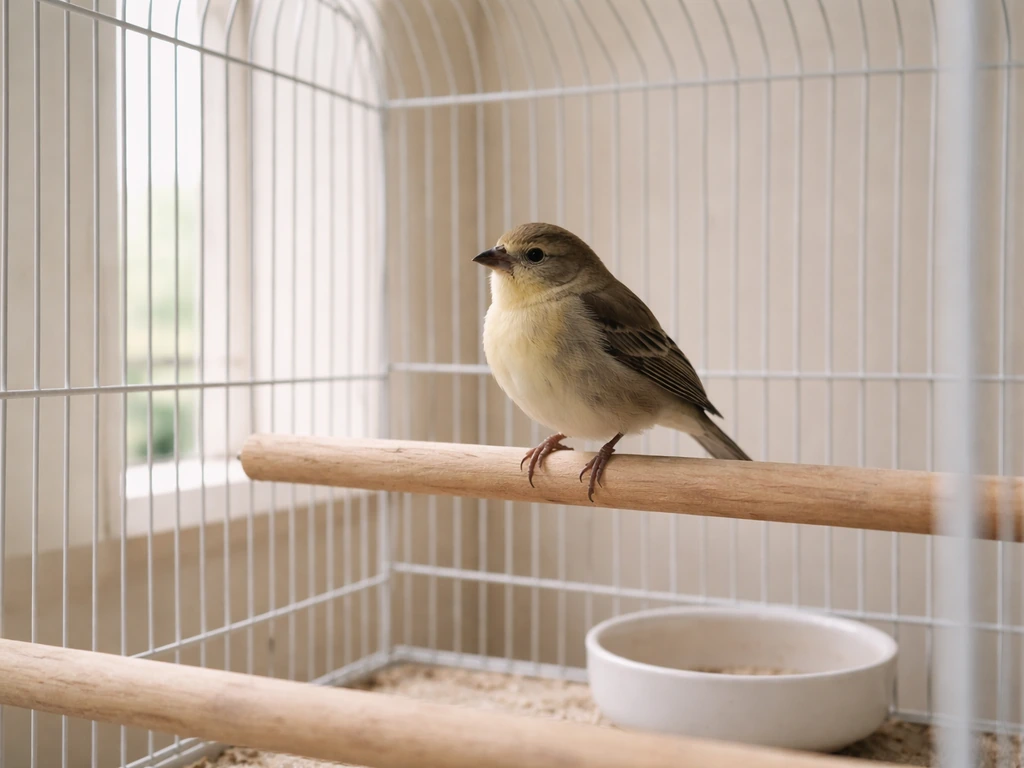
How caged birds experience stress and fear
Birds are prey animals, which means their default response to anything threatening is to hide it. In the wild, showing weakness gets you eaten. That instinct doesn't disappear in a cage. What this means practically is that a bird can be stressed, uncomfortable, or even unwell for a long time before you notice anything obvious. By the time the signs are impossible to miss, the problem is often well established.
Stress in birds is not just a mood state. It has real physical consequences. Chronic stress suppresses immune function, slows healing, and in serious cases can directly contribute to death. Even acute handling stress can be dangerous in a bird that is already compromised. This is worth knowing not to alarm you, but to explain why small signals matter and why dismissing behavior changes as "just stress" without investigating further is a mistake.
The emotional states that cage life can produce range across a spectrum. A bird with enough space, mental stimulation, appropriate social contact, good sleep, and a varied diet will generally feel secure. A bird that lacks any combination of those things can experience fear (from predator-like threats or unpredictable handling), frustration (from having nowhere to direct natural behaviors like foraging or flying), boredom (from a barren, unchanging environment), overstimulation (from constant noise or activity), or loneliness (because most birds are flock animals by nature and need social contact to feel okay).
Common signs a bird isn't coping well
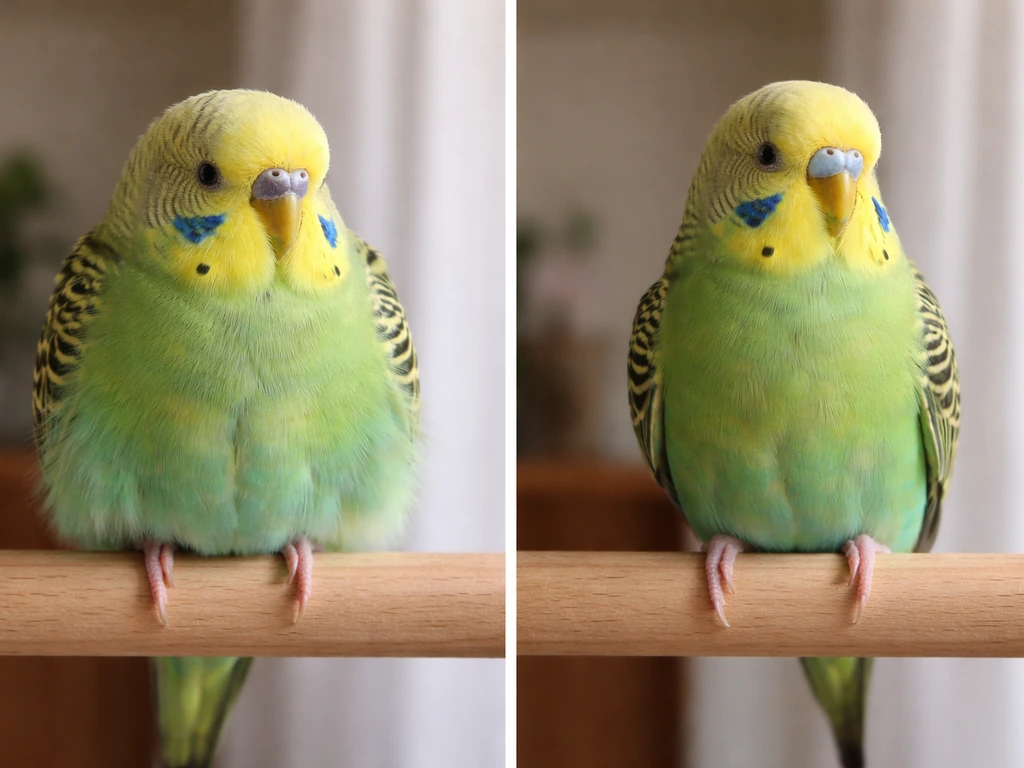
Behavioral and body language signals are your main window into how your bird is feeling. Some of these signals are subtle. Others are hard to miss once you know what you're seeing.
Body language and posture
- Fluffed feathers held for extended periods: this is a comfort posture when brief and accompanied by relaxed eyes, but persistent fluffing, especially combined with lethargy, is a serious warning sign
- Hunched or tucked posture: a bird sitting low, head pulled in, and eyes half-closed outside of normal nap times needs attention
- Hiding at the back or bottom of the cage, or sitting in corners: these can indicate fear, feeling unwell, or both
- Feather condition: dull, damaged, or missing feathers, especially if the bird is chewing or pulling them
- Tail bobbing at rest: rhythmic up-and-down tail movement when the bird isn't just landing or vocalizing is a red flag (more on this under health signs)
Behavioral changes
- Constant screaming or vocalizing that isn't part of normal morning/evening contact calls
- Biting: this is often fear or stress rather than true aggression, especially in a bird that hasn't bitten before
- Repetitive, purposeless movements like pacing, head swinging, rocking, spinning, or swaying: these stereotypic behaviors indicate poor welfare and warrant a vet check
- Reduced appetite or interest in food and treats
- Sleep disruption, either sleeping far more than usual or seeming unable to rest properly
- Loss of interest in toys, interaction, or normal exploration
- Feather plucking or over-preening: this can start as mild chewing and escalate to significant self-damage
It's worth noting that feather plucking in particular is frequently labeled as "boredom" or "anxiety" by well-meaning owners, but that framing can be dangerously oversimplified. PetMD similarly notes that feather picking in larger parrots can be a common outward sign of stress or boredom feather plucking can be a stress or boredom outward manifestation. Feather destructive behavior has a long list of possible causes including skin conditions, infections, nutritional deficiencies, hormonal issues, toxin exposure, and psychological factors. You cannot reliably tell from observation alone which one applies to your bird. Any bird pulling out feathers needs an avian vet assessment before you assume it's a behavioral problem.
Environment factors that change how a bird feels
The cage environment is the single biggest thing you can control. Small adjustments in several areas can dramatically shift how your bird experiences its space.
Space and bar spacing
Cage size matters more than most product listings suggest. Your bird needs to be able to fully extend and flap both wings without touching the sides, move between perches without awkward contortion, and have enough room to get away from anything that startles it. Bar spacing needs to match your species: bars too wide let small birds escape or get a head stuck, bars too narrow prevent grip and movement for larger parrots. A cage that's too small creates constant physical frustration, which becomes emotional frustration fast.
Perch setup and foot health
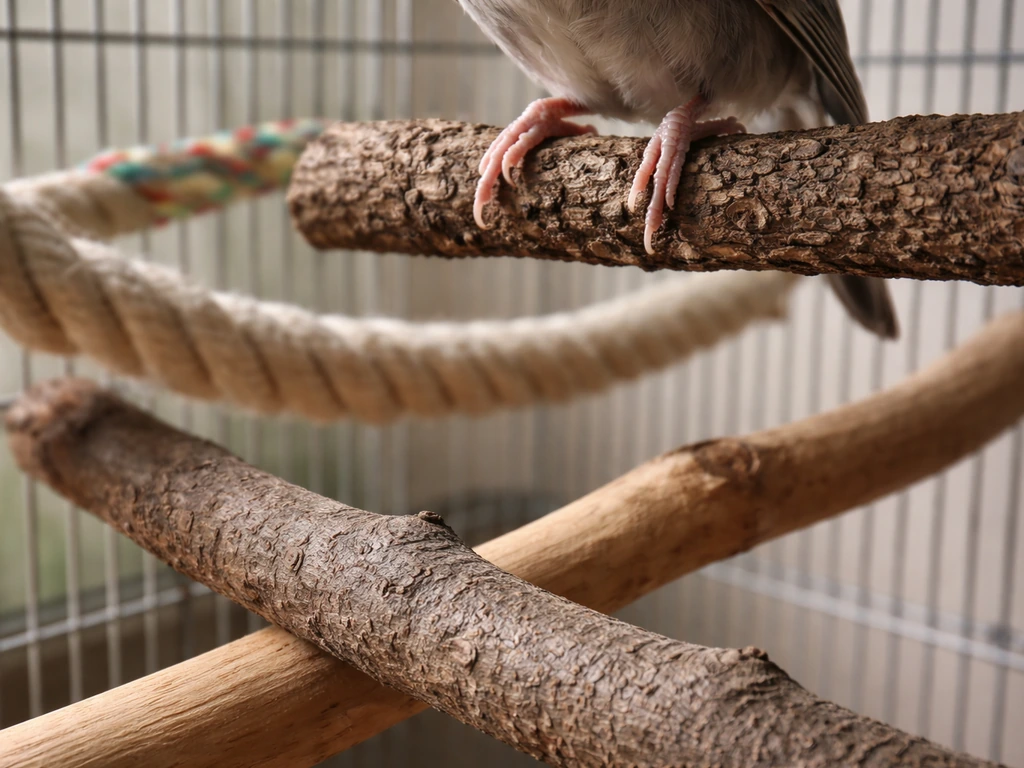
Perches are where your bird spends most of its time, so they matter enormously. Uniform dowel perches of a single diameter cause foot problems over time because the foot is always gripping in exactly the same position. Offer a variety of perch diameters, textures, and materials, including natural wood branches, rope perches, and platform perches that let feet rest flat occasionally. Positioning matters too: place perches at different heights so your bird can choose comfort and temperature zones, and make sure the highest sleeping perch is genuinely out of draft zones.
Enrichment, foraging, and toys
In the wild, birds spend most of their day finding food. A bowl filled with pellets solves nutrition but removes the entire behavioral experience of foraging. Hiding food in paper wraps, puzzle feeders, or throughout the cage gives your bird something to actually do. Rotate toys regularly so the environment changes. The goal isn't an overloaded cage, it's a cage where your bird has choices and things to investigate. Lack of stimulation is one of the documented contributors to sleep deprivation and feather-picking behavior.
Social contact
Most companion birds are flock species that genuinely need social interaction to feel well. Isolation, long periods without human or bird contact, or being kept in a room the household rarely enters is a welfare problem. This doesn't necessarily mean getting a second bird (introductions can be complex and need to be managed carefully). It does mean your bird needs regular, predictable, positive interaction with you. If your bird is housed with a companion and one is plucking feathers from the other, they need to be separated: what looks like grooming can become injurious aggression.
Lighting and sleep schedule
Birds need a consistent light/dark cycle. Research on bird sleep confirms that darkness promotes sleep while light suppresses it, so a bird in a brightly lit room until midnight is not getting the sleep it needs. Most species do best with roughly 10 to 12 hours of darkness for sleeping. If you notice your bird sleeping at the bottom of the cage, take it seriously and check whether temperature, perches, and overall health are being supported properly. Covering the cage at the same time each evening and uncovering at a consistent morning time creates the predictable schedule that helps birds feel secure. Sleep deprivation is a real welfare issue and a documented contributor to behavioral problems including feather picking.
Placement, temperature, and noise
Where the cage lives in your home has a big impact on how your bird feels. Avoid kitchens entirely: overheated nonstick cookware releases fumes that can kill a bird rapidly, and cooking produces smoke, aerosols, and temperature spikes. Keep the cage away from drafts, air conditioning vents, and exterior windows that get cold at night. Constant loud noise, unpredictable household activity, and exposure to ceiling fans or dogs and cats pacing nearby all raise baseline stress levels. A wall-backed corner placement in a family room where the bird can see activity but feels partially sheltered is a solid default. If your bird is spending time in a corner of his cage, the placement and stress level of that spot is often worth evaluating alongside sleep, space, and enrichment needs a wall-backed corner placement.
Bathing opportunities
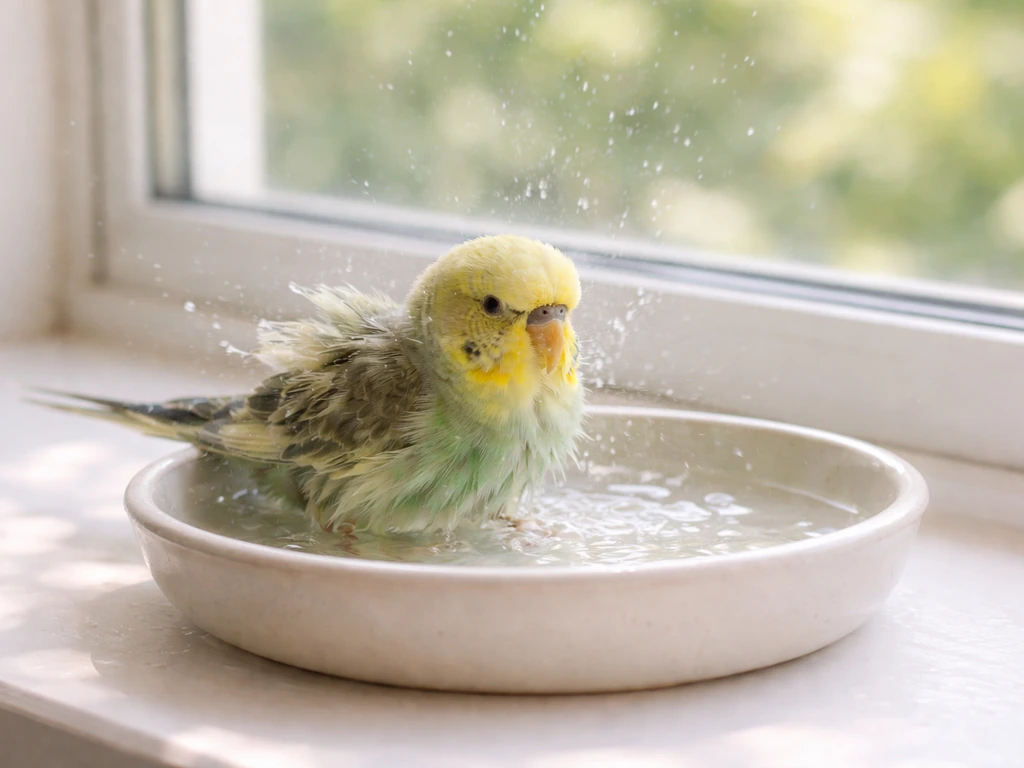
Many birds strongly want to bathe and feel better when they can. Offering a shallow dish of room-temperature water a few times a week, or misting with plain water, gives your bird a natural comfort behavior. Some birds prefer a shower perch. Watch which your bird responds to and make it a regular part of the routine.
Health red flags that can be mistaken for "just stress"
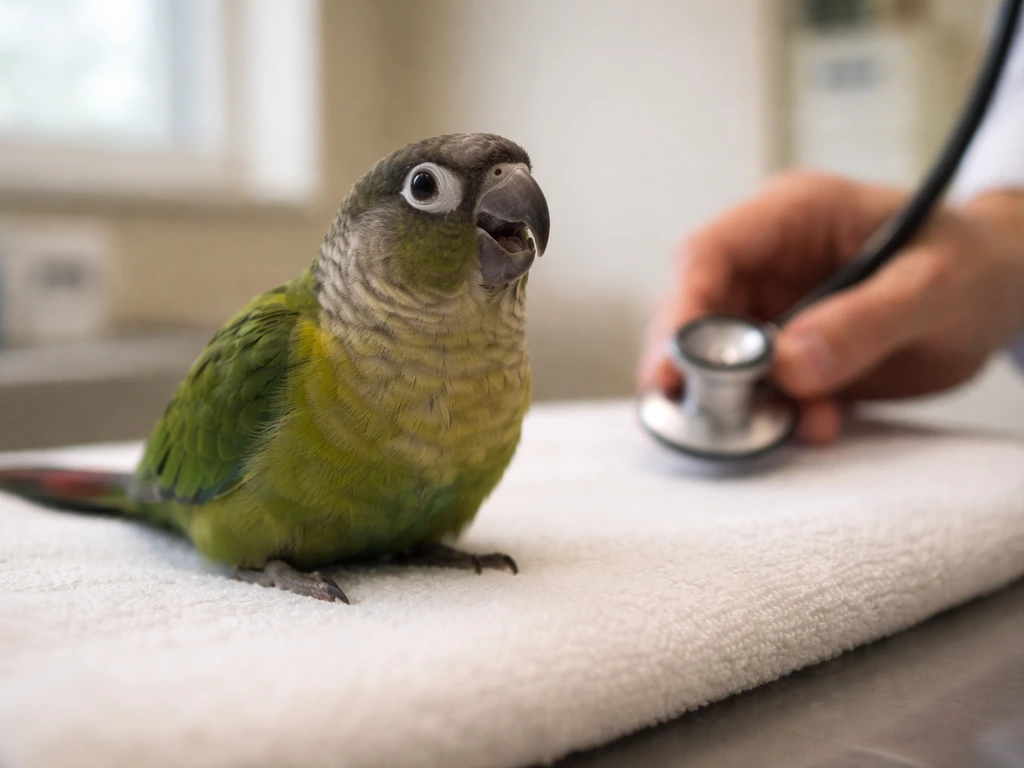
This is the section that matters most if your bird seems unwell. Because birds hide illness so effectively, what looks like behavioral stress can actually be a medical emergency in progress. These signs should never be written off as stress without ruling out physical causes first.
| Sign | What it might mean | Action |
|---|---|---|
| Open-mouth breathing at rest | Respiratory distress, this is serious | Avian vet same day |
| Tail bobbing rhythmically at rest | Respiratory effort or systemic illness | Avian vet same day |
| Nasal discharge or crusty nares | Respiratory infection or other illness | Avian vet soon |
| Persistent fluffed posture plus lethargy | Illness, not just a nap | Avian vet soon |
| Vomiting or regurgitation (not courtship feeding) | GI or systemic problem | Avian vet soon |
| Droppings that change color, consistency, or volume | Dietary change or infection or organ issue | Monitor closely, vet if persistent |
| Rapid unexplained weight loss | Often sign of serious illness | Avian vet soon |
| Repetitive stereotypic movements (rocking, spinning, pacing) | Welfare concern and possible neurological issue | Avian vet evaluation |
The core principle here is one worth repeating: birds tend to mask illness until they are very ill. By the time a bird looks obviously sick, it has often been struggling for a while. Purdue's veterinary guidance puts it directly: seek veterinary assistance at the slightest sign of illness. If your bird's behavior has changed and you're not sure why, that uncertainty is reason enough to call an avian vet rather than wait and see.
What to do today: immediate comfort and welfare checks
If you're reading this because something seems off with your bird, here's a practical checklist you can work through right now. If you’re asking why your bird is on the bottom of the cage, start by checking for health red flags and stress triggers, since that position can happen when a bird is uncomfortable or unwell why is my bird on the bottom of the cage.
- Watch your bird for five minutes without interacting: note posture, breathing, tail movement, feather condition, and whether it's eating and moving normally
- Check for any of the health red flags in the table above. If open-mouth breathing or tail bobbing at rest are present, stop and call an avian vet immediately
- Look at the cage placement: is it near the kitchen, a vent, a window with a draft, or an area with constant foot traffic or predator-like pets?
- Check the sleep situation: is your bird getting 10 to 12 hours of darkness? Is the cover going on at a consistent time?
- Assess the cage contents: how many perch types are there? When did you last rotate or add a toy? Is there any foraging activity built in?
- Think about social time: has the bird had meaningful interaction with you today? In the past few days?
- If the bird is fluffed but otherwise eating, moving, and breathing normally, move it away from any draft, reduce noise and activity nearby, and give it a quiet hour to settle
- Offer a shallow water dish for bathing if the bird hasn't had one recently
- Introduce one foraging element today: wrap a few treats in paper, or hide some pieces of food in a paper cup folded closed
- Note your observations so you have a baseline if behavior continues or worsens
These steps won't fix every problem, but they address the most common immediate welfare gaps and help you figure out quickly whether you're looking at a management issue or something that needs professional attention.
Long-term improvements and when to contact an avian vet
The day-to-day changes add up more than any single intervention. Building a consistent daily routine, with predictable wake and sleep times, regular interaction, foraging opportunities, and time outside the cage if it's safe for your species, gives your bird a stable, predictable world. Predictability genuinely reduces baseline fear in prey animals.
Long-term enrichment means thinking about your bird's natural behaviors and finding safe ways to express them in captivity. Foragers should work for food. Climbers should have vertical space. Chewers need safe wood and destructible toys. Social species need daily contact. Getting species-specific about what your bird actually needs, rather than treating all birds the same, makes a real difference over time.
Diet is worth reviewing too. Seed-heavy diets are nutritionally poor for most parrots and can contribute to lethargy and feather problems. A diet based on quality pellets with fresh vegetables and appropriate fruits is the standard recommendation from avian vets. Dietary changes need to be made gradually so your bird actually adopts them.
On the question of when to call an avian vet: the honest answer is sooner than feels necessary. If a behavior has appeared or changed and you can't explain it, that's a reason to call. If your bird is feather picking, don't assume it's boredom and try to manage it with toys alone. Get a vet evaluation first to rule out physical causes. If lethargy has been present for more than a day, if posture has changed, if breathing looks labored, if droppings are abnormal: all of these are worth a call. If you notice emergency breathing signs such as open-mouth breathing or tail bobbing while breathing, contact your veterinarian right away breathing looks labored. Avian vets are used to fielding "probably nothing" questions, and it genuinely is better to ask and be reassured than to wait until the situation is urgent.
Some behavioral patterns, like a bird that always retreats to the corner of the cage when strangers enter, or one that sleeps hanging on the bars rather than on a perch, are worth understanding in context rather than automatically treating as emergencies. Observing whether these behaviors are new, isolated, or accompanied by other signs helps you tell the difference between a quirk and a warning. Keeping a simple behavior log for a week or two gives you something concrete to share with a vet if you do need to go in.
The goal isn't a perfect cage. It's a cage your bird can feel safe in, with enough stimulation to prevent boredom, enough rest to stay healthy, enough social contact to feel connected, and an owner who knows the difference between a bird that's settled and one that's struggling. Most birds will show you clearly which one they are, as long as you know what to look for.
FAQ
If my bird seems “fine,” how can I tell whether the cage setup is actually meeting its needs or just hiding problems?
Look for stability, not peak behavior. A settled bird typically has consistent appetite, normal droppings, regular perch use (not only one spot), and relaxed sleep. Prey animals often mask illness, so also check for quiet but meaningful changes like quieter voice, less preening, reduced interest in food puzzles, or spending unusual time on the floor even if it still “acts calm.”
What cage size is “enough” for how a bird feels in a cage?
Use your species’ movement needs, not the brand’s listing. A practical test is whether the bird can fully extend and flap without brushing sides, move between perches without awkward stretching, and have at least one escape route to get away from startles. For smaller cages, birds commonly show constant frustration by pacing, bar chewing, or refusing to use certain perches.
My bird sits in one corner a lot. Does that automatically mean it is fearful or sick?
Not automatically, but it is a clue to investigate patterns. First determine whether it is a new change, how the bird acts around you and household noise, and whether the bird also has other red flags like fluffed posture, reduced eating, abnormal droppings, or reluctance to move. A wall-backed corner can feel safer for some birds, but persistent floor-corner hiding, especially with appetite changes, warrants a health check.
Can birds be stressed even if they are not biting, screaming, or plucking feathers?
Yes. Stress can show up subtly as reduced activity, sleeping less normally, selective eating (only from the bowl), sleeping in unusual places, ignoring toys it previously used, or increased “freeze and scan” behavior when people move. If you see a consistent decline in engagement for more than a few days, treat it as a welfare signal and review sleep, diet, enrichment, and air quality.
Is sleeping on the bars always a sign that something is wrong?
It can be, but context matters. Some birds temporarily choose bars for warmth or favored temperature zones, but if the behavior is new, frequent, or paired with labored breathing, loss of appetite, or droppings changes, it can indicate discomfort (perch surface issues, drafts, illness, or missing comfortable resting options). Make changes to perch placement and check health if it persists.
When feather plucking happens, should I first add more toys or reduce handling to calm it down?
Do not rely on environmental changes alone if feathers are being destroyed. Feather-destructive behavior has many possible causes, including skin problems, infections, hormonal issues, nutritional gaps, toxins, and psychological factors. The safest approach is to arrange an avian vet assessment before assuming it is boredom or anxiety, then adjust enrichment in parallel.
How much social interaction does my bird really need if it is caged indoors all day?
Many companion birds need predictable, positive interaction daily. “In the same room” is not the same as social contact, especially if you rarely approach calmly or if interactions are inconsistent. If your bird is housed alone, plan for regular short sessions, training, and supervised safe out-of-cage time if your species allows it. If a companion bird is plucking the other, separation may be necessary because grooming can turn injurious.
What if my bird is calm but its cage is in a noisy, busy area?
Even calm behavior can be masking higher baseline stress. Avoid kitchens (nonstick fumes and aerosols), keep the cage away from vents and drafts, and reduce exposure to constant noise spikes, ceiling fans, and roaming pets. A partially sheltered spot with the bird able to see household activity often supports security better than a fully exposed or constantly vibrating location.
How should I set up light and darkness so the bird feels secure?
Use a consistent routine, aim for a true dark period (many species do best around 10 to 12 hours of darkness), and avoid late-night bright light. If your bird seems tired, irritable, or begins feather-related behaviors, review whether the cage is being uncovered at irregular times or exposed to nighttime lighting. A simple schedule (same cover time, same uncovered time) helps predictability.
Do birds actually enjoy bathing, or is it just an owner “bonus” activity?
Bathing is comfort behavior for many birds, and it can improve how they feel day to day. Offer room-temperature water in a shallow dish a few times per week or mist with plain water, and watch whether your bird prefers a dish, a spray, or a shower perch. If bathing triggers distress, reduce frequency and check for respiratory issues before continuing.
What are the most common mistakes that make birds feel worse in cages, even with good intentions?
Common issues include using a single-size dowel perches for all time, relying only on a food bowl (no foraging), rotating toys too rarely (environment stays static), inconsistent sleep schedules, and assuming behavior changes are “just stress” without a health review. Another frequent mistake is placing the cage in hazardous areas like kitchens or near airflow from vents and fans.
When is it time to call an avian vet, even if I suspect it is behavioral?
Call sooner when behavior changes and you cannot explain a clear management cause, especially with feather loss, fluffed posture, breathing changes, abnormal droppings, reduced activity for more than a day, or new perching and floor-sitting habits. Birds often hide illness until late stages, so an avian vet visit is appropriate even if the goal is “probably nothing.”
Next Articles
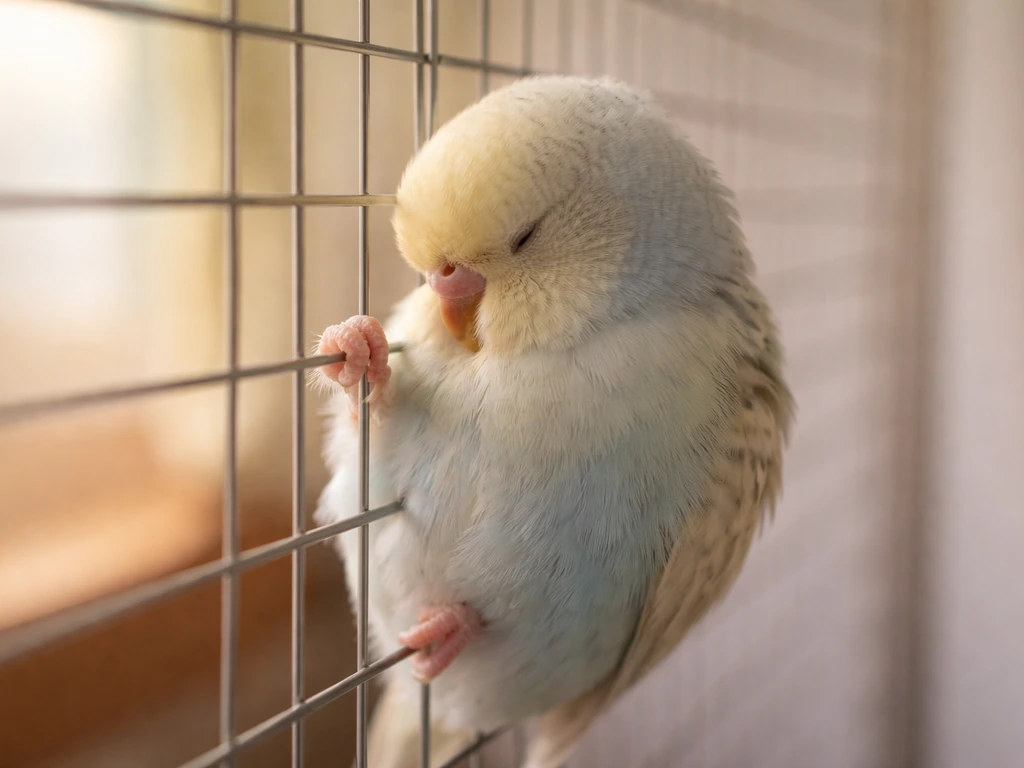
Why Does My Bird Sleep Hanging on the Cage Bars?
Why your bird sleeps hanging from cage bars, what it usually means, how to fix perch and comfort issues, and red flags.
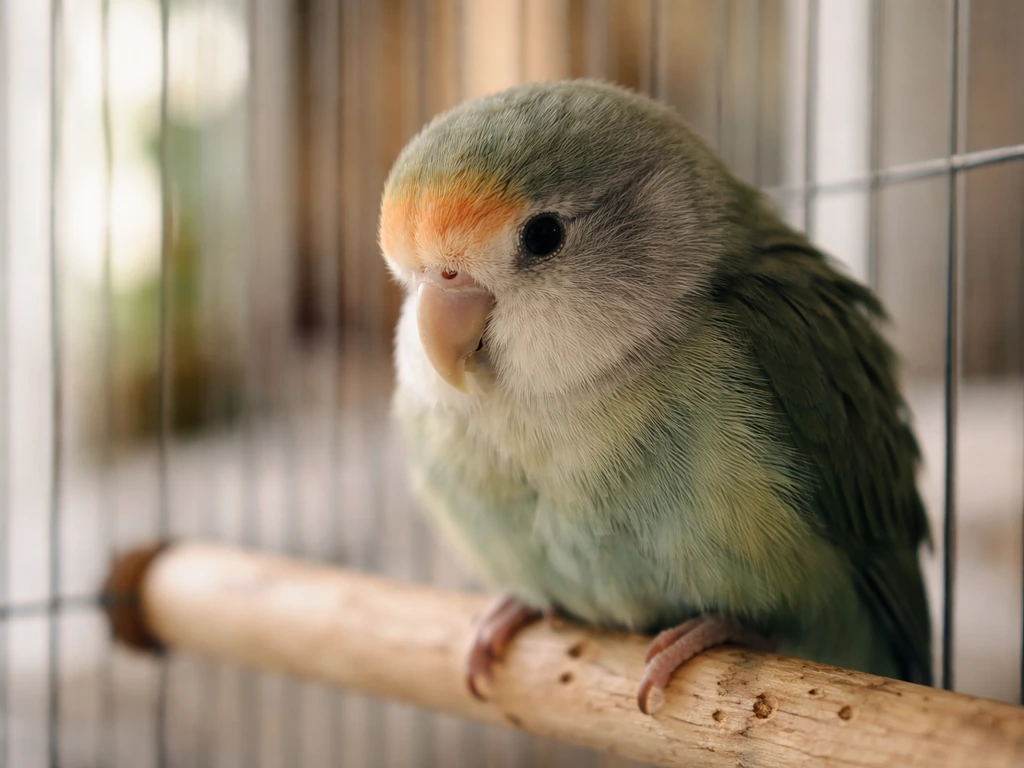
Why Is My Bird Making Whimpering Noises? What to Check
Find reasons for whimpering bird noises, quick home checks, and red flags for urgent vet care plus tracking tips.
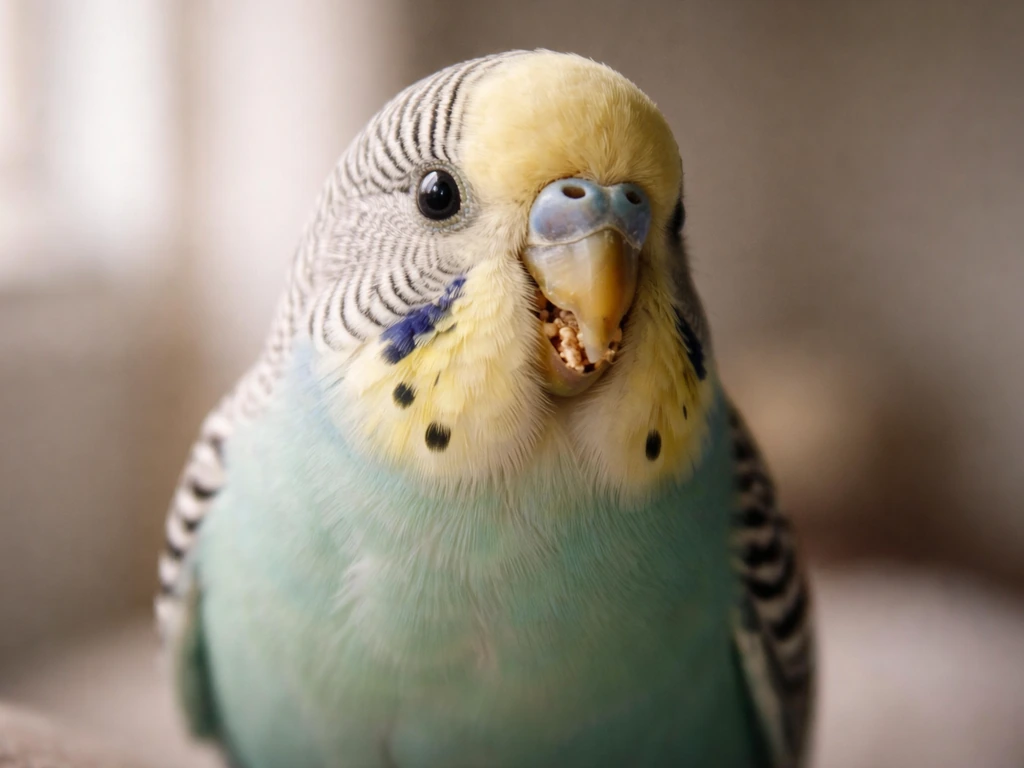
Why Does My Bird Make Crunching Noises? Causes and What to Do
Learn why your bird crunches, spot normal beak chewing vs breathing or crop issues, and what to do next.