
A bird sleeping at the bottom of the cage is not automatically an emergency, but it is always worth stopping to look closely. Sometimes it is completely innocent: a young bird exploring, a molt-tired bird resting low, or a bird that simply finds the floor warmer or more secure. Other times, it is one of the clearest signals a sick bird can give you. The difference usually comes down to a handful of physical signs you can check right now, before you do anything else.
My Bird Is Sleeping at the Bottom of the Cage: What to Do

Marcus Chen
7 Jun 2026
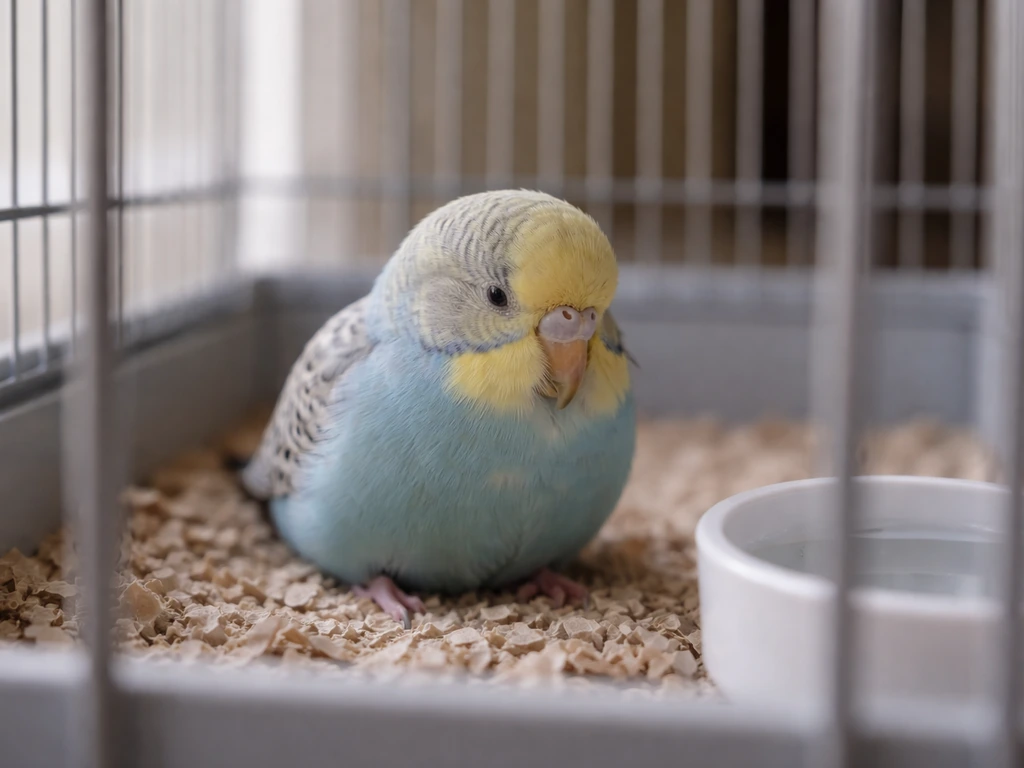
What it usually means when a bird sleeps on the cage floor
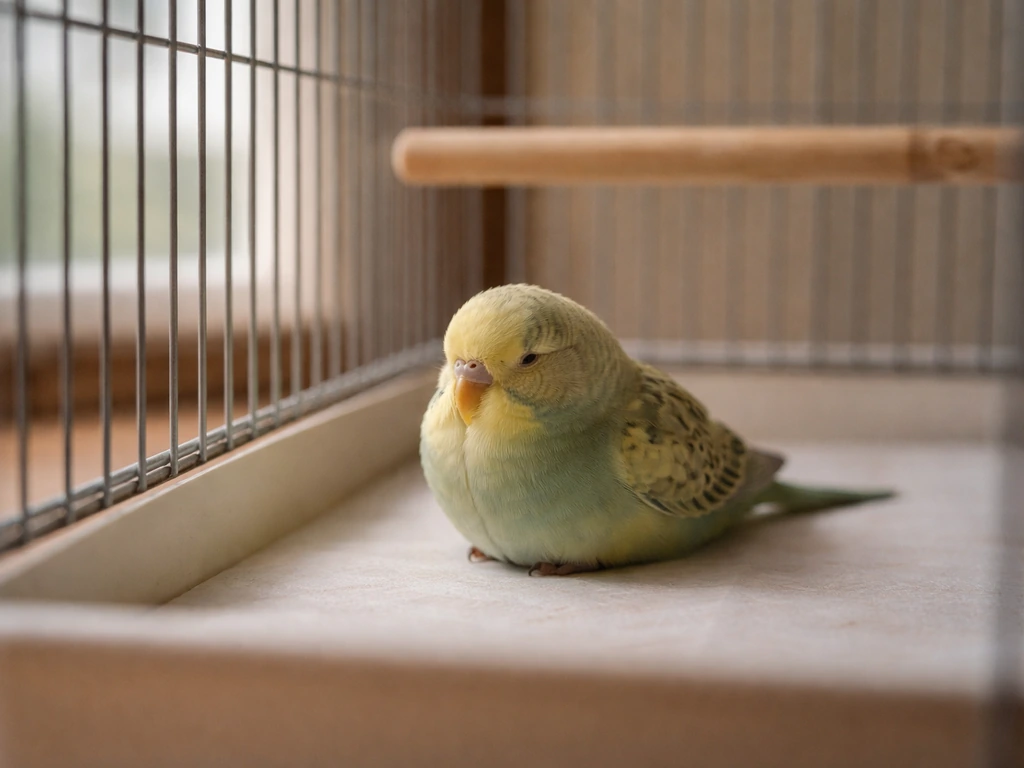
Birds naturally sleep on elevated perches because height means safety from predators. That instinct is strong, so when a bird breaks it and settles on the floor instead, something has shifted. In many cases it is a practical choice: the floor is warmer than a drafty upper perch, easier to reach if a bird is tired or unsteady, or simply where the bird has decided it feels secure. In other cases, the bird is too weak or too unwell to hold onto a perch at all. Your job is to figure out which situation you are looking at. If you are also noticing symptoms that feel like a bird sleep hanging on the cage, treat it as a different situation and double-check the safety and illness red flags right away.
Birds that are on the floor due to illness often show other signs alongside the unusual sleeping spot. Birds that are there by choice usually look normal in every other way. That distinction is the starting point for everything below.
Common non-urgent reasons a bird ends up on the floor
They found a warmer or more comfortable resting spot
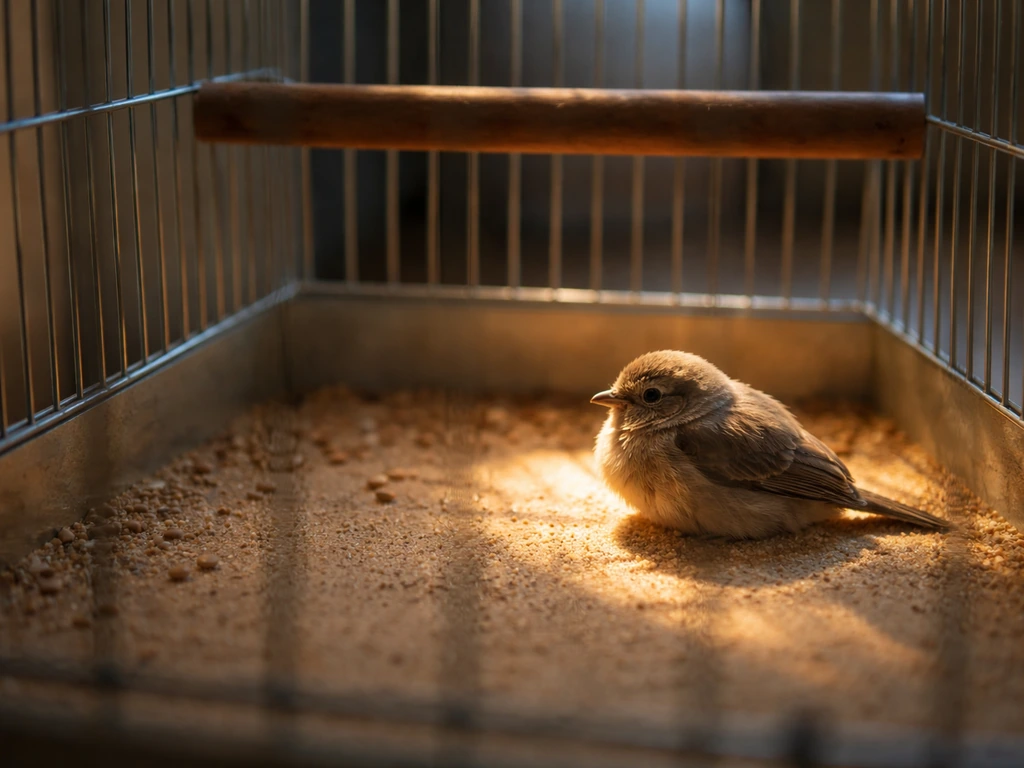
Cage floors can be warmer than upper perches, especially in rooms where cool air settles low or where the cage sits near a heating vent. Some birds, particularly smaller species, simply prefer to tuck in somewhere enclosed and low when the temperature drops at night. If your bird looks physically normal, is alert when you approach, and hops back up when interested in something, this is likely all that is going on.
Stress or a change in environment
A new cage, a new room, a new pet in the household, or even rearranged furniture can unsettle a bird enough that it retreats to the floor. Stress-related floor-sitting usually clears up within a day or two once the bird adjusts. Watch for whether the behavior is consistent or just happening around a specific change.
Temperature and drafts
Drafts are one of the most underappreciated stressors for pet birds. A cage placed near a window, an air conditioning vent, or even a door that opens frequently can expose a bird to temperature swings that make upper perches uncomfortable. Fluffed feathers combined with floor-sitting can indicate the bird is trying to conserve heat, though fluffed feathers are also a symptom of illness, so you cannot rely on that sign alone.
Molting and fatigue
Molting takes a surprising amount of energy. During a heavy molt, birds can seem quieter, more tired, and less interested in climbing. They may rest lower in the cage more than usual. The key thing to check during a molt is that the skin revealed by feather loss looks normal and healthy, not irritated or raw. A molting bird that is eating, drinking, and still alert when you interact with it is almost certainly fine.
Young birds and cage exploration
Fledglings and young birds that have not fully developed their balance and grip will spend more time on the floor than adult birds. If you have a young bird, floor time is often just part of the normal learning process. Make sure food and water are accessible at floor level so they do not have to struggle to reach them.
Health warning signs to check right now
Before you do anything else, observe your bird for two to three minutes without disturbing it. You want to catch what it looks and acts like in its natural state, not after it has been startled. Here is what to look for:
- Breathing: Is the bird breathing with its beak closed? Open-mouth breathing is a serious red flag. Watch the tail as well. If the tail bobs rhythmically with each breath, that is a sign the bird is working hard to breathe and needs veterinary attention quickly.
- Posture: Is the bird sitting upright or is it hunched, leaning to one side, or unable to hold itself up? A bird that cannot maintain normal posture is a concern.
- Responsiveness: When you approach or speak to it, does it acknowledge you? A bird that is completely unresponsive or unusually dull-eyed is showing a worrying level of lethargy.
- Feathers: Fluffed feathers are a sign the bird may be cold, feverish, or unwell. A bird that looks permanently puffed up rather than just fluffing briefly during a nap needs closer attention.
- Eyes and nostrils: Any discharge, crustiness, or wetness around the eyes or nostrils is not normal and should be noted.
- Droppings: Check what is on the cage floor near the bird. Normal droppings have a dark fecal portion and white or beige urate crystals. Droppings that are entirely liquid, bright green, black, or absent altogether are worth noting, though stress and diet can also change droppings temporarily.
- Appetite and water: Has the bird eaten or drunk anything recently? A bird that is refusing food and water alongside floor-sleeping is showing a combination of symptoms that VCA identifies as a likely sign of serious illness requiring immediate care.
- Perching ability: Can the bird get back up to a perch when motivated? A bird that tries and fails, or does not try at all, may be too weak to perch normally.
What to do at home today based on what you see
If your bird passed the observation check above and appears otherwise normal, there are several practical adjustments you can make right now to rule out environmental causes and support the bird's comfort while you monitor it.
Warm the bird up safely
If you suspect cold or drafts, gently raise the ambient temperature near the cage. A common approach is to cover three sides of the cage with a light cloth or position a low-wattage heat lamp nearby, making sure the bird can move away from the heat source if it wants to. Do not overheat the space. Aim for a comfortable room temperature around 70 to 80 degrees Fahrenheit for most pet bird species. Overheating is just as dangerous as cold.
Remove drafts and noise stressors
Move the cage away from windows, vents, and doors if it is not already in a stable location. Reduce noise and activity around the bird for a few hours, especially if a recent environmental change seems to have triggered the floor-sitting. Give the bird a chance to settle and feel secure.
Make food and water easy to reach
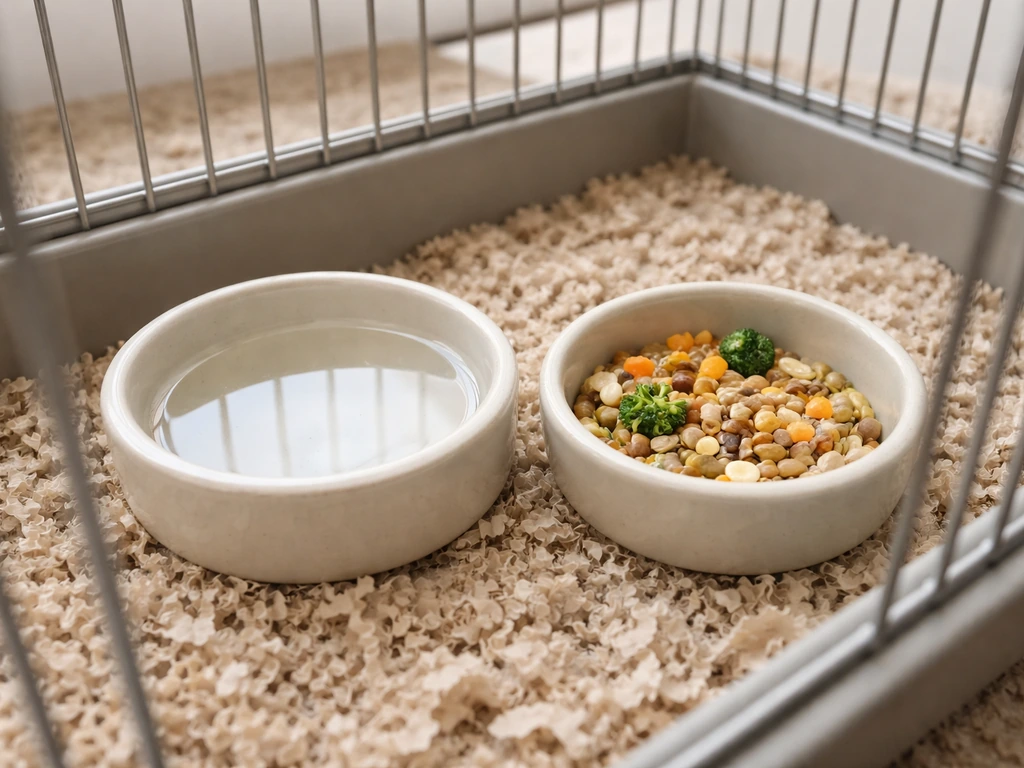
If your bird is staying on the floor, temporarily place a small dish of food and fresh water at floor level so it does not have to expend energy climbing to eat or drink. This is especially important if you are going to be monitoring the bird over the next several hours. You want eating and drinking to be as easy as possible while you watch for improvement.
Your observation checklist for the next few hours
- Check breathing every 30 minutes: beak closed, no tail bobbing, no clicking or wheezing sounds.
- Note whether the bird eats or drinks anything during your observation window.
- Watch for any droppings and check their appearance.
- See if the bird moves around on the floor or is completely still.
- Try gently engaging the bird: does it track your movement with its eyes? Does it vocalize?
- Check whether the bird attempts to perch at any point.
- Note feather position: is it persistently fluffed or does it smooth out when warm and calm?
If you see consistent improvement over two to four hours and the bird starts perching, eating, and behaving more normally, the cause was likely environmental or fatigue-related. If nothing improves, or if any of the warning signs below appear, move to veterinary care.
Red flags that mean you should call an avian vet urgently
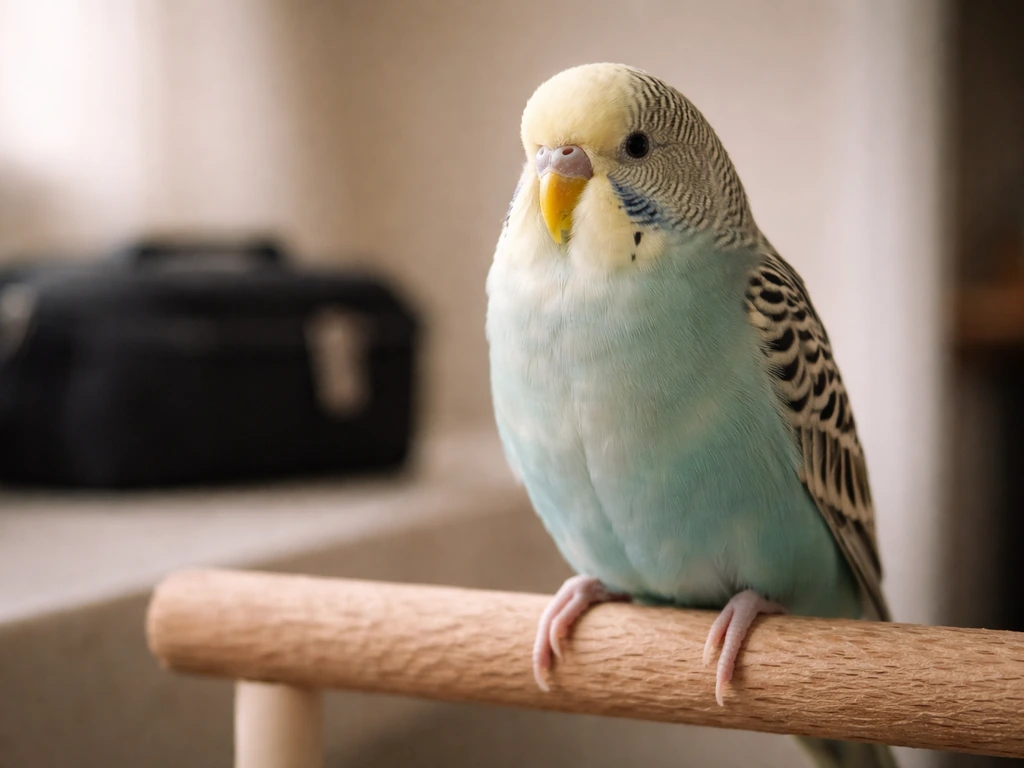
Some signs tell you clearly that this is not a situation you can manage at home. If you see any of the following, contact an avian vet or an emergency animal hospital right away. Do not wait to see if it improves on its own.
- Open-mouth breathing or labored breathing at any point.
- Tail bobbing with every breath, which indicates significant respiratory effort.
- Any discoloration around the beak, feet, or mucous membranes: gray, dark pink, or bluish tones can indicate the bird is not getting enough oxygen.
- Complete unresponsiveness: the bird does not react to your voice or movement.
- The bird cannot grip a perch at all, even when it tries.
- No droppings produced in several hours, or droppings that are entirely liquid or black.
- No eating or drinking over a period of several hours combined with lethargy.
- Any seizure-like activity, falling, or inability to stay upright.
- Visible injury, bleeding, or swelling anywhere on the body.
- Discharge from the nostrils or eyes alongside any of the above.
While you are waiting for veterinary care or transport, keep the bird warm and minimize handling. Merck Veterinary guidance advises keeping a distressed bird warm and supported rather than restraining it unnecessarily. A covered, warm carrier is ideal for transport.
How to prevent this from happening again
Set up perches your bird actually wants to use
One reason birds end up on the floor is that the perches available are uncomfortable or hard to grip. Offer perches of varying diameters and textures so the bird can choose what feels good under its feet on any given day. Natural wood perches of different widths are a good starting point. Make sure perches are stable and do not wobble, and position at least one at a height the bird clearly prefers for resting.
Keep the environment stable
Consistency matters more than people realize. Creating a calmer setup is one way to help answer how does a bird feel in a cage and keep stress from building up. Place the cage in a spot with stable temperature, away from drafts, air conditioning vents, and direct sunlight. Aim for a room that stays between 65 and 80 degrees Fahrenheit and does not swing wildly between hot and cold. Cover the cage at night to give the bird a sense of security and to maintain warmth.
Maintain a predictable daily routine
Birds thrive on routine. Regular feeding times, a consistent sleep schedule, and predictable interaction help reduce stress-related behavior. If you notice your bird on the floor after a disruption to its routine, that context is useful information.
Monitor behavior over time, not just in the moment
The most useful thing you can do as a bird owner is know what normal looks like for your specific bird. Birds hide illness well, and behavioral changes are often the earliest signal that something is off. If your bird is spending more time on the floor than it used to, that shift in pattern is worth paying attention to even if everything else looks fine. If your bird is spending time in the corner, it can also point to stress or illness, so it helps to look at the full body language and check for any red flags. Keep a loose mental note of your bird's typical sleeping spot, energy level, eating habits, and droppings so that any change stands out quickly. Purdue University’s caged-bird husbandry guidance notes that urates (whitewash) are usually white or beige and are made of uric acid crystals, and that blank" rel="noopener noreferrer">droppings’ color, consistency, and amount can change with food, water intake, stress, and mood. This is also worth keeping in mind alongside related behaviors like why a bird sits in a corner of the cage or why a bird might be on the floor but awake and moving around.
Schedule regular wellness checks with an avian vet
Annual wellness exams with a vet experienced in avian care give you a baseline for your bird's health and catch problems early. If you have never had your bird examined, this is a good time to set that up. It also means that if you do see floor-sleeping combined with other symptoms, you already have an established relationship with a vet who knows your bird.
FAQ
How can I tell if my bird is truly sleeping on the floor versus just being weak?
Sometimes birds rest low without being sick, but you should treat “sleeping” differently from “drooping.” If your bird closes its eyes, breathes normally, and can respond (even mildly) to you being nearby, it is more likely rest, especially if it perks up when something interesting happens. If the head is persistently drooping, the bird cannot get upright, or breathing looks strained, assume illness and seek veterinary help.
What symptoms mean floor-sleeping is more likely an illness than a comfort choice?
Yes, if the floor-sitting is paired with odd breathing, open-mouth breathing, repeated tail bobbing, fluffed feathers that do not settle, weakness, or low responsiveness. Also go sooner if the bird is not eating or drinking, has abnormal droppings, or you notice a sudden change in normal behavior rather than a gradual adjustment to stress or temperature.
Should I pick up my bird to see what’s wrong if it stays on the bottom of the cage?
Avoid moving or lifting the bird repeatedly to “check” it, because that can worsen stress and chill. Instead, watch from a distance for a few minutes, note posture and breathing, then make one low-effort change at a time (warmth, drafts, food and water access). If you need to transport, use a covered, warm carrier and handle as little as possible.
What’s the best way to observe my bird without making it more stressed?
For the first observation period, do not shine bright lights directly on the bird or use loud noises to test responsiveness. After you observe quietly for a couple of minutes, check practicality instead: are food and water easy to reach at floor level, is the cage draft-free, and does the bird look alert when you approach calmly?
How warm should I make the room, and how do I avoid overheating?
If your bird is cold, you may notice it keeps feathers fluffed, stays lower, and may not move to eat right away. Warm it gradually by improving the room temperature and removing drafts, then consider a safer localized heat option where the bird can choose to move away. Do not use very hot surfaces or prolonged direct heat, because overheating can quickly become dangerous.
If my bird is still on the cage floor after a few hours, when should I call an avian vet?
If the behavior does not improve after the short monitoring window, or if it is getting worse (less movement, refusal to eat, labored breathing), do not wait for “another day.” Birds can decline quickly, so it is reasonable to contact an avian vet the same day when floor-sitting is persistent and not clearly tied to stress, molt, or a clear temperature issue.
What household changes most often cause a bird to retreat to the floor?
Stress can be subtle. Common triggers include a new cage or placement, a change in household routine, increased noise, or other pets nearby. If the floor-sitting started soon after one of these changes and the bird still eats, drinks, and otherwise acts normal, improvement is more likely within 1 to 2 days once the environment stabilizes.
Could my bird be on the bottom because the perches are uncomfortable, and what should I change first?
Yes, if your bird cannot grip comfortably or has trouble reaching items. Use perches with different diameters and textures, and ensure they do not wobble. It also helps to place food and water at both perch height and floor level temporarily so the bird can keep eating while you adjust the setup.
Is floor-sitting normal for baby birds, and what signs would make it not normal?
If you have a fledgling or young bird, increased floor time can be normal, but you still want to confirm basics: the bird should be able to stand, maintain balance over short periods, and reach food and water without struggling. If the bird seems weak, falls repeatedly, or cannot right itself, treat it as abnormal and consider a vet visit.
What body signs should I track daily to catch problems early when my bird sleeps on the floor?
If droppings, appetite, or breathing look abnormal, do not rely on “it’s sleepy.” Birds often hide sickness until it is more advanced, so any persistent combination of floor-sitting plus changes in droppings, eating, posture, or responsiveness should be treated as a health concern rather than a routine sleep preference.
Next Articles
How Does a Bird Feel in a Cage Signs and Fixes
Understand how caged birds feel: stress versus health signs, plus quick fixes for comfort, safety, enrichment, and vet r
Why Does My Bird Sleep Hanging on the Cage Bars?
Why your bird sleeps hanging from cage bars, what it usually means, how to fix perch and comfort issues, and red flags.
Why Is My Bird Making Whimpering Noises? What to Check
Find reasons for whimpering bird noises, quick home checks, and red flags for urgent vet care plus tracking tips.