
One bird stepping on another is usually either a mating or dominance behavior, and in most cases it's normal. It becomes a problem when the bird being stepped on shows signs of stress or injury, or when the stepping happens repeatedly and aggressively. The key is reading what both birds are doing with their body, not just the stepping itself.
Why Is My Bird Stepping on My Other Bird? Causes and Fixes

Marcus Chen
14 Jun 2026
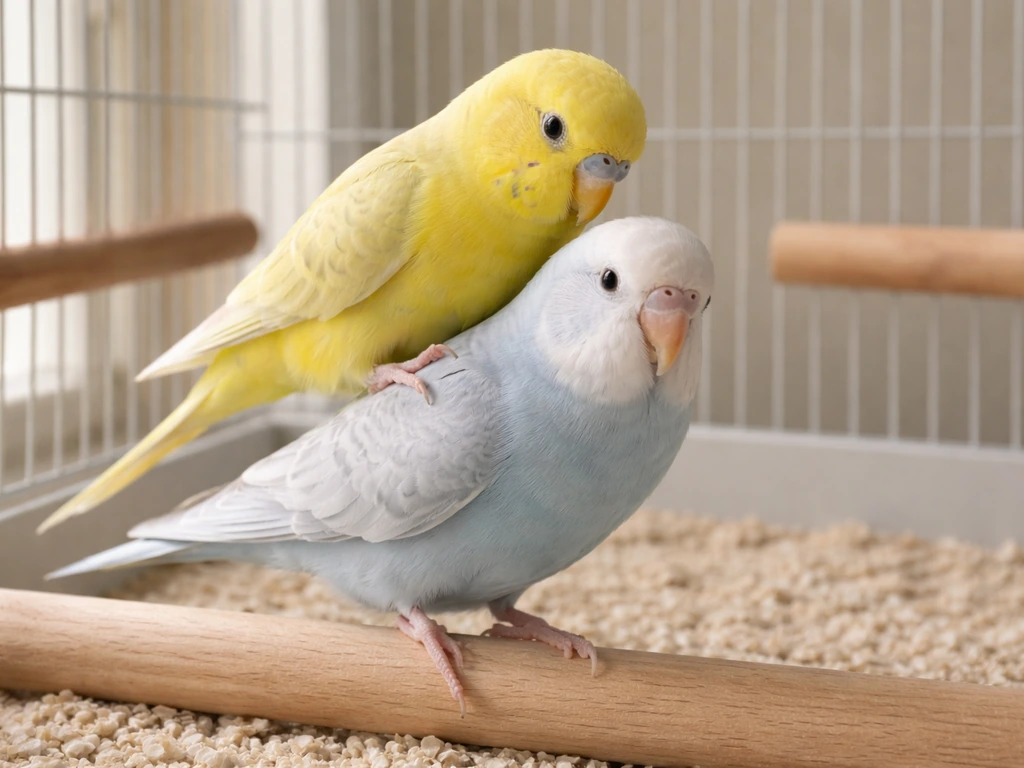
What "stepping on" actually means in pet birds
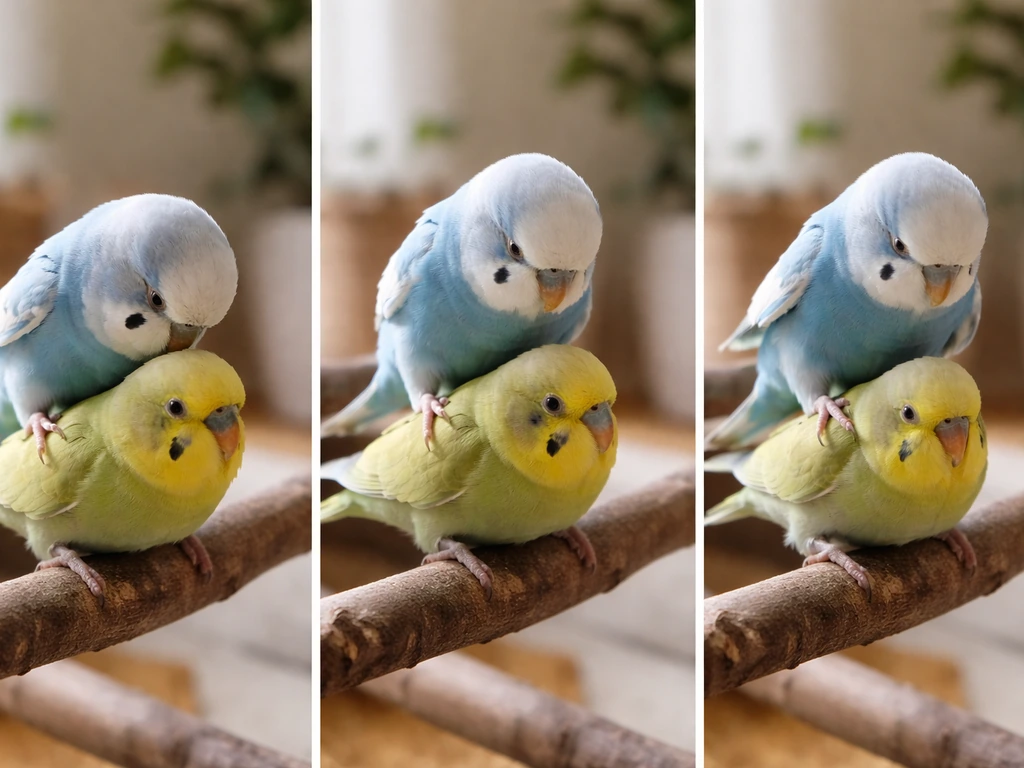
When one bird climbs on top of another, it generally falls into one of three categories: mounting (sexual behavior), dominance, or play. Mounting is by far the most common reason. Birds don't need a partner of the opposite sex to do this, either. Same-sex mounting is well documented across many bird species and can happen outside of a traditional reproductive context entirely. It doesn't always mean your birds are mating or even trying to.
Dominance stepping looks a bit different. One bird presses down or stands on the other to assert position, often near food, water, or a favored perch spot. It's a social ranking move. You'll usually see the bird on the bottom either freeze, crouch, or try to move away. It's the avian version of "this is my spot."
Play-based stepping is looser and more chaotic. It often happens during general rough-and-tumble interaction, especially with younger birds. Both birds may take turns, there's no tension in the body posture, and neither bird is trying to escape. If it looks fun and reciprocal, it probably is.
Body language clues that tell you what's really going on
Body language is everything here. You can't interpret what the stepping means without watching both birds carefully, especially the one being stepped on.
For the bird doing the stepping, look for these courtship and arousal signals: eye pinning (the pupil rapidly contracting and expanding), tail fanning or fanning the wings out to the sides, bowing or bobbing motions, strutting, blushing around the face (in some species like cockatiels and eclectus), and increased vocalizations. These are classic signs of hormonal or breeding-related behavior rather than aggression.
Aggression looks different. Slicked-down feathers, a hard forward lean, biting or lunging before or after the mounting attempt, and a tense, locked posture all suggest this isn't about affection. If your bird is beaking you, the cause could be hormonal behavior, territorial aggression, or fear, and the right response depends on the body language signals. Tail fanning can appear in both contexts, so don't rely on it alone. Read the whole bird.
For the bird being stepped on, the clearest distress signals are: trying to flee and being blocked, screaming or biting back, puffing up and cowering, crouching flat to the perch with wings slightly out, or sitting on the cage floor afterward. On Birdfact, puffing up and feather raising are described as part of the body context that can signal dominance or intimidation, especially when birds are trying to appear larger puffing up and cowering. A relaxed bird being mounted might crouch quietly and stay put. A stressed bird will tell you clearly that it doesn't want this.
Why eye pinning matters but isn't the whole story
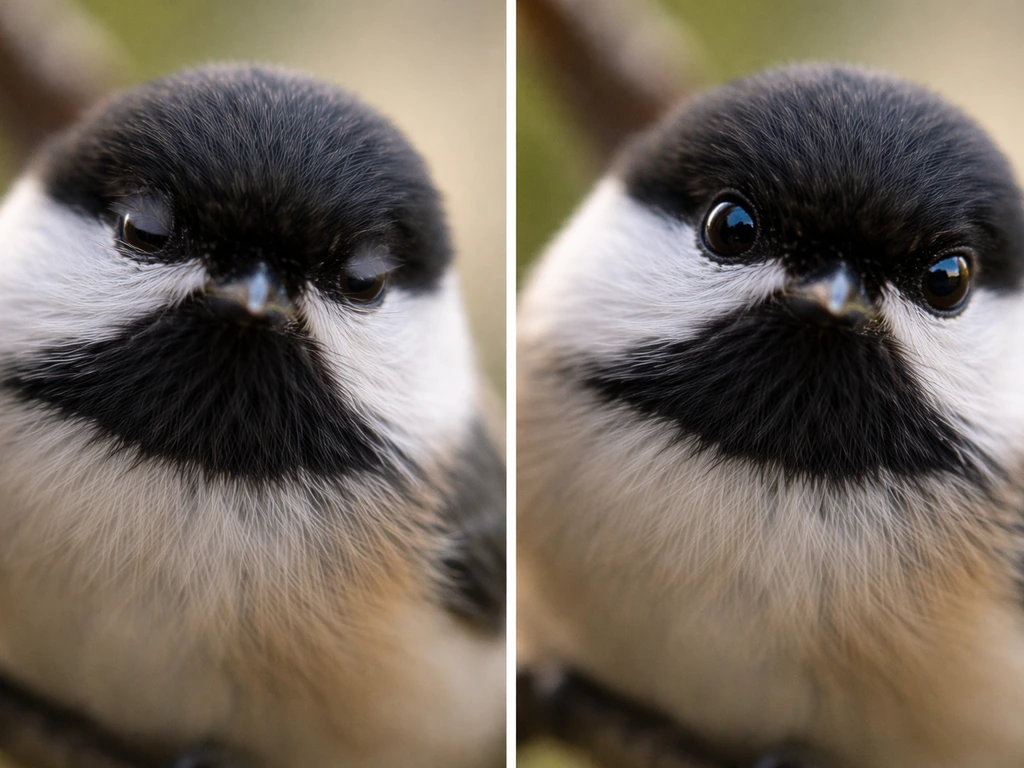
Eye pinning is one of the highest-arousal signals in birds and is worth paying attention to. But it shows up in excitement, fear, aggression, and courtship. You have to pair it with posture, feather position, and what the bird does next to know what it means. A bird with pinned eyes, fanned tail, and puffed chest who's actively pursuing another bird is in a very different headspace from one with pinned eyes who's retreating.
Common triggers behind the behavior
Knowing why this is happening helps you fix it. These are the most common causes.
- Hormones and breeding season: Longer daylight hours trigger reproductive hormones in most pet bird species. Birds that were perfectly chill all winter can suddenly become intensely driven to mate as spring arrives. This is photoperiod-driven behavior, meaning the amount of light per day directly affects hormone levels.
- Stress and overcrowding: A bird that feels cramped, under-stimulated, or threatened may redirect that energy into dominating a cagemate. If the cage is too small for two birds to have their own space, you'll see more of this.
- Resource competition: Food bowls, water dishes, favorite perches, even certain toys can become things worth "guarding." Stepping on a cagemate near these resources is often pure dominance behavior.
- Boredom: Birds with nothing to do will invent things to do. Sometimes that means pestering a cagemate. Increased foraging opportunities and enrichment often reduce this quickly.
- Pair bonding and mate-seeking: If your birds have bonded closely, one may become very insistent about mating behavior. This can intensify if nesting materials or nest-like spaces are present in the cage.
What to check today: cage setup, enrichment, and physical health
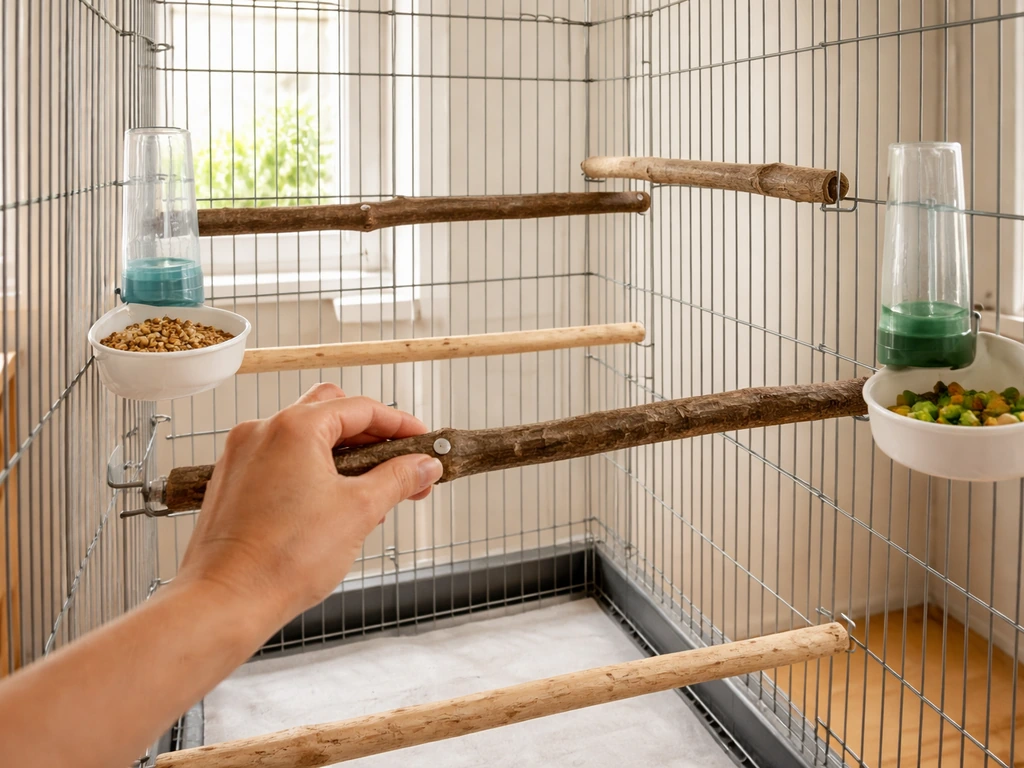
Cage and environment
Start with the basics. Are there at least two of everything? Two food stations, two water sources, multiple perches at different heights? If one bird controls access to resources, the dynamic between them will stay tense. Perches should be spread around the cage so neither bird has to pass through the other's space constantly.
Remove any nest boxes, dark huts, cozy hideaways, or enclosed spaces. These trigger nesting instincts and crank up hormone-driven behavior. Also pull any toys your bird treats as a mate substitute (usually something it regurgitates on or rubs against regularly). Reducing daylight to around 8 hours per day is a concrete, vet-recommended way to lower reproductive hormone levels if breeding behavior is the issue. IVIS also notes that breeding season can heighten stress through same-species competition, such as a neighboring male challenging, which can compromise breeding success.
Enrichment and mental stimulation
Add foraging toys, rotate what's in the cage, and give both birds things to do independently. If the stepped-on bird has its own activities and distractions, it's less likely to be a constant target. Think of enrichment as giving each bird its own agenda.
Check the feet and legs of both birds
This part often gets overlooked. If a bird is being stepped on repeatedly and isn't moving away normally, it might not be able to. Check the feet and legs of the bird being stepped on for swelling, sores, redness, or any reluctance to grip the perch. Pododermatitis (bumblefoot) causes painful lesions on the foot's bottom surface and can make a bird shift its weight awkwardly or avoid certain postures. Look at the perches too: rough, too-thin, or too-uniform perches can cause foot soreness over time. Varied diameter perches help a lot.
Also watch the bird being stepped on for any signs it's sitting low, favoring one leg, or resting on the cage floor more than usual. Those are red flags that something physical is wrong, not just a social issue.
How to respond right now
If you're watching this happen and the bird on the bottom is clearly distressed, separate them now. You don't need to permanently re-home anyone, but giving the stepped-on bird its own space to decompress is the right immediate move. A second cage, even temporarily, lets you monitor both birds and reintroduce them later with better setup conditions.
- Physically separate the birds if the one being stepped on is screaming, biting, trying to flee, or sitting puffed and flat after the interaction.
- Reduce light exposure to 8 hours of daylight if hormonal behavior seems to be the driver. Cover the cage earlier in the evening and keep it consistent.
- Remove nest boxes, huts, and mate-substitute toys immediately.
- Add a second food bowl and water dish if you only have one of each.
- Add perches so both birds have spots that don't require crossing the other's territory.
- Supervise all shared time until the behavior settles, especially during early morning and late afternoon when hormones tend to peak.
- Increase enrichment for the bird doing the stepping so it has other outlets.
If the behavior is mild and neither bird seems stressed, you don't necessarily need to intervene. Watch, note whether it escalates, and track how often it's happening. Some stepping is just normal flock life.
When it's a red flag and time to call an avian vet
Some situations go beyond behavior management and need a professional. Here's when to pick up the phone.
| Sign to watch for | What it might mean | Action |
|---|---|---|
| Limping, not bearing weight, or refusing perches | Foot pain, bumblefoot, bone or muscle disorder | Avian vet promptly |
| Sitting on cage floor, moving only when necessary | Pain, neurological issue, severe illness | Avian vet urgently |
| Bleeding from feet, vent area, or skin | Injury from mounting or aggression | Avian vet urgently |
| Screaming continuously or extreme fear response after interactions | Psychological stress, trauma | Separate birds; vet consult |
| Feather pulling or skin tearing on the other bird | Aggression, underlying disease, psychological problem | Avian vet promptly |
| Sudden change in posture, drooping wings, or difficulty gripping | Neurological issue, bone/muscle disorder | Avian vet urgently |
| Mounting is constant and causing visible harm despite management changes | Uncontrolled hormonal aggression | Avian vet for hormonal treatment options |
Any sudden change in how a bird holds itself, especially if it came on quickly and wasn't there before, warrants a vet call. Birds hide illness well. By the time posture changes are obvious, something has usually been brewing for a while.
It's also worth knowing that stepping-on behavior sometimes co-occurs with other social behaviors that can look alarming but are actually normal, like one bird feeding the other or regurgitating onto a cagemate. If you are seeing regurgitation targeted at you, this can point to the same bonding and hormonal signals, so it helps to look at body language and context regurgitating onto a cagemate.
If one bird is feeding the other, it can sometimes be a bonding or comfort signal, but it's important to watch how the receiving bird responds one bird feeding the other. Those behaviors are usually bonding signals. The difference is in how the receiving bird responds. A welcomed partner looks relaxed and reciprocates.
A stressed bird looks trapped.
A quick comparison: normal stepping vs. something to address
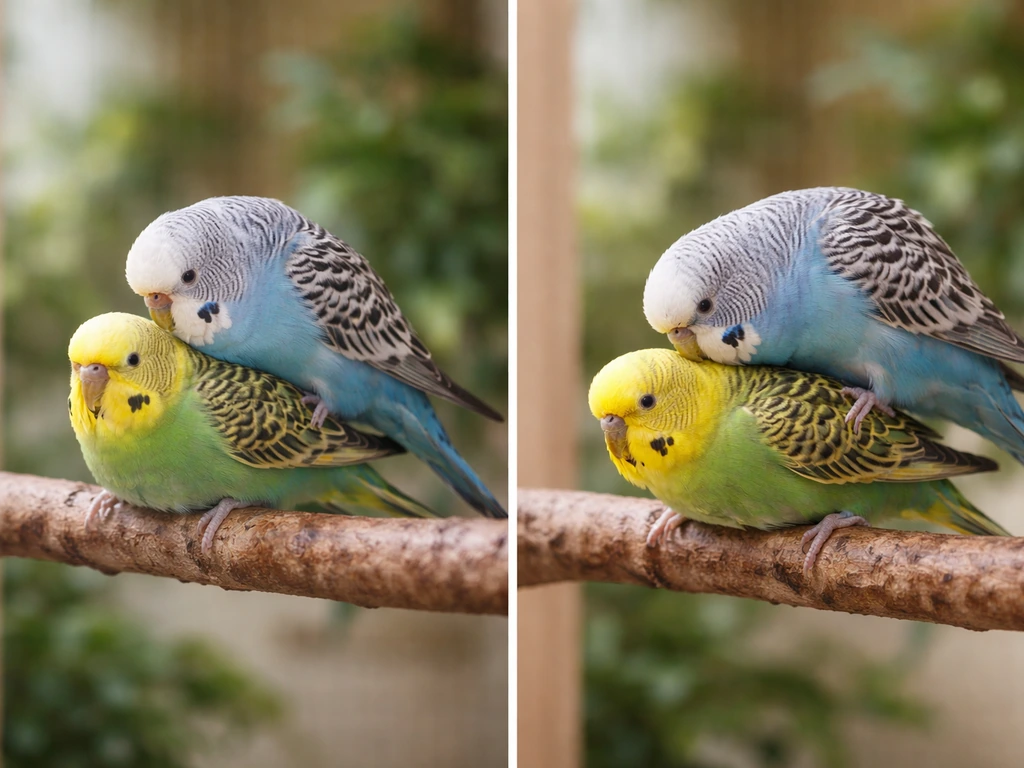
| What you're seeing | Likely normal | Worth addressing or monitoring |
|---|---|---|
| Occasional mounting with relaxed body language from both birds | Yes | No, unless it becomes frequent |
| Stepping near food or perches followed by the other bird moving away calmly | Yes, mild dominance | Add more resources as a precaution |
| Frequent mounting that the bottom bird clearly resists | No | Yes, separate and adjust environment |
| Mounting followed by one bird sitting puffed on the floor | No | Yes, check for injury or illness |
| Mounting with biting, feather pulling, or bleeding | No | Yes, separate immediately and see a vet |
| Mounting only during spring/longer days, otherwise calm | Yes, seasonal hormones | Manage light exposure; monitor |
The bottom line is that birds step on each other for real reasons, and most of those reasons are manageable once you know what you're looking at. Start by watching both birds closely, adjust the environment today using the steps above, and don't hesitate to call an avian vet if something feels physically off. Your instincts as an owner matter. If your bird is sleeping on you instead of just stepping on another bird, that can be a sign of comfort or bonding and it has its own set of causes to consider why does my bird sleep on me. If it looks wrong, trust that and get a professional opinion.
FAQ
How can I tell if stepping is mating behavior or aggression when the body signals look mixed?
Use what happens immediately after. Courtship and arousal usually keeps the posture fluid and the stepped-on bird has escape options, it may crouch calmly or reciprocate later. Aggression is more likely if the top bird blocks movement, follows the other bird after it tries to leave, or pairs stepping with lunging, hard forward lean, or warning vocalizations.
What if my birds step on each other but neither one looks hurt, should I still change anything?
Yes, do a quick risk check even if it looks mild. Confirm the bottom bird is not losing access to food, water, or a preferred perch, and that it can move away without being chased back into the same spot. If stepping becomes frequent or monopolizes resources, adjust cage layout and add independent foraging options even without visible injuries.
Can stepping happen between birds that are same sex or unrelated?
Yes. Same-sex mounting and other social “closeness” behaviors can occur without a mate or breeding context. Still, if it escalates into trapping or the receiving bird shows distress, treat it as a compatibility or hormone issue rather than assuming it is harmless because they are both the same sex.
How do I know whether the bird being stepped on might be in pain (not just “being submissive”)?
Look for pain-related habits beyond body language: favoring one foot, gripping awkwardly, sitting low more often, reluctance to step onto certain perches, or a shift to the cage floor afterward. Bumblefoot signs can include redness, swelling, or a rough or thickened area on the bottom of the foot.
Will separating the birds permanently fix the problem?
Not usually. Immediate separation is appropriate if the receiving bird is clearly distressed or the stepping is aggressive and repetitive. For a longer-term fix, it often works better to separate temporarily, adjust the environment, and reintroduce using the improved setup (more perches, more resources, and fewer nesting triggers) rather than assuming a permanent rehome is the only solution.
My bird steps on another bird and also regurgitates. What should I watch for?
Regurgitation can be bonding, but confirm the receiver’s body language. If the receiving bird looks relaxed, stays near, or reciprocates, it is more likely affiliative. If the receiver is pinned, blocked, crouched in fear, or shows escape attempts, treat it as unwanted hormonal or territorial pressure and reduce triggers and resources competition.
How many food and water stations are enough, and what if my cage is too small?
Aim for at least two of each, placed so both birds can access them without repeatedly crossing the other bird’s space. In very small cages, two stations may still not prevent blocking. If one bird can physically guard both, stepping may persist, so increasing cage size or changing perch and station placement is often the real fix.
Do certain perch types make stepping more likely or more harmful?
Perch design can affect comfort and foot health. If perches are rough, too thin, or all the same diameter, foot soreness can increase and make the receiving bird less able to get away. Varied diameters and smooth, safe surfaces help reduce pain that can turn a “normal” social interaction into a harmful one.
Should I reduce daylight or remove toys if stepping is happening during certain times of day?
If stepping aligns with hormone-heavy periods or breeding cues, reduce daylight toward about 8 hours per day and remove nest-like items (huts, enclosed hideaways, nest boxes) and mating substitute toys. Also watch for rebound effects, where the bird becomes more restless before settling, so keep enrichment low-conflict (foraging and independent play) rather than adding more attention to the behavior.
When should I call an avian vet urgently?
Call promptly if posture changes happened suddenly, you see limping, swelling, open sores, a foot that looks abnormal, blood, or a bird that is spending lots of time on the floor. Also call if the stepping is frequent and the receiving bird is not improving after environmental changes, since pain or a medical issue can maintain the cycle.
What tracking should I do to figure out the cause faster?
Log the exact context: time of day, location in the cage (near a perch, food bowl, or corner), who initiates, whether the receiving bird tries to flee, and whether stepping follows warning signs like biting or a hard posture. This helps you decide if the main driver is hormones, resource guarding, or a physical inability to escape.
Next Articles
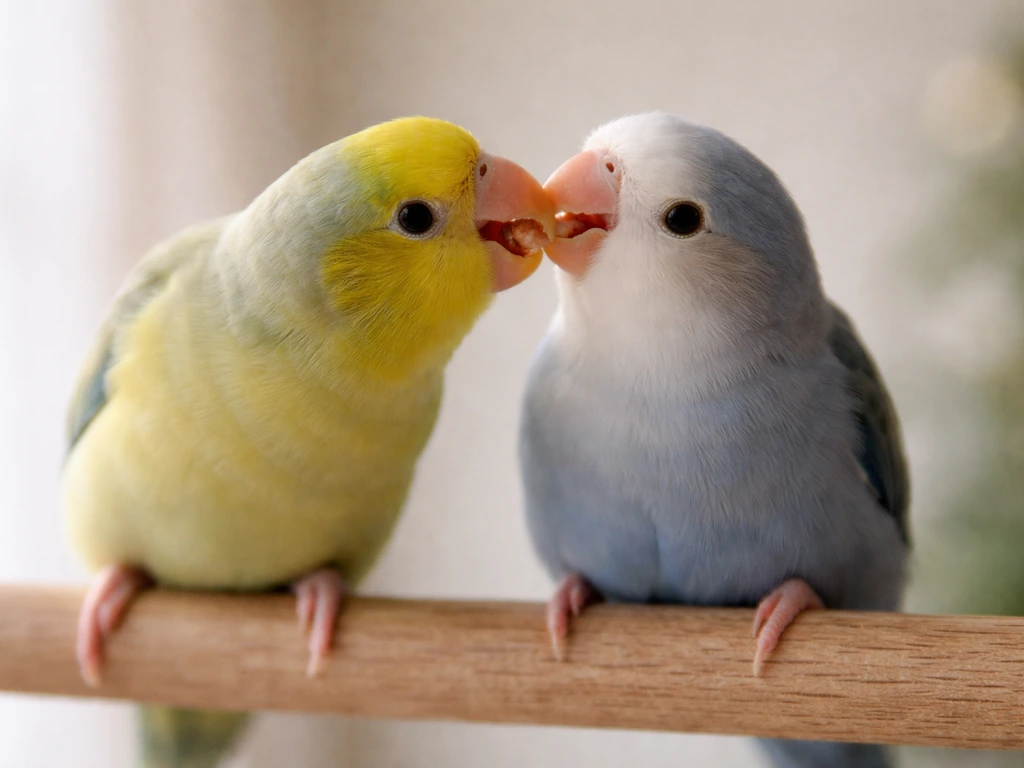
Why Is My Bird Feeding My Other Bird? Causes and Fixes
Learn why your bird feeds another, how to spot bonding vs dominance or illness, and what to do next safely.
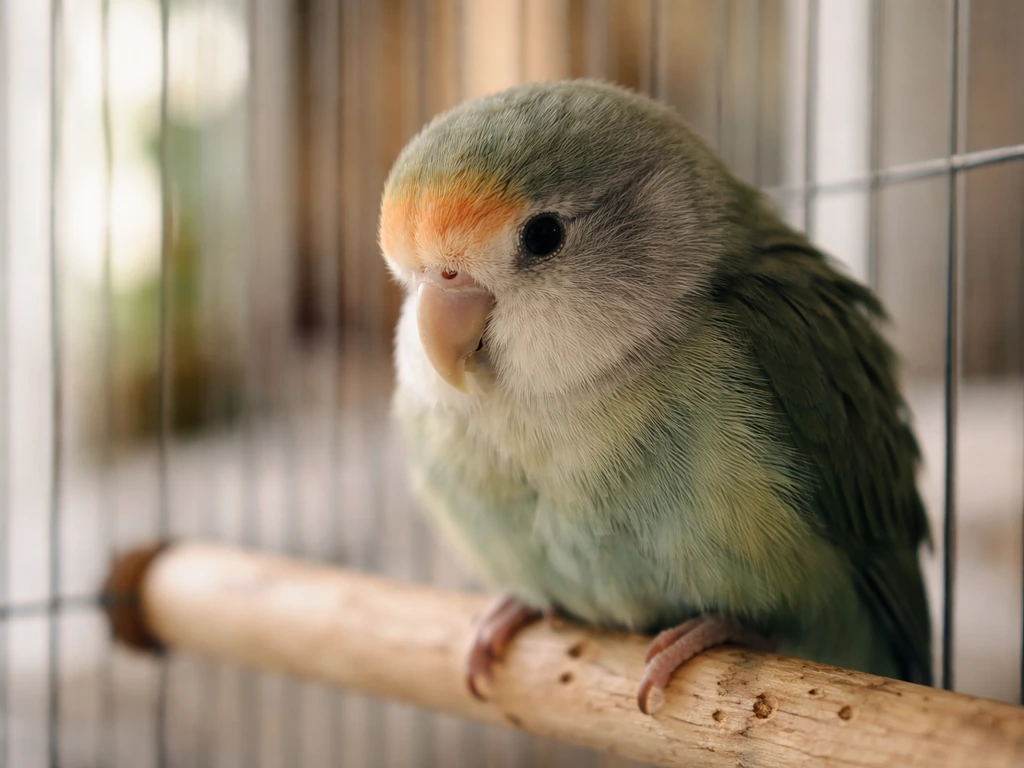
Why Is My Bird Making Whimpering Noises? What to Check
Find reasons for whimpering bird noises, quick home checks, and red flags for urgent vet care plus tracking tips.
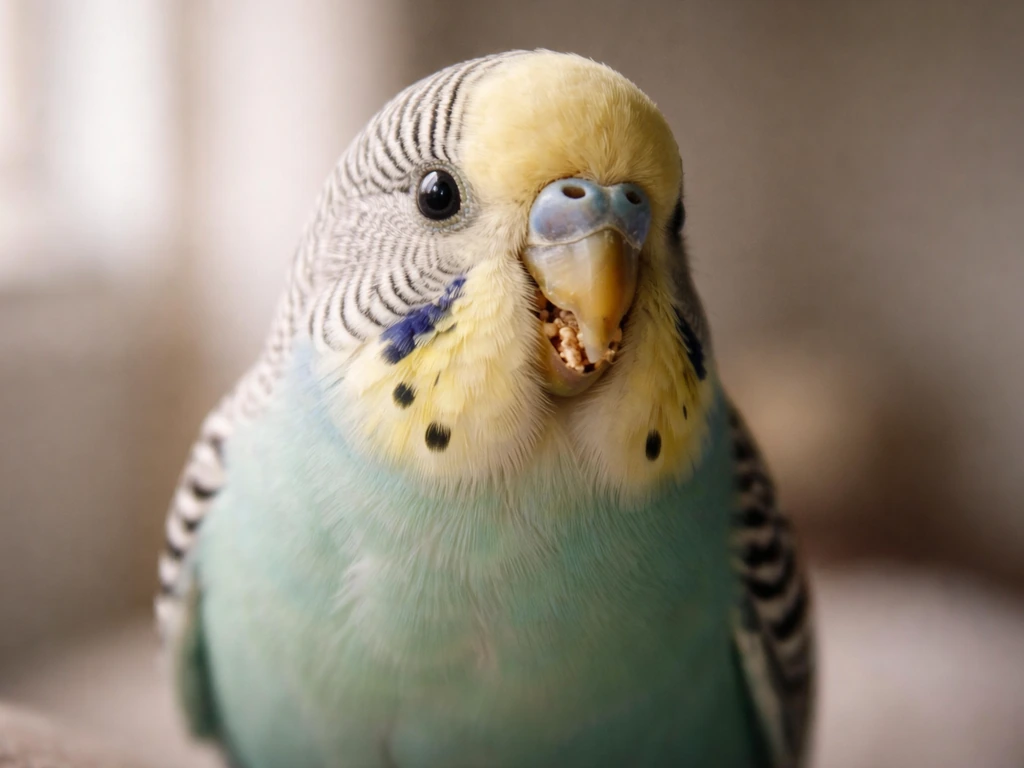
Why Does My Bird Make Crunching Noises? Causes and What to Do
Learn why your bird crunches, spot normal beak chewing vs breathing or crop issues, and what to do next.