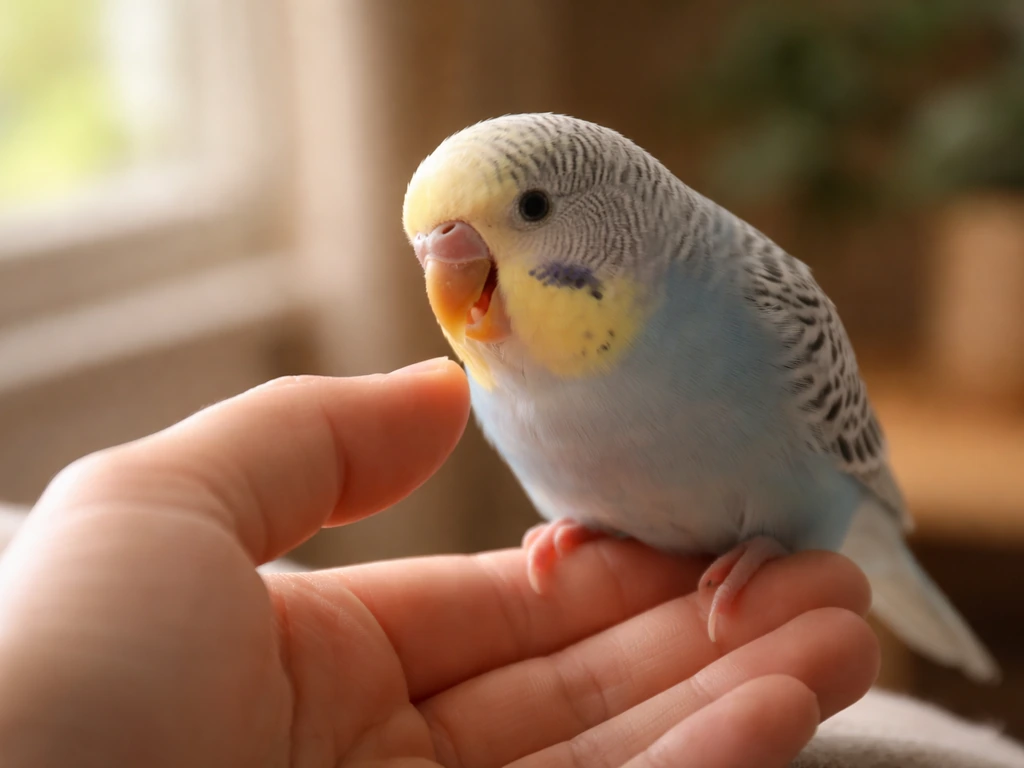
Your bird is beaking you because birds use their beak the same way we use our hands. It's their primary tool for touching, testing, exploring, and communicating. Most of the time, gentle beak contact is completely normal and not aggression at all. But context matters a lot, and the same beak behavior can mean very different things depending on what your bird's body is doing at the same time, what was happening right before it started, and whether the contact is gentle or actually breaking skin.
Why Is My Bird Beaking Me? Causes and How to Stop It

Marcus Chen
26 Jun 2026
Normal beak contact vs. a real problem bite
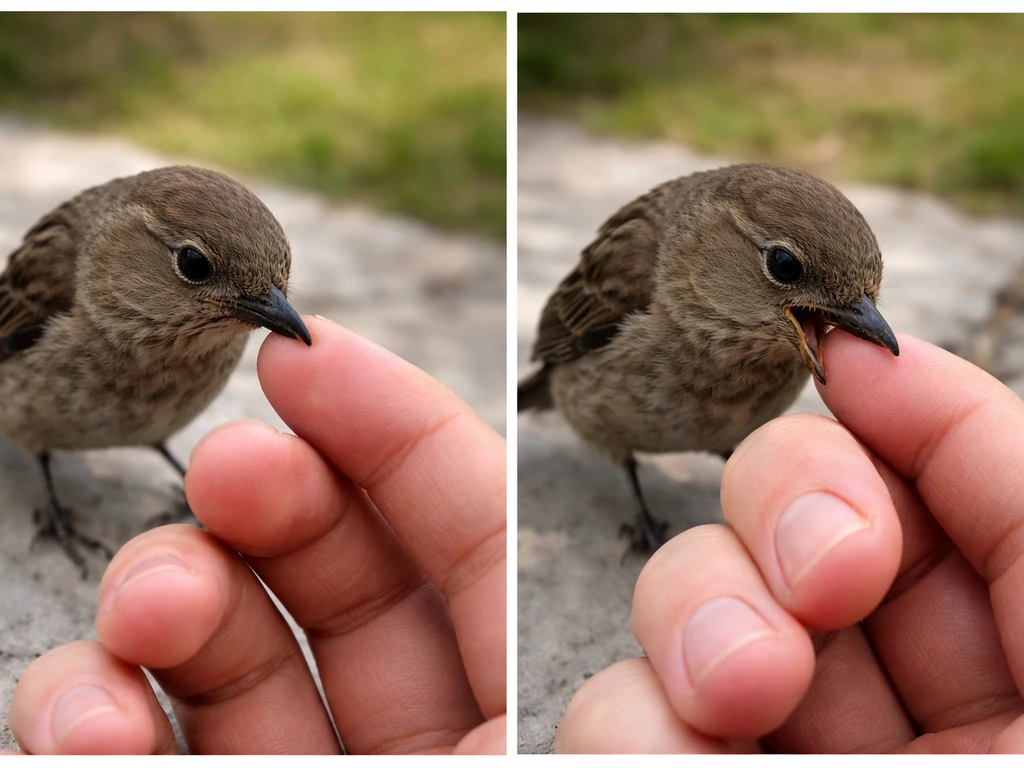
There's a big difference between a bird that mouths your finger gently while you're holding it and a bird that lunges and clamps down hard enough to bruise or break skin. Both are technically 'beaking you,' but they call for completely different responses.
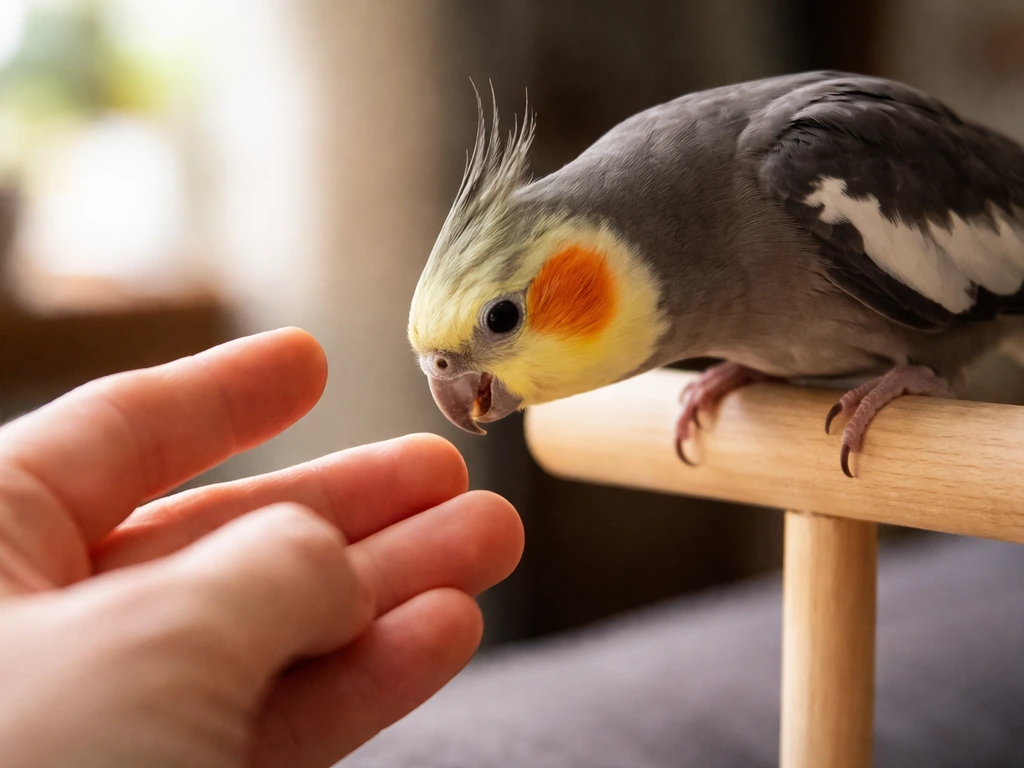
Normal beak behavior looks like light nibbling, exploratory touching, gentle grasping while climbing, or soft pressure without intent to hurt. Baby birds and young parrots do this constantly as they learn about their world. A bird that's preening your hair or gently mouthing your fingers is almost certainly being affectionate or curious, not aggressive.
Problematic beaking looks different: the bird leans forward, pins its eyes, fluffs or tightens its feathers, fans or flares its tail, and the bite has real force behind it. If bites are leaving marks, happening unpredictably, or getting worse over time, something specific is triggering it and it needs to be addressed. The good news is that birds almost never bite without motivation or warning. If you learn to read the signals, you can usually intervene before teeth (well, beak) connect.
The most common reasons birds beak humans
Curiosity and exploration
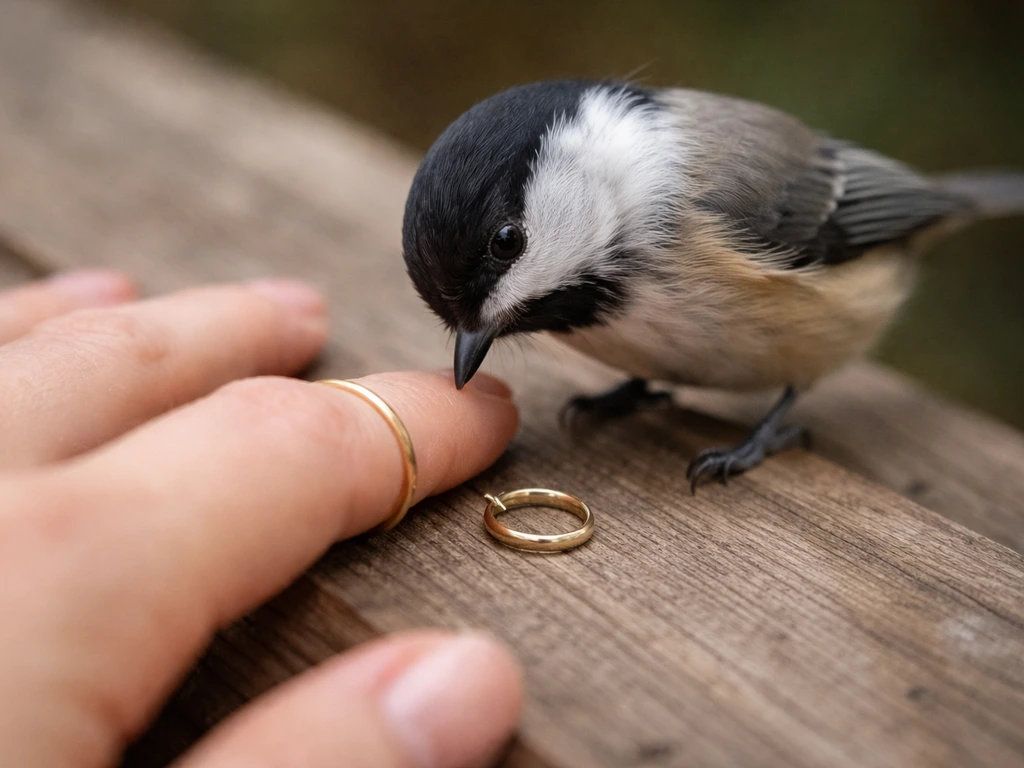
Birds investigate everything with their beaks. Your rings, nail polish, freckles, earrings, and even the texture of your skin are all interesting to a curious bird. This is especially true of young birds and species like cockatiels, budgies, and conures that are naturally tactile and exploratory. If the nibbling is gentle and your bird looks relaxed, you're probably just being 'inspected.'
Affection and preening
Mutual preening is a big deal in bird social life. When your bird gently nibbles your hair, eyebrows, or fingers, it may be treating you as a flock member it trusts. This is genuinely affectionate behavior, even if it occasionally feels a little sharp. It's in the same category as a bird that regurgitates on you or chooses to sleep pressed against you: signs of a strong bond.
Attention-seeking
If your bird has figured out that biting your finger makes you react (you gasp, you move, you look at it), it may repeat the behavior just to get a response. Birds are smart, and they connect cause and effect quickly. A strong reaction from you, even a negative one, can accidentally teach your bird that biting = attention. This is one of the most common ways gentle mouthing escalates into harder biting over time.
Begging and feeding cues
Young birds or birds in bonded pairs often beak around the mouth area as a food-begging signal. If your birds are a bonded pair, one bird may mouth or feed the other as part of that social bond bonded pairs. If your bird is bobbing its head and nosing at your lips or fingers around mealtimes, it may be asking to be fed, or mimicking feeding behaviors it associates with closeness and trust.
Fear, stress, hormones, and territory: the triggers behind harder bites
Fear and overstimulation
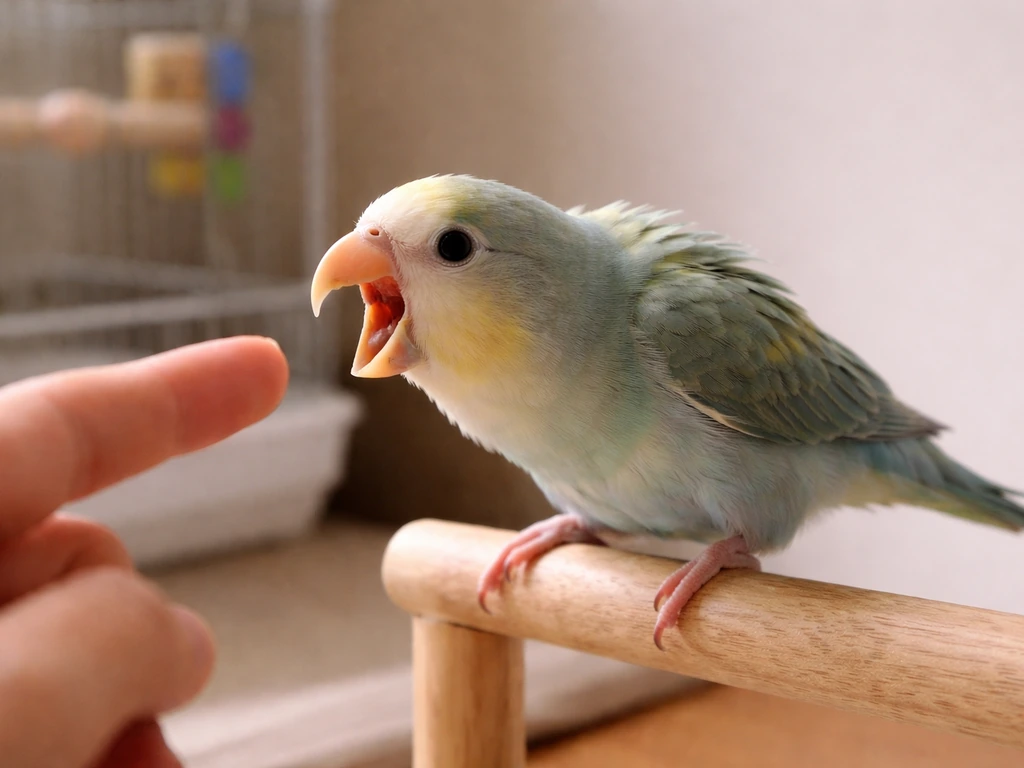
A frightened bird bites to create distance. If your bird is new to your home, had a bad experience, or is being handled in a way that feels threatening, it will use its beak to make you back off. Reaching into the cage to grab a bird that hasn't been trained to step up is one of the most reliable ways to get bitten, because from the bird's perspective, a giant hand is invading its safe space. Overstimulation during petting, especially long handling sessions, can also cross a threshold where even a tame bird suddenly bites.
Territorial aggression
Many birds treat their cage, a favorite perch, or even a specific person as territory to defend. Reaching in to change food dishes, clean the cage, or retrieve the bird from inside can trigger biting that has nothing to do with your relationship outside the cage. The cage door, the food bowl area, and cage perimeters are commonly-defended zones, especially in psittacines (parrots, cockatiels, conures, and similar species).
Hormonal periods
blank" rel="noopener noreferrer">Sexually mature birds can go through periods of dramatically increased aggression driven by hormones, and it can feel like your sweet bird became a different animal overnight. If your bird is suddenly stepping on or biting the other bird, hormone and territorial triggers are often involved, so consider the season and setting aggression driven by hormones. This is especially common in cockatiels, African greys, Amazon parrots, and macaws. During these periods, birds may guard a person (treating them as a mate), become more territorial, scream more, and bite anyone who comes near their 'mate' or nesting area.
Several home conditions ramp up hormonal behavior: longer daily light exposure, access to dark enclosed spaces like cabinets or tents, high-calorie foods, and frequent full-body petting (especially stroking the back, under the wings, or near the tail). Those areas are associated with sexual stimulation in parrots, and regular contact there can keep a bird in a heightened hormonal state that makes biting more likely.
Displaced aggression
Sometimes a bird gets startled or frustrated by something it can't reach (another pet, a reflection, a noise outside), and bites the nearest available thing, which happens to be you. This isn't personal. It's the bird equivalent of slamming a door when you're angry at something else entirely.
How to read body language and pinpoint the cause
Body language is the fastest way to figure out what kind of beaking you're dealing with. You're looking at the whole bird, not just the beak.
| Signal | What it usually means |
|---|---|
| Relaxed, slightly fluffed feathers, slow blinking | Calm and content, beak contact is likely affectionate or exploratory |
| Pinned eyes (pupils rapidly contracting and expanding) | Aroused or excited — could be positive or a warning, read the rest of the body |
| Tail fanning or flaring wide | Agitated, excited, or warning — step back and observe |
| Crest raised high (cockatiels, cockatoos) | Excited, alert, or alarmed depending on context |
| Crest slicked flat against head | Frightened or very aggressive — high bite risk |
| Leaning forward, wings slightly raised | Threat posture, about to bite defensively |
| Wings held away from the body, panting | Fear response, especially in budgies — do not push interaction |
| Open beak, head held high | Dominance display, bite may follow with no fear behind it |
| Growling or hissing vocalizations | Clear warning — back off now |
| Soft chirping, contact calls, relaxed posture | Comfortable and social, gentle beak contact is normal here |
Eye pinning on its own doesn't tell you much. Combined with tail fanning and a forward lean, it's a warning. Combined with relaxed posture and contact calls, it might just mean your bird is really happy to see you. Context is everything.
Also pay attention to timing. Does biting happen when you reach into the cage? During petting that goes on too long? At specific times of year? Around certain people or animals? Identifying the pattern is usually more useful than trying to 'correct' the behavior in the moment.
What to do right now if your bird just bit you
First: if the bite broke skin, treat the wound like any animal bite. Wash it with soap and water under running water for at least five minutes, apply gentle pressure if it's bleeding, and keep it clean. Bird bites that break skin carry a small risk of infection, so don't just brush it off.
Second: do not react dramatically. No yelling, no pulling away sharply, no tossing the bird. A strong reaction teaches the bird that biting produces an interesting and exciting response, which makes it more likely to happen again. Stay as calm as you can, gently place the bird on a neutral perch, and walk away for a few minutes.
Third: do not go back in immediately and repeat the same interaction that caused the bite. Give both of you a real break, let the bird settle, and try again only when it looks relaxed. If the bird bites every time you do a specific thing (reach in the cage, touch a particular spot, approach a favorite toy), make a mental note right then. That's your data point.
If you notice bites are getting more frequent or harder over time, start a simple log: time of day, what you were doing, what the bird looked like before the bite, and how hard it was. Patterns usually emerge within a week or two, and that information is genuinely useful whether you're troubleshooting on your own or consulting with an avian vet.
Training and enrichment strategies that actually reduce beaking
Teach a reliable step-up on a neutral surface
If your bird bites when you reach into the cage, don't keep reaching in. Instead, open the cage door and let the bird come out to a stand or T-perch on its own terms, then practice step-up from there. Presenting your hand or a stick perch to the bird's lower chest (just above the feet) with a treat reward for stepping up creates a positive association and removes the territorial trigger of your hand entering the cage space.
Try target training
Target training is one of the most effective and beginner-friendly approaches for redirecting beak behavior. The idea is simple: you teach the bird to touch a target (a chopstick, a pen cap, the eraser end of a pencil) with its beak and get a treat reward immediately when it does. Once your bird knows how to target, you can use that skill to guide it away from your hand, onto a perch, or toward a toy instead. It gives the beak something specific and rewarding to do.
Keep training sessions short: two to five minutes maximum, especially at first. End on a success and before the bird gets bored or frustrated. Reward immediately after the desired behavior, not several seconds later. Timing matters more than most people realize.
Redirect to toys and foraging
A bird that has plenty of interesting things to do with its beak is less likely to use yours as an activity. Offer a mix of shreddable toys, foot toys, foraging opportunities (hiding food in paper cups, wrapping treats in paper, using puzzle feeders), and rotating novel items. The goal is to give the beak an appropriate outlet. When your bird starts mouthing your hand, offer a foot toy instead and praise or reward when it takes it.
Manage overstimulation
Set a consistent routine for handling so your bird knows what to expect. Keep petting sessions shorter than you think necessary, especially with birds prone to hormonal biting. Stick to head and neck scratches rather than back or under-wing stroking, which can stimulate sexual behavior in many parrot species. Watch for early warning signals (tail flick, posture shift, eye pin) and put the bird down before it escalates rather than after.
Don't accidentally reward biting
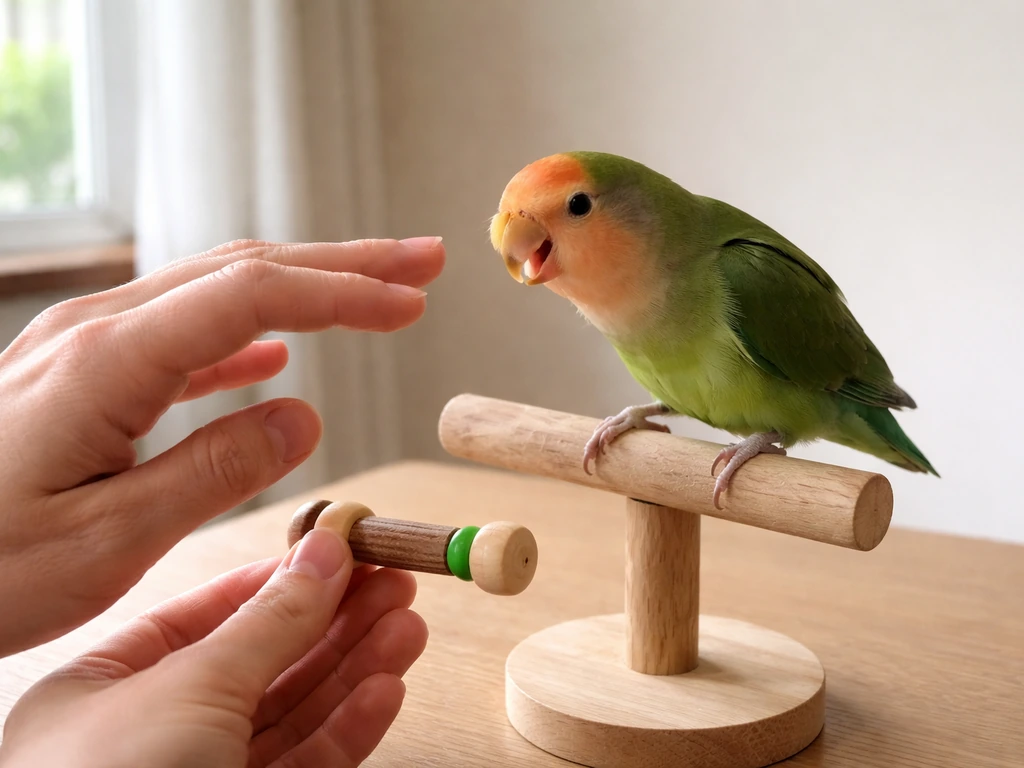
This is the single most important thing: stop whatever you're doing the moment a bite happens, but don't give the bird a big reaction that makes it interesting. The goal is for biting to result in absolutely nothing happening. No drama, no attention, no change in your behavior other than calmly ending the interaction. Meanwhile, reward and pay attention to your bird during the moments when it's calm, stepping up nicely, or using its toys. You're teaching the bird what actually works to get good things.
When beaking might be a health issue
A sudden change in beak behavior, especially in a bird that was previously gentle and predictable, is sometimes a sign that something physical is wrong. If you notice regurgitation along with changes in appetite, posture, or droppings, it can be worth discussing with an avian vet too bird regurgitation. Birds are very good at masking illness, so by the time behavior changes, they may already be feeling pretty unwell.
Watch for any of these alongside the biting behavior, and if you see them, get to an avian vet rather than treating it as a training problem:
- Fluffed-up feathers for extended periods, especially combined with inactivity or sitting at the bottom of the cage
- Open-mouth breathing, wheezing, tail bobbing up and down with each breath, or any respiratory effort that looks labored
- Significant changes in droppings: color, consistency, volume, or the ratio of solid to liquid
- Noticeable decrease in appetite or sudden disinterest in favorite foods
- Swelling anywhere on the body, limping, or obvious reluctance to use a foot or wing
- Lethargy, drooping wings, or uncharacteristic stillness
- A bird that suddenly bites out of nowhere after months or years of gentle behavior
- Signs of egg-laying or nesting behavior combined with aggression, especially if the bird strains, looks bloated, or is spending time on the cage floor
Hormonal issues can also tip from 'behavioral' into 'medical' territory. A hen that is laying eggs or showing signs of reproductive strain needs veterinary oversight, not just training adjustments. The same goes for a bird showing signs of chronic nesting behavior: an avian vet can advise on environmental and dietary changes that genuinely help, and can rule out anything physical.
If you're not sure whether what you're seeing is normal for your bird, it's always better to call an avian vet and describe what you're observing than to wait and see. Birds decline quickly when they're sick, and early attention makes a real difference.
FAQ
What should I do right after a bite if it broke skin? Is it serious?
If the beak breaks skin, do not treat it as “just a nip.” Rinse under running water with soap for several minutes, apply gentle pressure if needed, and watch for spreading redness, warmth, swelling, fever, or worsening pain over the next 24 to 48 hours. Bird-borne bacteria can complicate bites, so if any symptoms escalate, get medical care promptly and mention it was an animal (bird) bite.
When my bird bites, what should I avoid doing in the moment?
If your goal is to stop escalation, avoid two common mistakes: pulling away suddenly and continuing the interaction right after the bite. The immediate fix is to calmly end the interaction, offer a neutral perch, and give a short reset period before trying again only when your bird is visibly relaxed.
My bird sometimes gently mouths me, can I train it without making my bird fear my hands?
Beak touching can be harmless curiosity, but you can still “shape” it. Use a firm but calm interruption by ending contact and redirecting to an approved target or toy. Then reinforce the alternative behavior (touching the target, stepping up, or taking a toy) so your bird learns what earns attention and treats.
How can I tell whether the beaking is hormonal versus fear or attention-seeking?
Not necessarily. Hormones are more likely when biting increases around seasonal changes, lighting shifts, nesting areas, or when you handle body zones linked to stimulation. If the behavior is tied to specific times of day, cage access, or particular interactions, that usually points to fear, territorial guarding, frustration, or attention-seeking rather than hormones.
Do some birds mouth more naturally, and how do I judge what’s normal?
Species and personality matter. More tactile species may mouth more during exploration, but the key indicator is whether your bird’s body stays relaxed and the pressure stays light. If you see progressive force, eye pinning plus forward lunge, feather flaring, or pinning that comes with hard bites, treat it as a problem behavior regardless of species.
My bird attacks me when I put my hand in the cage. What’s the best workaround for training and cleaning?
If your bird bites when you reach into the cage, the practical option is to stop entering the space. Open the door, let the bird step up voluntarily to a T-perch or stand, then reinforce step-up with a treat. This removes the trigger of “hand invading territory,” which often drives repeat biting.
Should I stop petting entirely to prevent hormonal biting?
Yes, frequent “full-body” stroking can matter. As a rule, shorten sessions and avoid back, under-wing, and near-tail rubbing for parrots prone to hormonal behavior. Stick to brief head and neck scratches if your bird tolerates them, and stop the moment posture shifts toward escalation.
What should I track in my bite log to find patterns faster?
A simple log is helpful, but add two extra data points that often reveal patterns: whether your bird was already in a guarding posture (cage door, favorite perch), and what your response was (did you jerk, gasp, or pull away). Those details help distinguish training loops from sudden triggers.
My bird’s beaking changed suddenly. When should I stop troubleshooting and call an avian vet?
If biting is sudden in a bird that used to be predictable, consider a medical check. Pay attention to changes like unusual droppings, fluffed posture that persists, appetite shifts, changes in vocalization, breathing sounds, or regurgitation paired with discomfort. In those cases, treat it as more than training and contact an avian vet.
How do I use target training specifically to redirect a biting habit?
Target training is most effective when you reinforce immediately after the correct touch, keep sessions short, and end before frustration. Once it’s reliable, practice redirecting: ask for the target, then guide the bird to a perch or toy instead of your hand. Consistency matters more than repeating long sessions.
What’s the safest “reset” routine after a bite so I don’t accidentally reward it?
If a bite happens and you want to avoid teaching attention for biting, keep your response neutral: stop the interaction, calmly move to a neutral perch, and wait for the bird to settle. When your bird is calm, reward it right then. Also avoid repeating the exact trigger activity (same petting spot, same cage entry) immediately after.
Next Article
Why Does My Bird Regurgitate on Me and When to Worry
Understand why your bird regurgitates for bonding or attention, spot warning signs, and know what to do next.