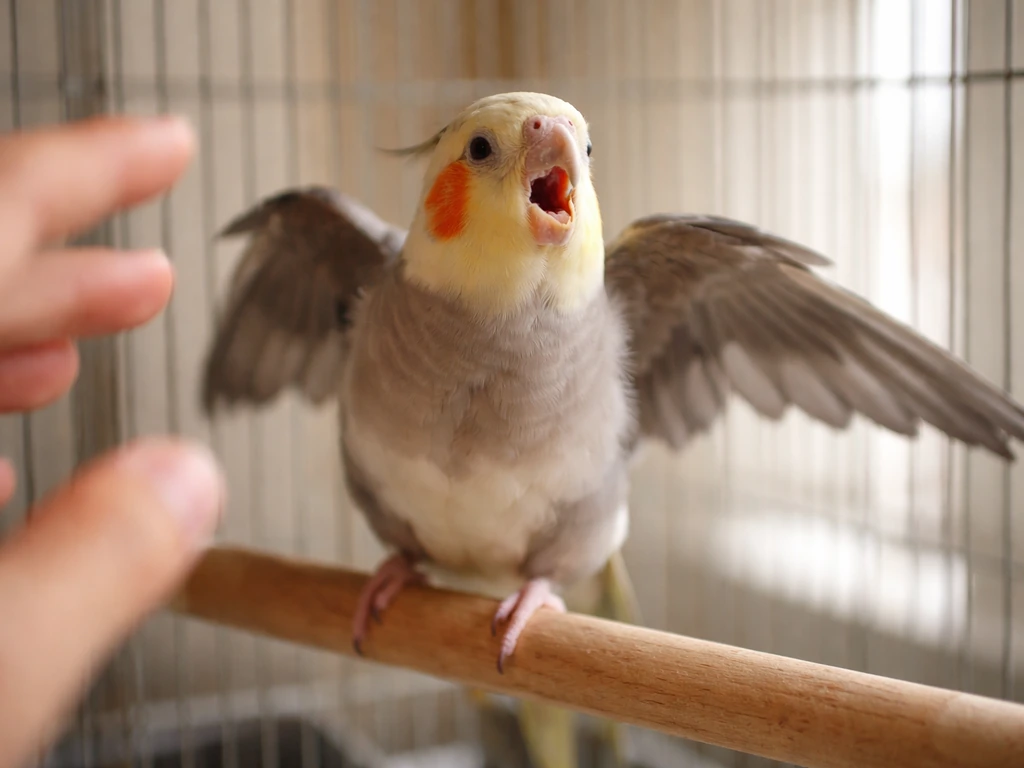
Most of the time, a bird flapping its wings inside the cage is completely normal. If your bird is flapping its wings but not taking off, the cause may be related to stress, a cage setup issue, or a health problem that needs attention flapping its wings inside the cage. Birds flap to exercise, stretch, express excitement, get your attention, or as part of bathing and preening routines. If the flapping seems to happen mostly in one spot and not as full exercise or stretching, it may still be normal but it is worth looking for context and stress triggers birds flap to exercise and stretch. The flapping is usually short, energetic, and followed by the bird perching calmly and going about its business. That said, wing flapping combined with open-mouth breathing, tail bobbing, fluffed feathers, or a sudden change in energy is a different story and worth taking seriously today.
Why Is My Bird Flapping Wings in the Cage? Fixes Now
Normal reasons birds flap wings in a cage
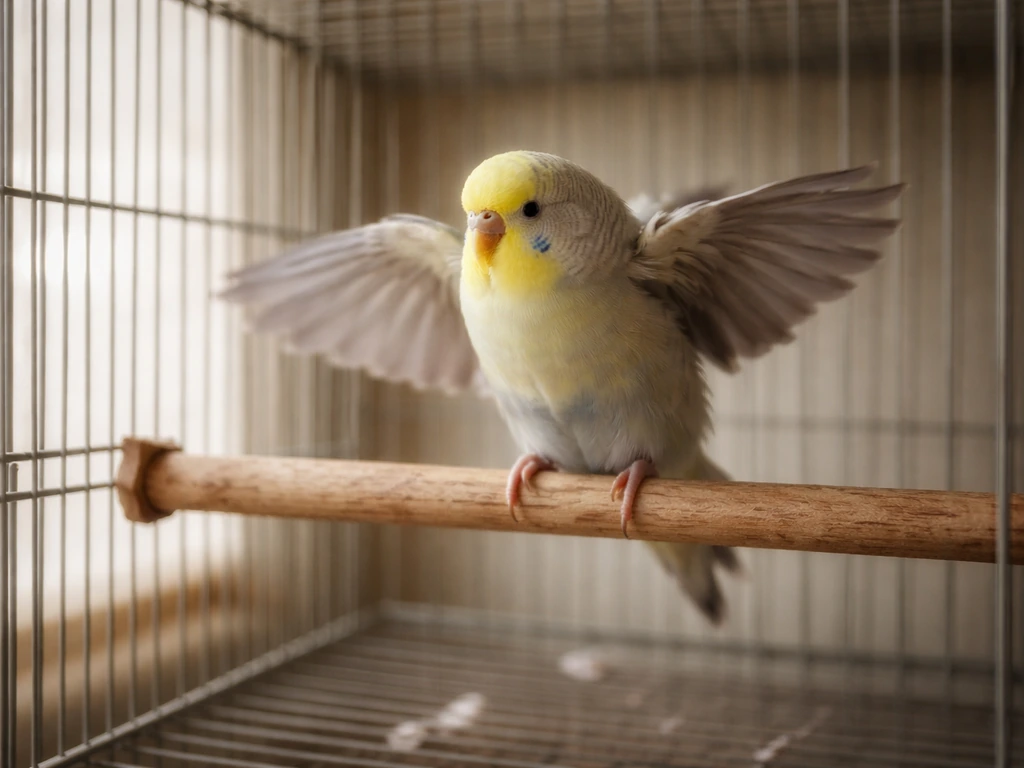
The most common reason is simple exercise. A caged bird cannot fly laps around a room, so brief wing-flapping bursts are how it works its flight muscles. You will often see this in the morning, after a nap, or when the bird is feeling alert and active. It stops quickly, and the bird returns to its normal perch posture without any visible effort. That is the clearest sign everything is fine.
Stretching is another big one. A lot of birds do a full wing extension and flap as a stretch, similar to how you might roll your shoulders after sitting for a while. You might see one wing extended at a time alongside a matching leg stretch on the same side, or both wings opening at once.
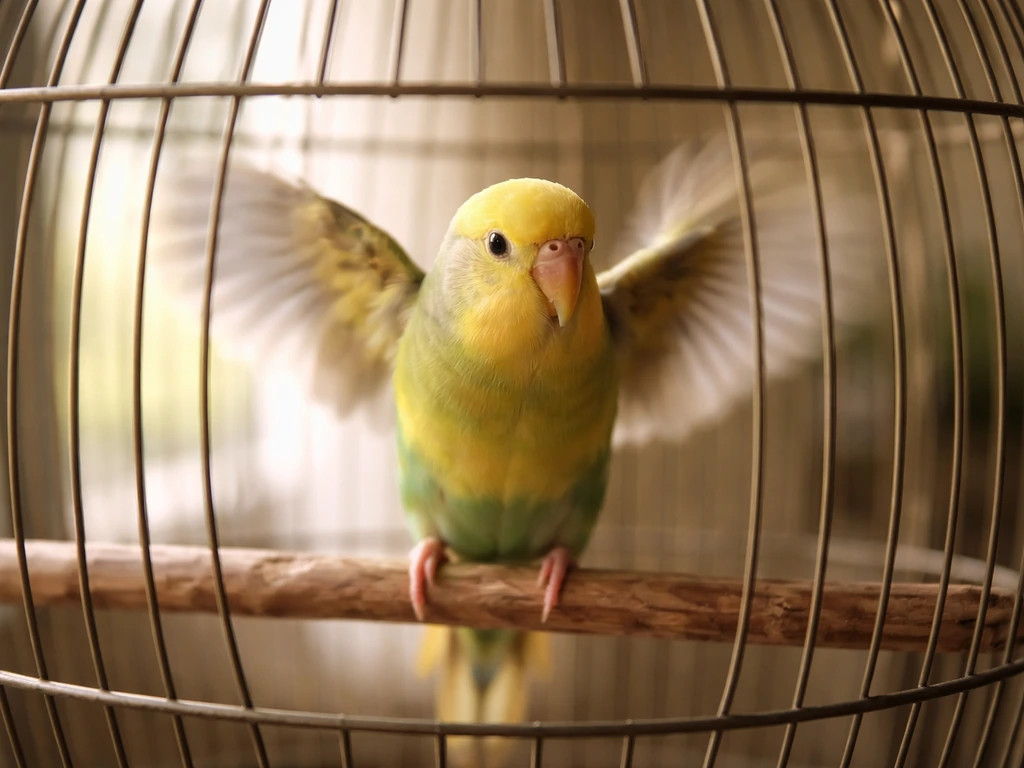
Excitement and attention-seeking drive plenty of wing flapping too. Budgies in particular are known for flapping wings to signal happiness or to tell you they want interaction. If your bird flaps when you walk into the room, starts talking, or bobs its head, it is almost certainly expressing enthusiasm rather than distress.
Bathing-related flapping is also very normal. When a bird is getting wet, either in a shallow dish, under a misting bottle, or in a sink, it will spread and flap its wings vigorously to work water through its feathers. Audubon notes that bathing behavior can include “standing in shallow water” with fluffed posture and wing-flapping motions to splash water over a bird’s back standing in shallow water with fluffed posture and wing-flapping motions. If your bird has recently had access to water or you have misted it, the flapping you see is likely grooming behavior, not a problem.
Stress, boredom, and environmental triggers
Not all wing flapping is joyful. A bird that is bored, under-stimulated, or stressed can flap repetitively in a way that looks more frantic or compulsive than the normal short burst. This is especially common in intelligent species like African greys, cockatoos, or conures that need a lot of mental engagement. If the flapping happens for long stretches and the bird seems agitated rather than playful, the environment is worth examining first.
Drafts are a frequently overlooked trigger. A draft is not just a cold room; it is a mild but consistent airflow, often with a slight temperature drop, that birds find deeply unsettling. If the cage is near an air conditioning vent, a heating outlet, a fan, or even a frequently opened window or door, the bird may flap in response to that airflow. Purdue University's veterinary husbandry guidance specifically warns against placing cages near HVAC outflows for this exact reason.
Fear from external stimuli is another common cause. A predator silhouette outside the window (a hawk, a cat, even a large crow), a new object placed near the cage, a loud noise, or an unfamiliar person can all trigger alarm flapping. This kind of flapping usually comes with alarm calls or wide, frightened eyes and settles once the trigger is gone.
Cage size also matters more than people realize. Purdue's guidelines state a cage should be at least twice the bird's wingspan in width, length, and depth. A bird in a cage that is too small cannot fully extend its wings and may flap repeatedly out of frustration. If your bird seems to knock its wingtips on the bars when flapping, the cage is too small.
Health red flags tied to wing flapping
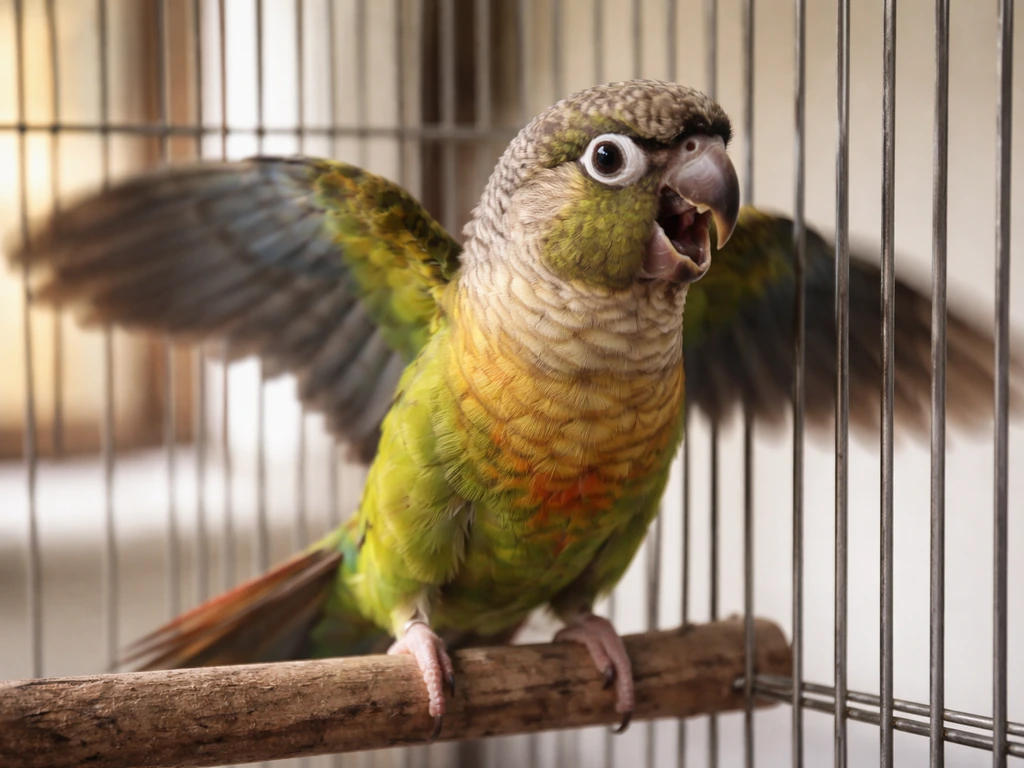
This is where you need to pay close attention. Wing flapping that is paired with any of the following signs suggests something medical is going on and you should not wait to see if it resolves on its own.
- Open-mouth breathing at rest (not during or immediately after heavy exertion)
- Tail bobbing with each breath, which indicates increased respiratory effort
- Audible breathing sounds like wheezing, clicking, or crackling
- Exaggerated chest movement or neck-stretching with each breath
- Fluffed feathers combined with lethargy or eyes partially closed
- Loss of balance, falling off the perch, or inability to grip properly
- Blue or pale tissue around the beak, feet, or inside the mouth
- Sudden change in droppings, especially very watery or discolored
- Dramatic drop in appetite or complete refusal of food
- Neurological signs like head tilt, tremors, or circling
Respiratory distress in birds is especially urgent. Smaller birds (under 300 grams) normally breathe at around 30 to 60 breaths per minute; larger birds (400 to 1,000 grams) breathe at roughly 15 to 30 breaths per minute. If your bird is breathing visibly faster than that at rest, or if you can see or hear the effort in each breath, that is a red flag.
One specific hazard that deserves its own mention: nonstick cookware fumes. PTFE (the coating in many nonstick pans) releases odorless fumes when overheated that are extremely toxic to birds. Clinical signs include sudden respiratory distress, neurological symptoms, and birds can die within minutes. If you have been cooking with nonstick cookware and your bird suddenly shows any distress, move the bird to fresh air immediately and treat it as an emergency.
How to tell normal from concerning flapping
The single most useful thing you can do is watch the bird for a few minutes and run through these observations. Context and combination of signs tell you far more than the flapping alone. Understanding why does a bird flap its wings can help you tell normal behavior from stress or illness.
| What to observe | Normal | Concerning |
|---|---|---|
| Duration | Short burst, stops in seconds | Prolonged, repetitive, or does not stop |
| Breathing after flapping | Returns to normal quickly | Open-mouth breathing continues at rest |
| Tail | Still or relaxed | Bobbing noticeably with each breath |
| Posture | Upright, alert, normal grip on perch | Fluffed, hunched, or falling off perch |
| Eyes | Bright, open, interested | Half-closed, dull, or sunken |
| Appetite | Eating and drinking normally | Ignoring food or water |
| Vocalization | Chatty, singing, or quiet but alert | Silent and withdrawn, or screaming in distress |
| Timing | Morning, after sleep, during bathing, when you arrive | Random, constant, or during rest periods |
| Body temperature cues | Normal activity level | Wings held away from body (sign of overheating) |
A bird that flaps, then hops to its food dish and starts eating is not a bird in crisis. A bird that flaps and then sits puffed up on the bottom of the cage with its eyes closed is telling you something is wrong. The overall picture matters more than any single behavior.
What to do right now: quick checks and safe adjustments
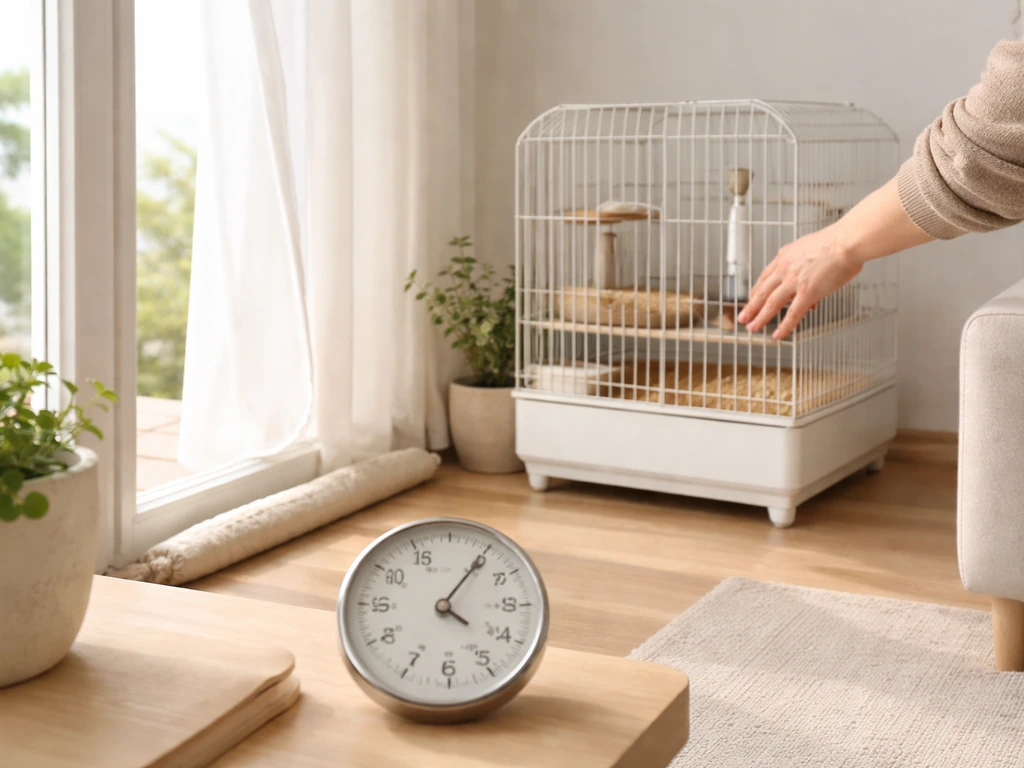
If you are watching your bird flap and are not sure whether to be worried, run through these checks before anything else.
- Check the room temperature. Birds do best between roughly 65 and 85 degrees Fahrenheit (18 to 29 degrees Celsius) depending on species. Too hot and they hold wings out and pant; too cold and they fluff up tight.
- Look for drafts. Put your hand near the cage at bird level and feel for moving air. Check whether any vents, fans, open windows, or doors are directing airflow toward the cage.
- Scan for stressors near the cage. Is there a new object, a pet, a predator shape outside the window, or a recent furniture rearrangement near the cage?
- Check if the bird has been out of the cage recently. Most pet birds need at least 1 to 2 hours of out-of-cage time daily. A bird that has been confined for days with no flight time may flap out of pent-up energy.
- Offer a light misting or a shallow bath dish. If the bird has not had access to water for bathing, offering it can satisfy grooming urges and often redirects repetitive flapping.
- Look at the recent cooking history. Have you used nonstick pans, sprays, or self-cleaning oven functions in the last few hours? If so and your bird seems unwell, treat it as a possible toxin emergency.
- Observe breathing for one full minute. Count breaths if you can. Watch for tail bobbing and listen for any sounds with each breath.
- Check that the cage is large enough. If wingtips are hitting the bars during normal movement, the cage is restricting the bird and causing frustration.
If after these checks your bird looks bright, is eating, has normal posture, and the flapping is brief and stops on its own, you can reasonably treat this as normal behavior and focus on enrichment. If anything on that list flags a concern, move to the next section.
Enrichment and routine changes to prevent repeat flapping
If stress, boredom, or a lack of exercise is driving the wing flapping, environmental adjustments will make a real difference. These are not complicated or expensive fixes.
- Increase out-of-cage time daily. Even 30 extra minutes of supervised flight in a bird-proofed room reduces restlessness significantly.
- Add foraging toys. Birds that have to work for their food stay mentally occupied and flap less from boredom. Rotate toys every few days to keep novelty up.
- Use perches of varying diameter. Purdue's guidelines recommend different perch sizes so the bird exercises the muscles and tendons in its feet, which also keeps it perching comfortably rather than fidgeting.
- Offer regular bathing opportunities. Mist your bird 2 to 3 times per week or offer a shallow dish of room-temperature water. Many birds that get regular baths are noticeably calmer.
- Establish a consistent light/dark cycle. Birds are sensitive to irregular light schedules. Aim for 10 to 12 hours of darkness each night using a cage cover if needed.
- Keep the cage placement stable. Moving the cage frequently or putting it in high-traffic areas increases anxiety. A wall-corner placement gives the bird a sense of security.
- Spend interactive time near the cage daily. Even just talking to or sitting near your bird counts. Social birds that feel ignored will use flapping and vocalizations to demand attention.
If your bird flaps specifically when screaming or when visibly agitated, that pattern overlaps with stress-driven vocalization behaviors worth addressing separately. If your bird is flapping its wings while also screaming, that can be a clue the flapping is linked to stress, overstimulation, or another behavior trigger. Similarly, if the flapping happens in place without any apparent trigger and never involves actual flight movement, that can be worth exploring as its own behavioral pattern.
When to see an avian vet
A good rule of thumb from veterinary guidance is this: if your bird looks sick to you, it is probably seriously ill. Birds are prey animals and hide illness instinctively, so by the time visible symptoms appear, things are often further along than they look. Do not adopt a wait-and-see approach if you see real warning signs.
Call an avian vet or emergency animal hospital immediately if you observe any of the following:
- Open-mouth breathing at rest
- Pronounced tail bobbing with every breath
- Wheezing, clicking, or other audible breathing sounds
- Blue or very pale tissue around the beak, feet, or mouth
- Collapse, seizures, tremors, or inability to stand
- Suspected toxin exposure (nonstick fumes, cleaning products, heavy metals)
- Uncontrolled bleeding or visible injury
- Complete refusal to eat or drink combined with lethargy
- Sudden inability to grip the perch or falling to the cage floor
When you contact the vet, be ready to describe: how long the flapping has been happening, what else you have observed (posture, breathing, appetite, droppings), any recent changes in the home (new foods, cooking smells, cleaning products, new pets or people), the bird's species and approximate age, and whether the bird has had any recent wing clipping or other physical intervention. The more specific you can be, the faster the vet can help.
If you genuinely cannot get to a vet immediately and suspect respiratory distress, keep the bird warm (around 85 to 90 degrees Fahrenheit for a sick bird), minimize handling and stress, and get to emergency care as quickly as possible. Do not wait overnight if the bird is showing breathing difficulty.
The quick decision path
Most likely cause: brief exercise, stretching, excitement, or bathing behavior. What to try first: check for drafts, temperature issues, cage size, and out-of-cage time. Add enrichment and regular bathing. Watch for these warning signs: open-mouth breathing, tail bobbing, fluffed posture with lethargy, loss of balance, blue or pale tissue, or any change in eating and drinking. If you see any of those warning signs alongside the wing flapping, contact an avian vet the same day. If none of those signs are present and the flapping is brief and followed by normal behavior, your bird is almost certainly fine and just doing what birds do.
FAQ
How can I tell if my bird is just exercising or actually distressed when it flaps in the cage?
Look for the after-behavior. Normal bursts are short, energetic, and end quickly with calm perching, normal posture, and normal breathing sounds. If the flapping continues in long, repeated bouts, or it is paired with open-mouth breathing, tail bobbing, or persistent fluffing, treat it as possible distress and seek same-day avian guidance.
What if my bird flaps only when I leave the room or when the lights change?
That pattern can point to stress from separation, overstimulation, or a fear response to darkness or drafts. Try reducing sudden changes, place the cage away from window glare and airflow, and maintain a consistent light schedule. If the flapping ramps up with alarm calls or frantic behavior, contact a vet to rule out respiratory or pain issues.
Does wing flapping mean my bird is trying to escape or that it is unhappy with the cage?
Sometimes, but cage size and setup matter more. If it flaps while striking wingtips on bars or cannot fully extend, the bird may flap from frustration. Verify the cage allows full wing extension in all directions, add perches at different heights, and increase out-of-cage time gradually so it can exercise without constant bar-striking.
Is it safe to increase out-of-cage time if the flapping seems frequent?
Only if your bird otherwise looks well (steady balance, normal eating, no breathing effort). If you suspect respiratory distress, increase stress by handling can worsen the situation. In that case, focus on immediate safety steps (warmth, minimal handling) and contact an avian vet first.
My bird flaps after grooming or when misted, should I be concerned about the frequency?
Grooming-related flapping is typically tied to wetting and stops once the bird dries and settles. Watch for signs that it is more than bath behavior, such as repeated flapping with labored breathing, lethargy, or reduced appetite after the grooming session. If those appear, get avian advice.
How do I check for drafts around the cage without moving everything constantly?
Use a safe, simple method: stand where the bird can feel airflow and hold a piece of tissue near the cage openings and perches, watching for consistent movement. Then check common triggers like HVAC vents, ceiling fans, space heaters, frequently opened doors, and window sills, even if the room feels warm.
What household fumes besides nonstick cookware can cause sudden wing flapping with breathing trouble?
Birds can be sensitive to overheated appliances and strong airborne irritants, including smoke from burning food, some aerosols, and certain cleaning product fumes. If flapping is sudden and paired with breathing difficulty after any cooking or chemical use, treat it as an emergency and move the bird to fresh air immediately while contacting an avian professional.
Can stress flapping be a learned habit, and what enrichment actually helps?
Yes, repetitive flapping can become a coping behavior, especially in intelligent species. Focus on reliable daily routines (predictable interaction), foraging-style toys, chew materials, and rotation of safe toys. Increase stimulation gradually and avoid sudden new stimuli that could trigger fear flapping.
What should I tell the vet, if it is hard to estimate how long the flapping lasts?
Use concrete intervals. For example, note how many minutes it lasts per episode, how many episodes in an hour, and what the bird does immediately after (eats, perches quietly, fluffs and sits low). Also mention recent home changes (cooking, new cleaners, new pets or people), and whether breathing looks effortless or labored.
Why Is My Bird Flapping Wings and Screaming? Quick Checks
Quick checks for why your bird flaps and screams, separating normal excitement from stress and health emergencies plus v