
Most of the time, a bird flapping its wings and screaming is doing exactly what birds do: communicating excitement, demanding attention, or reacting to something in its environment. Why does a bird flap its wings? Use the cues in this guide to tell whether it is excitement or something that needs urgent attention. But the same combination of sounds and movement can also be an early warning sign of a health problem, and because birds are very good at hiding illness until things get serious, it pays to do a quick check before writing it off as drama. Common reasons include stress, excitement, boredom, or a medical issue, so it helps to triage what’s happening alongside the wing flapping.
Why Is My Bird Flapping Wings and Screaming? Quick Checks

Marcus Chen
14 May 2026
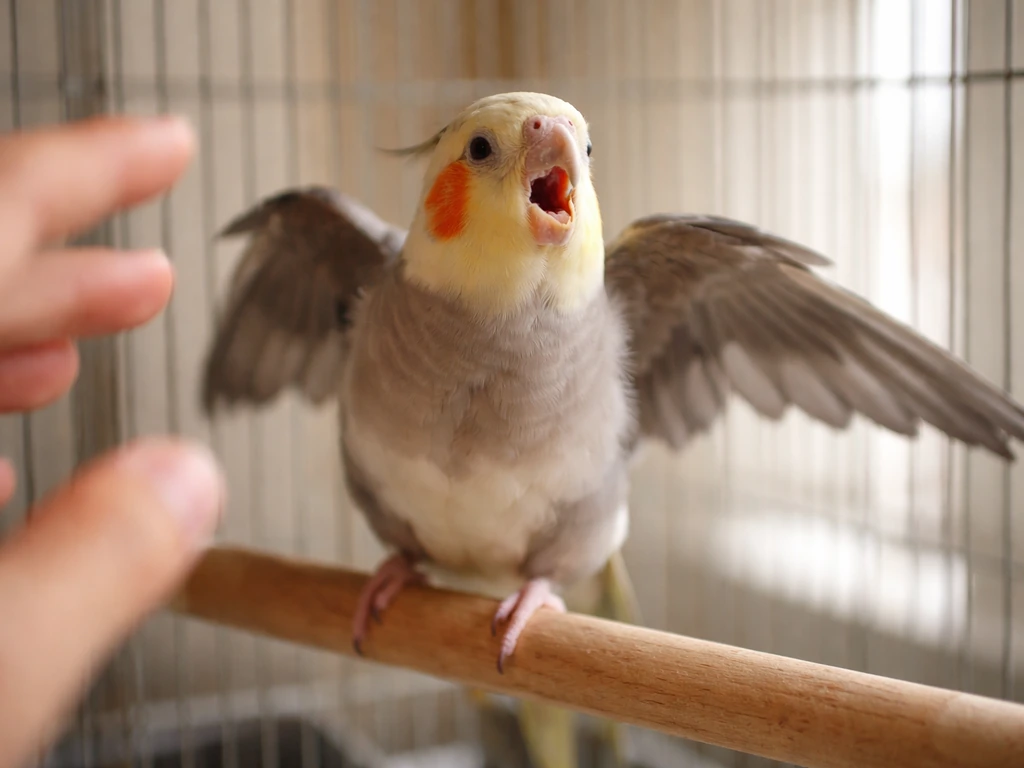
Normal excitement or real distress? Start here
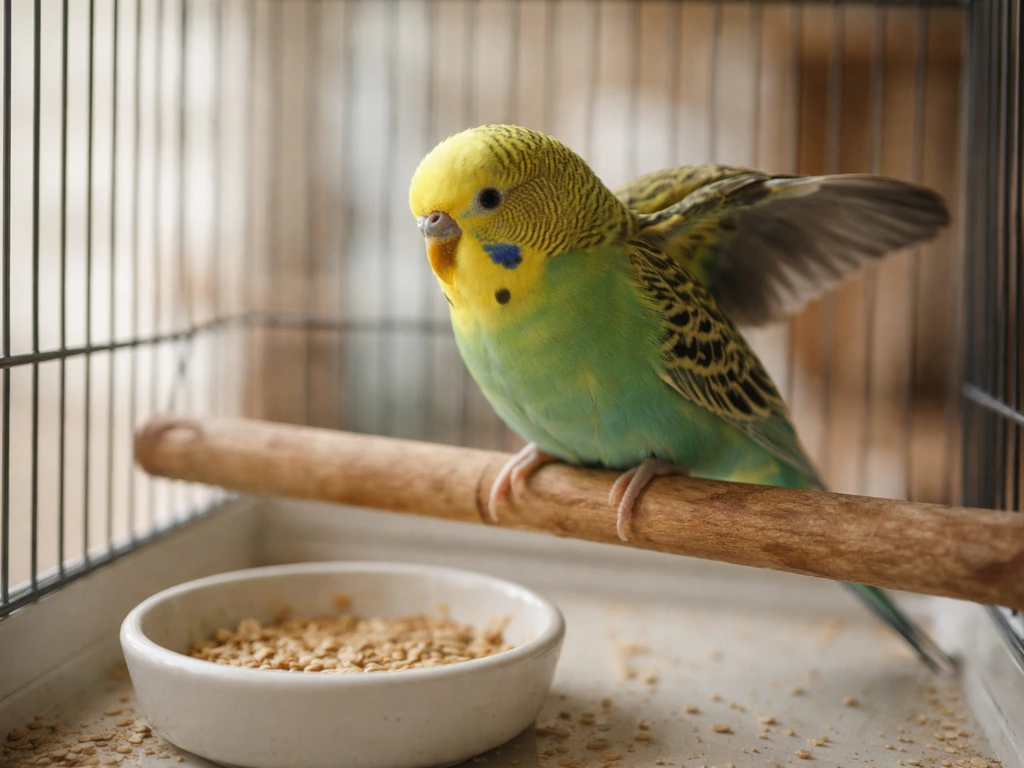
The fastest way to triage this is to look at what your bird is doing between the episodes. A bird that is flapping and screaming but then goes back to eating, preening, climbing around, and interacting normally is almost certainly behaving within the range of normal bird behavior. A bird that is flapping and screaming and then just sits hunched on the bottom of the cage, or stays puffed up and still, is telling you something is wrong.
Excitement-based flapping tends to look energetic and purposeful. The bird may be wing-flapping in place as a kind of exercise or emotional release, calling out to you or to other birds, or reacting to something stimulating like music, a TV, or your arrival home. Distress-based flapping looks more frantic and disorganized, often accompanied by a bird that seems frightened, is trying to escape, or cannot settle down even when nothing obvious is happening.
Run through this quick mental checklist: Is the bird breathing with its beak open? Is its tail bobbing up and down with each breath? Is it sitting low on a perch or on the cage floor? Those three signs together point to a medical issue, not a mood. If you see any of them, skip straight to the vet section below.
Immediate checks you can do right now
Before you change anything or call anyone, take two or three minutes to observe your bird carefully. You want a quick snapshot of five things: posture, breathing, energy level, appetite, and droppings. These are the same things a vet will ask you about, so notice them now.
- Posture: A healthy bird sits upright and alert. A sick bird often sits hunched, feathers puffed out, with its head tucked or body low on the perch. Sitting on the cage floor is a red flag.
- Breathing: At rest, you should not see open-mouth breathing, visible chest heaving, or tail bobbing with each breath. A high-pitched squeaking sound with each breath is a serious respiratory warning sign.
- Energy: Is your bird responding to you, moving around, and engaging? Or is it dull, unresponsive, or too weak to grip the perch properly?
- Appetite: Has it eaten today? Refusal to eat, even for a few hours in a small bird, can signal illness quickly.
- Droppings: Check the cage floor. Droppings should have a solid dark green or brown portion, a white urate portion, and some clear liquid urine. Watery, discolored, or absent droppings are worth noting.
If everything looks normal on that checklist, you almost certainly have a behavioral issue in front of you, not a medical one. If two or more of those checks are off, treat it as a potential health situation and move to the vet guidance section.
Behavioral reasons your bird is flapping and screaming
The vast majority of wing-flapping-plus-screaming episodes come down to one of these non-medical causes. Understanding which one fits your bird helps you fix it faster.
Attention-seeking
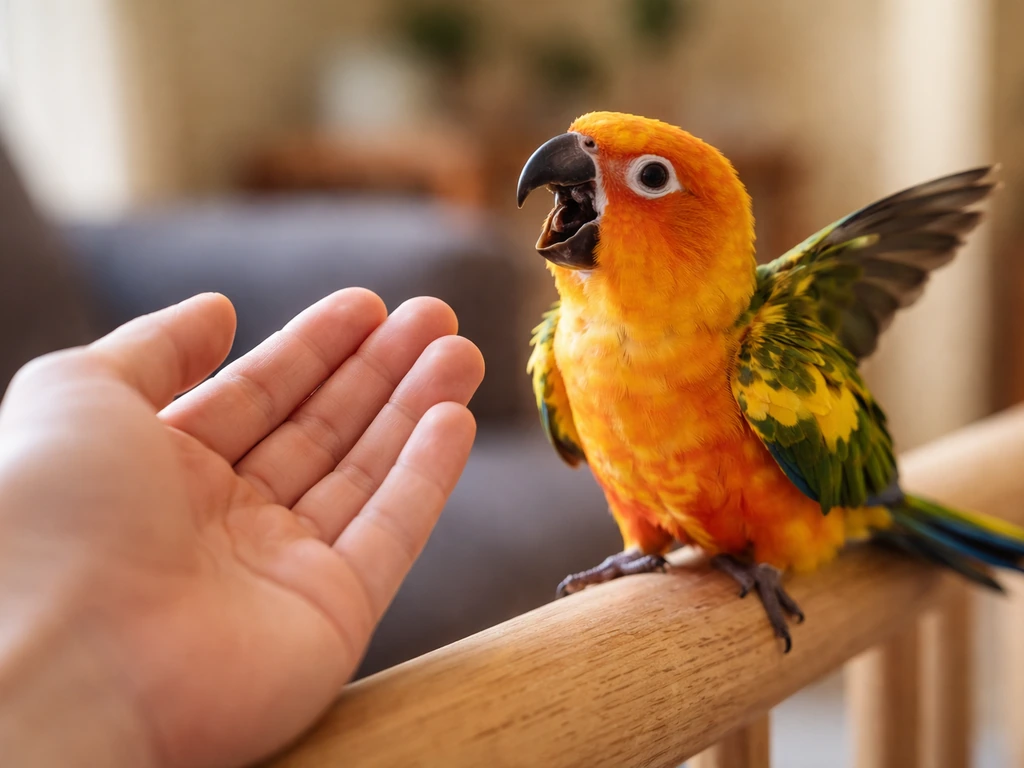
This is probably the most common reason. Birds figure out very quickly that screaming gets a response, and once that connection is made, the behavior tends to escalate. Responding to the screaming, even by walking over and saying 'stop it,' reinforces the pattern because your bird got what it wanted: your attention. The fix is to wait for a pause in the screaming before you approach, and to make sure your bird gets plenty of proactive, unprompted interaction so it does not feel like screaming is the only way to reach you.
Excitement and contact calling
Parrots and many other social birds use loud vocalizations as contact calls, checking in with their flock (which, in a home, means you). Flapping at the same time is often just physical excitement. This tends to happen at predictable times: when you come home, when morning starts, around mealtimes, or when something interesting is happening. It is normal within limits. A burst of screaming that lasts a few minutes and then settles is very different from screaming that goes on for hours.
Stress and fear
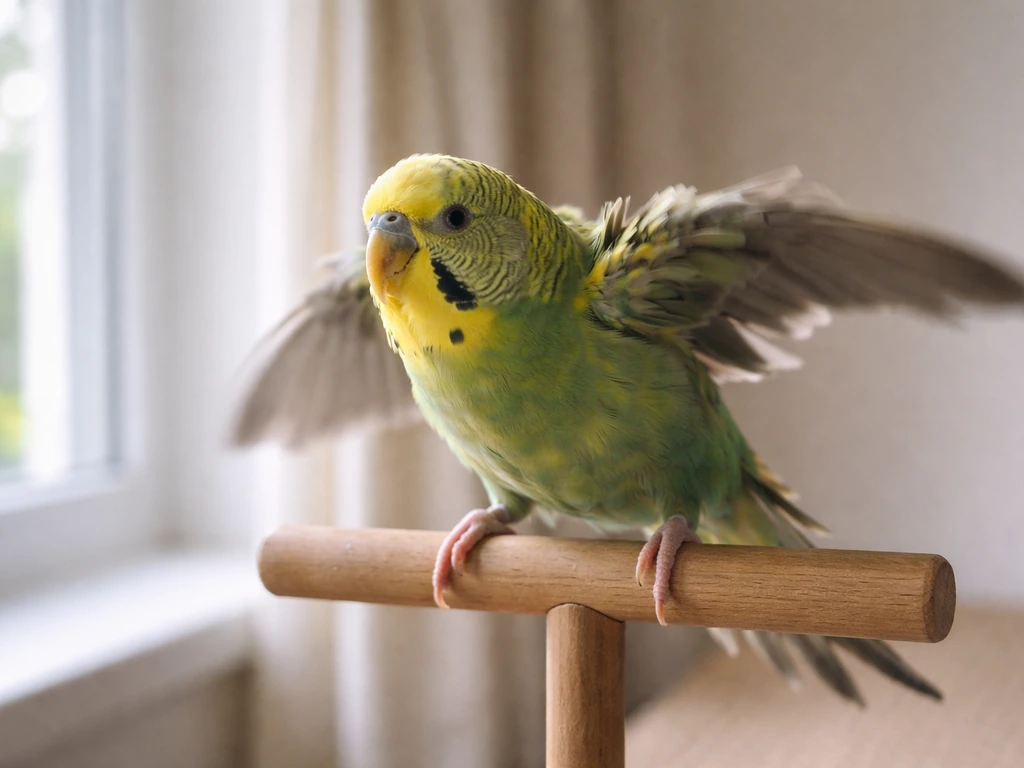
A bird that has been startled by something, introduced to a new person or animal, moved to a new room, or exposed to a loud noise may flap frantically and scream as a fear response. Check whether anything in the environment changed recently, including furniture rearrangement, a new pet, a visitor, or even something outside a window like a large bird or an unfamiliar object.
Boredom and under-stimulation
Birds are intelligent animals that need mental engagement throughout the day. When they do not get enough foraging opportunities, social interaction, or environmental variety, screaming is a common outlet. Research on captive parrots shows that foraging enrichment significantly increases time spent in normal behavior and reduces the kind of frustrated, repetitive behavior that screaming can be part of. If your bird's cage has the same toys it has had for months and its daily routine is predictable and unstimulating, boredom is a reasonable suspect.
Hormonal and mating behavior
During breeding season, or when hormonal cycles ramp up, many birds become louder, more territorial, and more physically demonstrative. Flapping, screaming, regurgitating at you, and aggressive posturing can all be part of this phase. It tends to follow seasonal light changes and usually passes. Limiting long daylight hours (keeping the bird to 10 to 12 hours of light per day) can help reduce hormonal triggering.
Social dynamics and territory
If you have more than one bird, or if your bird can see or hear other birds through a window or from another room, wing flapping and screaming may be about social tension, competition for resources, or attempts at contact. Watch whether the behavior ramps up at specific times when other animals or birds are nearby.
Health causes that can look like behavioral problems
This is where it is worth being careful. Birds mask illness instinctively, meaning by the time they are visibly unwell, they have often been sick for a while. A sudden change in vocalization, especially screaming that is new or out of character, is worth taking seriously even when no other symptoms are obvious yet. If the flapping and screaming is happening alongside any health red flags, you should take a closer look at possible medical causes, even if it seems behavioral at first screaming that is new or out of character.
Respiratory problems
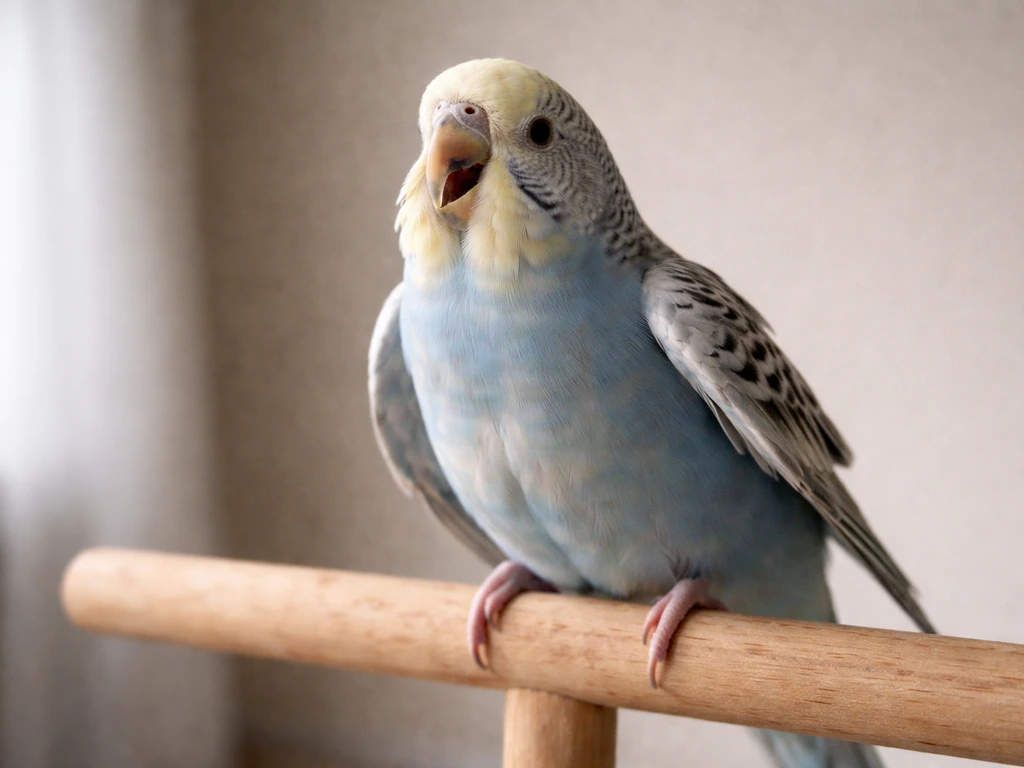
Respiratory infections, irritation from airborne toxins, or inhaled irritants can cause a bird to become distressed, vocalize more, and move its wings. The key signs that point toward a respiratory cause are open-mouth breathing, audible wheezing or clicking with each breath, visible chest movement that is exaggerated, and tail bobbing. Aerosol sprays, air fresheners, scented candles, cooking fumes, and cigarette smoke can all irritate a bird's airways. Non-stick cookware that overheats releases fumes that can be rapidly fatal to birds. If anything like this was used nearby recently, treat it as urgent.
Pain or injury
A bird in pain will often scream and move erratically. Check the wings carefully for asymmetry, drooping, or reluctance to move one side. Look at the feet and legs for swelling, unusual posture, or an inability to grip the perch. If your bird recently had any kind of accident (flying into a wall, falling, being stepped on), physical pain from an injury needs to be ruled out.
Overheating and thermal distress
A bird that is too hot will often hold its wings away from its body, pant, and vocalize. This is the bird's equivalent of sweating. Check whether the cage is in direct sunlight, near a heat vent, or in a room that has gotten warmer than usual. Birds need a stable, species-appropriate temperature. Overheating can become a genuine emergency quickly, especially in smaller birds.
Systemic illness
Infections, digestive problems, and other systemic illnesses can cause behavioral changes including increased vocalization. If the flapping and screaming is paired with weight loss, regurgitation, changes in droppings, or lethargy, there is likely something medical going on. In female birds, egg binding causes abdominal straining and tail bobbing and can be mistaken for respiratory distress. If your bird is female and you notice abdominal swelling or straining, get to a vet immediately.
What to change in the cage and routine today
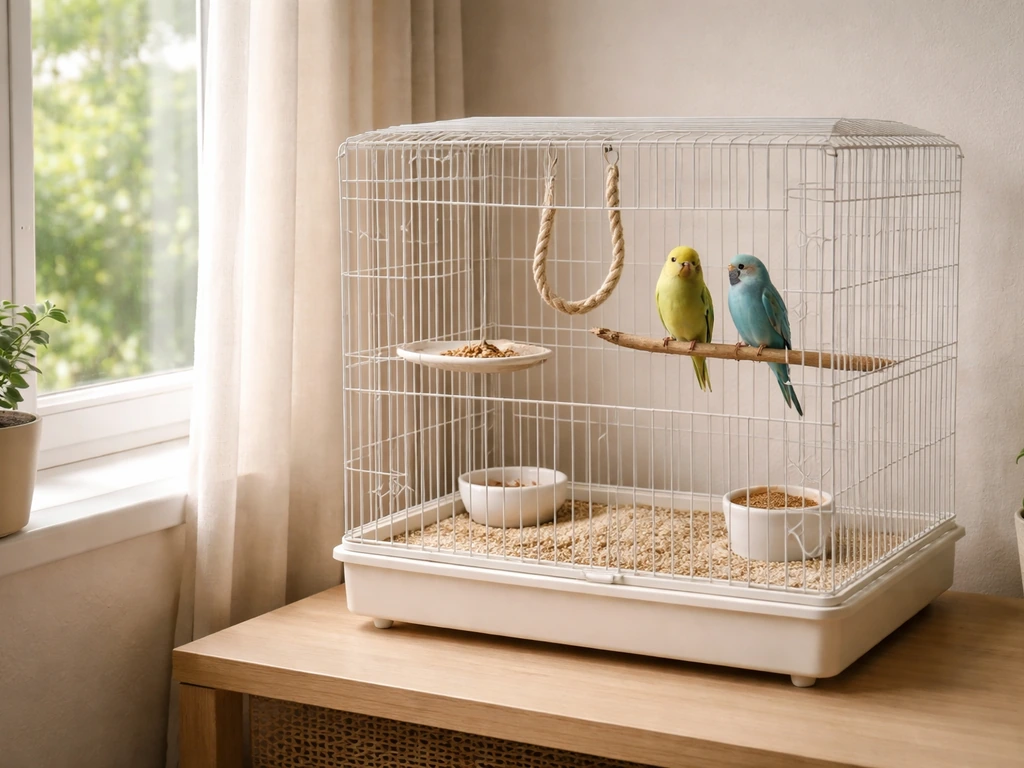
If your quick checks point to a behavioral or environmental cause, here are the adjustments that are most likely to make an immediate difference.
- Temperature: Make sure the room is within a comfortable range for your bird's species. Move the cage away from direct sun, heat vents, and air conditioning drafts. Avoid major temperature swings throughout the day.
- Light schedule: Birds need 10 to 12 hours of uninterrupted darkness for sleep. If your bird is not getting this because of late-night household activity or inconsistent schedules, sleep deprivation can worsen behavioral problems significantly. Cover the cage at the same time each evening.
- Noise and activity: Sudden loud noises, television volume changes, and chaotic household activity can spike screaming episodes. Keep the area around the cage reasonably calm, especially in the evening.
- Remove airborne irritants: Check for candles, air fresheners, cooking sprays, or any aerosols used in or near the room. Remove them and ventilate the space.
- Add enrichment: Rotate toys so something feels new. Add a foraging opportunity, like wrapping food in paper or hiding treats in a puzzle feeder. Even a new perch texture or location can reset a bored bird's attention.
- Review the social schedule: If your bird is screaming for attention and getting it by screaming, shift your approach. Spend time with your bird before screaming starts, and wait for a quiet moment before you respond to a screaming session.
If the behavior is happening inside the cage specifically, it may also be worth checking that the cage is large enough for comfortable movement, that perches are at appropriate heights, and that food and water are accessible without your bird having to fight for them. Related to this, wing flapping that happens primarily while the bird stays in one spot can sometimes be about exercise or wing-stretching rather than distress, which is worth factoring into what you observe.
When to call an avian vet urgently
Some signs mean you should call an avian vet today, not tomorrow. Birds decline fast when they are genuinely sick, and the instinct to 'wait and see' can cost critical time.
| Sign | How urgent |
|---|---|
| Open-mouth breathing at rest | Call immediately, same-day emergency |
| Tail bobbing with each breath | Call immediately, same-day emergency |
| Audible wheezing or clicking when breathing | Call immediately, same-day emergency |
| Collapse, seizure, or inability to perch | Emergency, go now |
| Severe lethargy or unresponsiveness | Emergency, go now |
| Suspected airborne toxin exposure (non-stick fumes, smoke) | Emergency, go now |
| Suspected egg binding (female, straining, abdominal swelling) | Emergency, go now |
| Sudden change in droppings plus screaming | Call vet today |
| Not eating for more than a few hours (small bird) or 24 hours (larger bird) | Call vet today |
| Screaming is new, sudden, and out of character with no environmental cause | Call vet within 24 hours |
When you call, be ready to describe the five things from the immediate check section: posture, breathing, energy, appetite, and droppings. Also mention anything that changed in the environment recently, how long the behavior has been happening, and whether it is constant or comes in episodes. If you need to transport your bird, keep it warm and quiet, limit handling, and make sure food and water are accessible if the trip will take more than a few minutes.
One important reminder: birds are very good at appearing fine until they are not. A sudden change in vocalization pattern, even without any other obvious symptoms, is a legitimate reason to have a vet check things out. It is always better to make the call and be reassured than to wait and have the window close.
Preventing this long-term
Once you have identified and addressed the immediate cause, a few consistent habits will reduce how often you end up in this situation again.
Build a consistent daily routine
Birds thrive on predictability. Feeding, out-of-cage time, sleep, and social interaction at consistent times reduce anxiety-based screaming dramatically. A bird that knows what to expect is a calmer bird.
Protect the sleep schedule
Ten to twelve hours of darkness and quiet every night is not optional. Cover the cage at the same time each evening and keep noise and light away from the sleeping area. Sleep deprivation alone can turn a well-adjusted bird into a screaming problem.
Rotate enrichment regularly
Foraging toys, new textures, hiding food, and rearranging the cage layout periodically keeps your bird mentally occupied. A bird that spends time solving problems during the day is less likely to spend that energy screaming. Aim to introduce something new or rotated at least once a week.
Train alternative behaviors
Positive reinforcement training gives your bird a way to earn attention and rewards through behavior you actually want, rather than through screaming. Even five to ten minutes of simple target training or step-up practice daily builds a communication channel between you and your bird that reduces the pressure that leads to screaming bouts.
Keep the environment stable
Consistent temperature, stable humidity, low exposure to airborne irritants, and a calm household routine all contribute to a bird that is physically comfortable and behaviorally settled. Annual or biannual wellness checks with an avian vet also help you catch changes in health before they become behavioral emergencies.
Wing flapping and screaming together can mean a dozen different things depending on your bird, its history, and what else you observe at the same time. The behavior itself is not the problem; it is a communication. Your job is to figure out what your bird is trying to say, and the framework above gives you a reliable way to work through that quickly every time it happens.
FAQ
How long should I wait before I assume it is a medical problem?
If the flapping and screaming happen with open-mouth breathing, tail bobbing, or a puffed-up low posture, treat it as medical and contact an avian vet promptly. If none of those are present and your bird returns to normal activity, you can first troubleshoot environment and routines (sound, light schedule, handling patterns, and cage setup) for a short period while still watching closely for any change.
Should I try to give my bird food or treats when it starts flapping and screaming?
Do not offer food as the first test if the bird is struggling to breathe or is sitting hunched on the floor. Instead, do a quick safety and observation check for breathing posture, tail bobbing, and overall responsiveness, then call your avian vet. If the bird is alert and breathing normally, a normal-interest behavior like eating or preening shortly after the episode is a reassuring sign.
Will yelling or trying to stop the screaming make it better?
Avoid punishment or sudden attention during distress. If your bird is escalating in response to you, moving closer or repeatedly telling it to stop can make the pattern stronger. A better approach is to watch for a lull, then calmly offer interaction or training, and address the trigger (noise, window activity, other pets, or lack of engagement).
My bird is acting this way after a move or new companion, what should I watch for?
New birds and new placements can trigger fear-based flapping, but the key detail is whether it is steadily worsening or staying tied to specific cues (for example, visitors, certain rooms, or time of day). If the behavior ramps up with every exposure or the bird cannot settle, you should treat it as a stress response that needs a structured desensitization plan and, if severe, professional guidance.
How can I tell the difference between wing-stretching/exercise and distress flapping?
If your bird flaps its wings but seems stable and purposeful, it can be normal wing-stretch or exercise. However, if the bird flaps while staying low, appears frightened, or shows any breathing signs, that points away from exercise. Place the focus on breathing and posture, not just the wing movement.
What room conditions commonly cause wing flapping and screaming?
Temperature swings can change vocalizations quickly, even if your room feels comfortable to you. Check for direct sun, heat vents, drafty doors, and nighttime cooling. Also confirm cage placement away from cooking areas and avoiding near active scents, aerosol sprays, and candles.
Could something I used at home, like cooking or air fresheners, trigger this behavior?
Yes, aerosols and fumes can be hard to notice in the moment. If you used non-stick cookware, had the stove run with overheating, or used air fresheners, scented sprays, candles, or diffusers recently, treat respiratory irritation as possible even if there are no other visible symptoms yet, and contact an avian vet.
Is this behavior possibly hormonal, and what should I adjust first?
For episodes tied to breeding or hormones, you may see more territorial displays, increased calling, and sometimes regurgitation. Keeping the light cycle consistent (about 10 to 12 hours of darkness), avoiding overly stimulating handling, and limiting access to nesting-like materials can reduce hormonal surges, but persistent aggression or sudden severe symptoms still merit a vet check.
If I have multiple birds, how do I know it is social tension versus stress?
Watch for competition dynamics: does it happen near feeders, water bowls, sleeping spots, or when other birds are within view through a window or door? If episodes spike when specific birds are nearby, you may need to separate resources, increase spacing, add visual barriers, and manage social exposure times.
What signs, besides the noise and flapping, should make me call the vet immediately?
New droppings patterns, decreased or inconsistent appetite, weight loss, regurgitation, lethargy, or persistent tail bobbing are strong medical clues. If two or more of posture, breathing, energy, appetite, and droppings are off, do not rely on behavioral causes, arrange an avian vet evaluation.
What if the behavior is constant instead of coming in bursts?
If the behavior is constant or worsening, assume it is more than simple attention-seeking, even if the bird occasionally gets quiet. Your next step should be to remove likely environmental triggers (noise, scents, direct light changes), normalize routines and sleep schedule, and simultaneously keep a close watch for medical red flags.
How should I prepare my bird for a vet visit during an active episode?
When transport is needed, keep the carrier warm and quiet, cover it lightly to reduce stimulation, and avoid handling the bird repeatedly. Minimize time out of controlled conditions, and if the trip is longer than a few minutes, ensure easy access to food and water if the bird is breathing and acting normally.
Next Articles
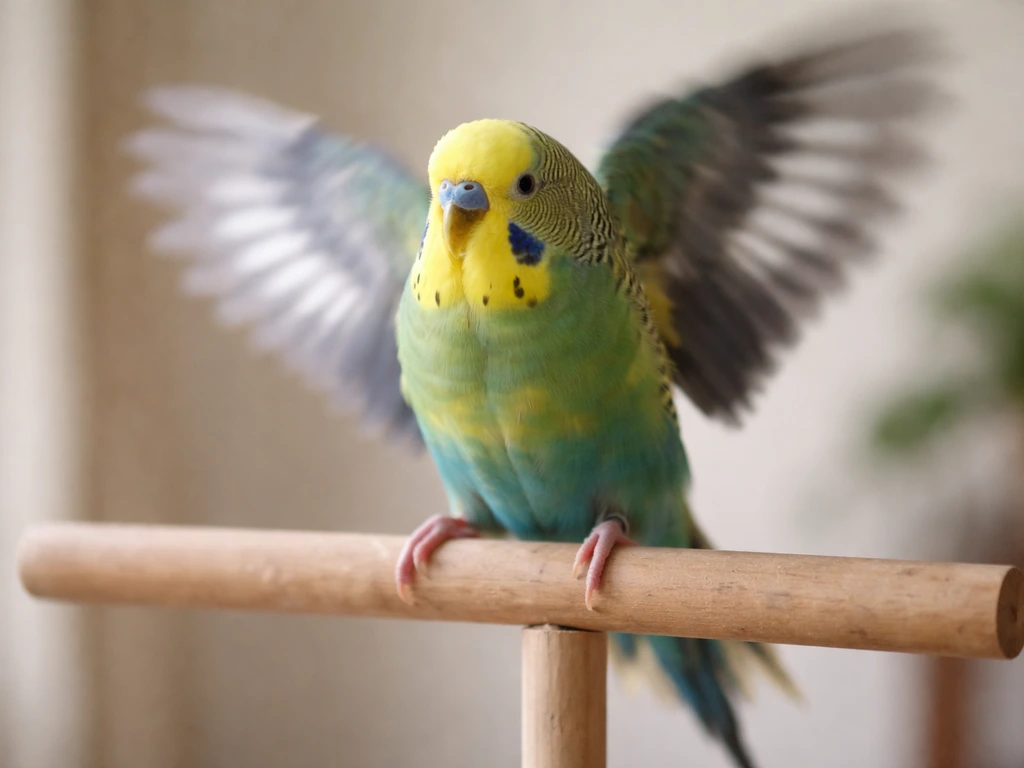
Why Is My Bird Flapping Its Wings but Not Flying?
Learn why your bird wings flap but won’t fly, spot breathing pain stress overheating signs, and know what to do next
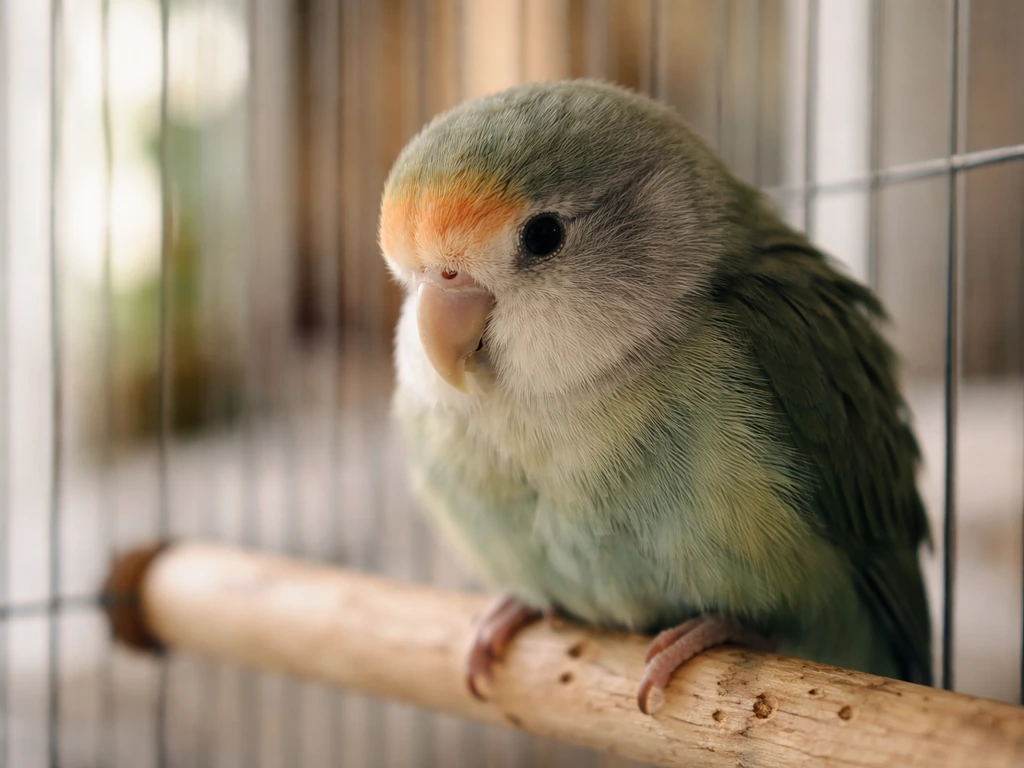
Why Is My Bird Making Whimpering Noises? What to Check
Find reasons for whimpering bird noises, quick home checks, and red flags for urgent vet care plus tracking tips.
Why Does My Bird Make Crunching Noises? Causes and What to Do
Learn why your bird crunches, spot normal beak chewing vs breathing or crop issues, and what to do next.