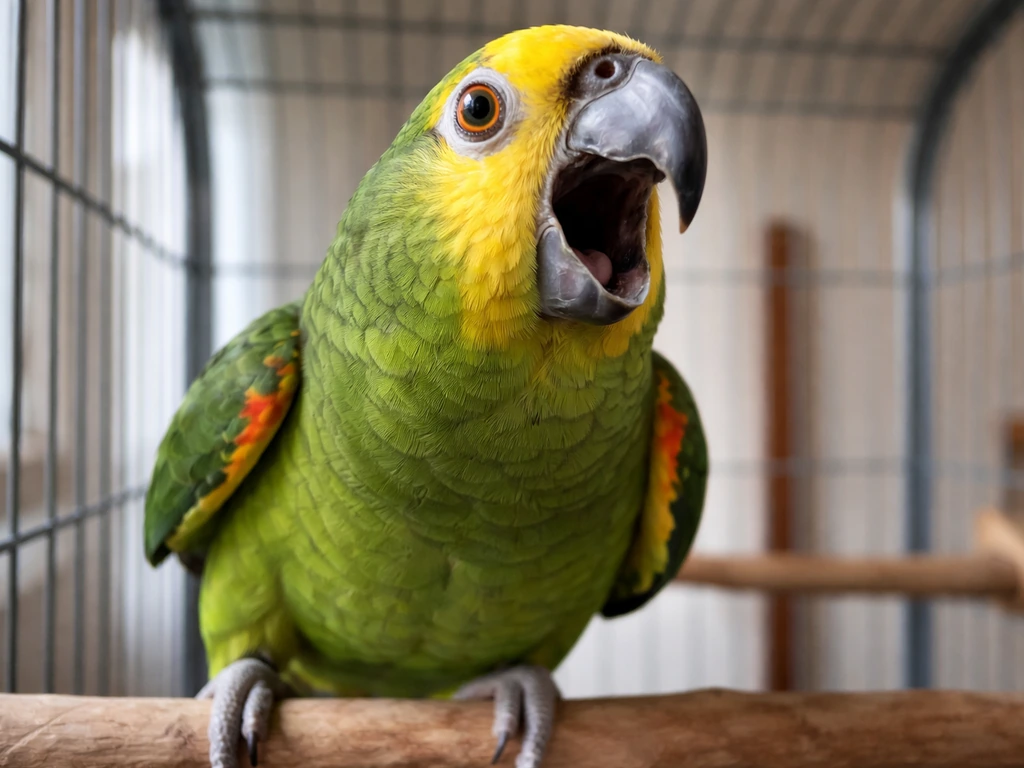
Most birds scream in the morning because it is completely normal behavior. Birds are hardwired to vocalize at dawn, whether they are greeting the flock, staking out territory, or just announcing that they are awake and want their breakfast. That said, not every morning scream is a carefree greeting. Knowing what "normal" looks like for your specific bird is the fastest way to figure out whether you are dealing with natural dawn behavior, an easy environmental fix, or something worth calling an avian vet about.
Why Does My Bird Scream in the Morning? Causes and Fixes

Marcus Chen
27 May 2026
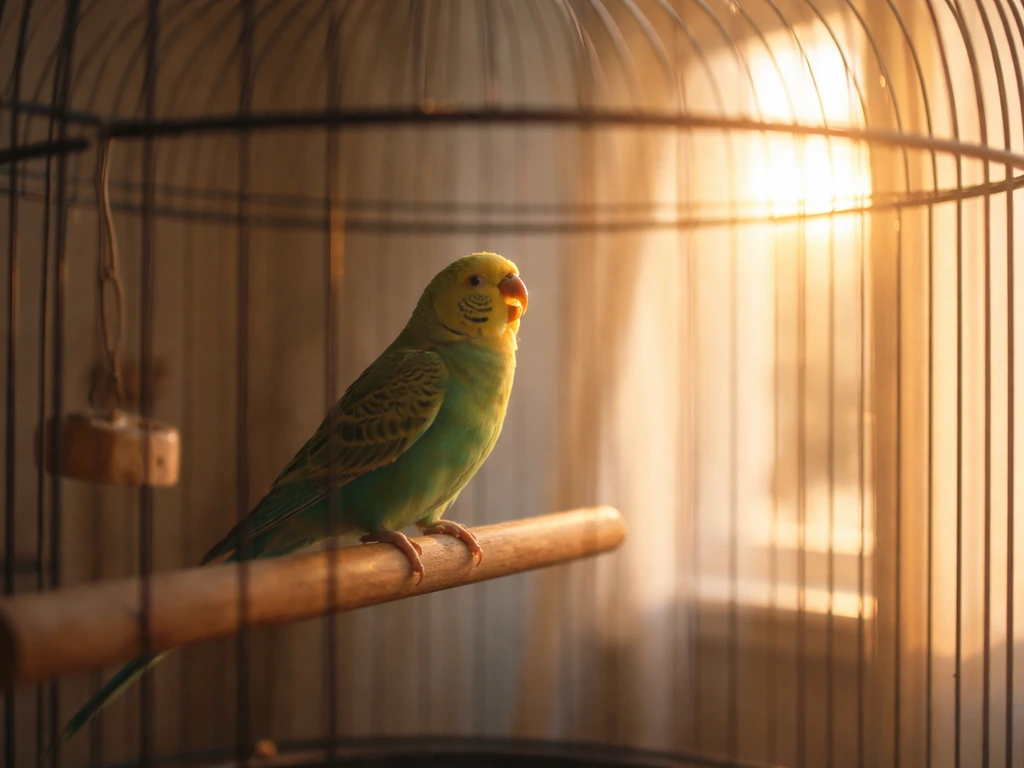
Normal dawn vocalizing vs attention-seeking
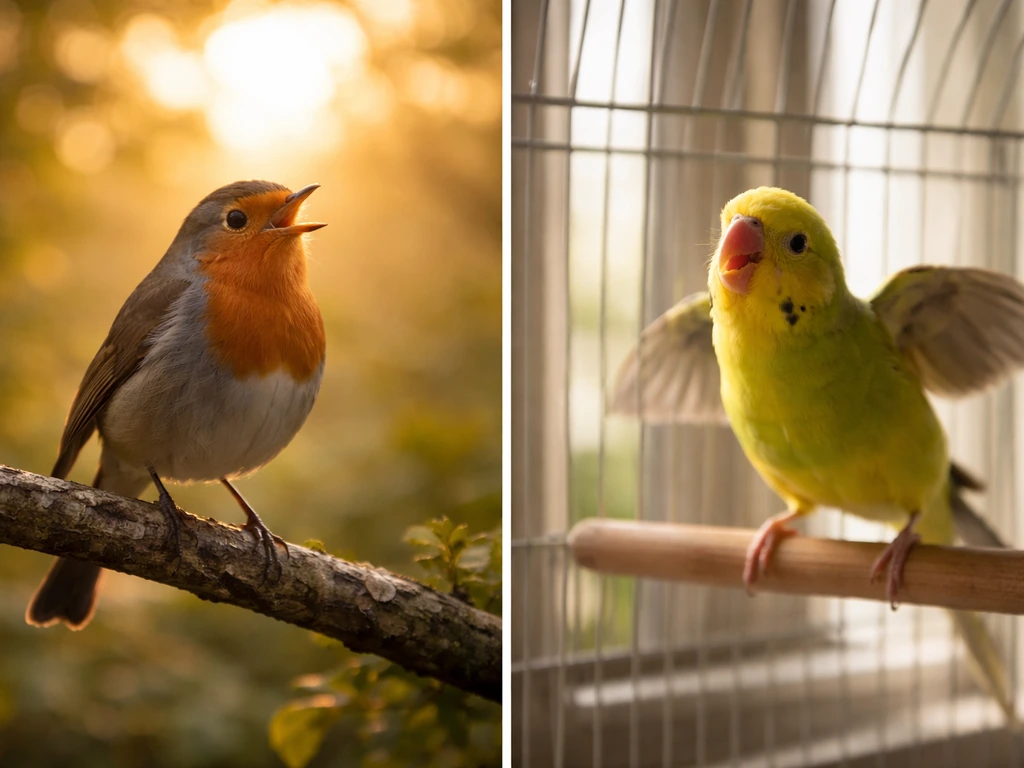
Wild birds across nearly every species are loudest right around sunrise. This is the classic "dawn chorus," and your pet bird carries that same biological drive even though it has never needed to find food or defend a territory in the wild. The calling is timed to light, not to your alarm clock, which is why your bird often starts before you are ready to deal with it.
Dawn vocalizing tends to be rhythmic, brief in bursts, and stops on its own once the bird has settled into the morning. Attention-seeking screaming is a different animal. If your bird is screaming for no reason, use these cues to tell whether it is routine dawn vocalizing or attention-seeking behavior. It ramps up when you walk past the cage without stopping, escalates if you leave the room, and quiets the moment you give the bird what it wants.
If your bird's screaming follows that pattern, the behavior has shifted from instinct into learned communication. This is related to what happens when a bird screams specifically when you leave the room, which is worth thinking about separately if that pattern sounds familiar. If your bird cries more when you leave the room, it can be a learned communication or attention-seeking behavior worth addressing differently screaming when you leave the room.
If this happens mainly when you leave the room, it may be more about learning and attention than about normal dawn vocalizing screams specifically when you leave the room. This is also commonly tied to separation routines, where the bird calls out when it realizes you are not nearby.
Some birds also combine both. A quick dawn burst at first light, then a second wave of louder screaming once they realize you are up and not paying attention yet. The first wave is normal; the second is a trained habit.
Common morning triggers in the home
Before blaming behavior, check the environment. Several physical triggers reliably set birds off in the morning and are easy to fix once you identify them.
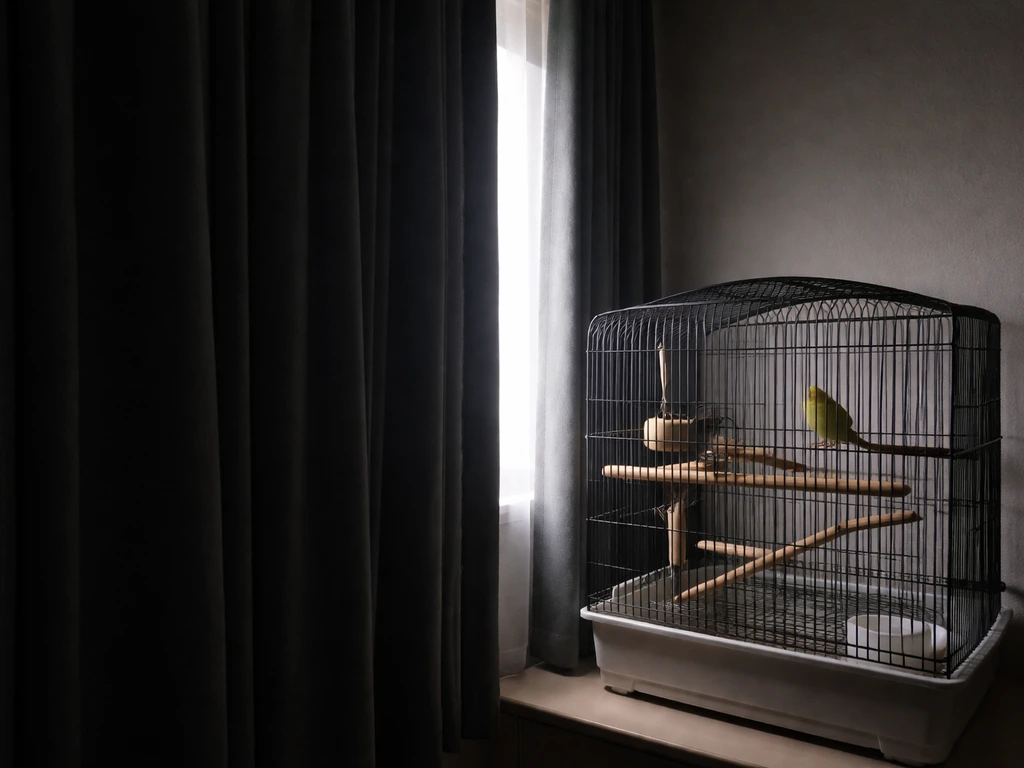
- Light hitting the cage too early: If your bird's cage is near a window that catches early sun, natural light at 5 a.m. will cue your bird to start vocalizing well before your household is active. Blackout curtains or moving the cage can help significantly.
- Cage placement near activity: Birds placed in busy areas pick up on the sounds of a household waking up (coffee makers, footsteps, other pets) and respond vocally.
- Inconsistent uncovering time: Pulling the cage cover at different times each morning teaches your bird nothing. Birds respond well to routine, and an inconsistent schedule keeps them on edge.
- Temperature shifts: A cold draft from an overnight window left open, or a room that drops sharply at night, can cause distress vocalizations first thing in the morning.
- Mirrors and cage toys: Some birds get worked up by their own reflection or stimulating cage accessories first thing in the morning, especially if the cage is in a bright spot.
- Other pets: Dogs or cats moving around the house in the early morning can trigger alarm calling in birds.
Cage placement is one of the most underrated factors. A cage in a drafty hallway, near an HVAC vent, or directly in front of an east-facing window creates a bird that is reacting to its environment every single morning.
Behavioral causes worth knowing about
Hormones and breeding season
If your bird's morning screaming has recently gotten much louder or more intense, hormones are a real possibility. During breeding season, many birds vocalize more frequently and more aggressively at dawn. Research on bird behavior consistently links loud early calling with reproductive status, meaning a hormonally active bird is biologically motivated to announce itself more forcefully. Research on American redstarts shows that total singing time and dawn chorus behavior can vary with breeding status, suggesting a hormonal or territorial link to louder early calling during reproductive periods links loud early calling with reproductive status. This is normal in context but can feel sudden and alarming if you have not seen it before.
Territorial responses
Birds use morning calls to establish territory. Even in your living room, your parrot or cockatiel may be responding to sounds from outside, other birds heard through the window, or even the TV being turned on. These territorial vocalizations can be short and sharp or long and repetitive depending on the species.
Social and flock responses
In the wild, many parrot species gather in large groups in the morning and at dusk for social interaction before foraging. Your single pet bird does not have a flock, so you and your household become the flock. When the house stirs in the morning, your bird is essentially calling out to check that everyone is accounted for. This explains why the screaming often starts right when your household begins moving around rather than at the very first light.
Health and irritation red flags to check today
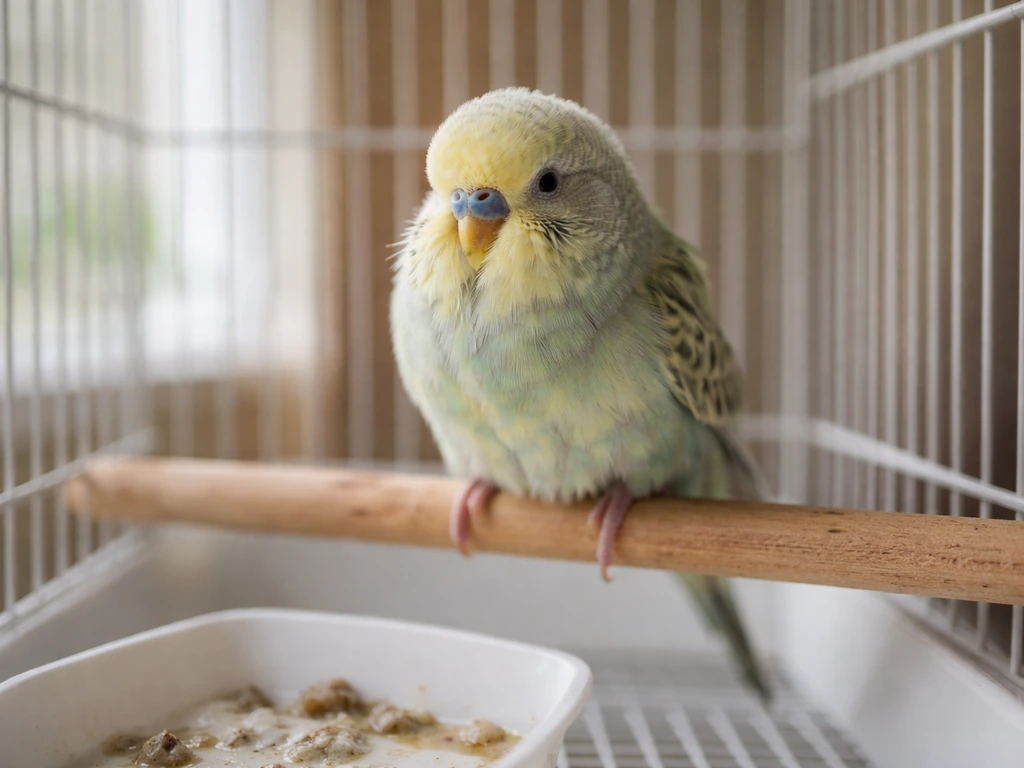
This is the section to pay close attention to. Screaming can be one of the few ways a bird signals that something is physically wrong. Birds are very good at hiding illness, so by the time a bird is visibly unwell, the problem has often been building for a while. Morning is actually when some of these signs are easiest to catch because the bird is transitioning from rest to activity.
Check for these signs right now, before assuming the screaming is purely behavioral:
- Open-mouth breathing at rest: This is a serious sign. A bird should breathe with its beak closed when calm. Open-mouth breathing, gasping, or wheezing at rest needs veterinary attention today, not tomorrow.
- Tail bobbing: A tail that bobs visibly up and down with each breath suggests your bird is working hard to breathe. This is a red flag for respiratory distress.
- Fluffed or ruffled feathers combined with screaming: Occasional fluffing is normal, but a bird that is screaming and staying fluffed is not simply cold or sleepy.
- Lethargy or closed/partially closed eyes after vocalizing: A bird that screams and then seems exhausted or droopy is showing a concerning combination.
- Changes in droppings: Loose, discolored, or watery droppings alongside new or worsened morning screaming can indicate illness.
- Reduced appetite: If your bird is screaming but then not eating its morning food, take note.
- Nasal discharge or clicking/wheezing sounds: These suggest respiratory irritation or infection.
- Sudden change in the sound of the scream: A call that sounds raspier, weaker, or fundamentally different from your bird's normal voice warrants attention.
Environmental irritants can also drive morning vocalizing. Cooking fumes (especially non-stick pans, which release toxic gases), air fresheners, scented candles, cigarette smoke, and cleaning products can irritate a bird's sensitive respiratory system. If the screaming started around the same time you changed something in your household routine or environment, that connection is worth investigating.
Step-by-step troubleshooting checklist
Work through this checklist today. Note what you observe so you have something concrete to share with a vet if it comes to that.
- Note the exact timing: Does the screaming start at first natural light, or does it start when your household routine begins? Light-triggered screaming points to environmental adjustments. Routine-triggered screaming points to attention-seeking or social response.
- Check for physical symptoms: Before anything else, run through the red flags listed above. Tail bobbing, open-mouth breathing, or fluffed posture changes the priority to health first.
- Look at the cage location: Is the cage near a drafty window, an HVAC vent, or in direct early morning sun? Is it in a high-traffic area that picks up household sounds?
- Assess sleep duration: Most parrots need 10 to 12 hours of sleep per night. If your bird is getting less, overtiredness can increase stress vocalizations. Note when you cover and uncover the cage each day.
- Check for recent changes: New pet, new furniture, rearranged room, schedule change, new food, different cleaning product? Birds notice and respond to changes in their environment.
- Observe what stops the screaming: Does it stop when you walk over? When you talk? When you turn on music? This tells you whether it is attention-seeking, flock-calling, or something else.
- Check the temperature overnight: A thermometer near the cage overnight can tell you whether the bird is experiencing cold stress. Room temperature should stay reasonably stable.
- Document the droppings: First droppings of the morning are a useful health indicator. Note any changes in color, consistency, or amount.
- Look for hormonal signs: Is the bird regurgitating on toys, becoming cage-territorial, or showing feather changes? These suggest a hormonal period.
- Listen for respiratory sounds: Stand near the cage in a quiet room and listen. Clicking, wheezing, or labored breathing that you can hear is a vet call.
What to do today: routine, enrichment, and lighting
Fix the light first
If early light is waking your bird before you are ready, the fastest fix is blackout curtains on the window nearest the cage, or moving the cage to a spot that does not catch direct early morning sun. Using a cage cover consistently helps too, but only if your bird is already used to being covered. If your bird has never had a cover and panics when you try one, forcing it will make things worse, not better. Introduce it gradually.
Set a consistent uncovering time
Pick a time that works for your schedule and stick to it every morning. Birds thrive on predictability. When uncovering happens at the same time each day, your bird learns to expect it and the frantic calling that happens when the bird is uncertain about what is coming often reduces on its own within a week or two.
Manage attention without rewarding screaming
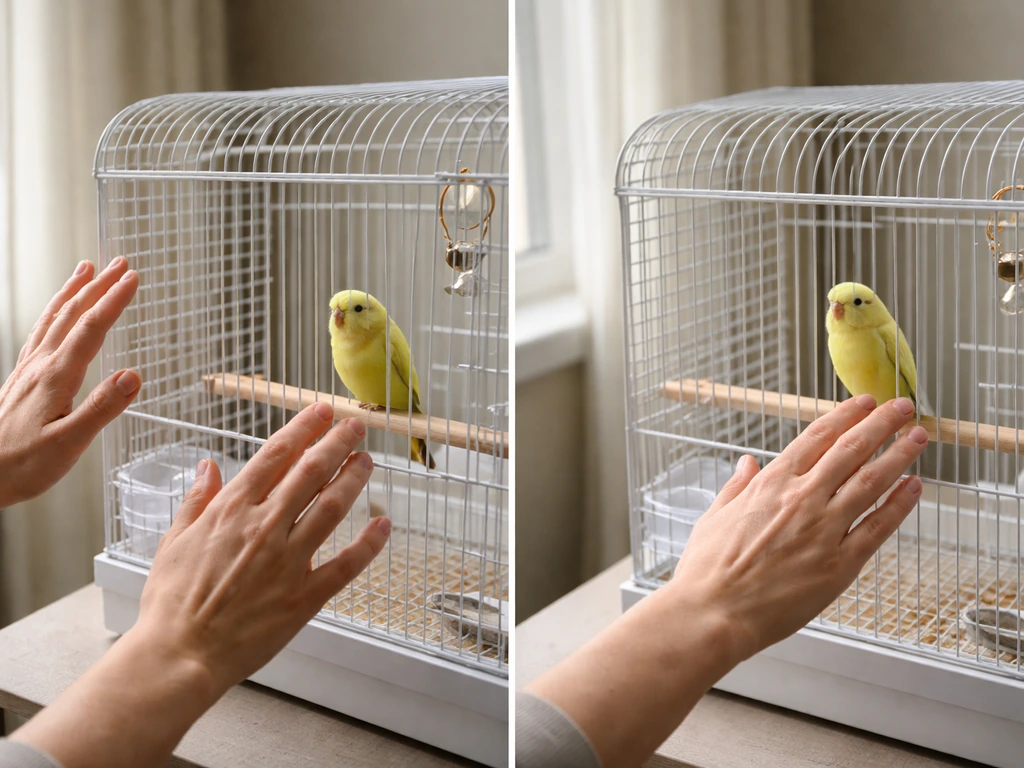
The most common mistake people make is rushing to the cage the moment the screaming starts. This teaches your bird that screaming equals immediate attention, which makes the problem worse over time. Instead, wait for a pause in the vocalizing, even a short one, and then go to the cage. You are reinforcing quiet, not the scream. This takes some patience in the first few days but it works.
Add morning enrichment
A bored bird is a loud bird. Putting foraging toys, puzzle feeders, or fresh food in the cage the night before means your bird has something to engage with the moment it wakes up instead of screaming for entertainment. This is especially effective for intelligent species like African greys, cockatiels, and conures who need mental stimulation to stay calm.
Try background sound
Some birds settle dramatically when soft music, a nature sound recording, or a TV in the background kicks on in the morning. It simulates the ambient noise of a flock and can satisfy the social calling instinct without requiring your direct attention. Experiment with volume levels because too loud can be stimulating rather than calming.
Support sleep quality
Aim for 10 to 12 hours of darkness for your bird each night. If your bird freaks out at night instead of at dawn, the same checklist approach applies, but you should also focus on sleep cues and any nighttime irritants or changes in routine nighttime bird screaming. A sleep-deprived bird is more reactive, more vocal, and harder to manage generally. If your bird stays up late because your household is active in the evenings, a cover in a quiet room earlier in the night can make a noticeable difference in morning temperament within just a few days.
When to call an avian vet
If you have worked through the checklist above and the screaming is clearly behavioral with no physical symptoms, you can work on the routine and enrichment adjustments at home. But some situations call for a vet today, not eventually.
| Sign or Situation | How Urgent |
|---|---|
| Open-mouth breathing at rest | Emergency: call an avian vet or emergency clinic immediately |
| Tail bobbing with each breath | Emergency: respiratory distress, do not wait |
| Gasping, wheezing, or audible breathing sounds | Emergency: call today |
| Screaming combined with fluffed feathers and lethargy | Same-day vet call |
| Sudden change in the sound of the scream (raspy, weak) | Same-day vet call |
| No appetite this morning combined with new screaming | Same-day vet call |
| Abnormal droppings alongside new screaming | Call the vet and describe what you see |
| Discharge from nostrils or around eyes | Call the vet today |
| Screaming that is dramatically louder or more frequent than usual, suddenly | Schedule a vet visit within a day or two |
| Screaming is normal dawn calling, no physical symptoms | Monitor and apply home adjustments |
One thing worth remembering: birds are prey animals and they instinctively hide illness for as long as possible. By the time a bird looks obviously sick, it has often been unwell for days. Purdue's veterinary guidance puts it plainly: any caged bird that appears ill should be treated as seriously ill. Open-mouth breathing at rest, in particular, is flagged by multiple veterinary sources as a very serious sign that should not be watched and waited on. The Avian Welfare Coalition booklet also lists respiratory distress signs such as difficulty breathing, gasping, excessive wheezing, and prolonged open-mouth breathing with tail flicks blank" rel="noopener noreferrer">Open-mouth breathing at rest.
If your bird is screaming but otherwise eating normally, acting alert, and showing no physical symptoms, you are almost certainly dealing with a normal bird doing normal bird things at an inconvenient hour. If you are wondering why your bird chirps so much, start by ruling out health issues before focusing on routine and environment why is my bird chirping so much. The steps in this article will help you manage it.
If you are wondering why your bird squawks so much, start by checking whether the timing suggests normal dawn behavior or an attention-seeking habit screaming. But if anything on that red flag list matches what you are seeing this morning, call an avian vet and describe the combination of symptoms. That combination of details is exactly what a vet needs to help you triage the situation quickly.
FAQ
How can I tell if the morning screaming is normal dawn behavior versus something medically wrong?
Look at timing and duration, not just volume. Normal dawn vocalizing usually starts with light and comes in bursts, then settles once the bird is active. If your bird screams for long stretches after sunrise, has trouble breathing, sits fluffed for extended periods, or stops eating, treat it as a possible health issue and call an avian vet.
Why does my bird seem to scream more when I respond right away?
Yes. Many birds learn that specific morning routines predict attention, food, or release. If you consistently respond immediately to the first scream, the bird may escalate because it has learned the “scream, then payoff” pattern. Try waiting for a quiet pause, then approach, and start the morning interaction on a consistent schedule.
What household changes can make my bird start screaming in the morning?
Check household changes that occur close to the same time as the new screaming, even if they seem unrelated to the cage. Common culprits include new air fresheners, different cookware, a new cleaner, a change in candle or diffuser use, or even stronger scents from laundry detergent, plus drafts from fans or HVAC changes.
My bird screams at dawn only on weekdays when I’m leaving, is it still normal?
If it happens only on days when you leave for work, travel, or your schedule changes, it may be learned calling around transitions rather than true dawn instinct. Track whether it begins right when your house is moving, and whether it eases when you ignore the initial calls and give attention at the same times each day.
Can covering the cage help even if my bird has never used a cover before?
If you use a cage cover, confirm your bird can see you normally when awake and that airflow is safe. Introduce covers gradually, avoid blocking ventilation, and do not cover during the bird’s panic phase, since forcing can increase stress and make the morning behavior worse.
What’s the best way to use toys or puzzle feeders to reduce morning screaming?
Start with the bird’s last calm period and offer enrichment timed to it. Put foraging toys or fresh items in the cage before you expect the first vocal burst, so the bird engages immediately upon waking. If you wait until the bird is already screaming, you may accidentally reinforce the screaming as the cue for attention.
How many hours of sleep should my bird get to reduce early morning screaming?
Yes, the “darkness window” matters, not just the time you wake up. Many birds need around 10 to 12 hours of darkness, and inconsistent evening bedtime can shift the bird’s internal routine so the screaming starts earlier or becomes harder to manage.
What breathing signs mean I should call an avian vet immediately?
If the screaming is paired with open-mouth breathing at rest, repeated coughing, tail bobbing, or breathing that looks labored, do not wait for behavior training. Those signs can point to serious respiratory problems, and an avian vet visit is the safest next step.
What should I track so I can tell a vet what’s going on if it doesn’t improve?
Keep a simple log for 3 to 7 days, including start time, how long it lasts, what was happening in the room (people moving, TV on, leaving the house), and any recent environmental changes. This helps a vet distinguish routine dawn vocalizing from stress patterns or illness.
Next Article
Why Is My Bird Squawking So Much? Troubleshooting Steps
Find why your bird squawks so much with step-by-step checks for stress, boredom, hormones, and health red flags.