
Most of the time, a bird freaking out at night comes down to one of a handful of fixable things: a sudden sound or flash of light, a draft hitting the cage, being too hot or cold, or not getting enough uninterrupted dark sleep. These are environmental problems with real solutions. Occasionally, though, nighttime agitation is the first visible sign of a health issue, so it's worth knowing the difference before you just cover the cage and hope for the best. If your bird is screaming for no clear reason at night, start by checking for light, sound, drafts, temperature shifts, and disrupted darkness.
Why Does My Bird Freak Out at Night? Fixes and Causes

Marcus Chen
8 Jul 2026
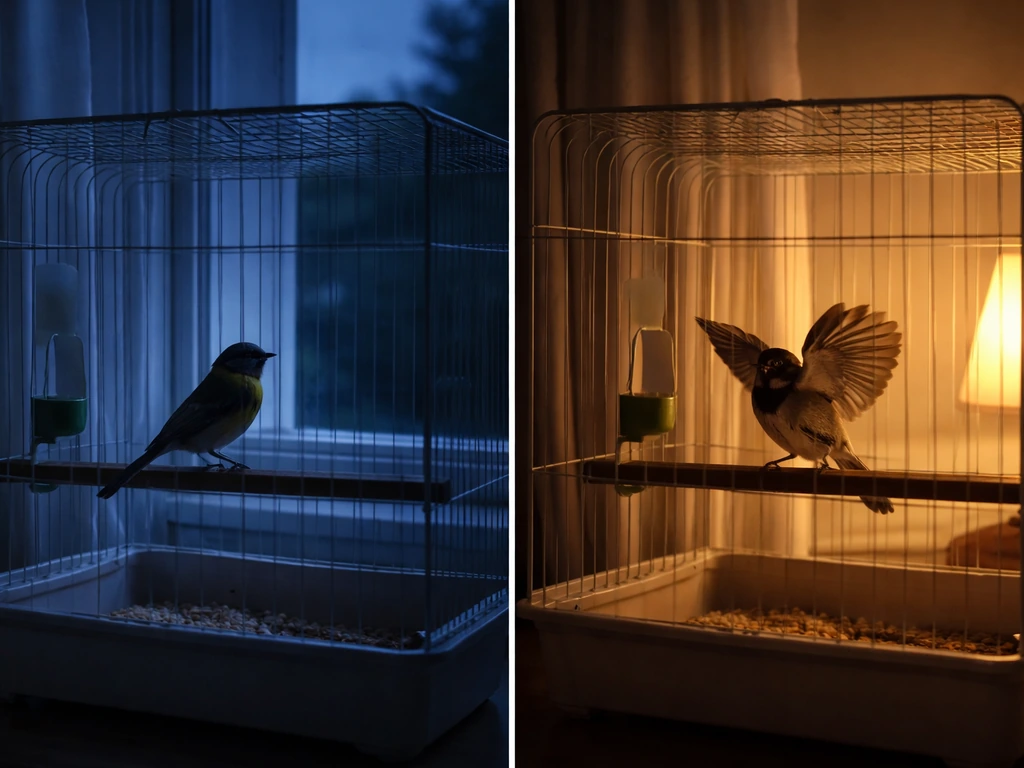
What 'freaking out' at night actually looks like
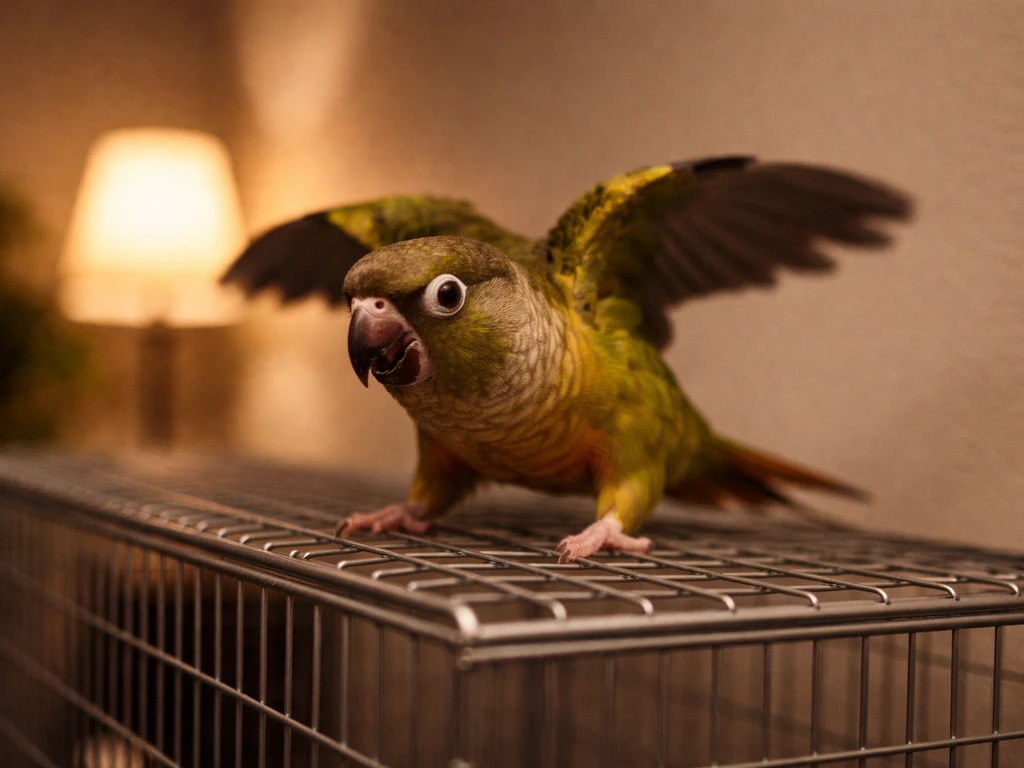
Before troubleshooting anything, get specific about what your bird is actually doing. 'Freaking out' can mean very different things, and the behavior itself tells you a lot about the cause.
Behavioral signs that usually point to fear, startle, or environmental triggers include: sudden loud vocalizations or screaming, frantic wing-flapping inside the cage, crashing into cage bars or toys, falling off the perch, and then returning quickly to normal within a few minutes once the trigger passes. This kind of episode, sometimes called a night fright, tends to be short, sharp, and over fast. You might hear your bird chirping or vocalizing persistently in ways that seem anxious rather than playful. If your bird also screams at other times, it's worth comparing those behaviors.
Warning signs that suggest something more serious are different in character. Watch for behaviors that don't resolve after a few minutes: sitting puffed on the cage floor, tail bobbing rhythmically with each breath, open-mouth breathing, audible clicking or wheezing, staying unusually still or hunched, or refusing to go back up to the perch. SpectrumCare notes that tail bobbing is not a normal resting breathing pattern and recommends urgent evaluation if it is paired with signs such as open-mouth breathing, noisy breathing, weakness, inability to perch, or bottom-sitting tail bobbing rhythmically with each breath. These aren't fear behaviors. These are red flags that need a closer look.
| Behavior | Likely cause | Urgency |
|---|---|---|
| Screams, flaps, then calms quickly | Startle/night fright | Low — check environment |
| Persistent loud vocalizations | Stress, hormones, or sleep deprivation | Medium — investigate triggers |
| Puffed up, sitting on cage floor | Illness, pain, or temperature issue | High — monitor closely |
| Open-mouth or noisy breathing | Respiratory distress | High — vet contact same day |
| Tail bobbing at rest | Breathing difficulty | High — vet contact same day |
| Frantic movement, then normal | Night fright or draft | Low — check environment tonight |
The most common causes: light, sound, drafts, temperature, and broken sleep
The majority of nighttime freak-outs trace back to the cage environment, not the bird itself. Here are the culprits I see come up over and over.
Light changes
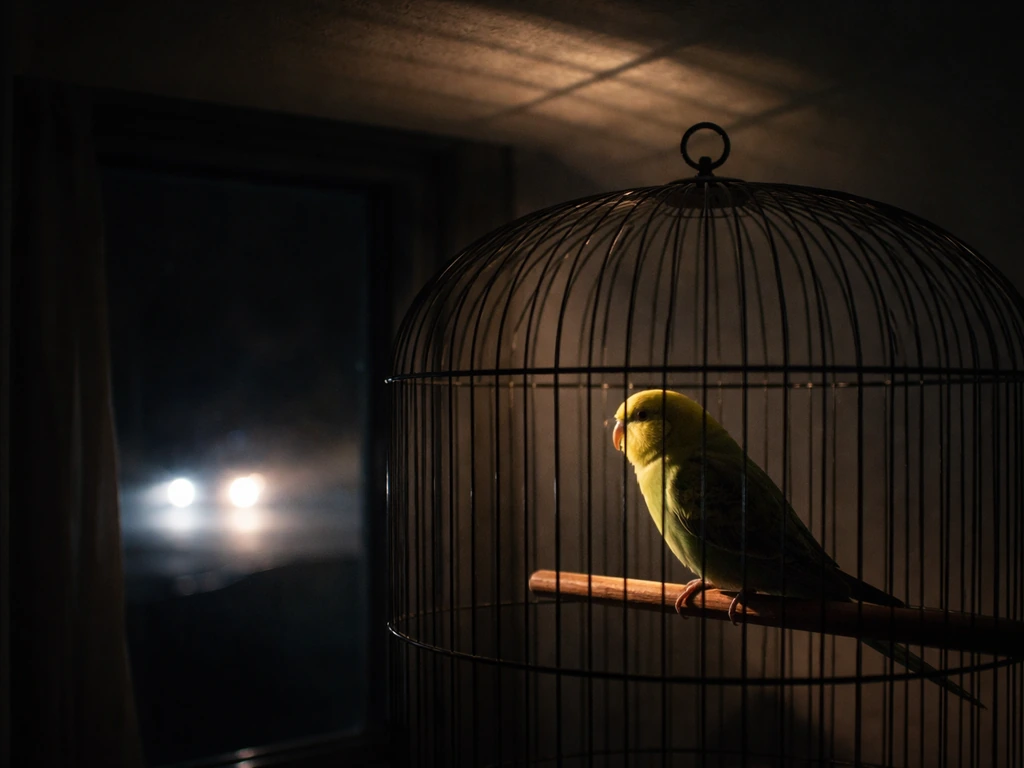
Birds are acutely sensitive to changes in light. A car's headlights sweeping across the ceiling, a TV flickering in the next room, someone walking past with a phone screen, or a streetlight bleeding under a curtain can all trigger a startle response in a sleeping bird. Even a small, sudden change in light intensity is enough to wake a light-sleeping species like a cockatiel or conure and send them into a panic.
Sound
Sounds that seem normal to you at 11pm are novel and alarming to a bird that's supposed to be asleep. Garbage trucks, outdoor animals, a TV turning on, even a house settling can startle a bird mid-sleep. Birds in the wild rely on sound to detect predators, and that instinct doesn't switch off just because they live in your living room.
Drafts
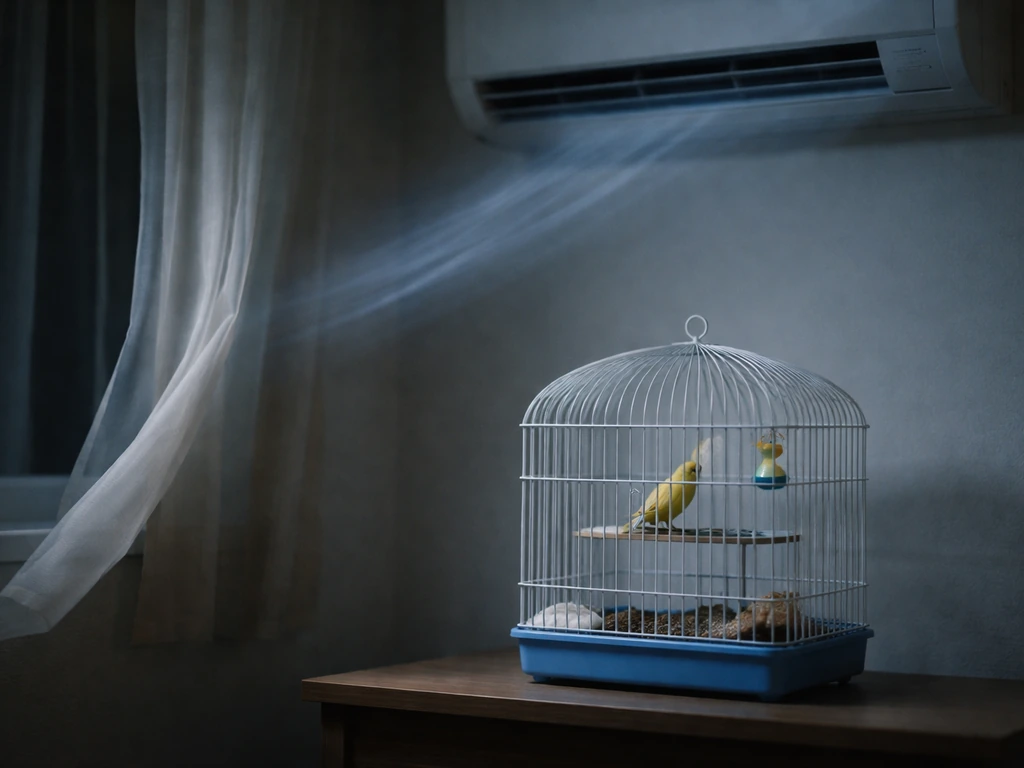
A draft is one of the sneakiest causes of nighttime distress. Air conditioning vents, cracked windows, fans, and even the airflow from a ceiling fan can create a chill that disrupts sleep or causes physical discomfort. Birds are sensitive to air movement especially at night when temperatures drop and they're not actively generating body heat through movement.
Temperature shifts
Nighttime temperature drops in a home, especially in summer when air conditioning kicks in or in winter when heating cycles off, can make a bird uncomfortable enough to become agitated. Most pet birds do best in a stable temperature range of around 65 to 80 degrees Fahrenheit (18 to 27 Celsius). Rapid fluctuations are more stressful than a steady cool temperature.
Sleep disruption and too little dark time
Birds need 10 to 12 hours of darkness and quiet to sleep properly. If your bird is in a room where people are active until midnight and the lights are on, it's running on chronic sleep deprivation. An overtired bird is an irritable, reactive bird. Sleep deprivation in parrots and other pet birds is a real and underappreciated cause of behavioral problems, including nighttime restlessness, excessive screaming, and general agitation. This directly connects to daytime behaviors you might also notice, like screaming when you leave the room or squawking through the evening hours.
Night frights: what they are and how to handle them
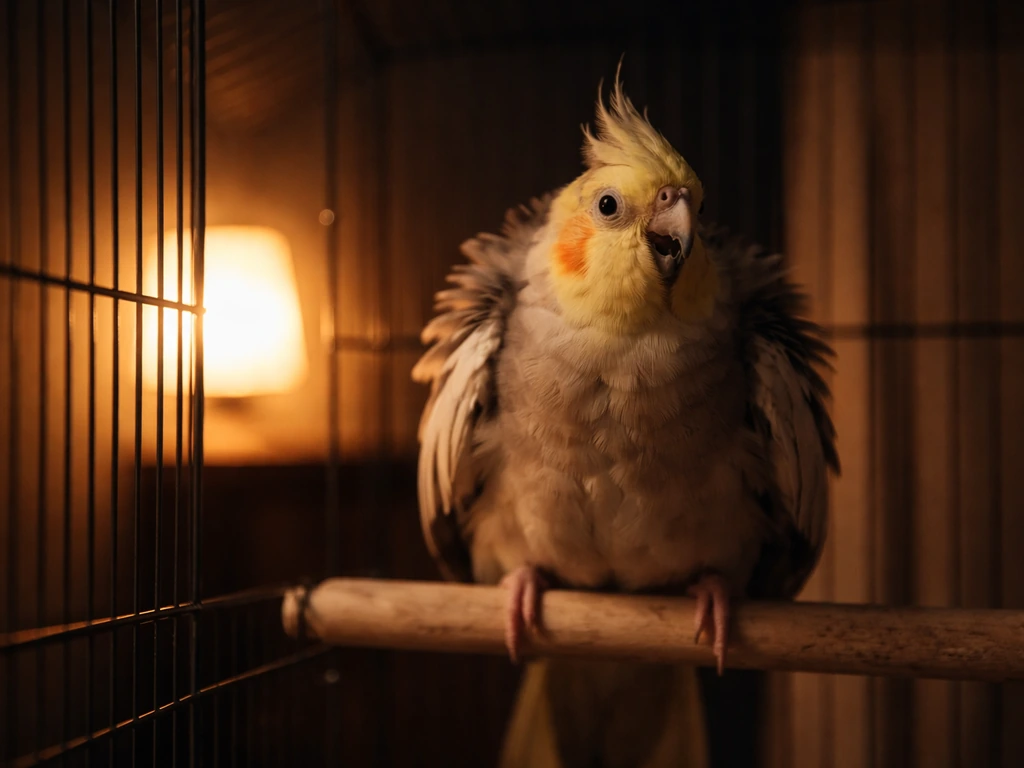
Night frights are sudden, intense startle episodes where a bird wakes in darkness or semi-darkness and panics. They're most common in cockatiels but can happen in any species. The bird crashes around the cage, may injure itself on bars or toys, and is often disoriented for a few minutes after. It looks alarming, and it feels alarming to the bird too.
The immediate step is to turn on a dim light in the room, not a bright overhead, just enough for the bird to orient itself. If your bird keeps panicking after these steps, it may be dealing with night frights and you can use the same guidance for why is my bird crying episodes. Then speak to your bird calmly and quietly. Don't rush over and grab it right away, as a panicked bird may bite out of fear. Give it 30 to 60 seconds to see where it is and calm down, then check for injuries once it's settled.
To prevent night frights from recurring, many owners find that a very dim night light (a small plug-in LED is ideal) left on near the cage allows the bird to orient itself quickly if it wakes. This is usually enough to prevent the full panic response. Also review what triggered the episode: a sound, a passing light, a shadow. Addressing the trigger is more effective than only treating the symptom.
- Keep a plug-in night light near the cage at a very low level
- Cover the cage with a breathable fabric cover to block light flashes
- Remove toys with dangling parts that the bird can collide with in a panic
- Place perches lower in the cage so falls are less dangerous
- Use a white noise machine or low-volume ambient sound to mask sudden noises
Hormones and territorial behavior after dark
Hormonal behavior is a less obvious but real cause of nighttime agitation, especially in spring and late summer. When birds enter a breeding cycle, their behavior shifts significantly. They can become more territorial, more vocal, more reactive to disturbances, and sometimes more aggressive at the cage bars. Conures and cockatiels are especially prone to this.
Signs that hormones might be playing a role: your bird has been more territorial or possessive lately, is regurgitating onto toys or perches, is seeking out dark enclosed spaces to sit in, or is reacting to its own reflection in the cage bars. If your bird screams in the morning, the same hormone and territorial drivers that affect dusk and dawn can also be part of the pattern vocalize at dusk and dawn. These birds can also become more likely to vocalize at dusk and dawn, which connects to the morning screaming pattern some owners deal with as a separate frustration.
The most effective way to manage hormonally driven nighttime agitation is to reduce the stimuli that trigger breeding behavior. This means ensuring the bird gets a full 12 hours of uninterrupted darkness (extended light periods mimic breeding season), removing cozy nest-like items from the cage, and avoiding petting the bird on its back or under its wings, as those touches are hormonally stimulating. If hormonal behavior is severe or causing injury, an avian vet can discuss additional options.
Health red flags that show up or worsen at night
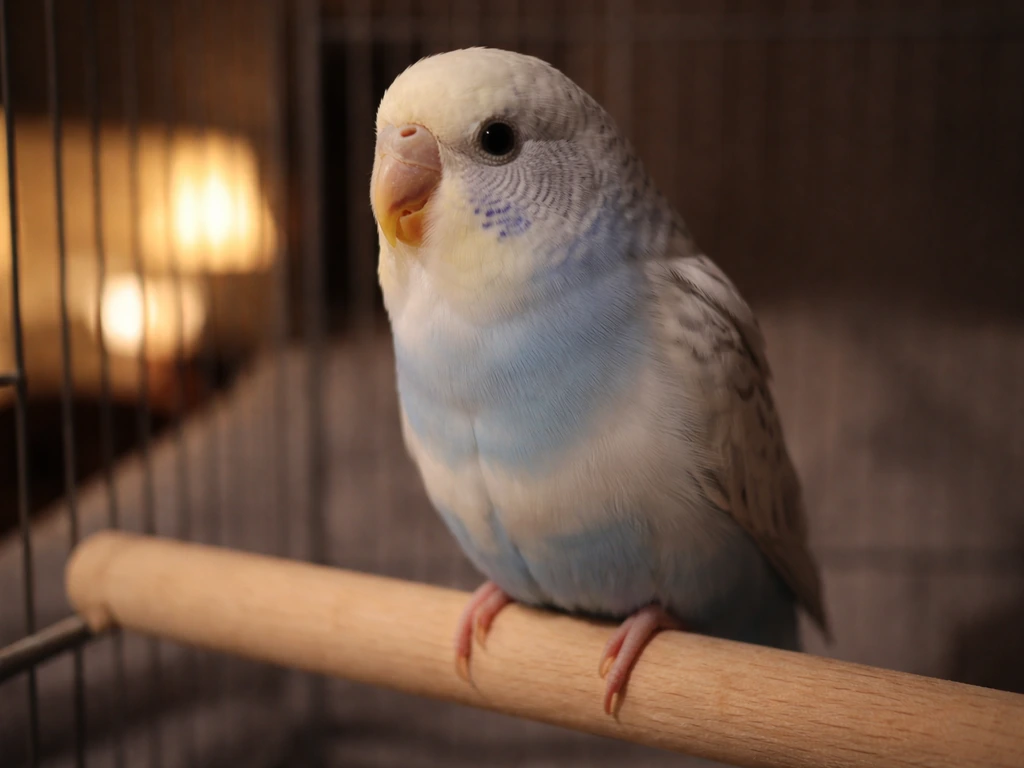
This is the part that matters most if your bird's nighttime behavior has changed recently and you can't find an obvious environmental cause. Several health issues tend to become more noticeable at night because the house is quieter and the bird is less able to mask symptoms when it's resting.
Respiratory problems are the most urgent thing to watch for. Open-mouth breathing in a resting bird is never normal. Labored breathing, audible clicking or wheezing, and visible sternal movement (the chest heaving) are all signs of respiratory distress that need same-day veterinary attention. VCA Animal Hospitals lists respiratory red flags in pet birds, including labored breathing and/or open-mouth breathing. Tail bobbing at rest is another critical sign: in a resting bird, the tail should not be visibly pumping up and down with each breath. When it does, it typically means the bird is working hard to breathe, which is a medical emergency, not a behavioral quirk.
Other health issues that can cause nighttime restlessness include pain from injury or internal illness, skin or feather irritation causing itching, gastrointestinal discomfort, neurological issues that cause disorientation, and overheating or hypothermia. A bird that is ill will often try to hide it during active daytime hours but cannot maintain that mask when resting at night.
- Open-mouth breathing at rest: contact an avian vet same day
- Audible clicking, wheezing, or rasping: contact an avian vet same day
- Tail bobbing with each breath while perching: urgent evaluation needed
- Bird sitting on the cage floor and not returning to a perch: high concern, vet same day
- Puffed feathers combined with lethargy and reduced droppings: vet visit within 24 hours
- Sudden behavioral change with no environmental explanation: schedule a vet checkup
Birds are prey animals and will hide illness for as long as possible. By the time a bird looks clearly sick, it has often been unwell for some time. Nighttime is one of the few windows where that mask slips. Trust your instincts: if something seems off and you can't explain it with environment or behavior, a vet visit is the right call.
Troubleshooting you can do tonight
If your bird just had an episode and you're reading this now, work through these checks in order. They take about 15 to 20 minutes and will cover the most likely causes.
- Rule out a health emergency first. Watch your bird breathe for 60 seconds. Is the breathing effortless and through the nostrils? Good. Are you seeing open-mouth breathing, tail bobbing, or audible sounds? Stop the environmental checks and contact an avian vet.
- Check for light sources hitting the cage. Stand where your bird sits and look around the room in the dark. Note any light from windows, electronics, gaps under doors, or passing vehicles. Block them with a cage cover or curtain adjustment.
- Check for drafts. Hold your hand near the cage at perch height and feel for airflow from vents, windows, or fans. If you feel any movement, relocate the cage or redirect the airflow source.
- Check the room temperature. It should be between 65 and 80 degrees Fahrenheit. If it's cooler than that, especially if there's air conditioning running overnight, add a breathable cage cover for warmth.
- Listen for noise sources. What sounds are present after 9pm that weren't there during the day? Outdoor animals, a TV in another room, appliances cycling on? A white noise machine near (not next to) the cage can buffer irregular sounds.
- Assess your bird's sleep schedule. How many hours of darkness is the bird actually getting? If it's less than 10 hours, move the cage to a quieter, darker room for sleep, or start covering it earlier.
- Add a dim night light if you don't have one. A small plug-in LED near the cage bottom (not directed at the bird) is often enough to prevent disorientation-based night frights.
- Log what you observed: time of episode, what was happening in the house, what the bird did, how long it lasted, and how the bird looked after. This information is genuinely useful if you end up needing a vet visit.
Species-specific notes worth knowing
Not every bird reacts the same way, and knowing your species helps set expectations.
| Species | Night fright risk | Main nighttime triggers | Key tip |
|---|---|---|---|
| Cockatiel | High | Light flashes, sudden sounds, shadows | Night light is strongly recommended |
| Budgie/Parakeet | Medium | Sounds, temperature drops | Keep in a quiet, stable-temp room |
| Conure | Medium-High | Sounds, hormonal phases, sleep deprivation | Strict 12-hour darkness schedule helps most |
| Finch/Canary | Low-Medium | Light changes, drafts | Breathable cage cover, minimal airflow |
| African Grey | Medium | Routine disruption, novel sounds | Consistency in schedule is critical |
| Lovebird | Medium | Drafts, temperature, light | Avoid positioning cage near vents or windows |
Building a routine that prevents nighttime problems long-term
One-off fixes help in the moment, but the most reliable way to prevent recurring nighttime issues is a consistent sleep routine. Birds thrive on predictability. When the same sequence of events happens every evening, the bird learns what to expect and settles more easily.
Aim to cover the cage or move the bird to its sleep space at the same time every night, ideally allowing for 10 to 12 hours of dark and quiet. Avoid placing the cage in a high-traffic room where household activity runs late. If your bird sleeps in the living room and you watch TV until midnight, that's a problem worth solving with a sleep cage in a quieter room.
Gradual desensitization works well for birds that are reactive to specific sounds. If garbage trucks at 6am are a reliable trigger, spend a few evenings playing recordings of similar sounds at low volume during calm, positive interactions so the sound loses its novelty and threat.
Evening enrichment can help wind a bird down rather than up. Foraging toys, calm interaction, and quieter lighting in the hour before sleep all signal to the bird that active time is ending. Avoid loud play, exciting handling, or new toys right before sleep time.
For long-term cage placement, aim for a room where temperature is stable overnight, there are no direct drafts, the cage isn't against an exterior wall that gets cold, and there's minimal exposure to street lights or passing headlights. A corner placement away from windows and vents is usually ideal.
If you've addressed all the environmental factors and your bird is still regularly agitated at night, that's when a relationship with an avian vet becomes the most useful tool you have. Routine wellness checkups, not just sick visits, are genuinely worth it for birds because the earlier a health issue is caught, the more options you have. An avian vet can also advise on hormonal management, behavioral support, and whether specific supplements or husbandry changes make sense for your bird's individual situation.
FAQ
How long should a bird’s “night fright” last before I worry?
Not necessarily. A one-time scare that settles within a few minutes often fits an environmental night fright, but repeated episodes (for example, multiple nights in a row) or any breathing difficulty, tail pumping, or open-mouth breathing are different. In those cases, treat it as a health or chronic-stressor issue and get help from an avian vet.
What light level should I use when my bird panics at night?
Avoid bright overhead lights. If you need to check them, use the dimmest option you have to help orientation, then keep the room quiet. If you cannot reduce light and sound immediately, postpone handling until the bird is calmer, because sudden bright lighting can prolong panic.
Is it okay to fully cover the cage to prevent night freak-outs?
Yes, and it can make behavior worse. Covering the cage too tightly can trap warm, humid air or block airflow, and it can prevent you from noticing injuries. A better approach is a controlled dim night light, stable temperature, and addressing drafts or passing light, then using visual checks after the bird settles.
Should I pick up my bird during a nighttime panic or leave it alone?
Use the bird’s behavior to decide. Wait 30 to 60 seconds before touching, and only handle if you see signs of injury, bleeding, a bad fall, or continued unsafe distress. If the bird keeps trying to crash into bars or won’t perch, that is a reason to intervene and contact an avian vet.
Can reflections or shadows at night trigger the same panic as headlights and flickering lights?
Yes. Birds often startle at motion before they “see” clearly, so reflections and moving shadows under curtains, a door opening, or someone walking past can trigger the episode. Check for spinning fans, changing TV brightness, and shifting curtain light, not just direct flashes.
How can I tell if temperature swings, not just low temperature, are driving the behavior?
Try to aim for stable overnight temperature rather than just “warm enough.” If your room temperature swings by several degrees due to heating cycles or drafts, your bird may repeatedly wake uncomfortable. Place the cage away from exterior walls, vents, and doorways, and use a thermometer at cage height.
Why does my bird freak out at night only some nights?
It’s possible, especially if your bird is exposed to intermittent light or noise overnight. Consider whether the sleeping room has overnight activity, changing phone or TV lighting, or a bright streetlight that pulses through blinds. Aim for uninterrupted darkness and minimize “background” novelty.
My bird’s tail bobs when it rests at night, does that always mean it’s scared?
Tail bobbing during rest is a red flag even if the bird is otherwise responsive. If you also notice open-mouth breathing, audible clicking or wheezing, chest heaving, or the bird cannot settle onto the perch, treat it as respiratory distress and seek same-day veterinary care.
How do I distinguish hormonal nighttime vocalizing from a medical problem?
Frequent screams at night can be behavior or illness. If the bird remains restless despite a calm environment, has trouble breathing, seems hunched or unusually still, or refuses to return to the perch, don’t assume it’s “just hormonal” or “just night noise.” Those patterns warrant a veterinary assessment.
What’s the safest way to desensitize my bird to recurring night-time sounds?
Gradually desensitize the specific trigger and keep volume low enough that your bird stays calm, then only increase once it consistently shows relaxed behavior. Stop if your bird escalates, and pair the sound with positive, non-stress activities earlier in the evening, not during the actual dark-sleep window.
What cage location changes make the biggest difference for night panics?
Cage positioning matters. If the cage is near a window, exterior wall, or vent, night freak-outs may track with streetlights, temperature drop, or airflow. For troubleshooting, try one controlled change at a time (draft-free spot, away from windows/vents, reduce light bleed) and observe for several nights.
My bird hides in the corner or dark spots at night, could that be hormonal?
If your bird is going into a dark enclosed space, becoming possessive, regurgitating on toys or perches, or reacting strongly to its reflection, hormonal behavior is more likely. Still, confirm basics like stable darkness and no nest-like items, and contact an avian vet if aggression or injury is developing.
Could adding new toys or moving the cage cause nighttime freak-outs?
Yes, but do it carefully. New toys, rearranging the cage late, or handling right before lights-out can create novelty and keep the bird keyed up. Introduce enrichment earlier in the day or at least well before bedtime, and keep the final pre-sleep routine predictable.
What should I track so I can explain the problem to an avian vet effectively?
If the bird recently had an episode and you keep seeing similar patterns, switch from guessing to documenting. Note time, what changed (light, sound, temperature), duration, and the specific behavior (crashing, tail bobbing, breathing changes). That record helps your avian vet separate environment triggers from respiratory, pain, or neurological concerns.