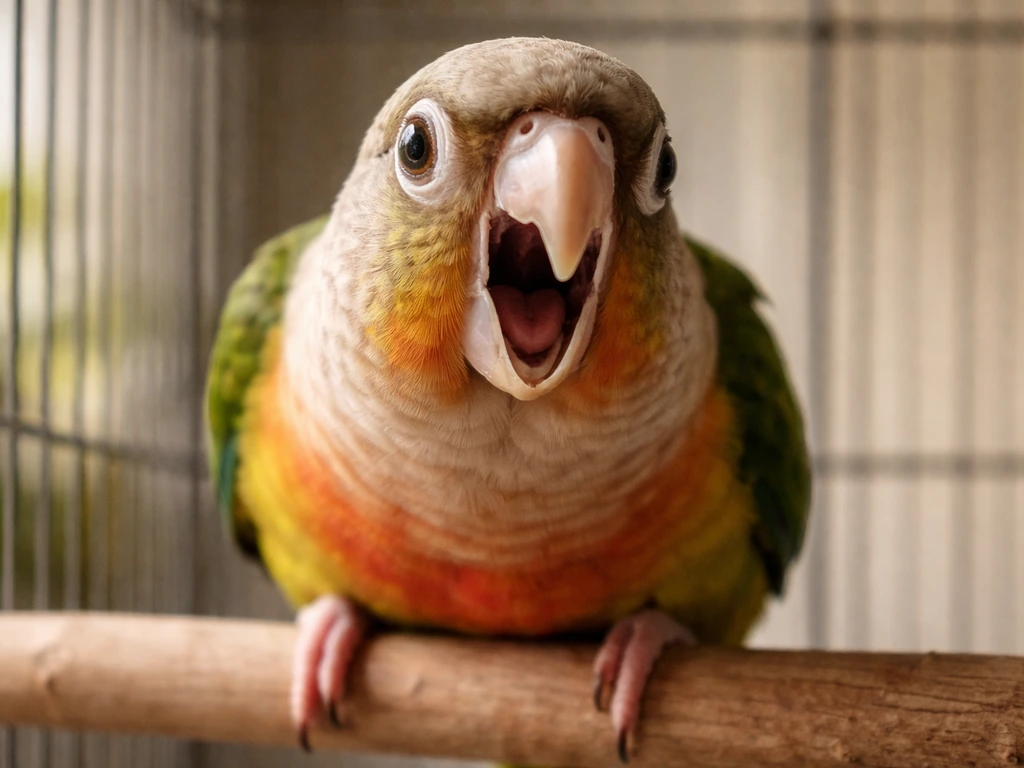
Your bird screams when you leave the room because, from its perspective, you just disappeared from the flock and it needs to know where you are. This is called contact calling, and it's hardwired into most parrots. The problem is that when you rush back every time it screams, you accidentally teach the bird that screaming works. That pattern is what turns a natural behavior into an exhausting habit.
Why Does My Bird Scream When I Leave or Enter?

Marcus Chen
27 Apr 2026
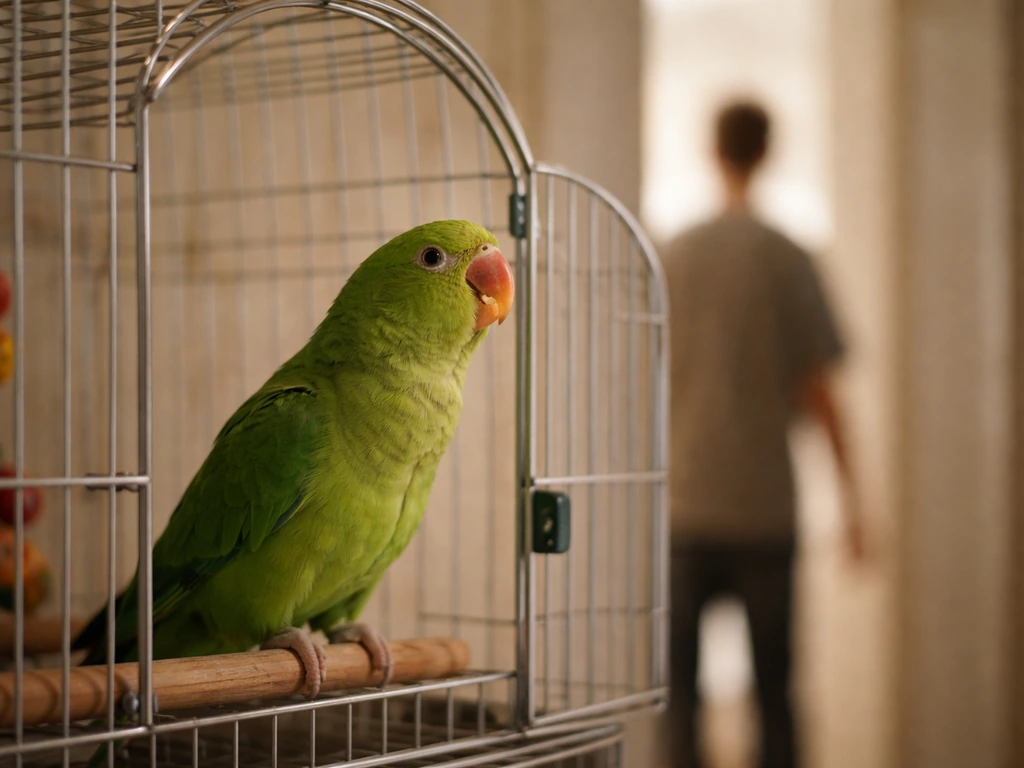
What "screaming at you leaving or entering" actually means
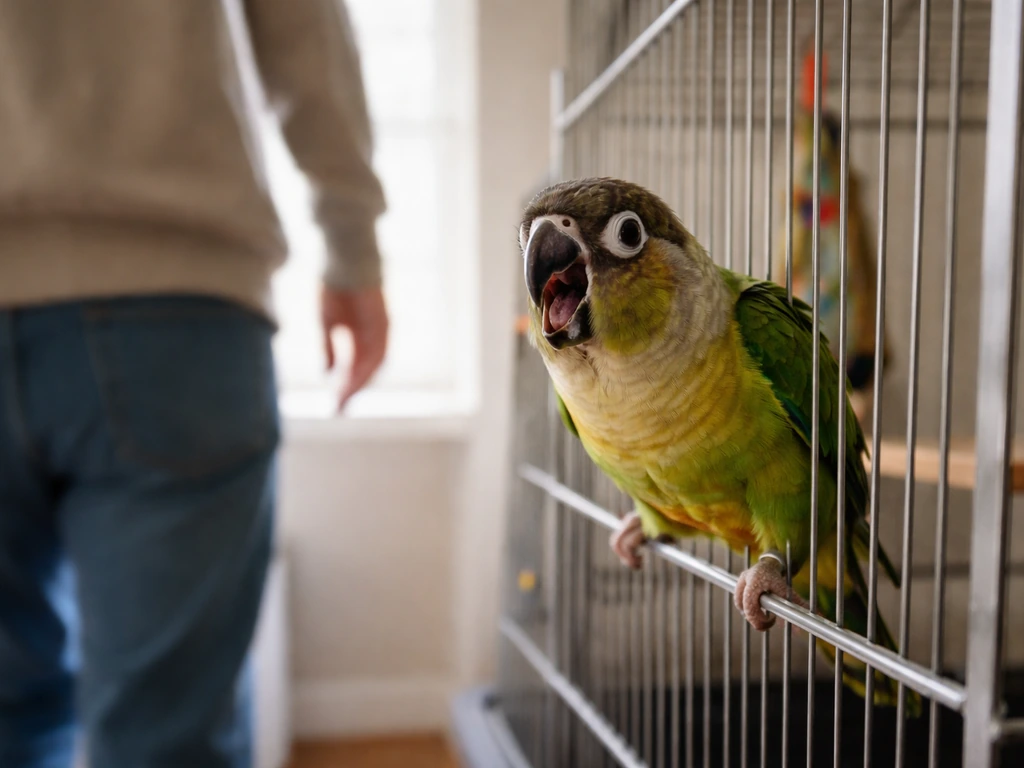
Birds are flock animals. In the wild, a bird that gets separated from the group faces real danger, so contact calling is a survival mechanism. When you walk out of the room, your bird doesn't fully understand that you're just going to make coffee. It experiences something closer to: the flock member is gone. Call until they respond.
Screaming when you leave is usually driven by one of these things: separation anxiety, learned attention-seeking, or over-dependence on you as the bird's only source of stimulation. The screaming when you enter is slightly different. That's often the bird expressing excitement or anticipation, but it can also be agitation caused by the abrupt transition itself, especially in high-strung species like cockatoos or conures.
The key distinction to make is whether the screaming is contact calling (a few loud calls, then quiet once the bird hears a response) versus distress vocalizing (frantic, non-stop, escalating calls that don't settle even when you're present). The first is manageable with training. The second needs more attention and might point to anxiety or a health issue.
Quick checks before assuming it's just behavior
Before you work on training, rule out the things that make screaming worse or that have nothing to do with behavior at all. If you are seeing crying alongside unusual behavior, also consider the common causes behind why is my bird crying so you can rule out anything medical or stress-related before focusing only on training. A bird that's in pain, sick, or uncomfortable will vocalize more, and no amount of training will fix that.
- Is the screaming new or has it escalated recently? A sudden change in vocal behavior warrants a closer look at health, not just habit.
- Check for physical signs: fluffed feathers, labored breathing, tail bobbing, discharge around the eyes or nares, changes in droppings, or a loss of appetite. Any of these alongside increased screaming is a vet call.
- Is the cage in a drafty spot, near a vent, or in direct midday sun? Discomfort from temperature extremes can drive persistent vocalizing.
- Has anything changed in the household recently? New pet, new person, moved furniture, changed schedule? Birds are extremely sensitive to environmental shifts.
- Is the bird getting enough sleep? Chronic sleep deprivation (less than 10 to 12 hours in a quiet, dark space) makes birds louder, more reactive, and harder to settle.
- Is the bird getting enough mental stimulation? A bored bird in an unstimulating environment screams. It's not spite, it's the only option available.
If all of those check out and the bird is otherwise acting normally, you're most likely dealing with a learned behavioral pattern. That's good news, because it's fixable.
Figure out your bird's specific triggers first
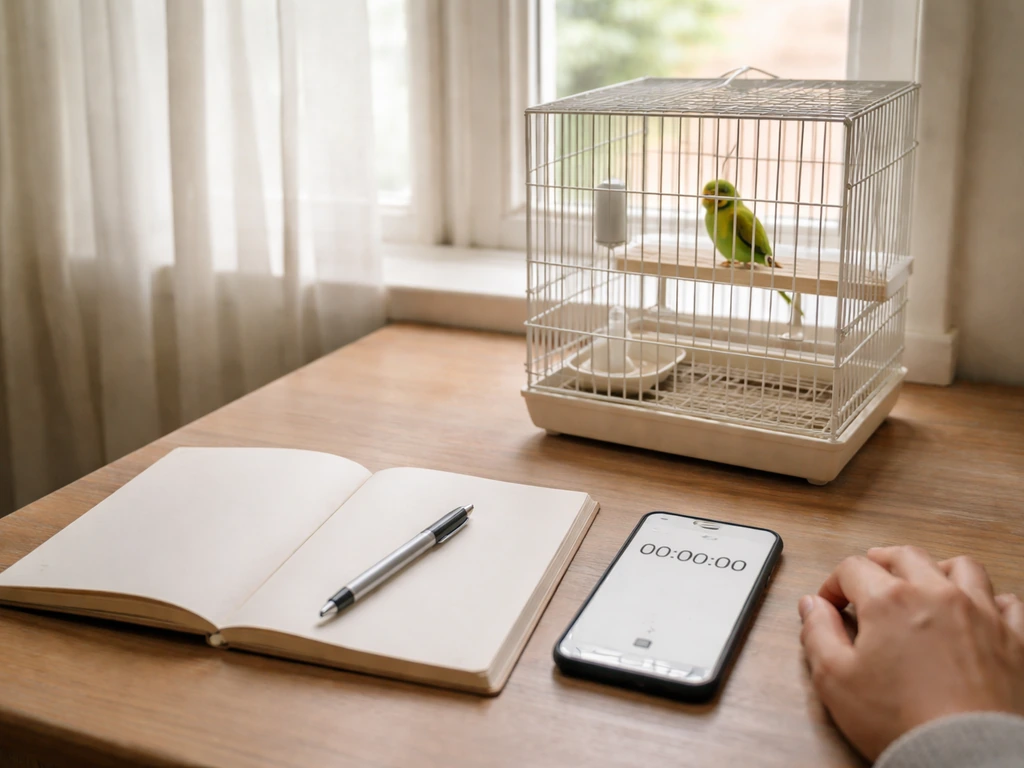
Spend two or three days just observing before you start changing anything. You'll train more effectively once you know exactly what's setting the screaming off. Use this simple checklist.
- What time does the screaming happen most? Morning, evening, midday? Morning screaming has its own pattern worth exploring separately from transition-based screaming.
- Does the screaming start the moment you move toward the door, or only after you've been gone for a certain amount of time?
- Does the bird settle on its own, or does it scream continuously until you return?
- What does the bird do right before you leave? Is it watching you closely, following your movements, tensing up?
- Does it also scream when other household members leave, or only you?
- When you enter, does the screaming start before you open the door (it hears you coming), right as you enter, or only if you don't immediately go to the bird?
- What's the bird's body language during the screaming: feathers slicked down, wings slightly out, eyes pinning? Or is it pacing and appearing distressed?
The answers tell you whether you're dealing with contact calling, full separation anxiety, or transition agitation. They also show you exactly where to start your desensitization work.
Things you can do today to start turning this around
The single most important thing you can do right now is stop responding to screaming. This is hard because your instinct is to go back and check on the bird, or to yell from the other room, or to say "It's okay!" None of those responses help. They all confirm to the bird that screaming gets your attention, which is exactly what it's trying to achieve.
Instead, wait for a pause in the screaming, even just two or three seconds of quiet, and then return or call back to the bird. You're not ignoring the bird, you're just teaching it that quiet is what summons you, not noise. This is the core of the whole fix.
Alongside that, start building a more predictable routine. Birds do significantly better when they can anticipate what happens next. Feed at the same times, have out-of-cage time at the same times, and put the bird to bed at the same time each night. Predictability reduces anxiety, and reduced anxiety reduces screaming.
- Add foraging toys, puzzle feeders, or shreddable toys to the cage so the bird has something engaging to do when you're not there.
- Leave a radio or TV on at a low volume when you leave the room. Familiar background noise can be genuinely calming.
- If you can see the bird from wherever you go most often in the house, try positioning the cage so the bird can maintain visual contact with you during normal daily movement.
- Practice short, calm departures and returns multiple times a day so leaving becomes unremarkable rather than an event.
A simple training plan that actually works
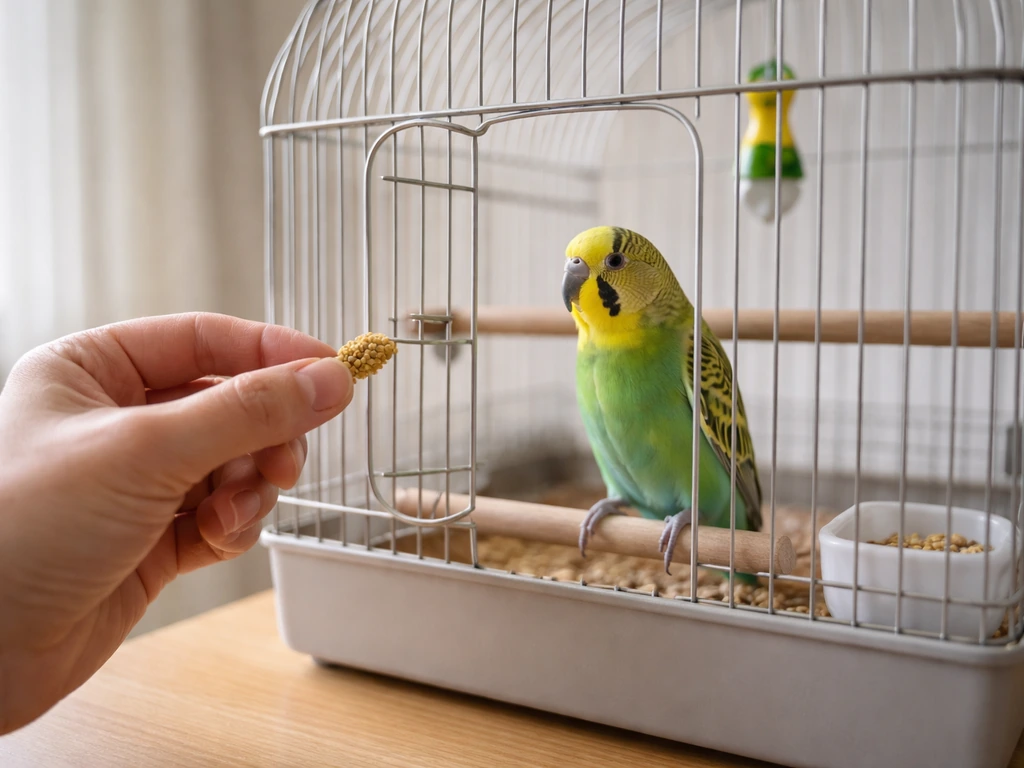
The goal of training here is two things: reward quiet behavior and build the bird's ability to handle being alone. Both require consistency, and both take time. Most birds start showing improvement within one to three weeks with daily practice, though heavily reinforced patterns in older birds can take longer. RSPCA guidance emphasizes appropriate behavioural and social care, including providing young parrots with almost constant attention until they are adults, and encouraging play using provided items Most birds start showing improvement within one to three weeks with daily practice, though heavily reinforced patterns in older birds can take longer..
Rewarding quiet
Catch the bird being quiet and reinforce it. Walk past the cage when the bird is calm and offer a small treat or quiet praise. If the bird is screaming, do not approach the cage until there's a break. The moment there's a break, go over calmly and reward. You're building an association: quiet brings good things, screaming brings nothing.
Some trainers use a bridging cue like a clicker or a specific word to mark the exact moment of quiet before delivering the reward. This speeds up the association and makes it cleaner. If you have a clicker already, this is a great place to use it.
Teaching independence
If your bird is highly bonded to you specifically and has limited contact with other people or enrichment outside of you, start gradually shifting that. Introduce more foraging time, rotate toys so novelty stays high, and if there are other household members the bird tolerates, involve them in feeding and interaction. The World Parrot Trust also recommends using safe, engaging foraging and puzzle toys as environmental enrichment to keep parrots actively involved Introduce more foraging time, rotate toys so novelty stays high. The bird needs to learn that life is interesting even when you're not directly present.
You can also work on stationing: teaching the bird to stay on a perch or play stand while you move around. This gives the bird a job and a secure home base that isn't your shoulder. Rewarding the bird for staying on its station while you step away, even just a few feet, starts building that tolerance gradually.
Desensitizing your bird to exits and entrances
If your bird starts ramping up the moment it sees you heading toward the door, it has learned to read your pre-departure cues: picking up keys, putting on shoes, grabbing a bag. You can dilute those cues by doing them repeatedly without actually leaving. Put your shoes on and sit back down. Pick up your keys and then make tea. Over time, those cues stop triggering the same alarm response.
For actual exits, the method is to practice very short departures. Step out of the room for five seconds, come back before the bird has a chance to scream, and reward the quiet. Gradually extend the time: 10 seconds, 30 seconds, two minutes, five minutes. Go at the pace your bird can handle without spiraling. If the bird starts screaming before you return, you went too long and need to drop back to a shorter interval.
Entrances can also be managed. If your bird screams when you come in and you immediately rush over and greet it, you're reinforcing that pattern. Instead, come in calmly, take a moment, do something else briefly, and then go to the bird once it's quiet. Keep your arrivals low-key so they don't become a trigger for excitement-based screaming either.
Transitions in general, whether leaving, arriving, or moving between rooms, are high-trigger moments for many birds. Some birds that scream specifically at night or during certain parts of the day have a related pattern worth looking at, since the underlying anxiety or routine sensitivity is often the same. Some birds scream in the morning because their routine or anxiety around daily changes follows the same pattern as other times of day. At night, birds can also ramp up due to routine sensitivity or heightened anxiety, so it helps to identify your bird’s specific triggers and patterns why does my bird freak out at night.
When this is more than a training problem
Not all screaming is behavioral. Pain causes vocalization. So does illness, and birds are notorious for hiding symptoms until they're quite unwell. Any time screaming is new, has changed in character, or comes alongside physical signs, get an avian vet involved. A general practice vet with limited bird experience may miss things that an avian specialist catches.
Signs that should prompt a vet visit sooner rather than later:
- Screaming that started suddenly with no clear environmental cause
- Screaming accompanied by fluffed feathers, tail bobbing, or labored breathing
- Changes in droppings (color, consistency, or volume) alongside increased vocalization
- The bird is eating less or has lost weight
- Screaming that continues even when you're present and engaging with the bird
- Any sign of self-mutilation such as feather destruction or skin picking alongside distress vocalizations
If you've worked consistently on training for four to six weeks with no improvement, or if the anxiety seems severe (constant frantic calling, physical signs of stress, inability to settle), a certified parrot behavior consultant is worth considering. These professionals can observe your specific bird, your setup, and your interactions and give you a targeted plan that generic advice can't match.
The bottom line is that screaming when you leave is almost always solvable. It takes consistency, patience, and the willingness to stop rewarding the behavior you want to end. Start today by not responding to screaming, reward every quiet moment you catch, and build a routine your bird can count on. If you’re wondering why your bird is chirping so much, this approach can help you separate normal calling from distress or anxiety why is my bird chirping so much. Most birds improve meaningfully once those two things are in place.
FAQ
How do I tell if my bird’s screaming is contact calling or true panic?
Watch whether it settles when you are present or responsive. Contact calling typically has short bursts, then quiet once it hears you. Panic is usually frantic and escalating, and it stays loud even when you return or attempt calm reassurance. If it never truly settles, treat it as distress and consider a health check or a behavior consult rather than only training.
What if my bird screams the whole time I’m gone, even after I stop responding?
That can mean you are leaving longer than your bird can tolerate yet, or the bird has learned that screaming is the only way to get you back. Shorten your departure intervals so you return during the first quiet window, then extend gradually. If there is no quiet at all, reduce stimulation cues (shoes, keys, talking) and reintroduce training when the bird shows any calm moment.
Should I ignore the bird completely, or talk to it from the doorway?
Avoid talking, yelling, or doing anything that reliably triggers the bird to hear and respond to you. If you want to communicate, keep it minimal and only after you’ve gotten a clear pause in the screaming, then deliver the reward quietly and leave again. The goal is teaching quiet to summon you, not your voice.
How soon can I expect improvement, and what counts as progress?
Progress is often first seen as shorter screaming bouts, longer quiet periods between bouts, or fewer escalations. Even if the total screaming time doesn’t drop immediately, improvement can show up as a delay before the first scream. If there is absolutely no change after consistent practice for 4 to 6 weeks, reassess triggers, environment, and health, or seek professional help.
What if screaming gets worse the first few days of training?
That is common when you stop giving attention in response to screaming. The bird may intensify briefly, then eventually learn that noise no longer works. Use shorter departures and resume rewarding quiet sooner, so the bird has more opportunities to succeed during the learning phase.
Can I use treats, or will that just make my bird expect food every time I leave?
You can use treats, but keep them small and tied to the timing of quiet, not general presence. If every quiet moment results in a treat, the bird may still learn the pattern, but you can later fade to less frequent rewards. Also consider using different reinforcement types (praise, a favorite foraging item) to avoid overfeeding.
Does the bird need a companion or playmate to stop screaming?
Sometimes it helps, but it is not a universal fix. If your bird is bonded to you specifically, adding a bird or shifting household attention can reduce loneliness, but it can also create competition or new stress. If you consider another bird, do slow, supervised introductions and ensure each bird has its own secure space and routines.
My bird screams when I leave and also bites when I come back. What should I do first?
Prioritize safety and avoid reinforcing contact during peak excitement. Use a calm, low-key entry, wait for quiet or calm body language, then offer a neutral reward from a safe distance. If biting escalates or you see sudden changes in behavior, rule out pain or illness immediately because aggression can be a discomfort signal.
How do I handle morning or nighttime screaming, when routines are different?
Use a consistent, predictable schedule around those transition periods. If your bird ramps up at a specific time, target that exact pre-trigger window, reduce abrupt changes, and practice short departures or stationing during similar conditions. If nighttime screaming is intense or includes abnormal physical signs, involve an avian vet rather than assuming it is only routine anxiety.
Should I cover the cage or change the lighting when my bird screams during transitions?
Cage covers and lighting changes can help some birds, but they can worsen others if the bird becomes more alarmed or cannot see you. Try subtle, consistent adjustments only after you identify the trigger. Any environmental change should be paired with training so the bird still learns that quiet leads to your return.
What “setup” changes make training easier?
Ensure the bird has access to a favorite perch or station, appropriate toys (including chew and foraging options), and an area where it feels secure. Rotate toys so novelty supports engagement, and place the station so you can step away without blocking the bird’s view or startling it. If screaming spikes when you pass specific objects or rooms, repositioning can reduce the perceived “danger zone.”
When should I stop trying training and call a vet or behavior professional?
Contact an avian vet promptly if screaming is new, noticeably different, or accompanied by changes in appetite, droppings, posture, breathing, feather condition, or sleep. Seek a parrot behavior consultant if you’ve trained consistently (about 4 to 6 weeks) with no meaningful improvement, or if the bird is escalating to severe distress with physical stress signs.
Next Article
Why Is My Bird Screaming for No Reason? Causes and What to Do
Troubleshoot nonstop bird screaming: behavioral vs medical causes, home checks, red flags, and when to see an avian vet.