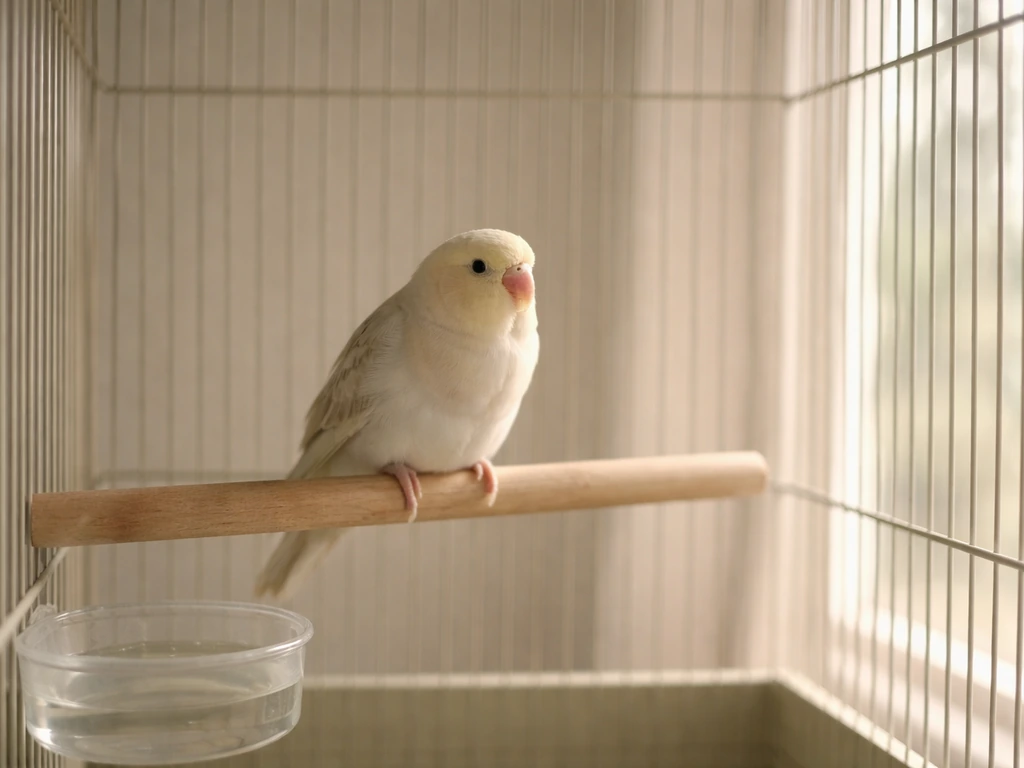
Most pet birds belong to a known species (budgerigar, cockatiel, lovebird, finch, etc.), and what owners usually call a 'breed' is actually a color mutation or variety within that species. Start by confirming the species first, then narrow down the color type. You can do most of this at home today using size, body shape, beak, feather pattern, and behavior, then verify with good photos and a mutation reference chart for that species.
What Breed Is My Bird? How to Identify It at Home

Marcus Chen
4 Jul 2026
Species vs 'breed': get this straight first
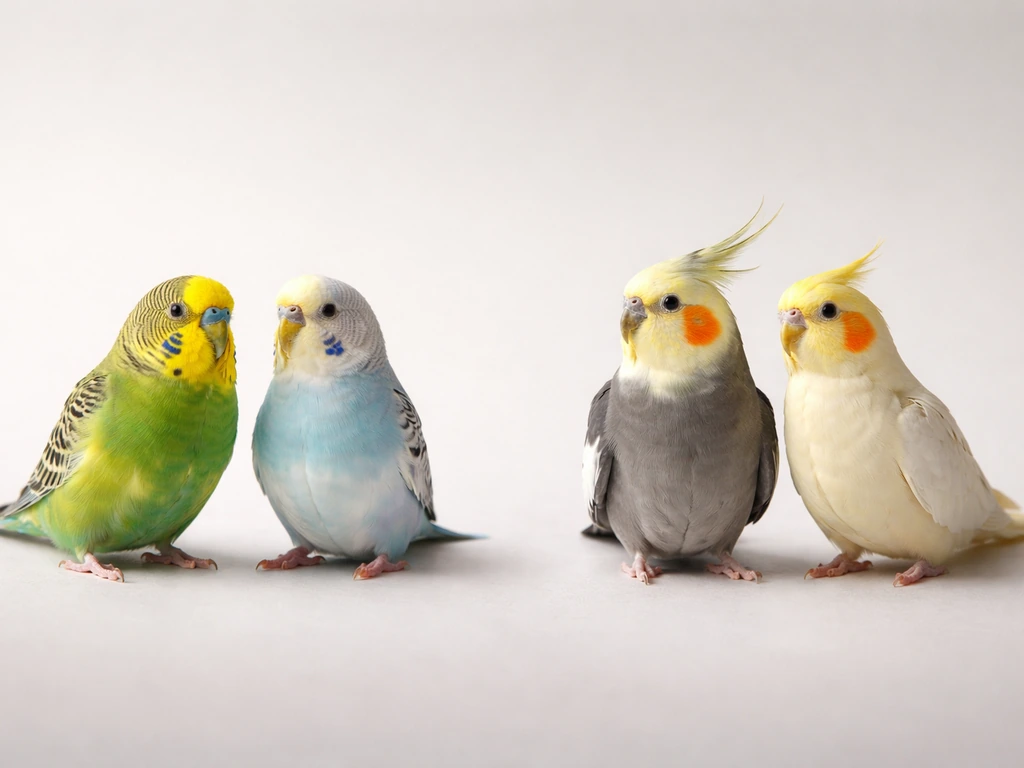
Birds aren't bred the way dogs are, so the word 'breed' doesn't really apply the same way. What you're looking for is the species (budgerigar, cockatiel, parrotlet, canary, etc.) and then, within that species, the color mutation or variety. A budgerigar's scientific name is Melopsittacus undulatus regardless of whether it's green, yellow, blue, or white. The color difference is a mutation, not a different bird.
This matters because when you go looking for information, searching for the correct species name will lead you to the right care guides, mutation charts, and breeder resources. Budgerigars alone have at least 32 recognized primary mutations in captivity, and these combine to create hundreds of visual varieties. Cockatiels have their own set of mutations tracked by societies like the American Cockatiel Society. So the process is two steps: identify the species, then identify the mutation.
Physical clues to check right now
Work through these traits systematically. One feature alone is rarely enough, but checking several together will point you clearly toward the right species and often to the mutation.
Size and body shape
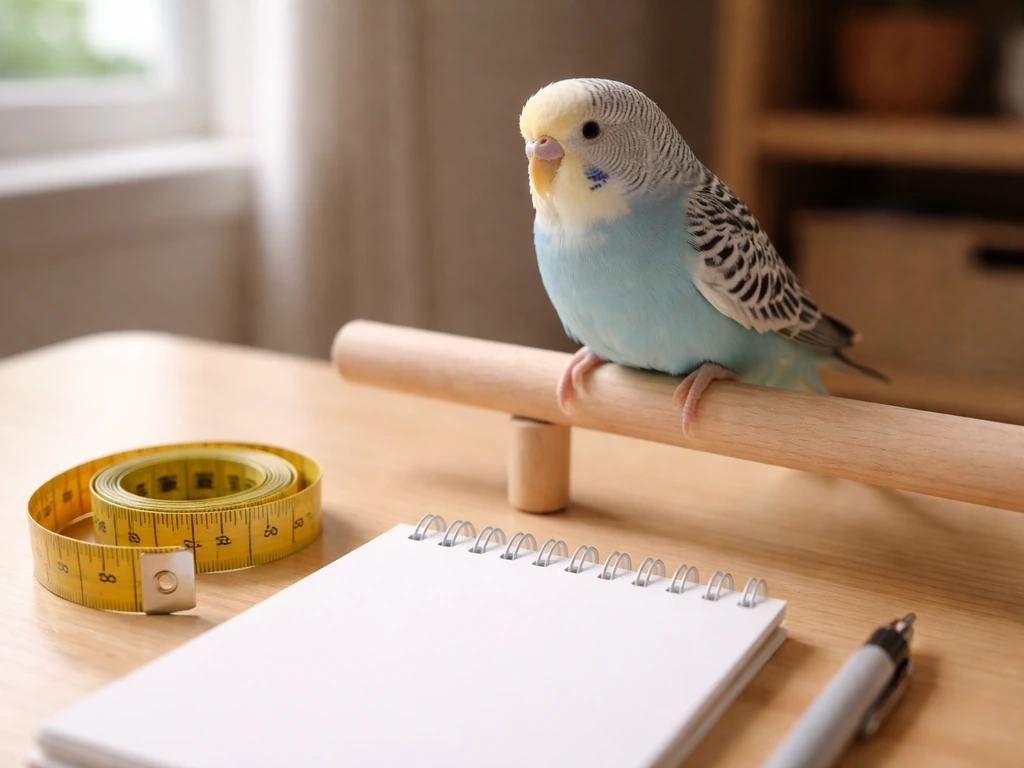
Measure your bird's length from the tip of the beak to the end of the tail (ideally with a soft measuring tape while the bird is calm or during a vet visit). A standard budgerigar is roughly 7 inches (18 cm) long. An English/show budgie can be noticeably larger and puffier. Cockatiels run about 12 to 13 inches. Lovebirds are compact and stocky at around 5 to 6 inches. Parrotlets are even smaller. If your bird is between sizes that don't match common references, it could be an exhibition-line bird or a hybrid.
Beak shape and color
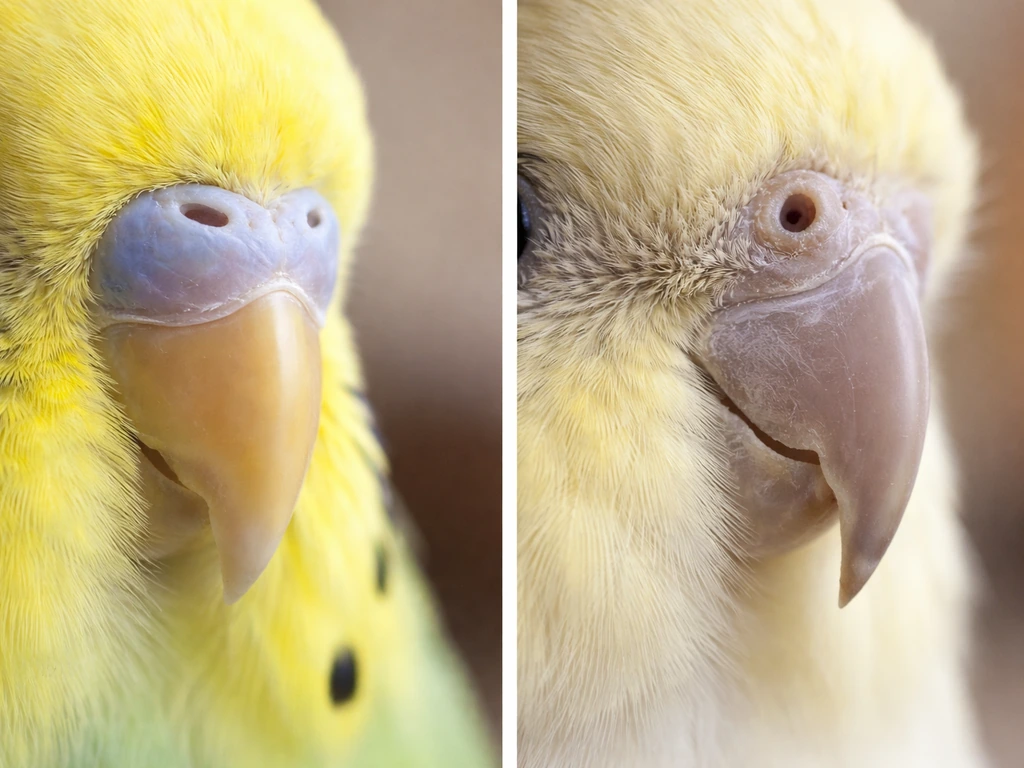
Budgies have a small, rounded beak that curves downward and is typically yellowish or horn-colored. Cockatiels have a more angular, slightly larger beak. Finches and canaries have short, conical, seed-cracker beaks. Parrots in general have a strong hooked beak. The cere (the fleshy area at the top of the beak) is especially important in budgerigars: in adult males it's typically blue or bluish-purple, while in adult females it tends to be brown, tan, or crusty-white. However, some mutations change the cere color significantly, and young birds under about six months old don't show reliable adult cere colors yet, so treat cere color as one clue among several rather than a definitive answer.
Feather pattern and markings
Pattern is often more reliable than color alone for species ID. A wild-type (normal) budgerigar has black barring (striations) on the back, wings, and head, plus six dark spots across the throat mask and violet cheek patches. A wild-type cockatiel is primarily grey with white flashes along the outer wing edges and an orange cheek patch. Finches often show streaking or banding across the breast. If your bird doesn't match these baseline patterns, you're likely looking at a mutation, which is where the color-specific charts come in.
Tail and wing shape
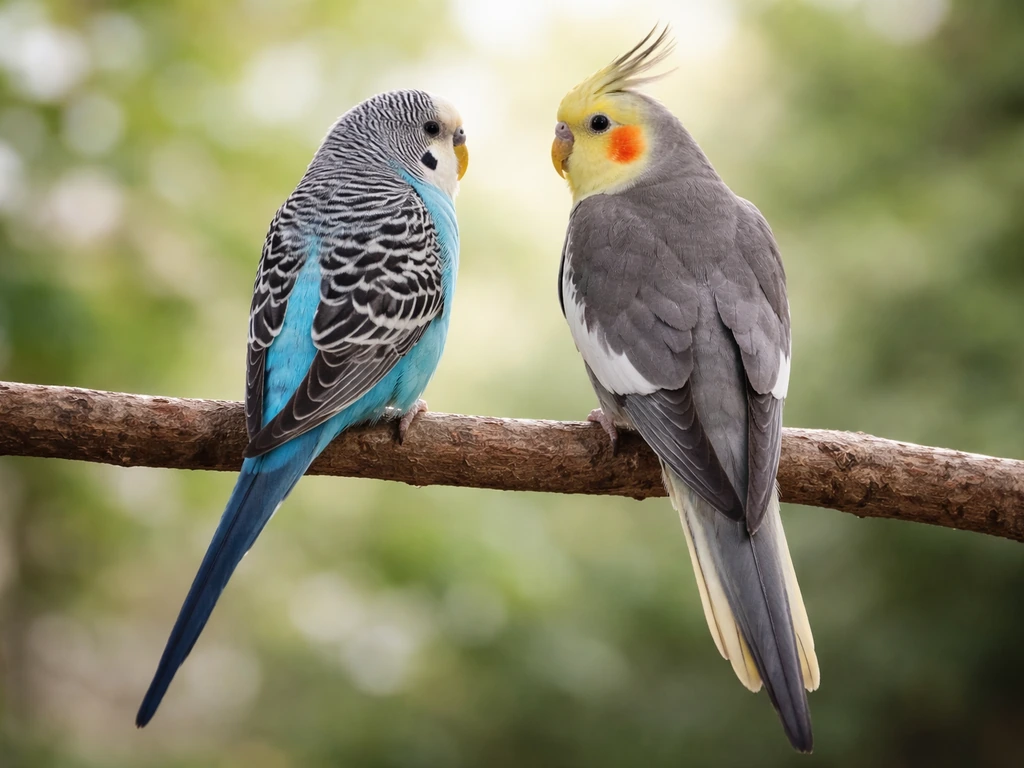
Budgerigars have a long, tapered tail that makes up roughly half their total length. Cockatiels have an even longer, more prominent tail with graduated feathers. Lovebirds have short, rounded tails. In flight, the wing shape changes too: budgies are fast and direct, while cockatiels have a more undulating glide. Even just observing how your bird lands and holds its wings at rest gives you information.
Behavior and sounds that help narrow things down
Behavior is underused as an ID tool. Different species have characteristic patterns that are hard to fake.
- Budgerigars are highly social and flock-oriented, constantly vocalizing with chattering and mimicry. They tend to perch horizontally and move along perches quickly.
- Cockatiels are well known for whistling and can learn tunes. They use their crest actively: raised when excited or curious, flattened tight to the head when stressed or defensive. They also tend to hiss when threatened.
- Lovebirds are short, intense, and active. They chew aggressively, like to wedge themselves into small spaces, and can be loud and feisty.
- Canaries sing elaborate, sustained songs (usually males). They are relatively hands-off birds and rarely enjoy being handled.
- Zebra finches make high-pitched peeping or beeping calls and are almost constantly active, hopping and flitting around. They're rarely hand-tame.
- Parrotlets are tiny but bold, with a strong biting tendency and a quiet, hissing vocalization style compared to larger parrots.
Head bobbing, in particular, is normal for many species and isn't a reliable way to distinguish between them on its own. Cockatiels, for example, commonly bob their heads when excited or when a favorite person approaches. Pay more attention to the overall pattern of social behavior, how the bird responds to mirrors, and whether it prefers climbing vertically (like many parrots) versus perching horizontally (like budgies and finches).
Color mutations, sex, and age can seriously change how your bird looks
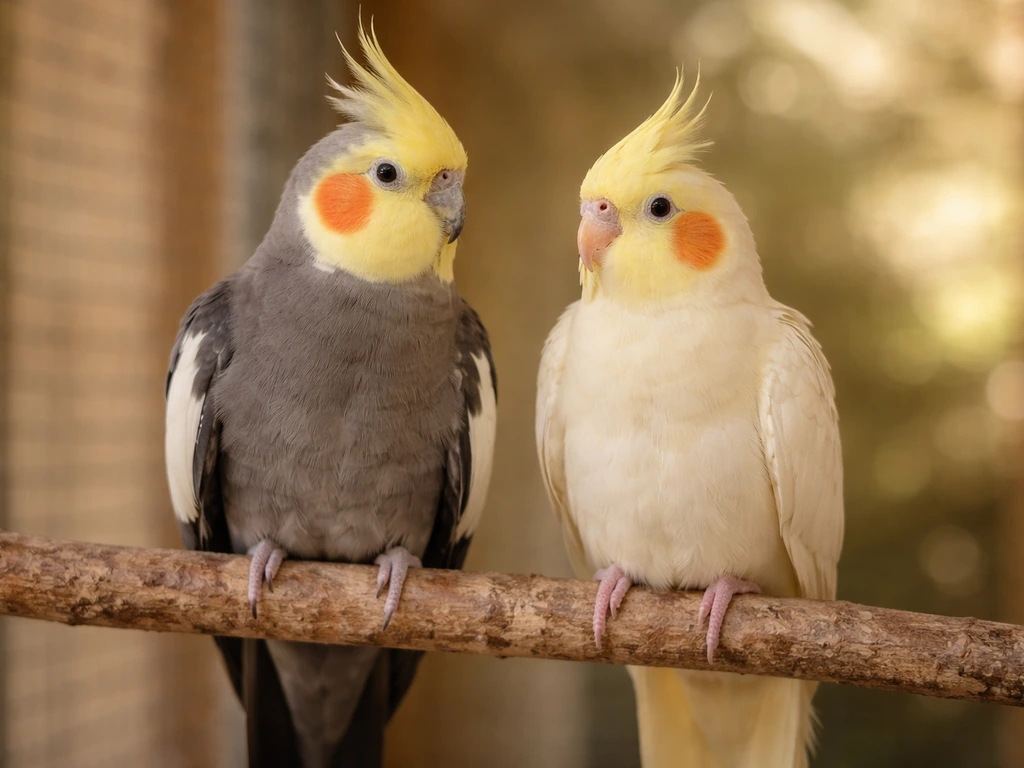
This is where most owners get confused, and it's completely understandable. A lutino cockatiel (all yellow-white with red eyes) looks almost nothing like a normal grey cockatiel, yet they're the same species. A recessive pied budgerigar can have patchy, irregular coloring that makes it hard to see the usual wing markings. These are the same birds with the same behaviors and needs.
Age adds another layer. Young budgerigars have dark barring that extends all the way down to the cere for their first few months of life. Their eyes are often all-dark (no visible iris ring). As they mature past their first molt, the adult pattern fills in and the iris ring becomes visible. If your bird is a juvenile, wait until after the first molt before trying to confirm a mutation, since the pattern will change noticeably.
Sex differences matter too, though they're mutation-dependent. In standard budgies, the cere color is the easiest adult sexing clue, but in mutations like albino, lutino, or recessive pied, both sexes may show a pinkish or whitish cere, making visual sexing unreliable without DNA testing. For cockatiels, males in the normal grey mutation develop a brighter yellow face and more vivid orange cheek patch after their first molt, while females retain more grey on the face. Some mutations mask these differences entirely.
Common look-alikes and why birds get misidentified
Some species pairs genuinely confuse people, especially when mutations are involved.
| Bird 1 | Bird 2 | Key difference |
|---|---|---|
| Budgerigar (standard) | English/show budgerigar | Show budgies are noticeably larger, have a bigger head and puffier feathering, and move more slowly |
| Normal grey cockatiel | Lutino cockatiel | Same species: lutino lacks grey pigment, appears yellow-white with red/pink eyes, still has the same crest and tail shape |
| Budgerigar (albino/lutino) | Cockatiel (albino) | Size is the giveaway: cockatiels are nearly twice the length, with a much longer tail and prominent crest |
| Zebra finch | Society finch (Bengalese) | Zebra finches have distinctive orange cheek patches and a striped breast; society finches are brown/white pied with no cheek patches |
| Canary | Greenfinch or siskin | Canaries have a more slender, elongated body and a finer beak; wild finch species are rarely sold as pets |
| Parrotlet | Lovebird | Lovebirds have a rounder head, shorter and stubbier beak, and a very short rounded tail; parrotlets are slimmer with a longer tail and a smaller hooked beak |
The most common misidentification is calling any small hookbill a 'parakeet.' Parakeet is a loose common name that applies to dozens of species, including budgerigars. If someone sold you a 'parakeet,' it's almost certainly a budgerigar unless it's unusually large, long-tailed, or has a distinctly different beak shape.
How to document your bird so you can actually compare it
Good documentation makes the difference between getting a useful answer from a breeder or online community and getting guesses. Here's what to capture.
- Take photos in natural daylight or under a neutral white light. Avoid warm yellow bulbs or flash, which shift colors significantly and make mutation ID unreliable.
- Photograph from multiple angles: straight-on front view, both sides (left and right profile), back (to show wing and back pattern), and top-down if possible.
- Get a close-up of the face showing the cere, beak, and eye color clearly. The iris ring color matters for age determination in budgies.
- Photograph the wing while spread slightly if your bird allows it, to capture the wing marking pattern.
- Take a full-body side shot that shows the complete tail length.
- Measure total length (beak tip to tail tip) with a soft tape and note the weight if you have a small kitchen scale (a healthy budgie typically weighs 25 to 36 grams; a cockatiel 75 to 125 grams).
- Write down what you observe about behavior: how it vocalizes, whether it whistles or chatters, how it reacts to you, and whether it's active or subdued.
- Note what it eats willingly, since diet preferences can also help confirm species expectations.
Once you have good photos, compare them against the mutation charts published by species-specific societies. For budgerigars, the World Budgerigar Organisation's Colour Standards is a thorough reference. For cockatiels, the American Cockatiel Society and National Cockatiel Society both have color code documents that walk through each mutation's defining traits systematically. These are the same standards breeders and show judges use, so the terminology is reliable.
When your bird's appearance doesn't match anything normal
Illness can change the way a bird looks, and this is important to flag before you invest too much time trying to identify a mutation from unusual plumage. If your bird is acting hormonal, stress and medical issues can also mimic common hormonal behaviors, so ruling out illness first is a good next step. A bird that looks ragged, patchy, or dull may be going through a normal molt, but it may also be plucking its feathers due to stress, parasites, or underlying disease. Feather plucking creates bare patches that can make a bird's coloring and markings completely unreadable.
More urgently, if the bird is showing any of the following signs, address the health concern before worrying about mutation identification: If you are wondering how to tell if your bird is hormonal, look closely for breeding-season behaviors like frantic calling, mounting, and territorial aggression.
- Open-mouth breathing or visible effort when breathing (tail bobbing with each breath)
- Sitting fluffed up at the bottom of the cage or unable to perch properly
- Lethargy, unusual quietness, or significantly reduced vocalization
- Stopped eating or drinking, or significant visible weight loss
- Discharge from the nostrils or eyes
- Feathers that are missing in patches (beyond normal molt patterns)
Small birds like budgies and cockatiels are prey animals and hide illness well. By the time symptoms are obvious, the situation can be urgent. If you're seeing any of those signs, contact an avian vet before anything else. Changes in behavior, such as reduced hormonal activity or unusual social responses, can also signal illness rather than a personality or breed trait.
Red-flag health signs include lethargy and appetite changes, and some guidance also notes that decreased vocalization and eating changes can accompany illness Changes in behavior. If your bird is acting differently due to hormones, it can sometimes be related to reproductive or egg-laying behaviors, so it helps to rule that out as well is my bird pregnant.
If you've been wondering whether your bird is acting strangely in other ways (unusual hormonal behaviors, for example) those patterns are worth tracking alongside the identification process.
Getting professional help when you're still stuck
If you've gone through the physical and behavioral checks and you're still not certain, a few good options exist.
An avian vet can confirm species and approximate age during a wellness exam, and can flag whether any unusual appearance is health-related rather than a mutation trait. Bring your photos, your measurements, your notes on diet and behavior, and any health changes you've noticed. The more specific you are, the more useful the visit will be.
Reputable breeders who specialize in your suspected species are another strong resource. Show them your photos (front, side, back, face close-up) and your measurements. Experienced breeders have seen hundreds of mutations and can often identify a combination mutation at a glance that would stump a newer owner for weeks.
Bird rescues and adoption organizations often have staff or volunteers with broad species experience. If you adopted your bird from a rescue, ask them directly. They may have intake records or photos from when the bird arrived.
Online communities (species-specific forums and subreddits) can be surprisingly accurate when you provide good photos and measurements. The caveat is that you'll sometimes get conflicting opinions, especially when a bird carries multiple mutations. If that happens, treat it as a signal to consult a breeder or avian vet rather than trying to pick the most popular answer.
The bottom line: confirm the species first using size, shape, beak, and behavior, check the bird is healthy so you're reading accurate plumage, document with good photos in natural light, then compare against the official mutation standards for that species. Audubon also recommends blank" rel="noopener noreferrer">consistent shooting conditions and exposure technique to help keep bird colors accurately documented. Once you can identify your bird correctly, you can also focus on preventing hormone-driven behaviors that lead to mating and aggression. That sequence will get you to a reliable answer faster than any single shortcut.
FAQ
If my bird’s care label says “parakeet,” how do I figure out what breed or species it actually is?
Treat “parakeet” as a generic sales term. First, confirm species using beak shape (rounded and downward-curving for budgies, more angular for cockatiels, conical for finches), then compare typical adult size and tail length. If the bird is long-tailed or noticeably larger than a budgie, do not assume budgie, ask a rescuer or breeder for intake details, or book an avian vet wellness check to confirm species.
What’s the most reliable photo set to identify my bird at home?
Use natural light (near a window), one bird without flash if possible, and capture front, side, and back views plus a face close-up that shows the beak and cere clearly (if applicable). Also take a shot of the wing pattern when wings are relaxed. If your bird is mid-molt, take photos on a few different days, because pinfeathers and patchy growth can mimic other mutations.
Can I identify a mutation before my bird is fully mature?
Be cautious with juveniles. In budgerigars, early barring and cere appearance can change a lot over the first molt, and some species show adult facial colors only after maturation. If you must guess, focus on features that stabilize early (body shape, beak structure, tail proportions), and wait for at least after the first molt before locking in the mutation.
How do illness, stress, or feather plucking affect “what breed is my bird” questions?
Unwell birds can look like they have rare plumage because molt can be uneven or because feather plucking creates bare patches that hide normal markings. Before comparing to mutation charts, check for raggedness in a pattern, missing feathers without regrowth, changes in droppings, or increased hiding. If anything seems off, rule out health issues first, since “rare mutation” is a common mistaken conclusion.
Is head bobbing a definitive clue for species or mutation?
No. Head bobbing happens in multiple species and is often triggered by excitement, attention from a person, or general social behavior. Use it as a supporting clue only, then weigh tail shape, wing posture at rest, beak form, and overall size together for a stronger identification.
How can I measure my bird correctly for species size comparisons?
Measure from the tip of the beak to the end of the tail while the bird is calm, using a soft measuring tape. Do it with help if needed so the bird is not stretched or restrained. If your measurements fall between common ranges, consider that exhibition-line birds can be larger and that hybrids are possible, so do not rely on size alone.
If both sexes look the same in my suspected mutation, how do I sex my bird?
Rely less on visual sexing for mutations where cere color is altered (for example, some budgerigar color mutations can make cere tones similar in both sexes). If sex matters for breeding planning or behavior questions, DNA sexing is the dependable option. For non-breeding households, focus on species ID and husbandry first.
What should I do if online community answers conflict on my bird’s mutation?
Conflicting ID usually means the bird has multiple traits that can fit more than one chart or that lighting and feather condition are throwing off pattern recognition. Take that as a cue to verify with either an avian vet (species and health flags) or a breeder specializing in your suspected species, and re-check your photos using the same mutation-terminology standards.
Can two birds with the same species and mutation look noticeably different?
Yes. Lighting, molt stage, feather wear, and recessive combinations can change the clarity of markings, especially patterns like pied or patchy expressions. That’s why it helps to compare multiple features (tail shape, beak, baseline patterning) rather than assuming color alone equals a single mutation.
When is it better to contact an avian vet instead of trying to “solve the breed” first?
Contact an avian vet promptly if the bird is acting differently, looks ragged or patchy beyond normal molt, shows signs of stress or illness, or if you see urgent hormonal or reproductive behaviors. Because prey animals can hide symptoms, waiting for a perfect plumage match can delay important care.
Next Article
How to Stop Your Bird From Being Hormonal Safely
Safe steps to reduce hormonal bird behavior: manage nesting cues, light, handling, and know red flags needing a vet.