A bird that suddenly stops eating or drinking is telling you something is wrong. It might be stress from a recent change, a problem with the food or water setup, the normal anxiety of being in a new home, or a genuine health issue that needs a vet today. The job right now is to figure out which one you're dealing with as quickly as possible, because birds decline fast when they're not taking in food or water.
Why Is My Bird Not Eating or Drinking? Quick Fixes
Marcus Chen
11 May 2026
Start here: what to check right now at home
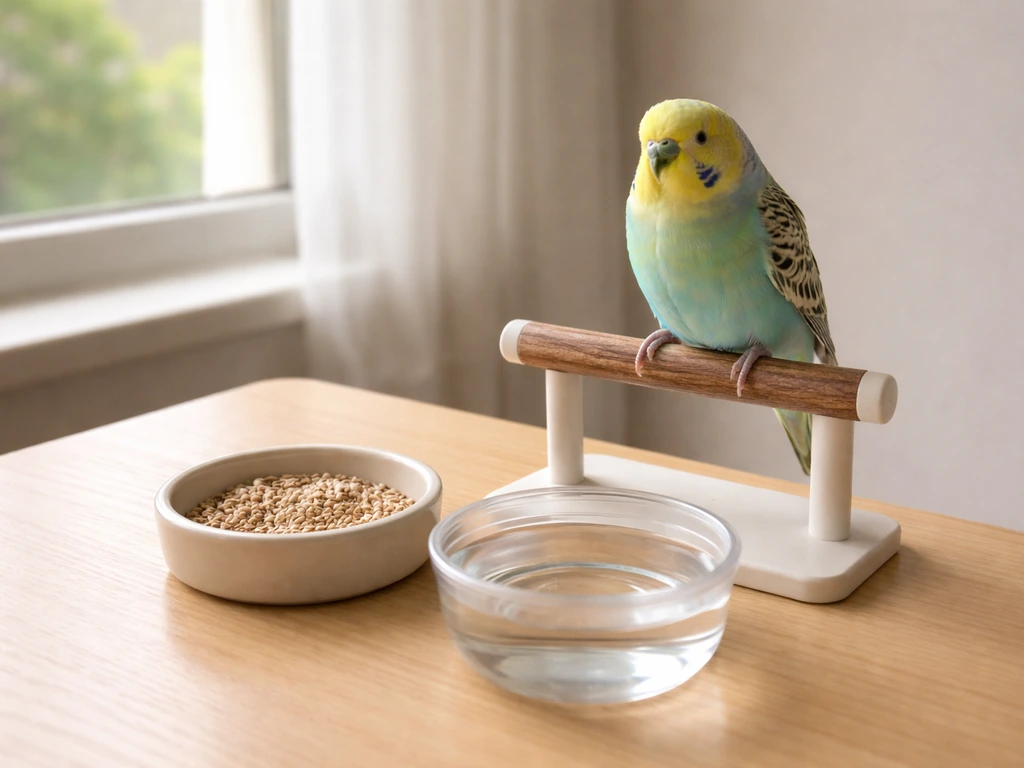
Before you do anything else, spend a few minutes observing your bird quietly from a short distance. You want to catch what the bird looks like when it doesn't know you're watching. Note its posture, breathing, and energy level. A healthy bird sits upright on its perch, keeps feathers mostly smooth, and reacts to movement or sound. A sick bird often looks exactly the opposite. A Reddit discussion in r/BirdHealth describes a bird rapidly escalating to open-mouth breathing, which highlights how quickly respiratory concerns can become urgent and warrant immediate veterinary assessment sick bird often looks exactly the opposite.
Work through this quick checklist and make a mental note of anything that looks off:
- Posture: Is the bird sitting fluffed up, hunched, or sitting on the cage floor instead of a perch? These are red flags.
- Breathing: Is it breathing with its mouth open, pumping its tail with each breath, or making any clicking or wheezing sounds? That's an emergency.
- Eyes: Are they bright and alert, or dull, half-closed, or sunken-looking?
- Droppings: Look at the bottom of the cage. Healthy droppings have three parts — a dark green or brown fecal portion, a white or cream urate portion, and a small amount of clear liquid urine. Droppings that are watery, yellow, tarry black, red, or completely absent are warning signs. Absent droppings for more than a few hours usually means the bird hasn't been eating.
- Crop: Gently observe the area at the base of the throat. A crop that looks swollen, feels squishy after several hours without eating, or smells sour when the bird opens its mouth could indicate crop stasis or infection.
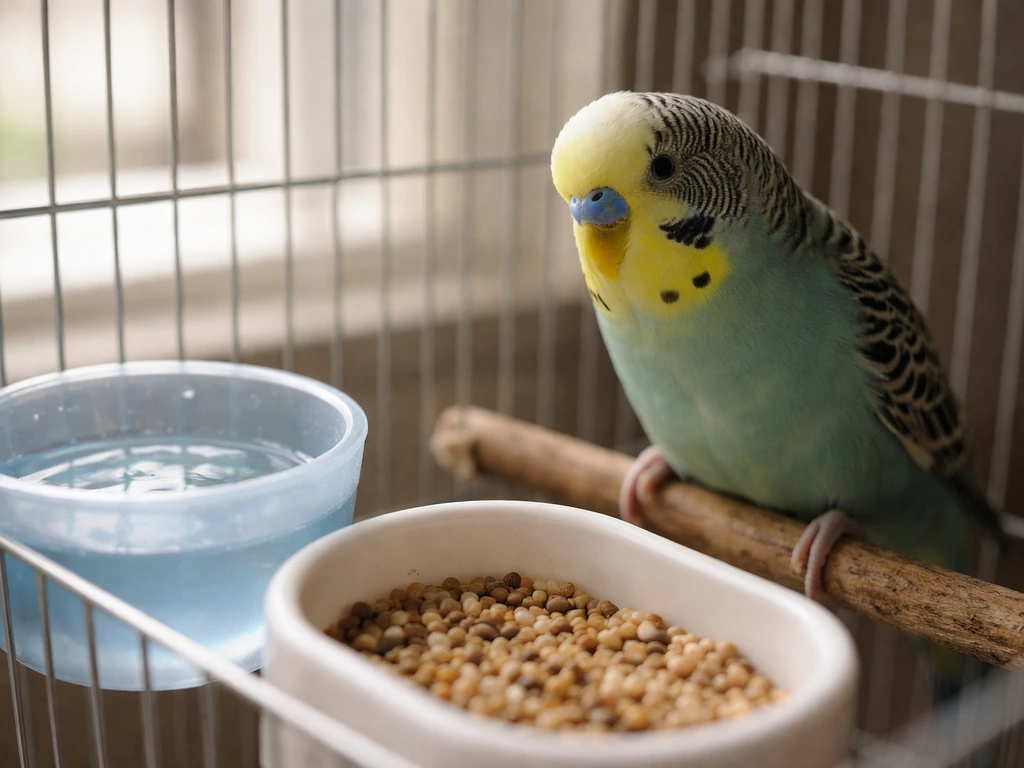
- Food and water: Check whether food has actually been eaten — seeds and pellets can be scattered to look depleted without being consumed. Check whether the water is clean, accessible, and at a comfortable level in the dish.
- What changed recently: New cage location, new food, new household pet, changes in your schedule, temperature swings, or a recent move are all common triggers.
Write down or photograph anything abnormal in the droppings before cleaning the cage. Born Free USA guidance notes that normal droppings include feces plus urates and urine, and abnormal patterns such as red or black blood can indicate internal bleeding, egg binding, intestinal infection, or a swallowed object abnormal patterns in droppings can indicate internal bleeding, infection, or a swallowed object. Those droppings give an avian vet critical diagnostic information, and removing them before the appointment can make diagnosis harder.
Common reasons birds stop eating
Appetite shutting off is one of the most common signs that something is wrong with a bird, and it cuts across a huge range of causes. Here are the ones that come up most often:
Stress and environmental disruption
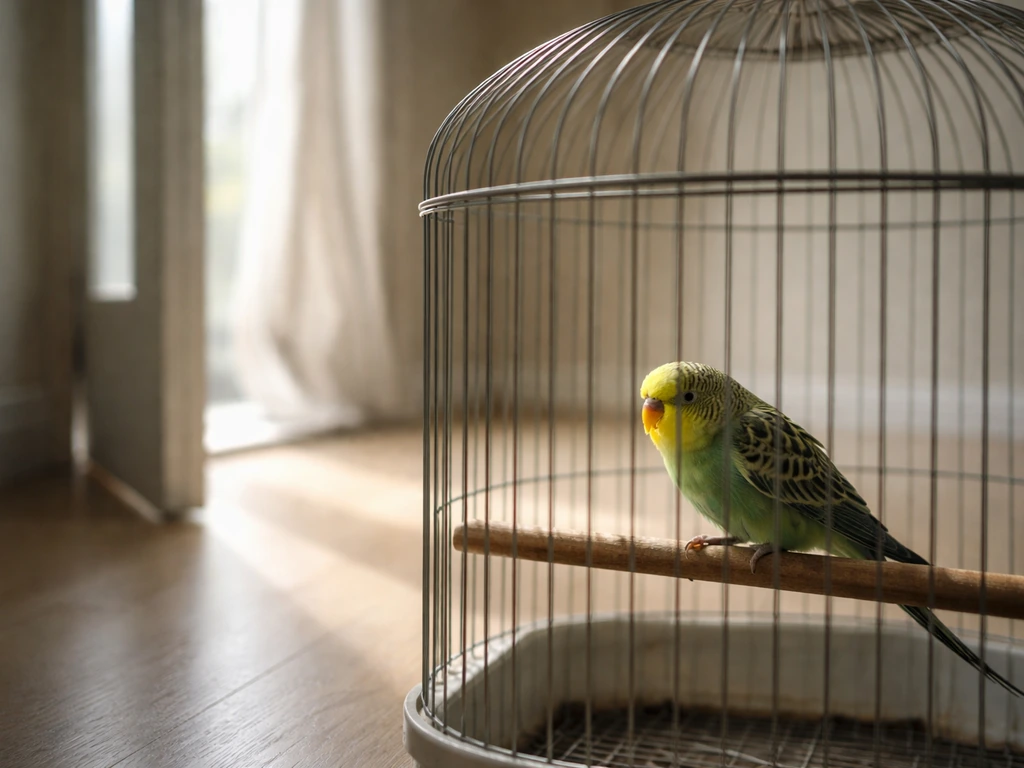
Stress is the most common non-illness cause. Birds are creatures of habit, and even minor changes to their environment can put them off food for a day or two. Moving the cage to a different room, rearranging the furniture nearby, loud or unfamiliar noises, a new pet in the home, or a change in your routine can all trigger this. If the bird is otherwise acting normally (bright eyes, sitting upright, normal droppings), stress is the most likely culprit.
Food changes and unfamiliar diets
Birds are notoriously conservative about food. If you recently switched brands, changed from seeds to pellets, or introduced new foods, your bird may simply be refusing to eat what it doesn't recognize. Small birds like budgerigars should not go more than 12 hours without eating during a diet transition, so if you're in the middle of a switch and your bird is holding out, you may need to go back to familiar foods temporarily and transition more slowly.
Illness and underlying disease
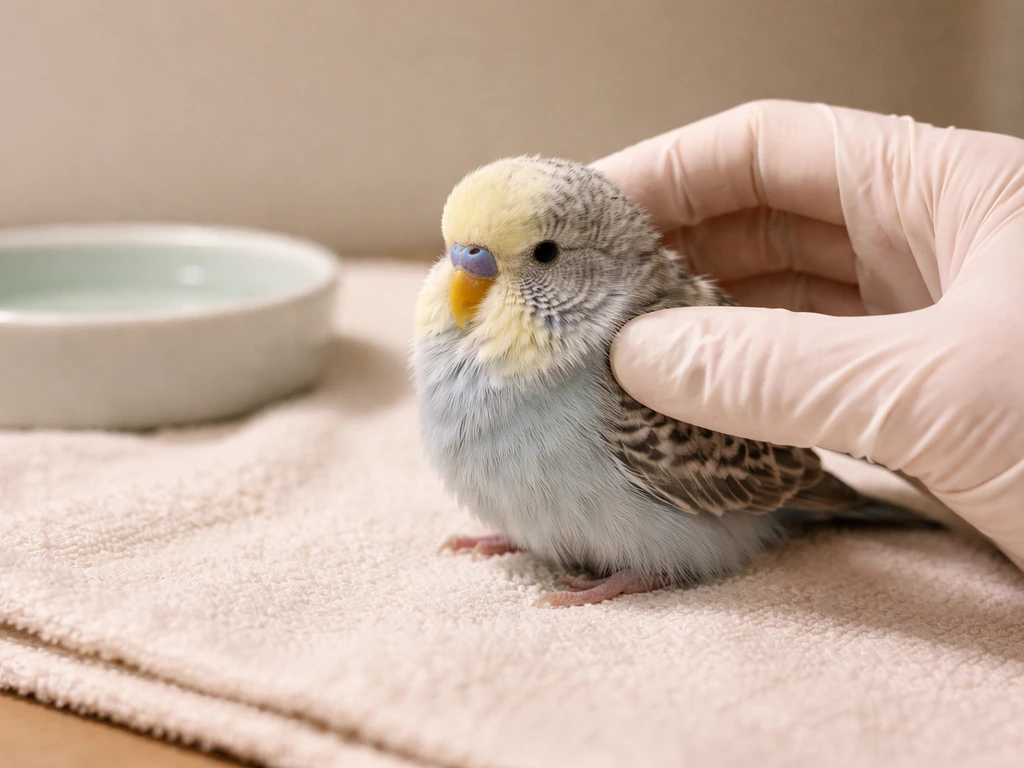
Anorexia and lethargy together are a classic pairing in sick birds and can indicate a wide range of conditions: bacterial, viral, fungal, or yeast infections; parasites; organ problems like liver or kidney disease; hormonal issues; cancer; or toxicities. Anorexia and lethargy together are common in multiple illnesses, so it helps to treat lethargy as a serious warning sign too. Infections like chlamydiosis (psittacosis) specifically cause decreased appetite alongside lethargy, nasal or eye discharge, and sometimes breathing difficulties. Crop stasis, sour crop, or GI infections can also kill appetite and sometimes produce a sour smell from the mouth along with regurgitation or a swollen crop that doesn't empty normally.
Pain or physical difficulty eating
Sometimes a bird wants to eat but physically can't. A beak injury, mouth lesion (white or yellowish bumps inside the mouth are a red flag), or anything that makes it painful to crack seeds or pick up food will show up as apparent anorexia. Check the beak and mouth carefully if you can do so safely.
Hormonal or reproductive causes
Female birds experiencing egg binding, which is when an egg becomes stuck, will often stop eating and show straining, abdominal swelling, and tail bobbing. This is a genuine emergency. Hormonal changes in general can also affect appetite in both male and female birds.
Water problems: why your bird won't drink and how to fix access
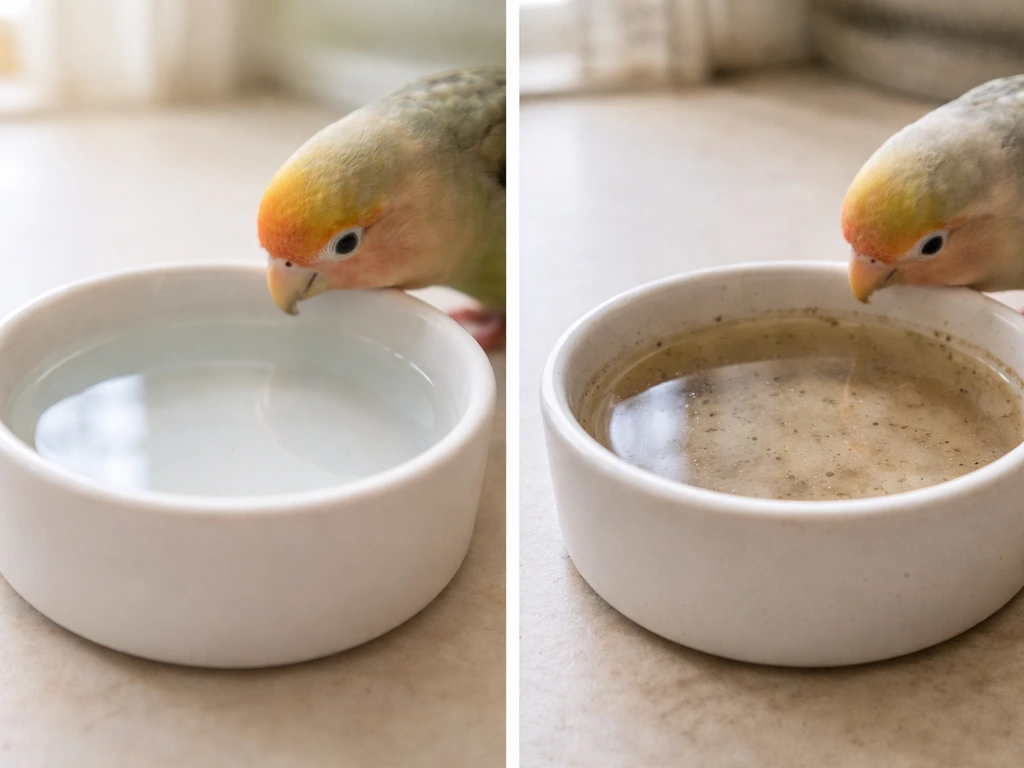
Refusing to drink is sometimes a separate problem from not eating, and it's worth checking a few specific things. First, consider whether anything about the water setup has changed. Birds can be surprisingly sensitive to differences in water dish size, depth, placement, or even the smell of tap water if your water source has changed. If you recently switched from a bowl to a water bottle (or vice versa), your bird may not know how to use the new system yet.
Make sure the water dish is clean, because stale or dirty water is a common reason birds avoid drinking. Change it at least once daily, and place it where the bird can easily reach it without straining. If you have multiple birds, make sure a dominant bird isn't blocking access. Some birds also prefer moving or dripping water, so a small water fountain or misting can encourage drinking.
One practical workaround for mild hydration concerns: offer moisture-rich foods like leafy greens, cucumber, or small pieces of fruit. These won't replace water intake for a seriously ill bird, but they add hydration alongside appealing flavors. Just check with your vet before doing this if the bird is already showing illness signs.
A bird that is genuinely dehydrated will show sunken eyes, dry skin around the nostrils, and reduced skin elasticity. Dehydration in a bird is serious and progresses quickly. If you suspect real dehydration rather than just a water access issue, this is a vet visit situation, not something to manage at home with fluids. A veterinarian needs to manage rehydration safely, including body temperature (birds run between 103 and 106°F normally), because improper rehydration can cause additional problems.
Environmental and diet variables that kill appetite
The conditions inside and around the cage have a bigger effect on eating and drinking than most people realize. Here are the main ones to check:
| Variable | What to check | What to do |
|---|---|---|
| Temperature | Is the cage in a draft, near an air vent, or in a cold room? Birds are sensitive to temperature drops. | Keep a sick or stressed bird's environment at 80–95°F. Move the cage away from vents, windows, or cold walls. |
| Lighting | Too little light can suppress activity and appetite. Too much direct light or sudden lighting changes can cause stress. | Provide 10–12 hours of natural or full-spectrum light daily. Avoid sudden transitions from dark to bright. |
| Humidity | Very dry air can affect respiratory comfort and even water intake. | A light misting or placing a shallow water dish nearby can help. For sick birds, a vet may advise increased humidity. |
| Noise and activity | Loud TVs, other pets, or household commotion near the cage can keep a bird on high alert and suppress normal eating. | Move the cage to a quieter location temporarily and minimize handling until appetite returns. |
| Food freshness | Spoiled pellets, rancid seeds, or stale food that looks fine to you can smell off to a bird. | Discard old food, clean the dish, and offer a fresh portion. Rotate seed mixes to avoid rancidity. |
| Diet transition | A sudden switch from seeds to pellets or a new brand is a classic appetite suppressant. | Revert to familiar food, then transition gradually over several weeks by mixing new food in increasing proportions. |
If this is a new bird: what's normal and what's not in the first week
If your bird has just come home, not eating or drinking much in the first 24 to 48 hours is extremely common. A new bird is in a completely unfamiliar place, surrounded by unfamiliar smells, sounds, and people. Its instinct is to stay still, stay quiet, and not draw attention to itself. If you are also wondering about sleep patterns, birds may stop sleeping normally when they are stressed or ill, so it is important to watch their posture and behavior why is my bird not sleeping. This is a survival behavior, not a sign that something is medically wrong.
The biggest mistake new bird owners make is trying too hard to help. Offering lots of different foods, handling the bird frequently to check on it, moving things around in the cage, or having multiple people crowd around it will all prolong the adjustment. The better approach is to place the cage in a calm spot, make sure food and water are clearly accessible, give the bird space, and let it settle on its own schedule.
One practical step you can take before the bird arrives is to find out what it was eating previously and have that exact food ready. Familiarity with at least the food reduces one stressor. If the bird came from a rescue or breeder, ask specifically what water setup they used, because a bird used to a bowl may not recognize a bottle, and vice versa.
Most new birds start eating within 24 to 48 hours. If yours is still not eating or drinking after 48 hours, or if you see any of the warning signs listed in the next section at any point, contact an avian vet. If you’re also asking why is my bird not moving, lethargy alongside appetite or water refusal is another reason to contact an avian vet right away not eating or drinking. Don't wait it out past that window assuming the bird just needs more time.
When it's an emergency: signs that mean act now
Some signs mean you should not wait until tomorrow's office hours. Call an avian vet or emergency exotic animal clinic immediately if you see any of the following: SpectrumCare also lists respiratory and crisis indicators such as open-mouth breathing, tail bobbing, wheezing, and inability to stand or perch that should prompt immediate emergency contact Call an avian vet or emergency exotic animal clinic immediately if you see any of the following.
- Open-mouth breathing or breathing with visible effort — this is a respiratory emergency
- Tail bobbing with each breath, which signals the bird is working hard just to breathe
- The bird cannot stand up or is sitting on the cage floor and not moving
- Seizures or tremors
- Blood anywhere — from the beak, cloaca, feathers, or cage
- Inability to swallow or visible swelling around the neck or throat
- Straining as if trying to pass something, especially in females (possible egg binding)
- Droppings that are completely absent for several hours, or droppings that are bright red, tarry black, or frankly bloody
- The bird has been fluffed, inactive, and refusing food or water for more than a few hours with no improvement
- Visible lesions, white or yellow patches inside the mouth, or discharge from the eyes or nostrils
For context on timing: a small bird like a budgerigar has very little metabolic reserve. Going without food for more than 12 hours is concerning, and going without food or water for 24 hours or more is dangerous. Larger parrots have more reserve, but no bird should go more than 24 to 48 hours without eating before professional evaluation. If the bird is also showing lethargy, weight loss, or other symptoms alongside not eating, that timeline tightens considerably. If you are seeing weight loss along with not eating, that is a strong reason to treat this as an urgent health problem and seek avian care right away.
Do not try to force-feed or syringe fluids into a bird on your own without veterinary guidance. Forced feeding of a bird that is dehydrated, cold, or has a respiratory problem can cause serious harm. If a vet has told you to syringe-feed and shown you how, follow their instructions. Otherwise, leave it to the professionals.
It's also worth noting that if your bird is showing other concerning signs alongside not eating, like excessive sleeping, weakness, or weight loss, those patterns overlap with what you'd see described in the context of lethargy, weakness, and sleeping too much. If your bird is sleeping so much that it seems unusually lethargic, it can also point to illness and is a good reason to talk to an avian vet promptly excessive sleeping. Any one of those signs alongside appetite loss is reason to escalate urgency.
What to do next: a step-by-step action plan
Here's how to work through this systematically depending on what you're seeing right now:
- Check for emergency signs first. Go through the list above. If you see any of them, stop reading and call an avian vet or emergency clinic now.
- Observe quietly for 10 to 15 minutes. Before touching anything, watch the bird from across the room. Note posture, breathing, droppings, and whether the bird has moved at all.
- Check the food and water setup. Is food fresh and recognizable to the bird? Is water clean and easy to access? Is the dish at the right height? Fix anything that looks wrong.
- Assess recent changes. Think through what changed in the last 1 to 7 days: new food, moved cage, new household pet, temperature change, new schedule. If you can identify a trigger, address it.
- Warm the environment if the bird looks cold or fluffed. Move the cage to a warm, quiet spot. Aim for 80 to 90°F for a bird that appears unwell. A heating pad on the lowest setting placed under half the cage (so the bird can move away) works as a temporary measure.
- Offer familiar, easy-to-eat foods. Don't introduce new foods right now. Offer whatever the bird ate before, plus easy soft options like warm cooked rice, small pieces of fruit, or leafy greens. Place food at multiple levels of the cage including the floor if the bird is sitting low.
- Minimize handling and stress. Resist the urge to pick up or over-interact with the bird. Keep the environment calm, lights at a normal level, and household activity low near the cage.
- Monitor droppings closely. Check every few hours. Droppings tell you whether the bird is eating at all and give you early warning of deterioration.
- Set a decision deadline. For a small bird, if there's no eating or drinking within 12 hours of your first observation, call a vet. For larger birds, 24 hours is the outside limit before professional evaluation, sooner if anything else looks off.
- Call an avian vet even if you're unsure. When in doubt, a phone call to describe the symptoms costs nothing. Many avian vets will help you triage over the phone and tell you whether you need to come in immediately or can monitor for a bit longer.
At the vet, they'll be able to assess hydration, weigh the bird (weight loss is often the clearest indicator of how long this has been going on), examine the crop and GI system, check for respiratory issues, and run diagnostics if needed. The more information you bring, when it started, what changed recently, what the droppings look like, what the bird has or hasn't eaten, the faster they can help.
Birds hide illness well as a survival instinct, which means by the time the signs are obvious, they've often been unwell for longer than it appears. That's why acting quickly matters more with birds than with many other pets. If something feels wrong, trust that instinct and get professional eyes on the bird.
FAQ
My bird is eating a little, but not drinking. Should I wait to see if it improves?
Don’t rely on “a little” as reassurance. Birds can avoid drinking even when the underlying issue is serious, especially if the bird is also puffed up, quieter than normal, or has abnormal droppings. If drinking has not clearly started within 12 to 24 hours, call an avian vet, and take note of how often you see the water dish touched, not just whether it’s still full.
How can I tell dehydration from a bird that just won’t use the water setup?
Watch for physical dehydration signs (sunken eyes, dry skin around the nostrils, and reduced skin “snap” when gently lifted) rather than only behavior. If the bird avoids the dish but looks otherwise normal, the likely problem is water aversion (dirty dish, wrong depth, placement, or dish type). If dehydration signs appear, treat it as urgent and seek veterinary help rather than trying home “fluids.”
What if my bird is perched normally, but refuses food and water for the first day after coming home?
Quiet, minimal movement and refusal for the first 24 to 48 hours is common after a move, especially if the bird stays upright and droppings are still normal. Still, you should confirm that water is easy to reach, the dish is clean, and the bird has the familiar food from where it came. If there is any lethargy trend or abnormal droppings, shorten the timeline and contact an avian vet sooner than 48 hours.
Can temperature or drafts cause my bird to stop eating and drinking?
Yes. Cold or a direct draft can reduce appetite and make a bird less likely to drink. Check that the room is consistently warm, avoid placing the cage near air vents or windows, and confirm the bird is not shivering, fluffing chronically, or breathing differently. If temperature changes coincide with the refusal, correct the environment and monitor closely, but contact an avian vet if appetite doesn’t restart quickly.
My bird is refusing new pellets, but seems to nibble seeds. Is this always a health problem?
Not necessarily. Many birds will selectively refuse unfamiliar foods, and a partial refusal can look “medical” even when it is behavioral. The key decision point is timing and overall condition. If the bird is alert and droppings are normal, switch back to familiar items temporarily and transition gradually. If the bird becomes lethargic or stops eating entirely, treat it as a possible illness rather than a diet issue.
Is it safe to offer extra fruit or watery foods if my bird won’t drink?
It can help only in mild situations or while you’re correcting water setup issues. Moist foods add some hydration, but they do not replace water for an ill or significantly dehydrated bird. If you notice lethargy, swollen crop, regurgitation, or dehydration signs, don’t rely on food moisture and contact an avian vet immediately.
What should I do with droppings if I need to go to the vet right away?
Before cleaning, take clear photos and, if possible, collect a small, fresh sample in a clean container or bag that won’t be contaminated with litter or disinfectant residue. Many owners miss this and then can’t describe what the vet needs to see (color, consistency, and presence of urates). Even if you already removed them, write down timing and appearance as accurately as you can.
My bird has sour smell or regurgitation. Does that mean crop stasis?
It can be, but don’t assume a diagnosis. A sour odor, regurgitation, and an abnormal or swollen crop can occur with sour crop, GI infection, or other GI problems, and they can worsen fast in birds. If you see any crop swelling that does not clear, changes in posture, or reduced appetite plus odor, treat it as urgent and contact an avian vet rather than trying to “fix it” at home.
Should I try to force-feed if my bird hasn’t eaten in a full day?
No, not without a vet’s specific instructions and training. Force-feeding can cause aspiration or other complications, especially if the bird is cold, has a respiratory issue, or has a GI problem like crop stasis. If the bird is not eating, your best next step is urgent veterinary guidance, and bring details on when it last ate and drank.
How do I measure how long my bird has really gone without eating or drinking?
Start from your last definite sighting, not the last time you “think” it happened. If you can’t confirm, estimate based on when droppings last appeared, how much food is left in the feeder, and when the bird was last seen eating. If you have multiple people in the household, ask each person when they last saw the bird approach food or water so you can give the most accurate timeline to the vet.
What’s the fastest way to make sure water is accessible and appealing?
Check four variables: cleanliness (change at least daily), reach (placement so the bird doesn’t strain), compatibility with the bird’s habits (bowl vs bottle), and water characteristics (some birds react to tap-water smell or changes in source). If your bird still won’t drink and is otherwise okay, you can temporarily offer a different but safe container type (matching what the bird used before) while you monitor closely. If drinking still doesn’t start within the concerning time windows, escalate to an avian vet.
When should I worry about egg binding instead of assuming it’s appetite loss from stress?
If your bird is female and you notice straining, tail bobbing, abdominal swelling, or repeated posture changes that look like discomfort, treat it as an emergency rather than stress. These signs can precede or accompany not eating. Even if the bird drank earlier that day, egg binding can still be life-threatening, so call an avian emergency service immediately.
Next Articles
Why Is My Bird Sleeping So Much? Causes and What to Do
Find causes of a sleepy bird, do an at-home checklist, spot danger signs, and know what to fix or when to see an avian v
Why Is My Bird Not Moving? Quick Checks and Emergency Steps
Quick at-home checks for a still pet bird, emergency signs, safe first aid, and when to see an avian vet.
Why Is My Bird Making Whimpering Noises? What to Check
Find reasons for whimpering bird noises, quick home checks, and red flags for urgent vet care plus tracking tips.