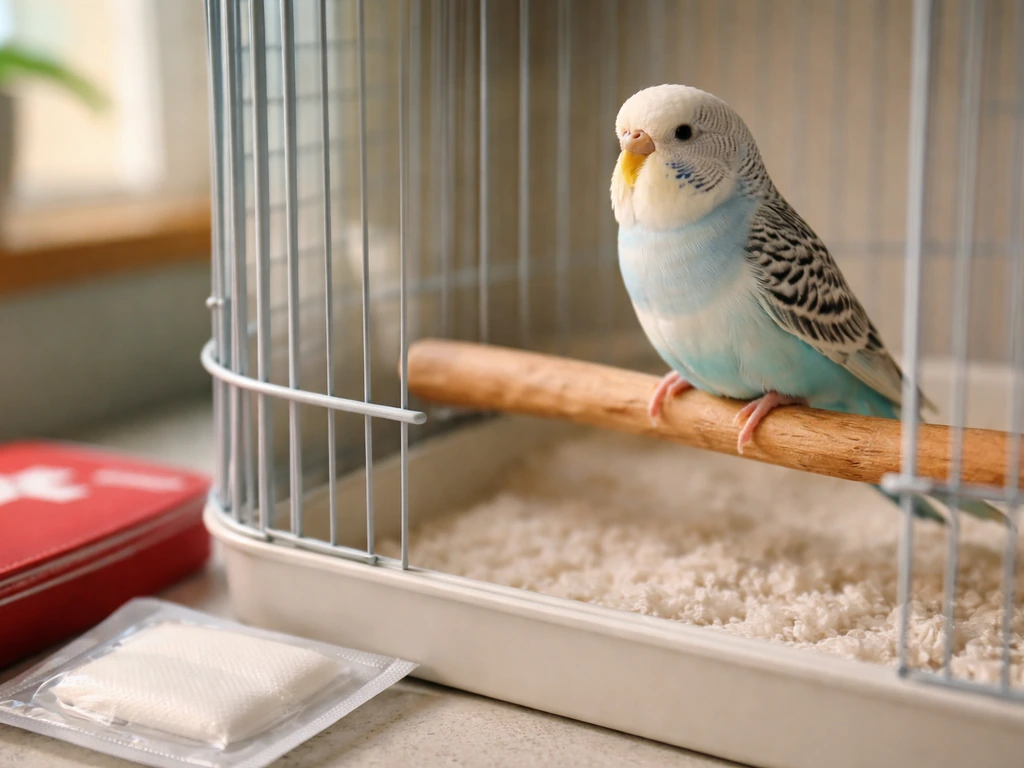
A bald spot on your bird is almost never something to ignore, but it's also not automatically an emergency. If you’re also seeing bleeding from the vent or private area, that is a separate urgent concern that should be evaluated by an avian vet bare skin. The most likely causes are normal molting, self-plucking driven by stress or boredom, feather damage from the cage environment, or a medical issue like mites, a skin infection, or a nutritional gap.
Why Is My Bird Balding? Causes and Safe Fix Checklist

Marcus Chen
12 May 2026
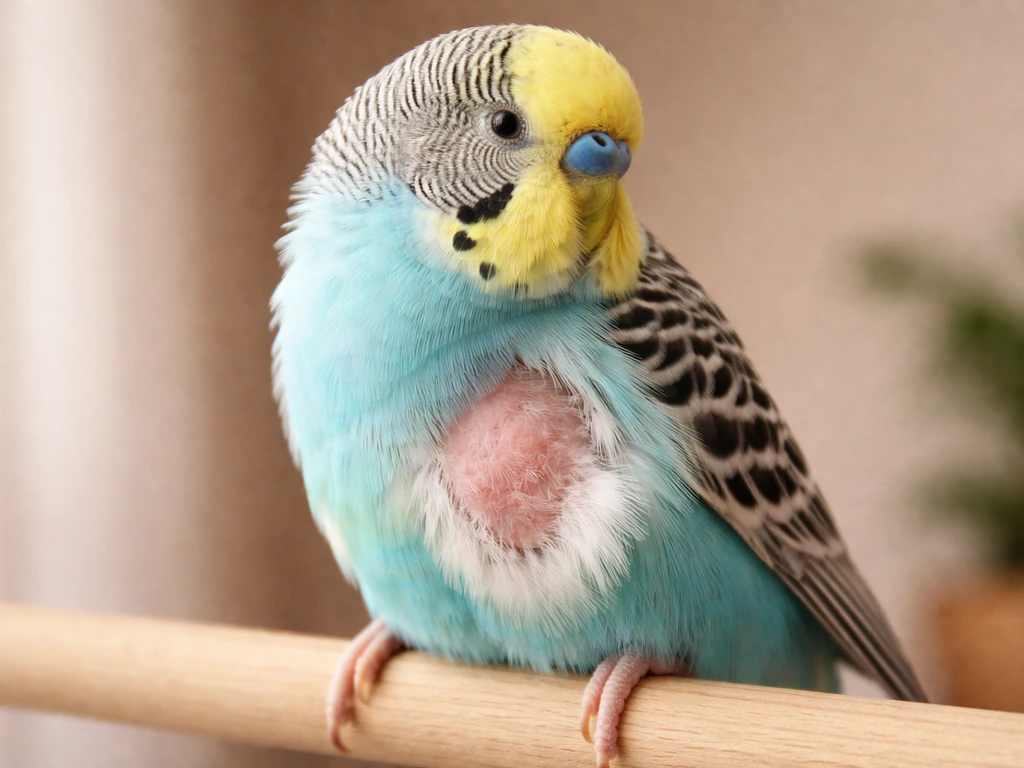
The tricky part is that several of these look similar at first glance. What follows is a practical walkthrough to help you figure out which category fits your bird today, what you can do right now, and when you genuinely need to get an avian vet on the phone.
Bald spot vs. normal molt: how to tell quickly
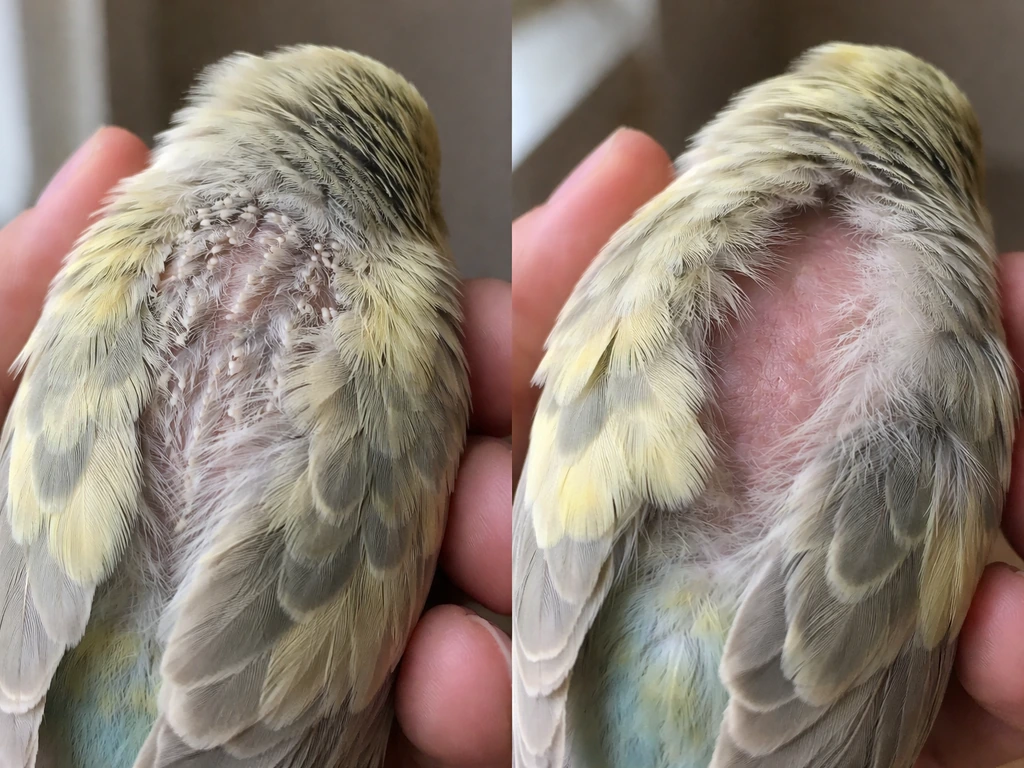
Normal molting happens roughly twice a year and is your bird's way of replacing old, worn feathers with new ones. The key rule with a healthy molt is this: it should never produce visible patches of bare skin. You might see more loose feathers on the cage floor, and your bird may spend extra time preening to remove the sheaths from incoming pin feathers, but the feathers fall out gradually and are replaced quickly enough that the skin stays covered.
The other thing to check is symmetry. A normal molt mirrors itself. If your bird is losing flight feathers on the left wing, the matching feathers on the right side should be going through the same process at roughly the same time. A bald patch that only shows up on one side, or in a single concentrated spot, is a red flag that something other than normal molting is going on.
| Feature | Normal Molt | Abnormal Feather Loss |
|---|---|---|
| Bare skin visible | No | Yes, often |
| Pattern | Symmetrical on both sides | Patchy, one-sided, or concentrated |
| Timing | Predictable, roughly twice a year | Can happen any time |
| Pin feathers present | Yes, as part of regrowth | May be absent or damaged |
| Behavior changes | More preening, otherwise normal | Plucking, scratching, irritability |
| Feathers on cage floor | Higher than usual but steady | Sudden pile-up or ongoing loss |
If you're seeing bare skin, the loss is lopsided, or it came on suddenly outside of a predictable molt cycle, keep reading. You're dealing with something that needs more attention.
Common causes of bird balding: plucking, stress, and irritation
Self-plucking, sometimes called feather-destructive behavior, is one of the most common reasons a pet bird ends up with a bald patch. Birds will pluck their own feathers when they are blank" rel="noopener noreferrer">bored, stressed, sexually frustrated, anxious, or simply under-stimulated. Captive parrots are especially prone to this because they are intelligent animals that need a lot of mental activity and social interaction. When that doesn't happen, feather plucking can become a compulsive habit that's hard to break even after the original trigger is gone.
One thing that surprises many bird owners: stroking your bird on the back can actually mimic mating behavior and raise hormone levels, which may increase plucking. If you've been handling your bird this way regularly, it's worth changing up how you interact.
The location of the bald spot matters too. Birds can only pluck feathers they can physically reach, so the chest, belly, inner thighs, and upper back are the most common targets for self-plucking. If the bald patch is on the top of the head or the back of the neck, those areas are out of reach for the bird itself, which means a cage mate may be doing the plucking, or there's a different cause altogether.
Beyond stress-driven plucking, feathers can be damaged or lost from plain physical causes: rubbing against cage bars or poorly placed perches, being chewed by a cage mate, or injury from hardware inside the cage. These cases usually show broken or frayed feather shafts rather than clean-pulled bare skin.
Signs that point to medical causes
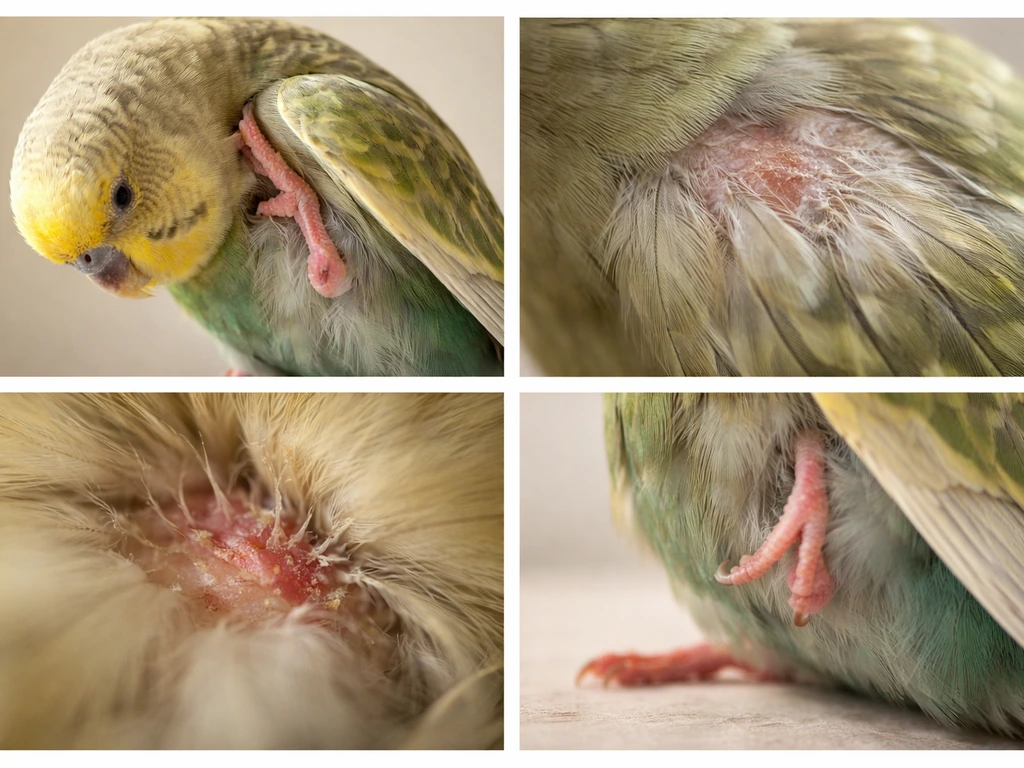
Sometimes the cause of feather loss is not behavioral at all. Medical problems worth knowing about include ectoparasites (especially mites), bacterial or fungal skin infections, nutritional deficiencies, hormonal issues, and serious systemic diseases like Psittacine Beak and Feather Disease (PBFD). These need a vet to diagnose properly, but here are the clues that push a case toward the medical column.
Mites
Mites are actually a rare cause of feather loss in pet birds, but they do happen. Depluming mites are one type that cause feathers to break easily and get pulled out, creating bare patches that can spread from the back toward the wings and head. Scaly face and leg mites produce a different set of signs: white crusty buildup around the corners of the beak, nostrils, eyes, or legs.
If you're seeing that powdery crust alongside feather issues, mites are a strong possibility. If your bird has dandruff along with feather problems, treat the skin irritation as a clue to look for the underlying cause feather issues. Notably, scaly leg mites often don't cause obvious itching, so don't rule them out just because your bird isn't scratching. A vet confirms mites with a simple skin scraping examined under a microscope.
Skin infections
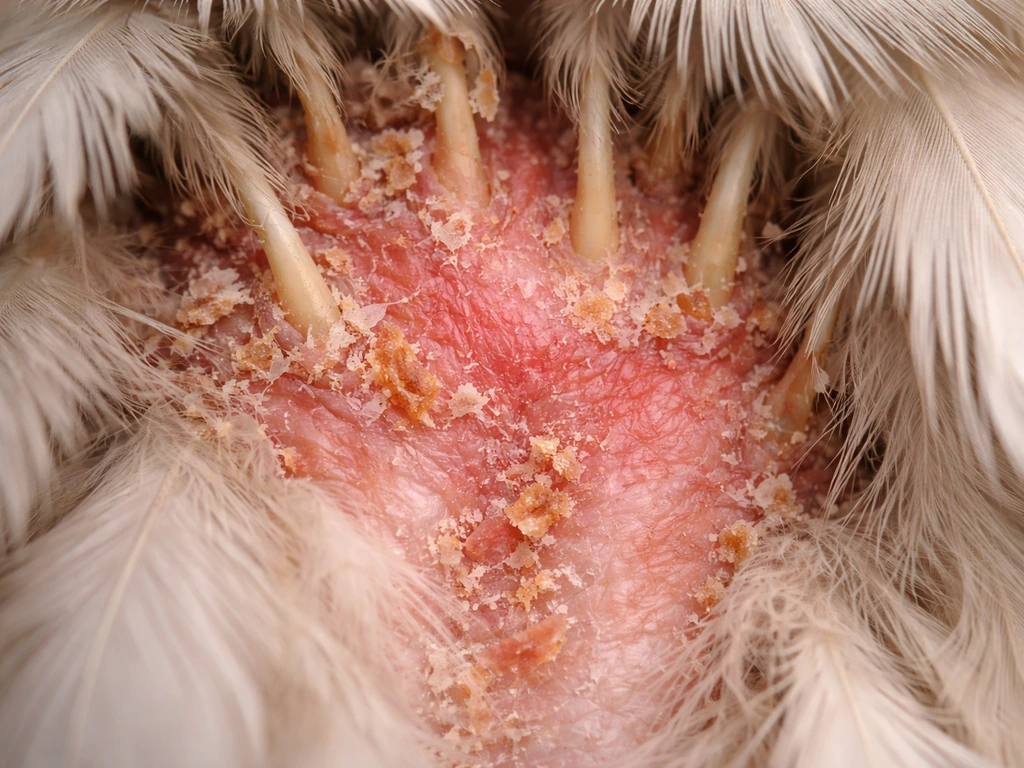
Bacterial and fungal infections can attack the feather follicles and cause localized feather loss with redness, flaking, or crusting at the skin. If you're seeing any scabbing, raw skin, or weepy areas at the bald spot, an infection is possible. Keeping the area clean and dry matters, but actual treatment requires medication from a vet.
Nutrition and systemic illness
A diet that's mostly seed-based and low in vitamins and protein can produce poor feather quality, slow regrowth, and eventually thinning. Abnormal pin feathers, such as ones that look constricted, clubbed, or stunted, or mature feathers with blood still visible in the shaft, are signs that something systemic is affecting feather development. These can point to nutritional problems, hormonal disruption, or viral disease and deserve a proper workup rather than a wait-and-see approach.
At-home triage checklist for today
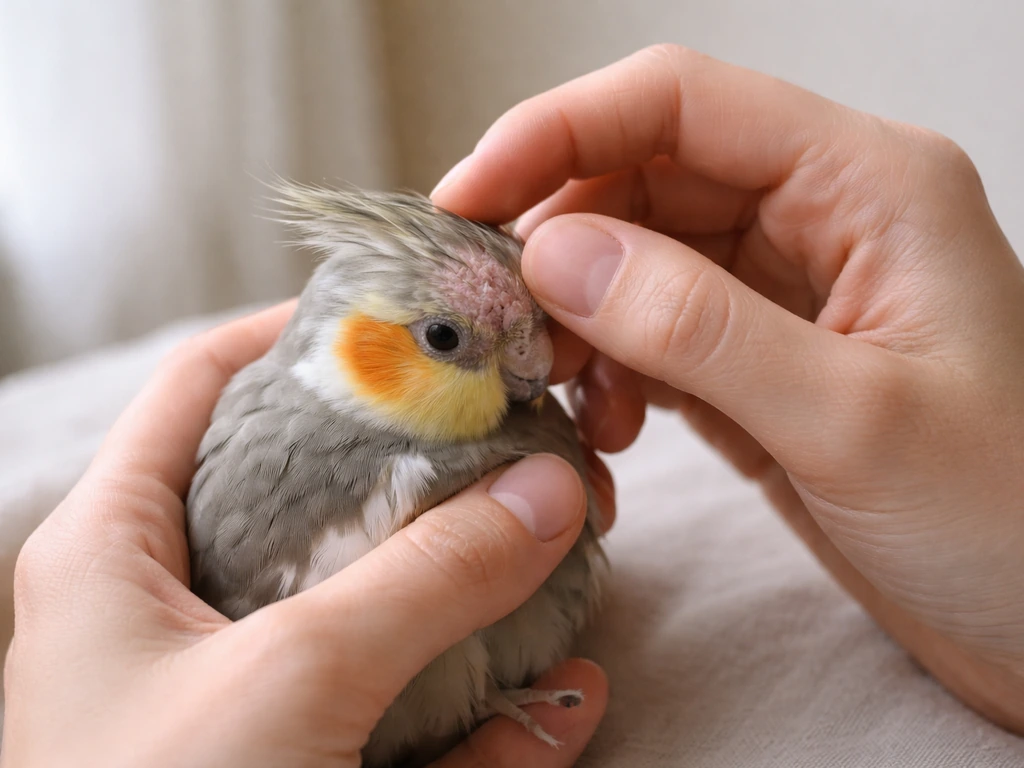
Run through this checklist right now before deciding what to do next. You don't need any tools, just close observation.
- Look at the bald spot directly: is there bare skin, or just thinner feather coverage? Bare skin is a concern; thinning alone may still be molt.
- Check for symmetry: is the same area on the opposite side of the body also losing feathers? If no, it's abnormal.
- Look at the feathers at the edge of the bald patch: are they clean-pulled (smooth skin), broken at the shaft, or frayed? Clean-pulled = plucking. Broken/frayed = mechanical damage or mites.
- Check for pin feathers in or near the bald area: their presence suggests active regrowth, which can happen during molt or after plucking.
- Look at the skin itself: any redness, crustiness, scabbing, flaking, or weeping? Any of these point to infection or mites.
- Check around the beak, nostrils, eyes, and legs for white crusty buildup, which is a classic sign of scaly face/leg mites.
- Watch your bird's behavior for 10 minutes: are they actively reaching to pluck or scratch the area? Or is the behavior normal?
- Note where the bald spot is: chest/belly/inner thighs = bird can reach it (likely self-plucking). Top of head or back of neck = bird cannot reach it (cage mate, or medical cause).
- Check the cage: are there sharp edges, misaligned wire, or perches positioned in a way that the bird rubs against the cage bars?
- Check for other birds in the cage that may be chewing or over-grooming your bird.
- Note any behavior changes beyond the feathers: is the bird eating normally, active, and alert? Or fluffed up, quiet, or breathing with effort?
If you checked off redness, crusting, scabbing, abnormal pin feathers, bare skin larger than a coin, or behavioral changes like lethargy or reduced appetite, move the bird toward a vet visit rather than waiting.
Habitat and care fixes to stop further feather loss
If the triage above points toward environmental or behavioral causes, there are real adjustments you can make today. Start with the cage itself. Check every perch: wood perches of varying diameters are best, and perches should be positioned so the bird isn't constantly rubbing against the cage sides when it turns around. Remove or pad any hardware with sharp edges. If the feather loss is on the chest or belly, check whether the bird is pressing against anything repeatedly.
If you have multiple birds, separate them temporarily. Even birds that appear to get along can over-preen each other or barbering-pluck out of dominance behavior, especially in a cage that's too small for the number of birds inside.
Heat, humidity, and noise all contribute to stress-driven plucking. Move the cage away from drafts, heating vents, and loud speakers. Avoid positioning the cage near windows that let in direct afternoon sun for hours, but do make sure the bird gets some indirect natural light daily. A stable, calm environment makes a noticeable difference for stress-related feather issues.
Hygiene matters too. Offer regular misting or shallow baths to keep skin and feathers in good condition, reduce any irritation that triggers scratching, and support normal preening. A clean, dry cage floor also limits bacterial and fungal load that could cause skin problems.
Diet and enrichment steps that support healthy feathers
A seed-only diet is one of the most common and correctable contributors to poor feather health. Seeds are high in fat and low in the vitamins, minerals, and protein that feathers are actually made of. If your bird's diet is mostly seed-based, start transitioning toward a high-quality pellet base (pellets should make up around 60 to 70 percent of the diet) supplemented with fresh vegetables, leafy greens, and occasional fruit. Don't swap everything overnight since abrupt diet changes stress birds, but start offering pellets alongside seeds and gradually reduce the seed proportion over several weeks.
Enrichment is just as important as diet when plucking has a behavioral root. Bored birds pluck. Give your bird foraging toys that require work to get a food reward, rotate toys every few days to keep things novel, and schedule regular out-of-cage time with interaction. Even 30 minutes of focused interaction per day can reduce anxiety-driven plucking noticeably in some birds.
If sexual frustration is a possibility (common in single birds during breeding season, or in birds that have been handled in ways that mimic mating), reduce mate-simulating handling. Stop back-stroking, limit excessive cuddling, and try to redirect behavior with training and play instead.
Keep the bird's daily routine consistent. Predictable light cycles (roughly 10 to 12 hours of light, the rest dark and quiet), regular feeding times, and a stable social environment all lower baseline stress. These aren't dramatic interventions, but consistency genuinely matters for birds prone to anxiety-driven plucking.
When to call an avian vet and what to document
Some situations need a vet, not more at-home adjustments. Call an avian vet promptly if you notice any of the following.
- Bare skin is visible and the bald area is larger than a small coin, or it's growing fast
- The skin at the bald spot is red, raw, scabbed, weeping, or has any crust buildup
- You see white crusty deposits around the beak, nostrils, eyes, or legs (possible mites)
- Pin feathers look abnormal: constricted, clubbed, blood-filled, or stunted
- The bird is actively and repeatedly plucking despite environmental changes
- Your bird is lethargic, fluffed up, or less active than normal
- Appetite has dropped or droppings look abnormal (watery, discolored, or very sparse)
- There is any open-mouth breathing, tail bobbing while breathing, wheezing, or gasping (treat this as urgent, not just a vet call but an emergency visit)
- Feather loss came on suddenly when the bird is not in a molt cycle
- The feather loss is spreading to new areas despite your changes at home
When you do call or visit the vet, having documentation ready speeds things up enormously. Note when you first noticed the bald spot, how fast it's grown, what the feathers around it look like, any behavior changes, what the bird eats, and what changes you've already made at home. Photos taken in good lighting over several days are genuinely useful. If the bird has been around new pets, new people, moved locations, or had any changes in routine, mention those too.
An avian vet will likely examine the skin and feathers closely, potentially do a skin scraping to check for mites, and may recommend bloodwork or feather testing depending on what they find. Conditions like PBFD, for example, can only be confirmed through biopsy or specific testing, so don't expect a definitive answer from observation alone. The workup matters.
Feather loss in birds is genuinely multifactorial, meaning it's rarely just one thing. The good news is that for most behavioral and environmental causes, the right changes at home make a real difference. For medical causes, the sooner they're identified and treated, the better the feather regrowth outcome. Start with the triage checklist, make the habitat and diet improvements that apply to your situation, and don't hesitate to get a vet involved if anything on that red-flag list applies to your bird.
FAQ
My bird has a bald spot, but it seems mostly like missing feathers, not bare skin. Should I still worry?
It depends on the pattern. Gradual, symmetrical feather loss with no visible pink skin can fit a normal molt, but bare skin, expanding patches, or sudden changes outside the expected molt window are reasons to use the vet triage checklist and call an avian vet if any red-flag signs appear.
How can I tell if another bird is plucking my bird versus my bird plucking itself?
Look for location and access. If the bald area is on the head, neck, or another hard-to-reach spot for the bird, that points toward barbering by a cage mate or external contact. Temporarily separating birds for a few days can also help you see whether new feather pulling stops.
Is it normal for a bird to look “thinner” around the shoulders during shedding?
Some overall thinning can happen during molt if it is gradual and bilateral. If thinning is concentrated in one area, progresses quickly, or you see redness, crusting, or abnormal pin feathers, treat it as more than a routine shed and reassess for infection, mites, nutrition gaps, or stress causes.
Do mites always cause itching, so if my bird is not scratching they might not be the problem?
Not necessarily. Scaly leg mites can occur without obvious itching, so the absence of scratching does not rule them out. If you see crusting around the beak or nostrils, powdery buildup, or feather loss that seems to spread, a vet skin scraping is the reliable way to confirm.
What does “abnormal pin feathers” look like in real life, and why does it matter?
Abnormal pin feathers can appear constricted, clubbed, or stunted, and sometimes you may notice developing feathers with blood still visible in the shaft. These signs suggest a systemic issue affecting feather growth, so a diet and environment tweak may not be enough, and a vet workup becomes more important.
Can cage cleaning products or disinfectants cause bald spots?
Yes, skin irritation can contribute. If you recently changed cleaners, used aerosols, or switched to a stronger disinfectant, consider reverting to bird-safe cleaning and thorough rinsing/drying of the cage. Persistent or worsening bald patches still warrant evaluation for infection or parasites.
Is back-stroking the only handling behavior that increases plucking?
No. Over-handling that mimics mating behavior, frequent excessive cuddling, and allowing the bird to stay in a highly aroused state can all contribute. If you suspect sexual frustration, reduce mating-like interactions, then use redirecting training and foraging instead.
When should I try home changes first versus calling the vet immediately?
If you observe bleeding, weepy or raw skin, significant scabbing, crusts plus feather loss, abnormal pin feathers, rapid expansion of a bald area (larger than a coin), lethargy, or reduced appetite, call promptly. If the only signs are gradual, symmetrical feather loss during the expected molt window, you can monitor while improving habitat and diet.
My bird keeps losing feathers on one wing only. Could this be injury rather than disease?
It can be injury, but one-sided loss can also occur with localized skin problems or friction. Check for perch rubbing, sharp hardware, and cage contact on that side. If there is redness, crusting, or broken feather shafts with ongoing progression, prioritize a vet exam to avoid missing infection.
How should I transition from seed-only to pellets without worsening stress and plucking?
Make changes gradually. Start by offering pellets alongside the current seed, then slowly reduce seed proportion over several weeks, keeping the environment calm and routine consistent. If your bird refuses pellets for long periods or becomes withdrawn, ask an avian vet for feeding strategy options rather than pushing abruptly.
Does bathing or misting help feather regrowth, or can it make irritation worse?
For many birds, appropriate misting or shallow baths help support normal preening and reduce dryness-related irritation. Use lukewarm water, avoid drafts, and stop if you see worsening redness or stress. If there is crusting, raw skin, or odor, treat it as a possible infection and involve a vet.
What documentation should I prepare for the vet to speed up diagnosis?
Keep a timeline (first noticing, how fast it worsened), a record of diet changes and any new toys, and behavioral notes (appetite, activity, lethargy). Take clear photos of the same angles and lighting across several days, and note any routine changes, travel, new people or pets, or cage relocation.
Next Article
Why Is My Bird Bleeding From Her Private? Causes and Urgent Steps
Causes of genital vent bleeding in pet birds plus urgent first steps, red flags, and when to see an avian vet.