
Here is the short answer: if your bird's feathers still look clean, smooth, and intact, and the bird seems relaxed while grooming, it is almost certainly normal preening. If you are seeing bald patches, broken feathers, irritated skin, or a bird that cannot seem to stop and settle, that is the line into over-preening territory, and that is worth acting on now.
How to Tell If Your Bird Is Over Preening and What to Do

Marcus Chen
23 Mar 2026
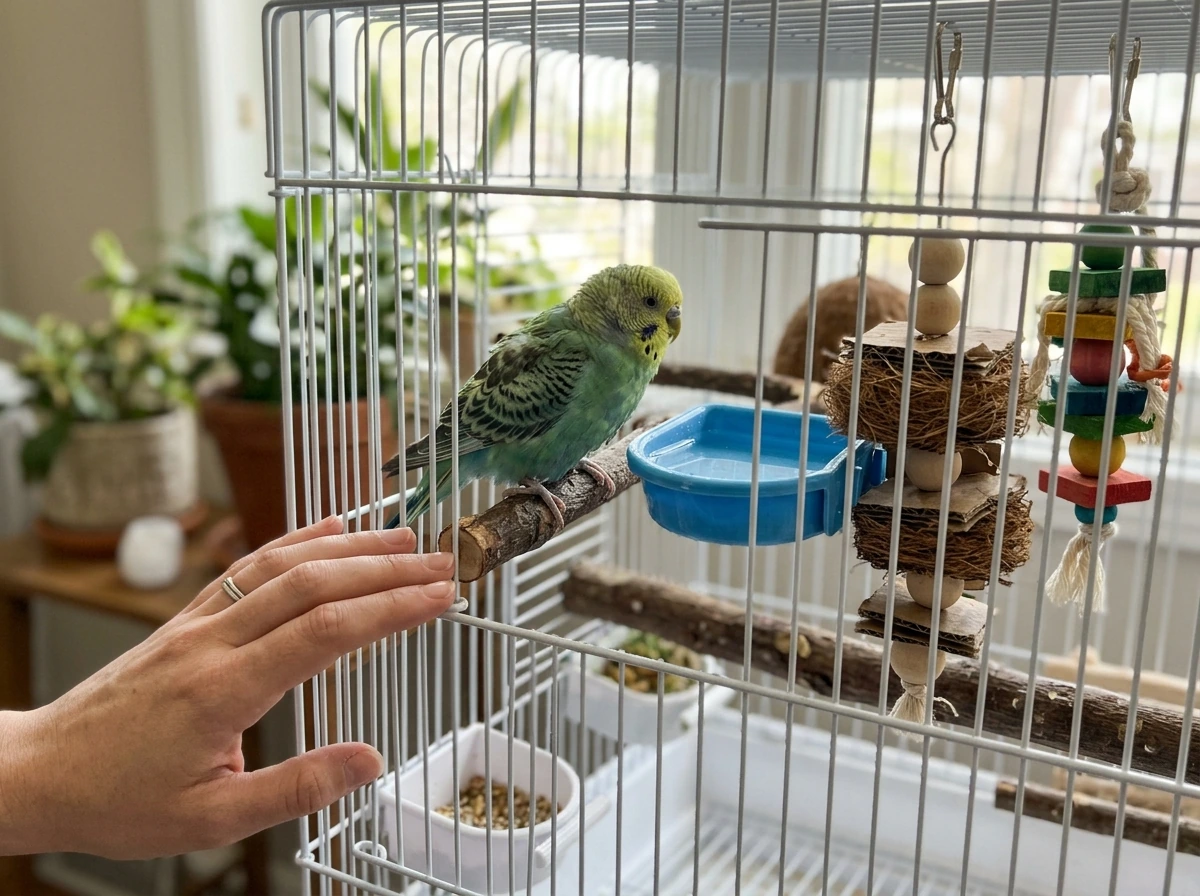
Normal Preening vs. Over-Preening: What Each Actually Looks Like
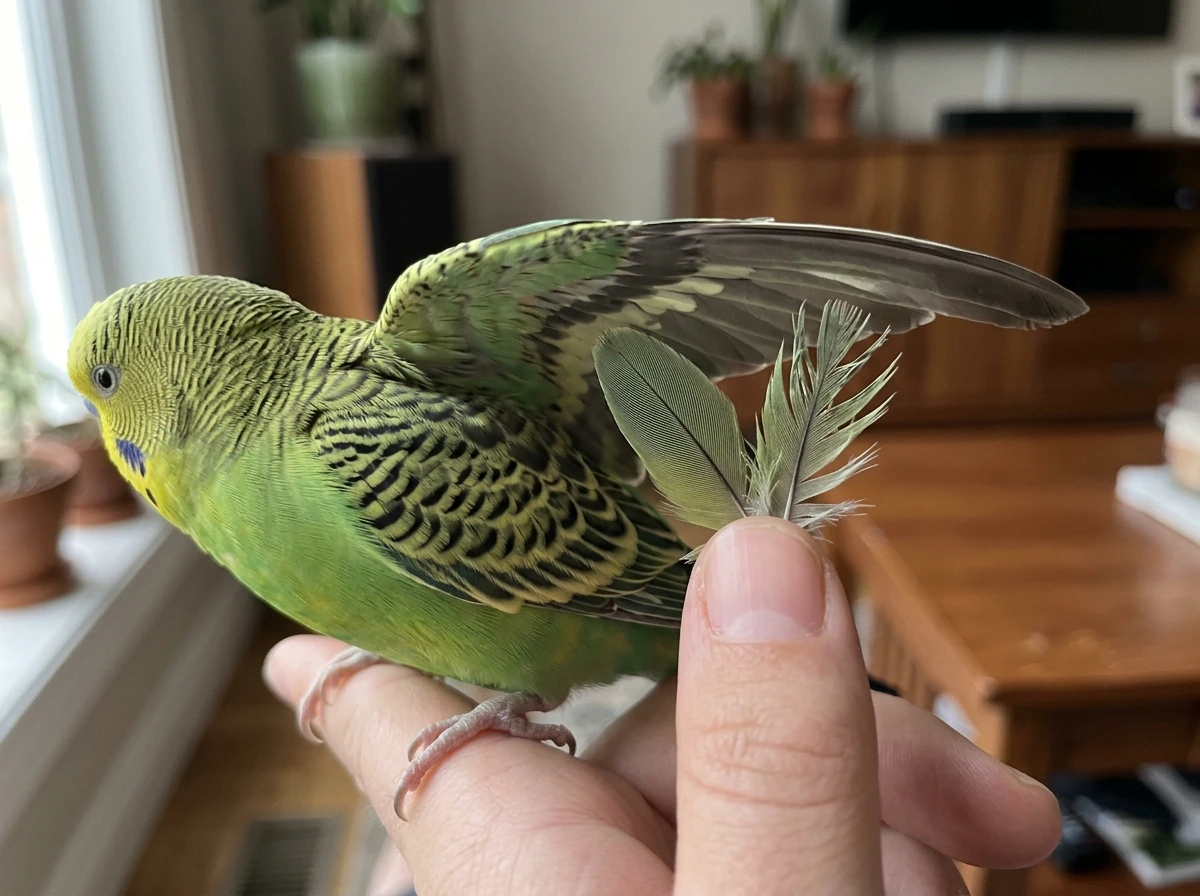
Normal preening is your bird maintaining its feathers. It runs its beak through individual feathers to remove debris, re-zip the barbs back together, and distribute oil from the preen gland near the base of the tail. A normally preening bird looks purposeful but relaxed. Its eyes are soft (not wide and alert), its posture is loose, and it moves on to other activities when it is done. Research referenced by the Association of Avian Veterinarians suggests birds in healthy conditions can spend roughly 19% of their active time preening, so a bird that seems to be grooming frequently is not automatically a red flag.
Over-preening, or excessive preening, looks different in both intensity and result. The bird keeps returning to the same spots compulsively, spends unusually long stretches grooming without stopping, and the feathers themselves start to show the wear. LafeberVet describes feather destructive behavior as a spectrum that starts with excessive preening and can progress all the way to feather picking and self-mutilation, which is why catching it early matters.
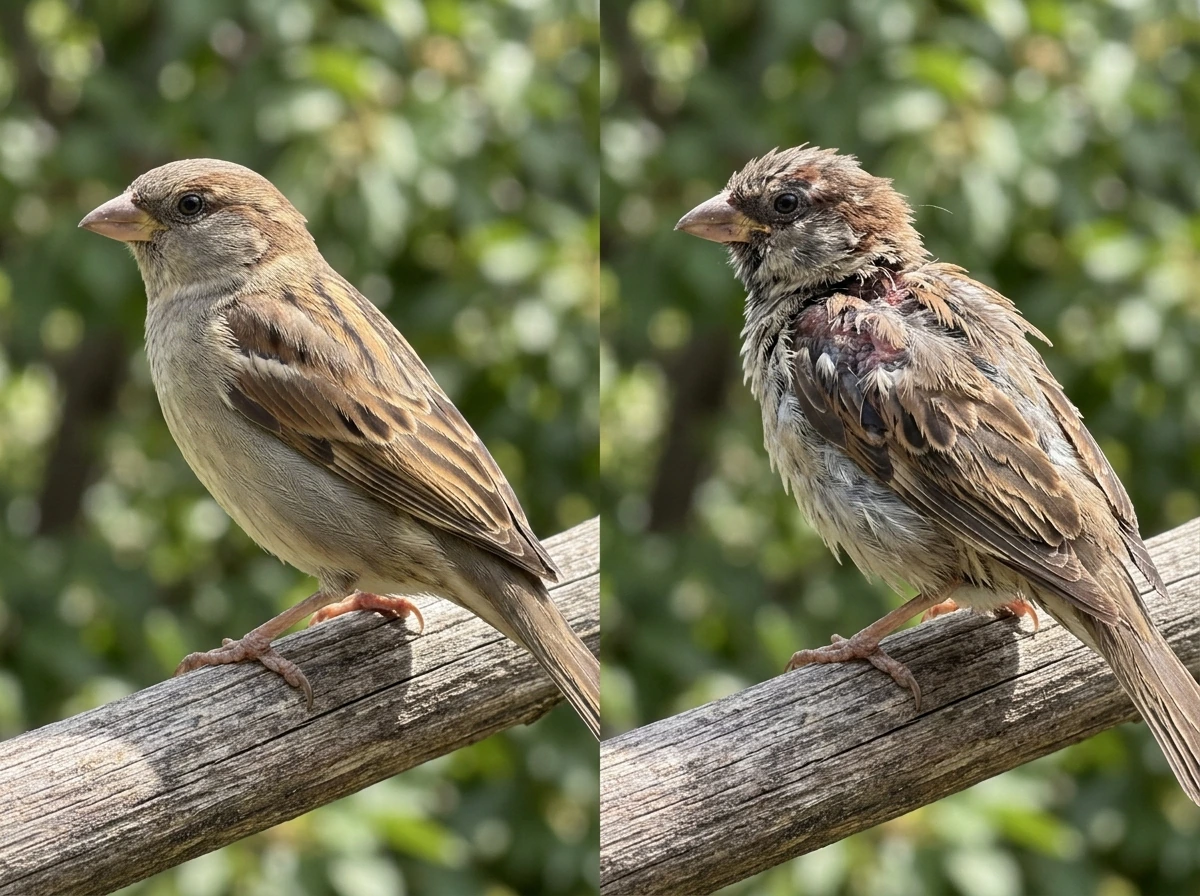
The clearest dividing line between the two: normal preening leaves feathers looking tidy and undamaged. Excessive preening leaves evidence behind.
Common Signs Your Bird Is Stressed or Uncomfortable
Over-preening rarely happens in isolation. If you are wondering why your bird is molting so much, start by comparing normal grooming and feather shedding with the signs of over-preening and stress. If your bird is grooming too much, something is usually driving it, and the bird's overall mood and body language will give you clues. Watch for these stress or discomfort signals alongside the preening:
- Feathers fluffed up for long periods (not just briefly after a bath or during sleep)
- Wide, tense eyes or a constantly alert posture while grooming
- Screaming, biting, or sudden aggression that feels out of character
- Reduced appetite or not eating at all
- Repetitive behaviors like pacing, swaying, or bar-chewing in addition to the preening
- Hiding more than usual or pushing into a corner of the cage
- Tail bobbing with each breath (a respiratory warning sign that needs immediate attention)
A relaxed, healthy bird preening has what the AAV describes as 'soft eyes' and a calm posture. A stressed bird grooming compulsively will look the opposite: tense, vigilant, and unable to settle. That contrast in body language is one of the most useful things you can watch for at home.
Feather Damage Clues: What to Look For on the Bird Itself
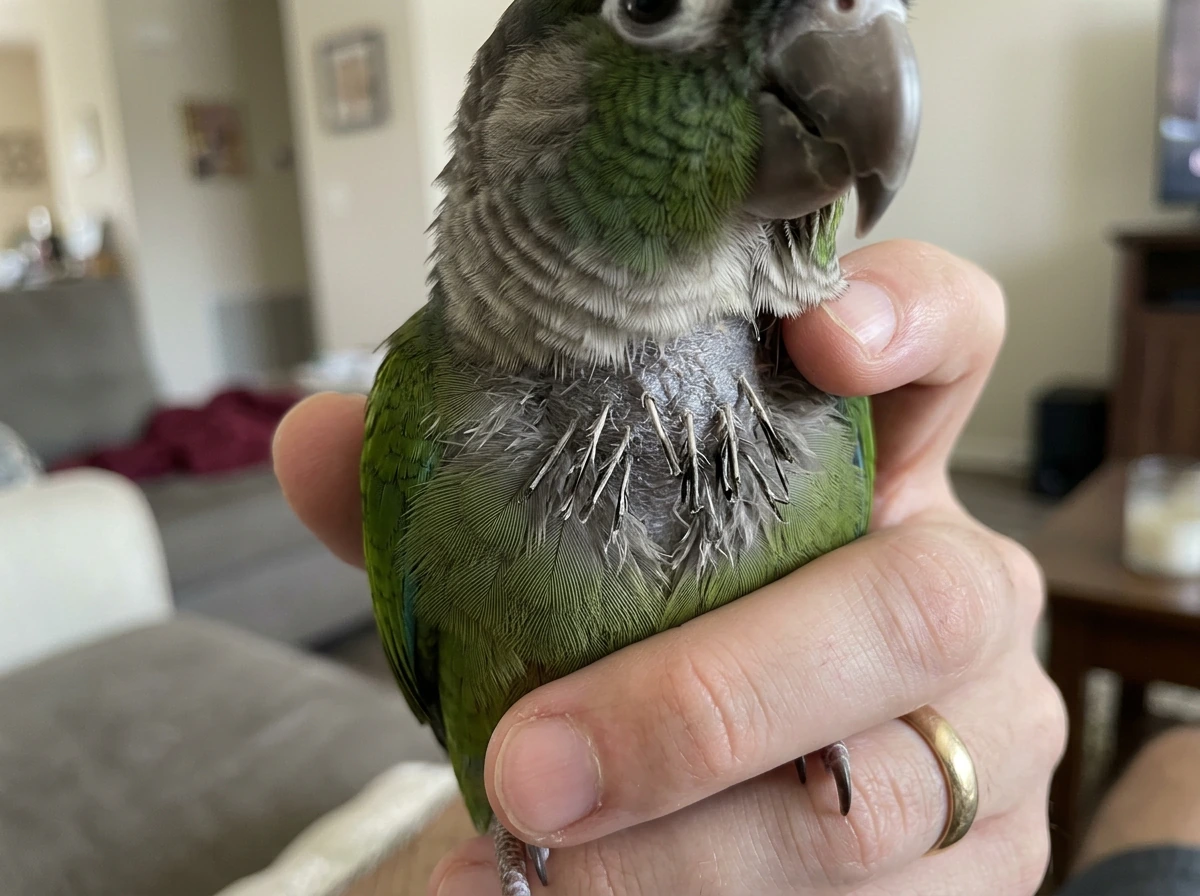
This is the physical evidence section, and it is where you can often get a clear yes-or-no answer about whether something is wrong. Go through your bird carefully in good lighting and look for the following:
- Bald patches or thinning areas, especially on the chest, neck, inner legs, or back
- Feathers with frayed or chewed edges rather than clean, smooth vanes
- Broken feather shafts that look snapped rather than naturally shed
- Blood feathers (dark-shafted pin feathers) that appear damaged or bleeding
- Redness, irritation, or inflammation of the skin under or around the feathers
- Scabbing or open sores on the skin
- Asymmetrical feather loss (one side more bare than the other)
Vetafarm notes that feather-destructive behavior tends to follow a pattern, spreading from areas like the chest and neck to the legs and back as it worsens. If you are seeing early-stage loss in one spot, that is your signal to address it before it progresses. According to Tree of Life Exotic Pet Medical Center, the behavior can advance from localized feather loss all the way to self-mutilation with open wounds if it is left untreated.
One important distinction: birds cannot preen the top of their own heads. If you see feather loss or damage on the head, another bird in the cage is likely responsible, not the bird itself. That changes what you need to address.
Behavior Patterns That Tell You More Than a Single Moment
One grooming session does not tell you much. Patterns over time do. Start paying attention to these four dimensions:
- Frequency: Is your bird preening multiple times in a short window, returning to the same spot within minutes of finishing?
- Duration: Does a single grooming session go on for 20, 30, or more minutes without the bird stopping to do anything else?
- Timing: Does the preening spike at a specific time of day, such as when you leave the room, when the lights change, or after a particular noise or event?
- Trigger: Does it get worse after a new person visits, a change in schedule, a new cage mate, or moving the cage?
Tracking these patterns is genuinely useful, not just for your own peace of mind but because an avian vet will ask you exactly these questions. LafeberVet specifically recommends integrating behavioral and environmental observations alongside any medical evaluation, so notes you take now can speed up the diagnostic process significantly.
What to Check at Home Right Now
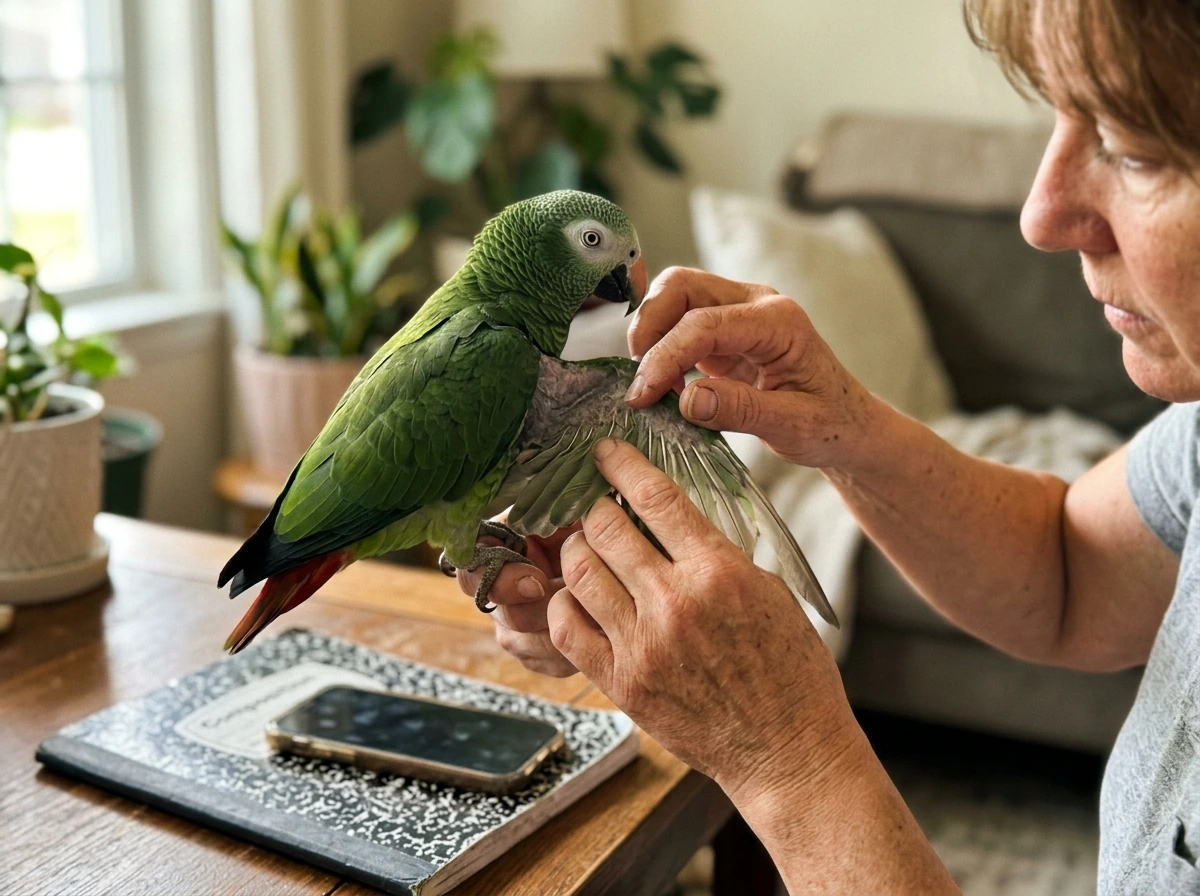
Before you do anything else, go through this home checklist. Many cases of excessive preening have a straightforward environmental or dietary trigger that you can identify and adjust on your own.
Environment and Cage Setup
- Has anything changed recently? New furniture, new pet, new person in the home, moved cage location, or changed your schedule?
- Is the cage in a high-traffic or noisy area that might be stressing the bird?
- Are perches the right diameter and texture for your species? Rough or poorly sized perches can cause foot irritation that leads to excessive grooming of the feet and legs.
- Is there anything in or near the cage that could be a chemical irritant, such as air fresheners, scented candles, non-stick cookware fumes, or cleaning product residue?
Bathing and Humidity
Many pet birds come from humid rainforest environments, and dry indoor air is a surprisingly common trigger for skin irritation and excessive preening. Bowmanville Veterinary Clinic notes that regular bathing and gentle misting can be very natural for these birds and supports healthy grooming cycles. If your bird is not getting a chance to bathe regularly, try offering a shallow dish of room-temperature water or a gentle misting with clean water two to three times a week and watch whether the preening frequency changes.
Diet
A diet heavy in seeds and low in variety can contribute to nutritional deficiencies that affect feather and skin health. If your bird is eating mostly seeds, that is worth changing regardless of the preening issue. A balanced diet that includes quality pellets, leafy greens, and appropriate fresh foods gives feathers a much better foundation. Do not add any supplements without guidance from a vet, as over-supplementing can cause its own problems.
Enrichment and Stimulation
Boredom is one of the most commonly cited behavioral drivers of excessive preening. LafeberVet lists lack of stimulation as a key suspected cause. Look at the cage: are there enough toys, foraging opportunities, and things to interact with? Does the bird get regular out-of-cage time? The AAV specifically states that enrichment can prevent behavioral vices like feather-destructive behavior by meeting the bird's physical and psychological needs.
Products in or Near the Cage
Be careful with any sprays, preening conditioners, or feather health products unless they were recommended by an avian vet. Vetafarm cautions against 'cure-all' sprays because they can fail to address the actual cause and sometimes make things worse. Plain warm water is the safest bathing option until you know what is driving the behavior.
How to Help Safely While You Monitor
There are steps you can take right now that are safe for your bird and may reduce the preening while you figure out the bigger picture.
- Offer regular baths or gentle misting: Aim for two to three times per week. Use room-temperature water and let the bird air dry in a warm, draft-free spot. Do not use hair dryers.
- Rotate toys and add foraging: Swap in new toys or rearrange existing ones every few days. Hide food in foraging toys to give the bird a mental task.
- Stabilize the lighting schedule: Aim for 10 to 12 hours of darkness at night. Inconsistent light cycles can contribute to hormonal changes that trigger or worsen preening.
- Reduce known stressors: If a specific trigger is causing the spike in preening (a particular person, a noise, a time of day), work on minimizing or desensitizing the bird to it gradually.
- Spend more calm time with the bird: Unforced, relaxed interaction, not loud play or forced handling, can lower overall stress levels.
- Do not punish or physically interrupt the preening: Doing so adds stress and can make the behavior worse.
None of these steps will fix a medical problem. They are supportive measures that address behavioral and environmental contributors while you assess whether a vet visit is needed.
When to Call an Avian Vet
Some situations require professional evaluation, not home monitoring. Call an avian vet promptly if you notice any of the following:
- Bald patches or significant feather loss that was not there a week ago
- Broken blood feathers that are actively bleeding
- Open wounds, scabs, or broken skin anywhere on the bird's body
- Redness, swelling, or visible irritation on the skin
- Respiratory signs: open-mouth breathing, tail bobbing with each breath, wheezing, or a change in the bird's voice
- Lethargy, unusual weakness, or the bird sitting low on the perch with fluffed feathers
- Bleeding from a feather, nail, or beak that you cannot control with gentle direct pressure within a few minutes
Texas A&M's veterinary guidance is clear: before assuming excessive preening is a behavioral problem, medical causes like mites, hormone imbalance, and skin infection need to be ruled out. Best Friends Animal Society goes further, recommending that any bird showing a pattern of excessive preening or feather chewing be seen by an avian vet right away. This is not a situation where waiting weeks is a good strategy, because as LafeberVet and Vetafarm both note, the behavior can escalate quickly from preening to self-mutilation if the underlying cause is not addressed.
An avian vet will typically do a physical exam, check for parasites like mites, run bloodwork to look for systemic disease or hormonal issues, and ask detailed questions about diet and environment. This diagnostic process is the only reliable way to separate a behavioral issue from a medical one. Trying to treat this at home without that distinction often means addressing the wrong cause entirely.
Normal Grooming or Excessive Preening? A Quick Comparison
| What You're Seeing | Likely Normal | Likely Excessive Preening |
|---|---|---|
| Feather condition | Smooth, clean, intact vanes | Frayed edges, broken shafts, missing patches |
| Skin condition | No visible skin | Redness, irritation, scabs, or open skin |
| Body language during grooming | Relaxed, soft eyes, settles afterward | Tense, cannot stop, returns immediately |
| Duration of sessions | Periodic, finishes and moves on | Extended, compulsive, hard to interrupt |
| Frequency | Regular but variable throughout the day | Constant or dramatically increased from baseline |
| Linked to triggers | Not noticeably linked to specific events | Spikes after changes, stress, or being left alone |
| Appetite and activity | Normal eating and active between grooming | Reduced eating, lethargic, or other behavior changes |
If most of your answers land in the right column, that is your signal to book an avian vet appointment rather than continuing to watch and wait. If you are also wondering whether feather loss is actually molting or feather plucking, compare the pattern and timing first before you decide to book. The earlier you catch feather-destructive behavior, the easier it is to manage, and the less chance it has to become a deeply ingrained habit or a medical emergency.
If you are also trying to figure out <span>why is my bird molting so much</span>, or how to tell if your bird is feather plucking rather than just grooming excessively, those are related questions worth exploring. If you are specifically trying to confirm molting, it helps to look for the timing and pattern of feather changes rather than assuming it is feather damage how do i know if my bird is molting. The patterns of feather loss look different in each case, and separating them out can help you get to the right answer faster.
FAQ
Can molting look like over-preening, and how do I tell the difference?
Molting usually comes with a clear seasonal timing, dusting or pin-feather appearance, and new feather growth over time. Over-preening typically damages existing feathers first, creates worn or broken shafts, and can leave irregular bald patches with irritated skin. If the bird seems stressed while grooming or the pattern stays focused on the same spots beyond the expected molt window, treat it as possible over-preening and check with an avian vet.
What if my bird is preening a single area a lot, but the feathers still look intact?
Localized, repetitive grooming can be a sign of itch from irritation, even if feathers look temporarily okay. Look for skin texture changes (redness, scabs, thickened skin) and for broken or misaligned feathers around that spot. If it persists more than a few days, or the bird cannot disengage from the area, consider a vet check to rule out mites, dermatitis, or early feather destructive behavior.
How can I track whether it is “pattern over time” without obsessing?
Pick one or two body regions and do a quick visual check at the same time each day (for example, after the lights-on routine). Note preening duration by rough categories (a few minutes versus repeated long sessions), and record visible changes like new broken feathers, redness, or expanding feather loss. A short log is usually enough, since an avian vet will ask about onset, frequency, and progression.
Does normal preening mean my bird is not stressed at all?
Not necessarily. Some birds can appear to groom while still being tense, especially if the environment is dry, noisy, or socially stressful. The useful clue is whether the bird has soft eyes and a relaxed posture and then moves on to other behaviors. If eye tension, fluffed posture, or inability to settle accompanies the grooming, treat it as a stress or discomfort signal rather than “just preening.”
Should I try limiting bathing if I think my bird is over-preening?
Usually avoid withholding bathing once you are trying to stabilize grooming. Plain, clean, room-temperature water and gentle misting can support normal feather maintenance and reduce dry-skin itch, which can drive excessive grooming. If you notice irritation after bathing, stop and switch to a simpler approach while you arrange an avian vet evaluation.
Are mites or infections always visible, or can they be missed at home?
Many problems begin subtly and are not obvious without an exam. Mites, skin infections, and some inflammatory conditions can present as itching and repetitive grooming before you see clear surface signs. Because over-preening can escalate quickly, if the behavior is persistent, spreading, or worsening, an avian vet should check skin and feathers directly (and often run tests).
My bird’s head feathers look damaged. Does that automatically mean another bird is responsible?
Often, yes, since birds typically cannot preen the top of their own heads. However, damage on the head can also involve skin irritation or rubbing against surfaces. Consider where the bird’s beak can reach, whether there are cage mates, and whether the bird shows grooming attempts directed at the head. If you cannot find a clear source, treat it as a red flag and have an avian vet assess for underlying skin issues too.
When should I switch from home adjustments to booking an avian vet appointment?
If feather damage is appearing, feather loss is expanding, the bird’s posture is consistently tense or unable to settle, or the behavior is not improving after you correct clear triggers (like dryness, diet imbalance, and lack of enrichment), book an appointment. Also go sooner if there are signs of open wounds, bleeding, or visible scabs, because waiting can allow the behavior to become ingrained or let a medical cause worsen.
Can toys and foraging alone stop over-preening?
They can help if boredom or lack of outlets is the trigger, and they often reduce repetitive grooming. But if there is an underlying medical cause, enrichment will not resolve it by itself. The decision aid is response: if you see improvement in both behavior and skin/feather condition within about a week after enrichment and environment changes, it supports a behavioral driver. If there is no improvement or the feathers worsen, prioritize a vet evaluation.
Is it safe to use preening sprays, conditioners, or “feather repair” products?
Do not treat them as a primary solution. Many products can fail to address the real cause and some can irritate skin or alter normal grooming. If a product was not explicitly recommended by an avian vet, use plain warm water and focus on correcting the root factors (humidity, diet variety, and enrichment) while you observe progression and arrange care if needed.
Next Articles
Why Is My Bird Making a Clicking Noise? Causes and Next Steps
Learn why your bird clicks, how to spot normal vs respiratory red flags, and the immediate vet-ready next steps.
Why Do Guinea Pigs Chirp Like a Bird? Causes and Fixes
Learn why guinea pigs chirp like birds, how to read cues and body language, and when chirping signals pain or illness.
Why Is My Bird Acting Weird? Quick Health Checks
Fast checklist to spot stress vs illness in birds, with today steps and urgent vet signs to watch for.