
If your bird is breathing heavily right now, the short answer is this: heavy or labored breathing in a pet bird is never something to dismiss. It can be caused by something as manageable as overheating or stress, or it can signal a serious respiratory infection, toxic fume exposure, or pneumonia that needs urgent veterinary attention. The key is knowing what you're looking at, and this guide will walk you through exactly that.
Why Is My Bird Breathing Heavily? Causes and What to Do Now

Marcus Chen
22 Apr 2026
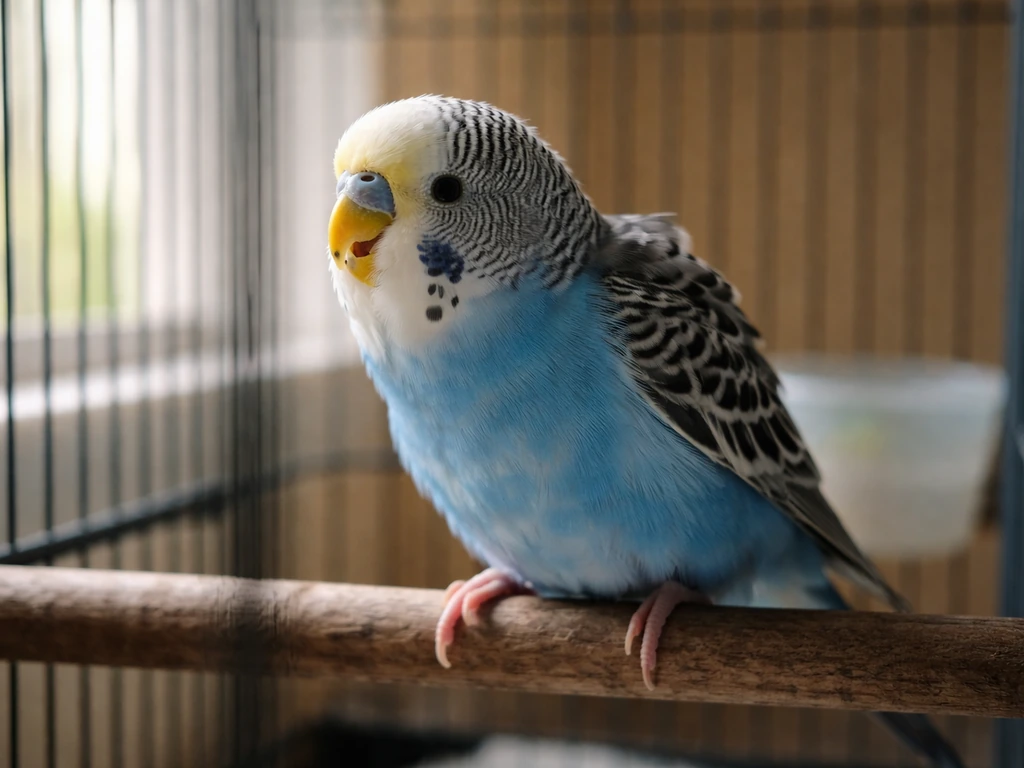
What normal breathing looks like in pet birds
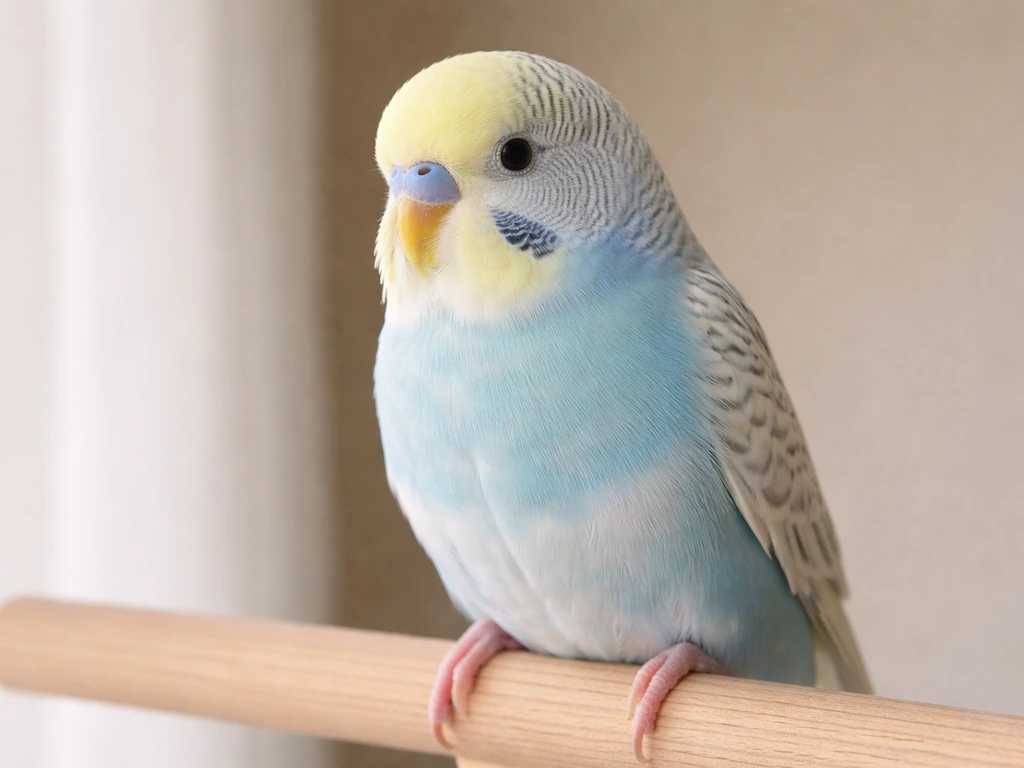
Before you can judge whether your bird's breathing is abnormal, you need a baseline. Healthy birds breathe with their mouths closed and their chest and body moving smoothly and quietly. Resting respiratory rates vary by size: smaller birds under about 300 grams (think budgies, cockatiels, lovebirds) breathe around 30 to 60 times per minute, while larger birds in the 400 to 1,000 gram range (like African greys, Amazon parrots, or cockatoos) breathe closer to 15 to 30 times per minute.
A bird that just flew across the room or got startled may breathe faster for a minute or two. That's normal. What isn't normal is breathing that stays elevated at rest, involves visible effort, or comes with other signs like tail bobbing, open-mouth breathing, or a change in posture.
Signs that breathing has crossed into problem territory
- Tail bobbing with each breath (the tail dips rhythmically as the bird works harder to breathe) — this should not happen in a healthy bird at rest
- Open-mouth breathing without recent exercise or heat exposure
- Wings held away from the body (wing abduction) to open the chest
- Neck stretching or head bobbing in sync with breaths
- Audible breathing: wheezing, clicking, rattling, or squeaking sounds
- Voice changes or loss of normal vocalizations
- Wet or crusty feathers around the nostrils or face
- Fluffed feathers and hunched posture at rest
- Lethargy, sitting low on the perch, or refusing to perch at all
- Reduced appetite or complete refusal to eat
One important thing to understand: birds are wired to hide illness. In the wild, showing weakness attracts predators, so they suppress signs of being sick until they genuinely can't anymore. By the time a bird's breathing looks obviously labored to you, it may already be much further along in an illness than it appears. Early action matters here.
The most common reasons a bird breathes heavily
Most cases fall into a few categories. Understanding which one you're dealing with helps you figure out how fast you need to move.
Stress or fear
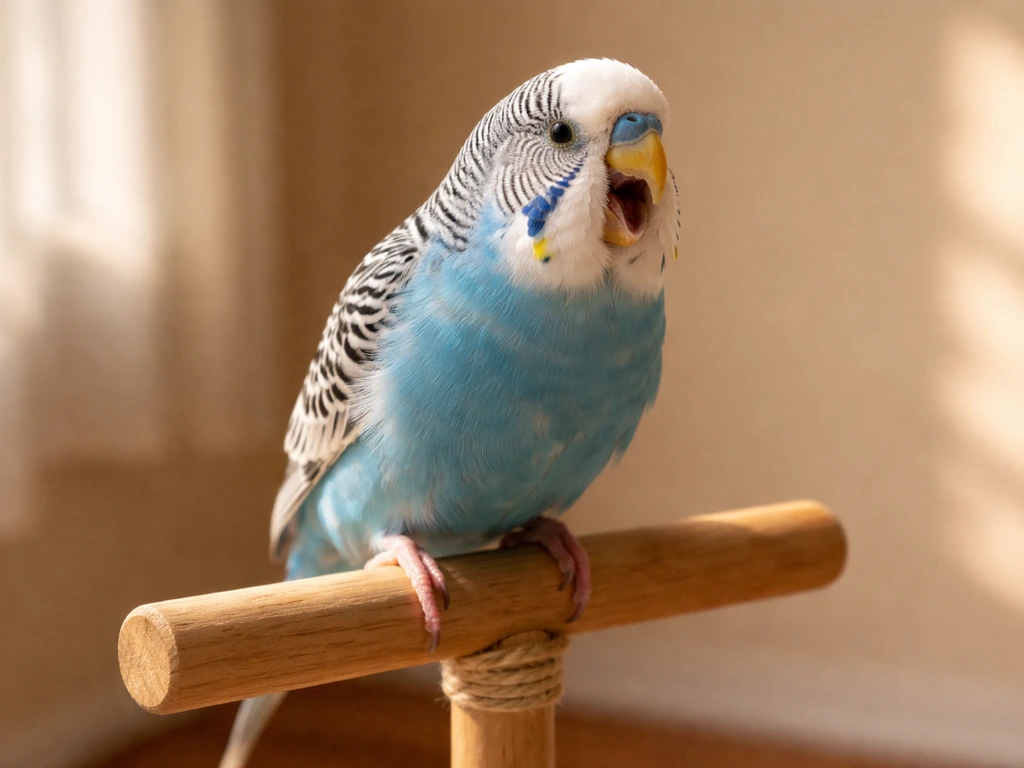
A bird that was just chased by a pet, handled roughly, transported, or startled by a loud noise can breathe fast and heavily for several minutes. This is a normal stress response. If the breathing settles back to normal within 5 to 10 minutes once the bird is calm and back in a quiet, safe environment, it's almost certainly not a medical problem. If you are wondering what it means when a bird is breathing fast, this timeline check is a helpful first clue. Watch closely though. If it doesn't return to normal, or if other symptoms appear, keep reading.
Overheating
Birds don't sweat. When they get too hot, they open their mouths and breathe rapidly to release heat, similar to how a dog pants. This can happen if the cage is in direct sunlight, near a heat vent, or if the room temperature climbs above about 85 to 90°F (29 to 32°C). A bird that's overheating may also hold its wings out from its body and look restless. Move it to a cooler spot and make sure it has access to water. If the heavy breathing continues after it cools down, something else is going on. This is closely related to what you'd see with panting, which deserves its own careful look. If you notice your bird panting, the cause can range from overheating to respiratory distress, so it is important to act quickly and get veterinary input when breathing does not improve.
Environmental irritants and air quality
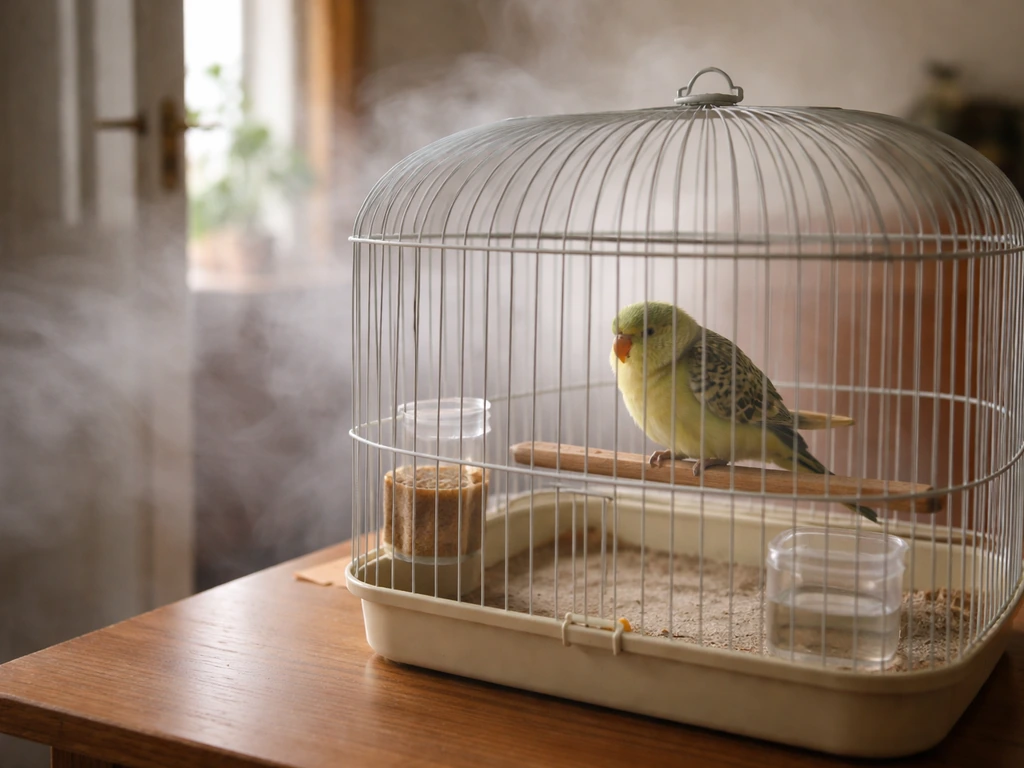
Birds have an extraordinarily sensitive respiratory system. Things that barely register to us can be acutely toxic or irritating to them. If you can smell something in the room, there's a reasonable chance it's affecting your bird's airways. Common culprits include nonstick cookware heated at high temperatures (Teflon/PTFE fumes can kill a bird within minutes), aerosol sprays like air fresheners, hairspray, or cleaning sprays, candles, incense, cigarette or vape smoke, scented plug-ins, paint or varnish fumes, carpet fresheners, and fumes from burned or burning plastic.
If there was any airborne exposure in or near the room recently and your bird is now breathing heavily, treat this as an emergency. PTFE toxicity in particular can cause lung inflammation and fluid-filled lungs very rapidly. Don't wait to see if it gets better.
Serious causes that need veterinary attention
Respiratory infections
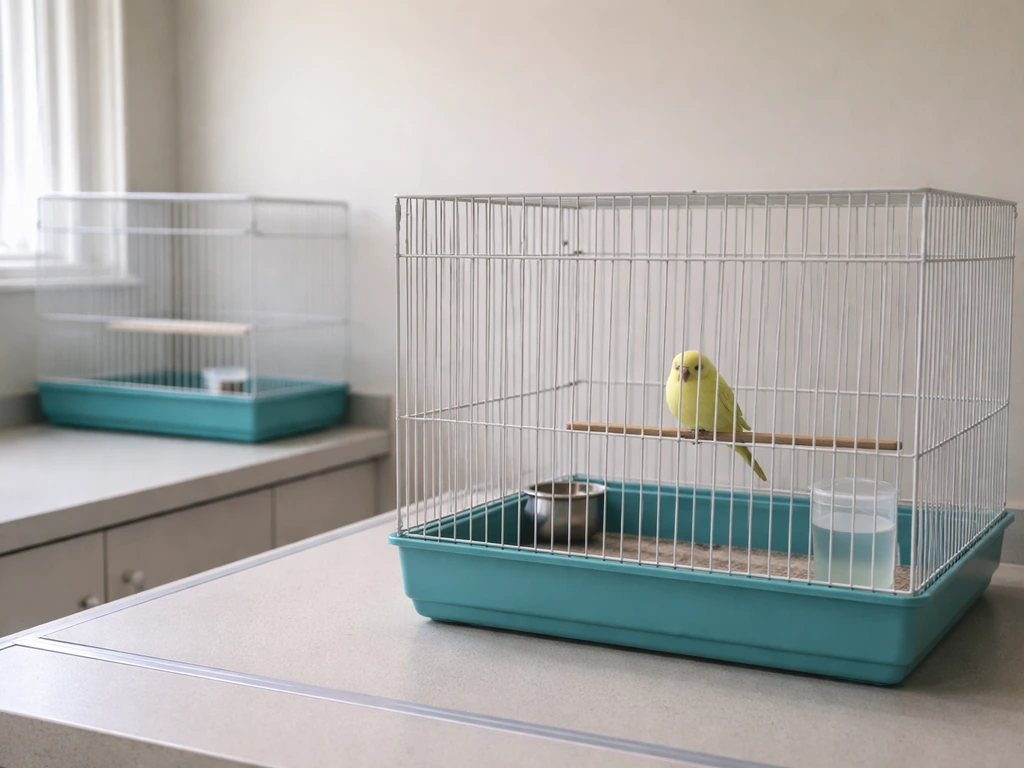
Bacterial, viral, and fungal infections can all affect a bird's upper or lower respiratory tract. Signs often build gradually: changes in breathing effort, nasal discharge, sneezing, voice changes, and lethargy. Aspergillosis (a fungal infection) is common in birds kept in environments with poor ventilation or mold exposure. Chlamydiosis (psittacosis) is a bacterial infection that causes respiratory distress and is also transmissible to humans, which makes it important to flag to your vet. A control-compendium from U.S. public health authorities outlines standardized measures to help control psittacosis and avian chlamydiosis in both people and pet birds Chlamydiosis (psittacosis) ... transmissible to humans.
Pneumonia and air sac disease
Birds have a unique respiratory system that includes air sacs extending throughout the body. Infections or inflammation in these air sacs can cause significant breathing difficulty, and the signs can look a lot like general respiratory distress. Pneumonia and air sac disease typically require radiographs and lab work to diagnose and treat properly.
Aspiration
If a bird inhaled liquid (from hand-feeding, medication given incorrectly, or drinking) into its airway, it can develop sudden respiratory distress. Aspiration is a genuine emergency and needs immediate veterinary care.
Toxin exposure
As covered above, fumes from nonstick cookware, aerosols, smoke, and cleaning products are among the most dangerous non-infectious causes of breathing difficulty in pet birds. The timeline can be extremely short with some toxins, particularly PTFE. If you suspect any toxic exposure, don't wait.
Check these things right now
Before calling the vet or heading in, do a quick but systematic check. This helps you report accurately and may also help you identify a fixable environmental problem immediately.
- Look at the bird without disturbing it. Note whether the tail is bobbing with each breath, whether the mouth is open, and whether the bird is sitting low or hunched on the perch.
- Check the room temperature. Is it above 85°F? Is the cage in direct sunlight or near a heat source?
- Smell the air. Has anything been sprayed, cooked, burned, or applied in or near the room in the last few hours? Even things from another room can drift in.
- Check the cage. Is it clean? Is there visible mold, droppings buildup, or dusty debris near vents or fans?
- Observe the bird's overall state. Is it eating and drinking? Is it alert and responsive, or dull and unresponsive? Can it grip the perch normally?
- Look at the area around the nostrils (cere). Is there any discharge, crustiness, or wetness on the feathers around the face?
- Check for any recent changes: new foods, new cleaning products, a new pet in the house, recent stress events like moving or a change in routine.
Write down what you find. This information will be valuable when you talk to the vet, and gathering it now while you're calm means you won't be trying to remember it under pressure.
What to do right now, today
Reduce stress and minimize handling
Handling a bird that is already struggling to breathe makes things worse. Restraint increases stress, and stress increases oxygen demand. Unless you need to move the bird out of immediate danger (like away from a fume source), leave it in place, keep the environment quiet, and reduce foot traffic around the cage.
Improve air quality immediately
Open windows in the room if outdoor air quality is good. Move the cage to the freshest-air room in the house if there's any chance of airborne irritants. Turn off candles, sprays, plug-ins, or anything that emits scent or fumes. Do not use nonstick cookware in the kitchen while the bird is unwell. If you've recently used any cleaning products, let the area air out completely before bringing the bird back.
Address heat if that's the issue
Move the cage out of direct sunlight and into a room with stable, moderate temperature (around 70 to 75°F or 21 to 24°C is comfortable for most pet birds). Make sure fresh water is available. Do not mist the bird with cold water suddenly, as temperature shock adds stress.
Consider gentle warmth if the bird seems cold or weak
If the bird is hunched, fluffed, and appears cold rather than overheated, keeping it in a warm environment (around 85 to 90°F) can provide some supportive comfort while you arrange veterinary care. A heating pad set to low under one side of the cage (leaving the other side cooler so the bird can move away) works for this. Adding a little humidity to the room with a cool-mist humidifier can also help keep airways moist, particularly if the bird is wheezing.
Isolate the bird if you have other birds
If you have multiple birds, separate the one showing symptoms. Respiratory infections can spread between birds, and isolation also reduces competition for food and perching space, which matters when one bird is already stressed.
When it's an emergency: go now, don't wait
Some breathing situations in birds are true emergencies that should not wait for a regular appointment. If you see any of the following, contact an avian vet immediately or head to the nearest exotic animal emergency clinic.
- Open-mouth breathing that is not linked to recent exertion or obvious heat and does not resolve in a few minutes
- Pronounced tail bobbing with every breath at rest
- Blue or pale tissues around the mouth, beak, or feet (indicating poor oxygen levels)
- Collapse, inability to stand, or falling off the perch
- Wheezing, clicking, or high-pitched squeaking sounds with breathing
- Any known or suspected exposure to nonstick cookware fumes, aerosols, smoke, or chemical fumes
- Discharge from the nose or mouth alongside labored breathing
- Labored breathing combined with complete refusal to eat or drink and severe lethargy
- Rapid deterioration over the course of an hour or less
When you transport a bird in respiratory distress, keep it in its carrier or a secure container, keep the environment warm and quiet, and drive directly to the clinic. Do not stop to try feeding or handling the bird. If you reach the vet and they offer oxygen support right away, that's the correct first step. Dyspneic birds benefit enormously from oxygen and minimal handling while the vet assesses what's going on.
It's worth knowing how this connects to other breathing concerns. Open-mouth breathing, fast breathing, loud breathing, gasping, and panting are all related presentations with overlapping causes, but they each have nuances worth understanding depending on what exactly you're observing. The underlying urgency principle, though, is the same: when a bird's breathing looks wrong and isn't resolving on its own, get professional eyes on it.
What the vet will do and how to prepare
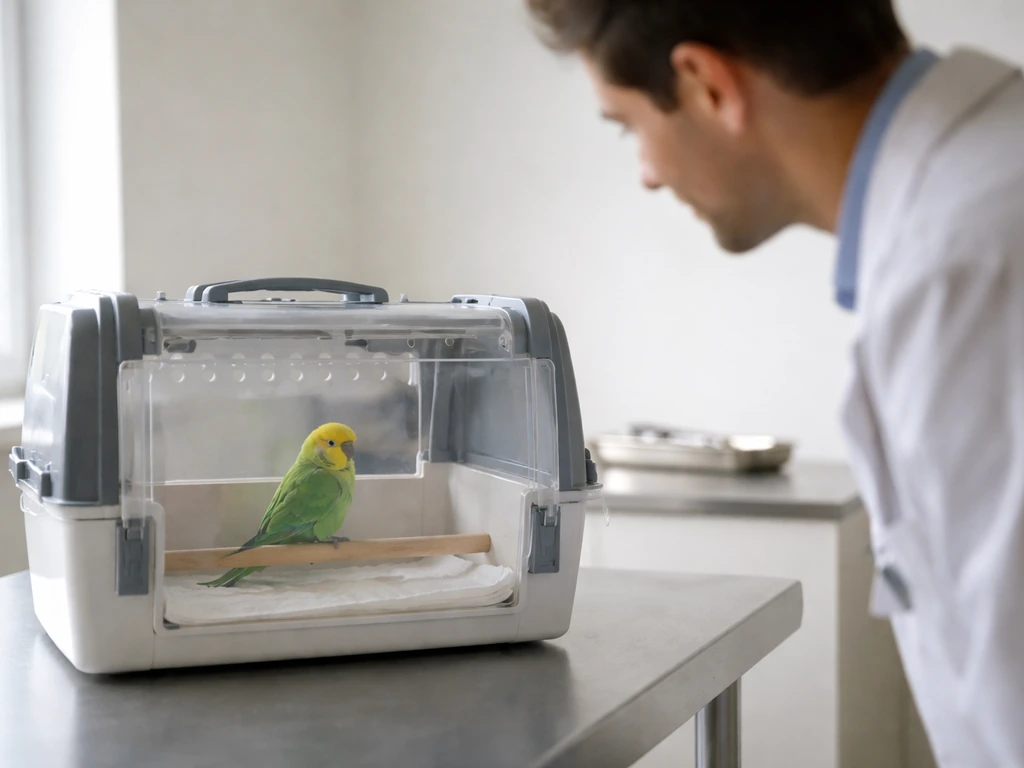
What to expect at the clinic
A good avian vet will start by observing your bird before handling it, watching respiratory rate and effort, tail bobbing, posture, and open-mouth breathing from a distance. This is intentional. Hands-on examination of a bird in distress is done carefully and in stages to avoid adding stress. If the bird is struggling significantly, supplemental oxygen may be provided first before any diagnostic procedures begin. Stabilization comes before diagnostics in true respiratory emergencies.
Once the bird is stable enough, the vet will likely do a physical exam including listening to the chest (auscultation), checking the nares and cere, evaluating the voice and any sounds, and assessing overall body condition. Depending on what they find, next steps may include radiographs to look for pneumonia, fluid, air sac disease, or masses; blood work (CBC and biochemistry panel) to check for infection or organ involvement; cytology samples from the respiratory tract; and in some cases, endoscopy to visualize the airways directly.
What to bring and what to tell them
The more specific information you bring, the faster the vet can triage and treat. Before you go, try to note or write down the following:
| What to track | Why it matters |
|---|---|
| When the breathing change started and how quickly it developed | Helps distinguish acute toxic exposure from slower-developing infection |
| Any recent airborne exposures: cooking fumes, sprays, candles, smoke, cleaning products | Critical for ruling in or out toxin-related respiratory distress |
| Other symptoms: sneezing, discharge, voice changes, lethargy, appetite loss | Helps narrow down upper vs lower respiratory involvement |
| Recent diet changes or new foods introduced | Some foods and mold in spoiled food can cause respiratory issues |
| Changes in environment: new cage location, new cleaning products, visitors with pets | Stress and airborne irritants are often environment-linked |
| Video or photos of the breathing episode if safe to capture | Visual evidence of tail bobbing, open-mouth breathing, or posture is extremely helpful |
| Normal activity level vs current activity level | Quantifying lethargy (e.g., 'usually chatty, now barely moving') gives the vet useful context |
If you have records from previous vet visits, bring those too. Any prior respiratory issues, treatments, or diagnostic results give the vet a baseline to work from and can speed up the diagnostic process considerably.
The bottom line: heavy breathing in a pet bird is your signal to pay close attention. Some causes are minor and fix themselves once the stressor is removed. But because birds hide illness so effectively, and because some causes like toxic fume exposure or serious infection can deteriorate very quickly, the rule is simple: when in doubt, call an avian vet. A quick phone call to describe what you're seeing costs nothing and can tell you whether you need to come in right now or monitor carefully over the next few hours. Don't guess when your bird's breathing is on the line.
FAQ
How can I tell if my bird’s breathing is truly abnormal, and how do I measure it?
Use an actual timer, not a quick guess. Count full breaths for 30 seconds, then multiply by 2 (or count for 60 seconds for best accuracy). If the rate stays above the usual range for your bird’s size at rest, or if you see open-mouth breathing, tail bobbing, or a hunched posture, treat it as abnormal even if the bird looks “otherwise okay.”
If my bird just got startled, how long should the heavy breathing last before I worry?
Yes. If the breathing settles within about 5 to 10 minutes once the bird is calm and in a quiet area, stress is more likely. If it does not normalize, or it worsens again when you move around the room, assume medical or environmental irritation and arrange avian vet guidance.
What should I do immediately if I suspect something in the air is causing the breathing problem?
First remove likely airborne irritants, improve ventilation, and avoid any added scents (sprays, candles, plug-ins). Do not give medications unless your avian vet has told you to, since some human cough or decongestant products can be unsafe for birds. If heavy breathing does not clearly improve after you eliminate fumes and reduce stress, contact an avian vet right away.
Is it safe to mist or spray my bird to help it breathe easier?
Do not. Misting or spraying can increase inhalation of irritants and can also cause temperature shock if the water is cold. If you want humidity, use a cool-mist humidifier at room temperature rather than directly wetting the bird, and stop if it seems to worsen breathing.
How do I know if my bird inhaled liquid and what’s the next step?
If aspiration is possible (for example, a liquid was given, the bird gulped oddly, or you heard coughing while giving medication), assume this can become a rapid emergency. Keep handling to an absolute minimum and go for prompt avian or exotic emergency care, because delay can allow inflammation or infection to develop.
When transporting my bird, should I try anything at home first?
If you see open-mouth breathing, gasping, or a bird that is struggling to breathe at rest, prioritize oxygen support and minimal handling. When transporting, keep the bird warm and quiet in a secure carrier, and go directly to the clinic without feeding attempts or extended stops that delay stabilization.
If my bird’s breathing is heavy but not getting worse, can I monitor at home?
Don’t expect improvement overnight if the cause is toxins, air sac disease, or infection. Instead, use a clear decision rule: if heavy breathing is not clearly better after you remove environmental triggers and stabilize temperature, treat it as urgent rather than “wait and see.” Phone triage with an avian vet can help you decide whether to come in immediately.
What quick environmental checks should I do before calling the vet?
Start by checking basics that can be fixed quickly: direct sunlight or heat vent exposure, nearby aerosols or cleaning products, smoke from any source, and whether the room has a strong odor. Also check whether the cage is dusty or contaminated (old litter, strong cleaners, visible mold). If any trigger is present, remove it before escalating care.
If I have multiple birds, should I isolate the one breathing heavily?
Yes, respiratory disease can spread. Isolate the symptomatic bird in a separate room if you have multiple birds, and keep airflow and handling paths separate (wash hands, avoid swapping toys or perches between cages). Continue isolation until the vet advises it is safe.
What handling mistakes make breathing problems worse?
Avoid restraint and avoid putting your face near the bird to listen or “test” noises. If you must move it for safety, do it quickly and keep the bird calm and covered, but do not perform repeated checks that add stress. Stress can worsen oxygen demand, making the breathing harder.
If I don’t hear wheezing or clicking, does that mean it’s not serious?
If the bird is silent but breathing looks labored, or if you notice tail bobbing, posture changes, or open-mouth breathing, still treat it as urgent. Some severe respiratory problems do not produce obvious wheezes at home, so rely on breathing effort and rate rather than sound alone.
My bird was around fumes (like overheated nonstick cookware), what should I do right now?
If your bird is breathing heavily after being exposed to nonstick cookware fumes or other strong airborne chemicals, assume rapid injury risk. Ventilate immediately, remove the bird from the area, and seek emergency avian care without waiting for a “cool down” to confirm recovery.
Next Articles
Why Is My Bird Panting? Causes, Checks, and What to Do Now
Learn why your bird pants, how to check breathing distress now, what to do safely, and when to call an avian vet
Why Is My Bird Making Whimpering Noises? What to Check
Find reasons for whimpering bird noises, quick home checks, and red flags for urgent vet care plus tracking tips.
Why Does My Bird Make Crunching Noises? Causes and What to Do
Learn why your bird crunches, spot normal beak chewing vs breathing or crop issues, and what to do next.