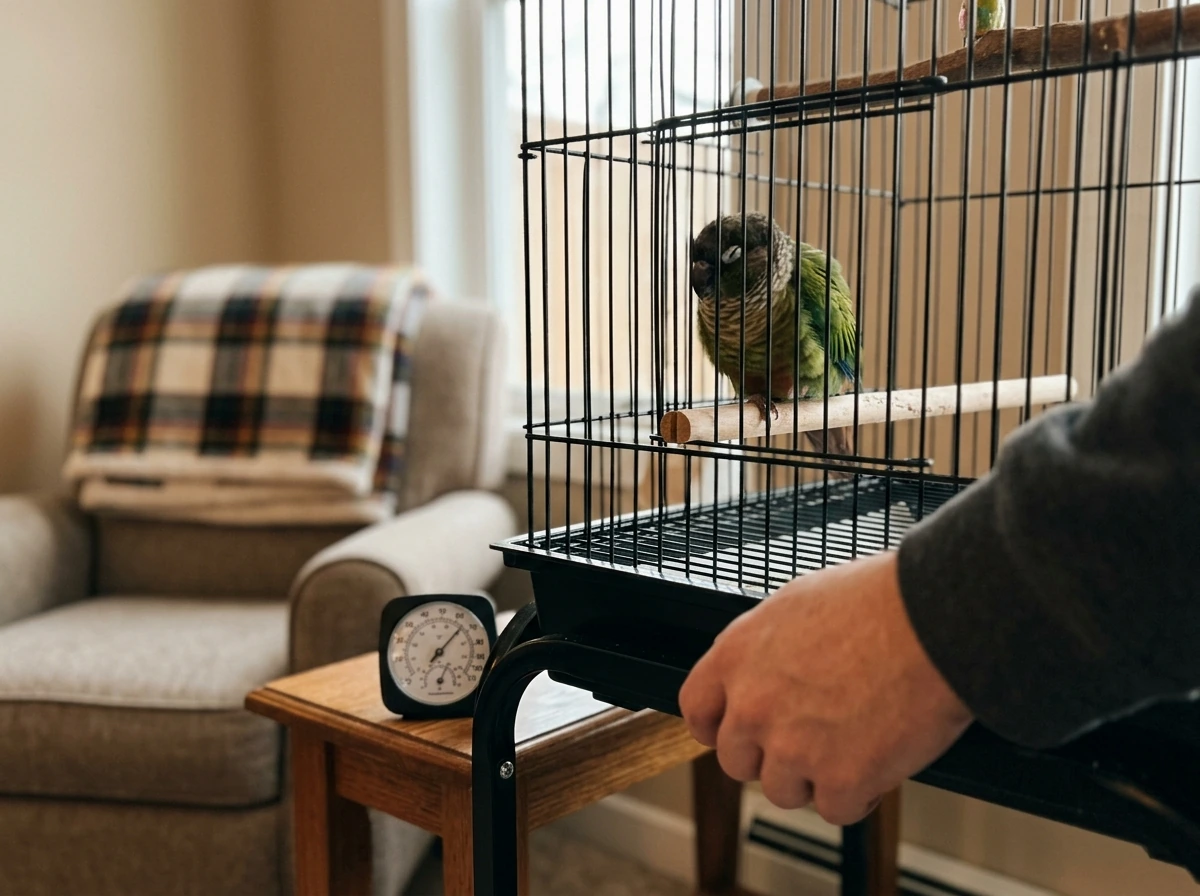
If your bird is vibrating, the first thing to know is that it is not always a crisis. Vibrating, trembling, or quivering in pet birds has a wide range of causes, from completely normal behavioral reasons to genuine medical emergencies. The goal right now is to figure out which category you are dealing with, and this guide walks you through that step by step.
Why Is My Bird Vibrating? Causes and What to Do Now

Marcus Chen
23 Mar 2026
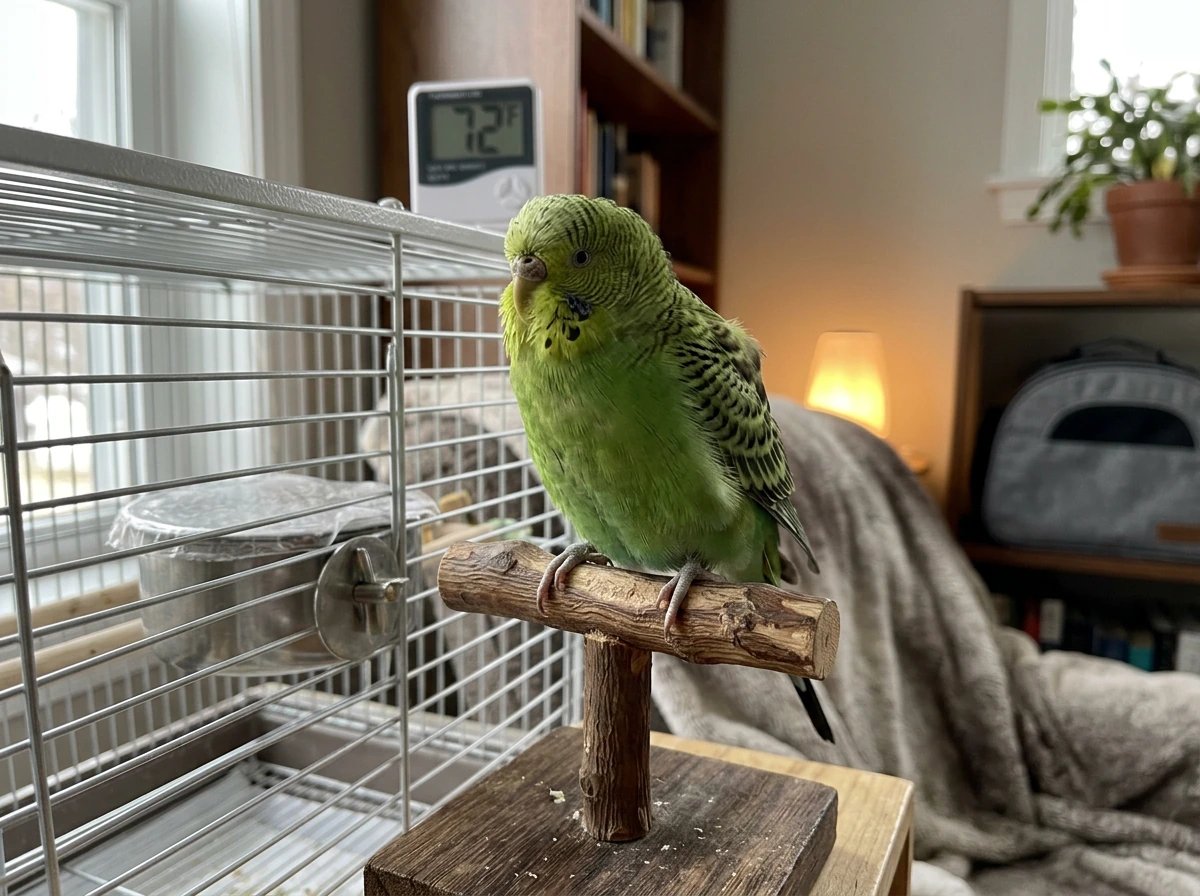
What does "vibrating" actually look like?
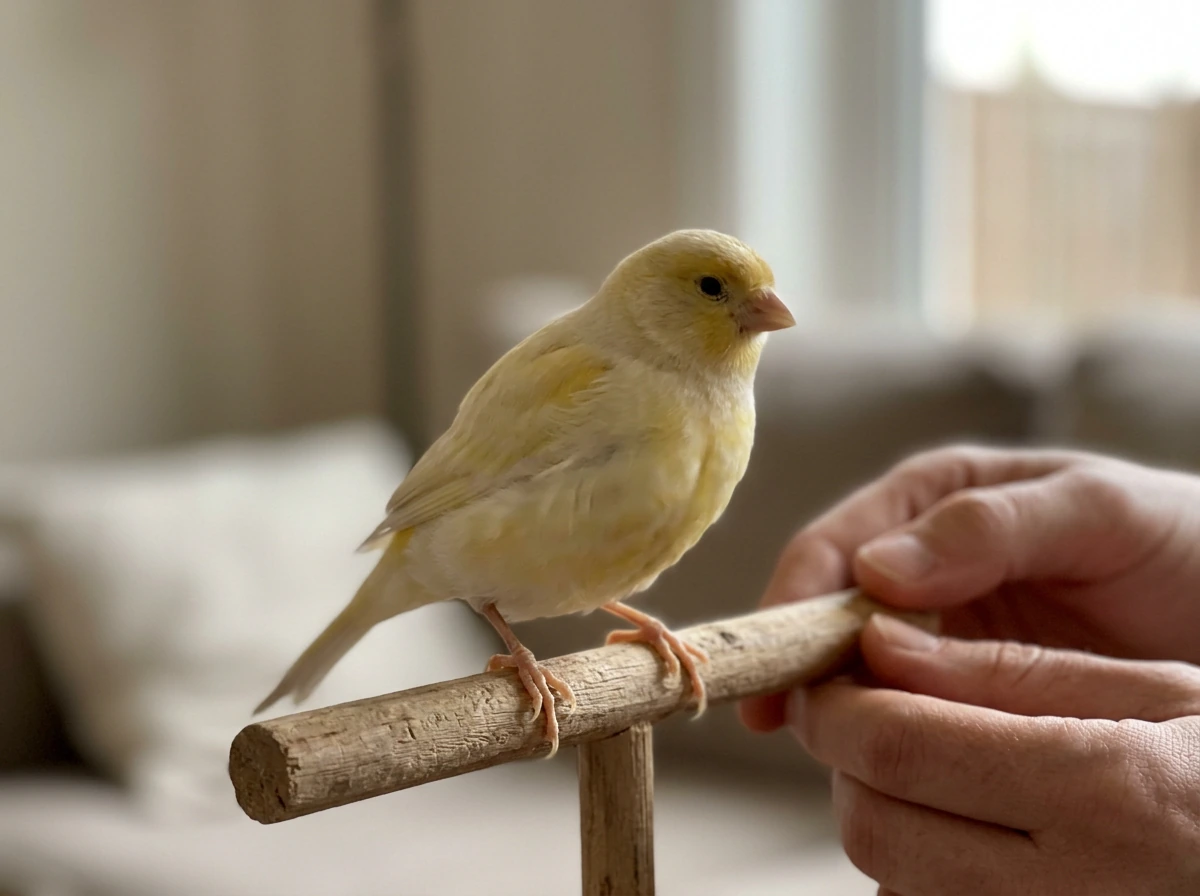
Before you can sort out why it is happening, it helps to nail down exactly what you are seeing. "Vibrating" covers a surprisingly wide range of movements, and the details matter a lot for figuring out the cause.
Ask yourself these questions as you observe your bird:
- Where on the body is the movement happening? Is it the whole body, the wings only, the tail, the head and neck, or just the feathers over the chest or abdomen?
- How intense is it? A fine, subtle quiver of the abdominal feathers is very different from a full-body shake that rocks the bird on its perch.
- How long does it last? A brief two-second flutter after landing is very different from continuous trembling over several minutes or hours.
- When does it happen? Only at certain times of day, only when you approach, only after eating, or constantly regardless of what is going on?
- What else is happening at the same time? Is the bird fluffed up, tail-bobbing, sitting on the cage floor, breathing with its mouth open, or acting completely normal otherwise?
Whole-body quivering, especially a rapid shaking of the abdominal feathers, is often a bird's attempt to adjust to a noticeable change in room temperature. A fine tremor limited to the head and neck is a different signal entirely and more likely to point toward a neurological issue. Brief wing vibrating while a bird is perched near you is often excitement or attention-seeking. Sustained, rhythmic trembling that does not stop is the pattern that warrants the most concern.
Quick at-home checks before you do anything else
Run through these checks right now. They take less than five minutes and will immediately eliminate or confirm some of the most common causes.
Check the room temperature
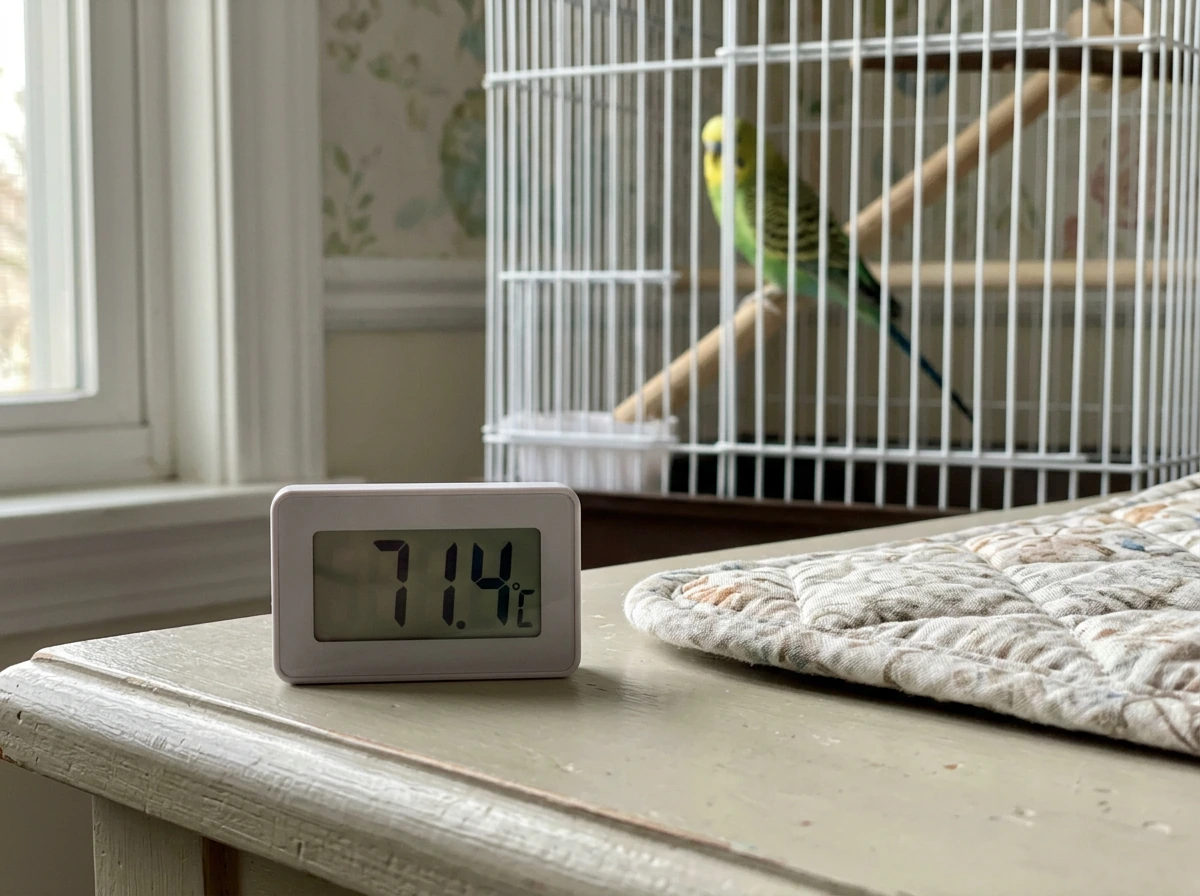
Most pet birds are comfortable between 65 and 80 degrees Fahrenheit. Below 60 degrees is considered dangerous and can cause hypothermia quickly. Check a thermometer near your bird's actual cage level, not just the thermostat reading across the room. Air conditioning vents, drafty windows, and even ceiling fans can create cold pockets that feel fine to you but chill your bird significantly.
Check for obvious stressors
Look around the room. Is there a new pet in the house, a loud noise source, a TV showing birds of prey, a mirror positioned oddly, or anything that recently changed? Birds can vibrate from pure fear or acute stress. Has anyone been near the cage in an unfamiliar way today?
Check the air quality
Non-stick cookware, scented candles, air fresheners, cleaning sprays, cigarette smoke, and even fresh paint fumes are toxic to birds. If anything was used or burned in the home recently, ventilate the space immediately and move your bird to a clean-air room. Toxic fume exposure can cause neurological signs including tremors and is a genuine emergency.
Check the cage setup and recent changes
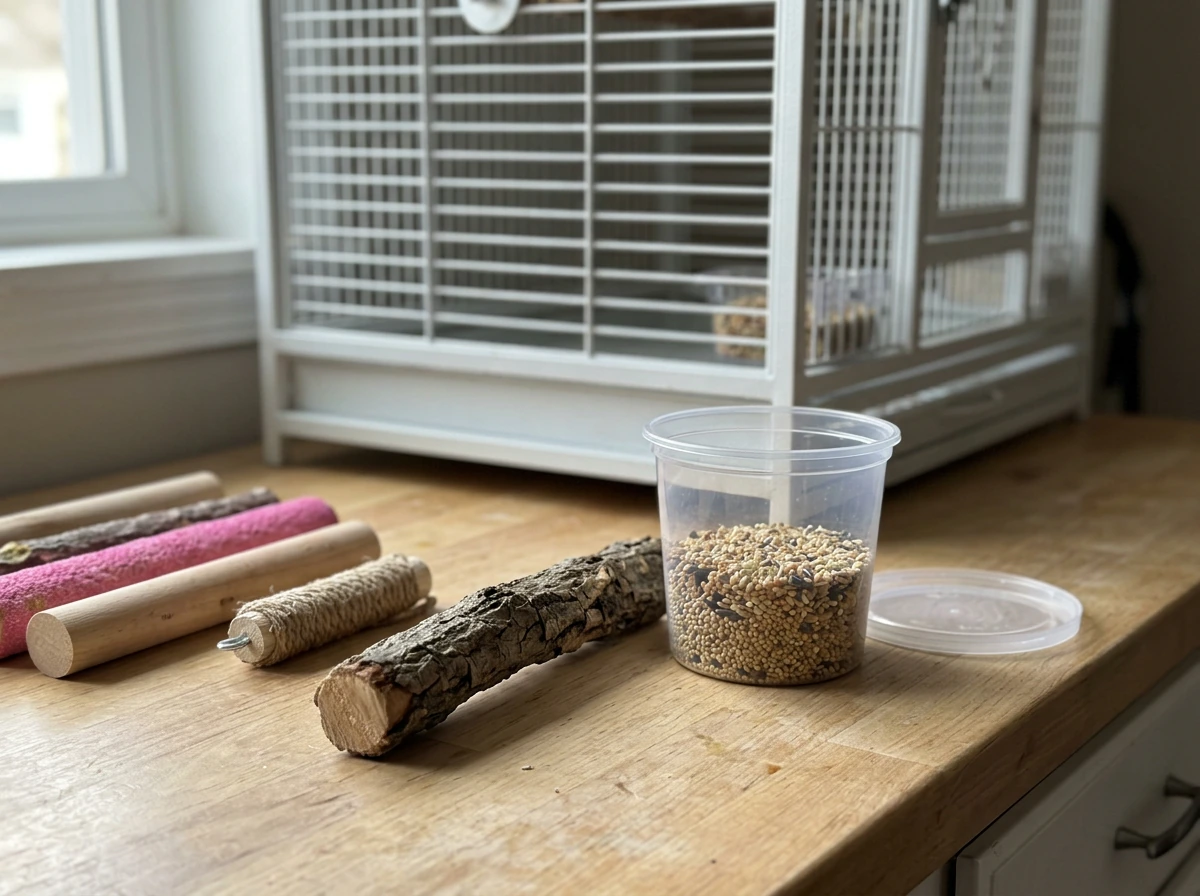
Think about the last 48 to 72 hours. Did anything change: a new food, a new perch, a new cage location, a new bird introduced nearby, a change in your schedule? Even changes that seem minor to you can be significant stressors for a bird.
Behavioral causes vs. health causes: how to tell them apart
This is the key question most owners are trying to answer. Here is a practical way to read the difference.
Behavioral or environmental vibrating tends to have these qualities: it is brief, it stops on its own, your bird is otherwise alert and active, eating and drinking normally, and the posture is upright. The bird responds to you, makes normal sounds, and generally looks like itself. Common behavioral reasons include excitement when you approach, hormonal activity during breeding season, temperature adjustment after moving between rooms, and mild fright.
Health-related vibrating tends to look different: it persists, it does not resolve when the apparent stressor is gone, and it is almost always accompanied by at least one other symptom. The bird may be fluffed up, sitting low on a perch or on the cage floor, quiet when it is usually vocal, or holding its wings slightly away from its body. You may notice changes in droppings, reduced food intake, or a change in the texture of the feathers. If the vibrating is there alongside any of these other signs, treat it as a health concern, not a behavioral quirk.
| Feature | Likely Behavioral | Likely Health Concern |
|---|---|---|
| Duration | Brief, stops quickly | Sustained or recurring throughout the day |
| Other symptoms present? | No, bird otherwise normal | Yes: fluffing, lethargy, appetite change, etc. |
| Response to stimuli | Bird reacts, alert, curious | Dull, unresponsive, or overly still |
| Posture | Upright, normal stance | Hunched, tail low, sitting on cage floor |
| Eating and drinking | Normal | Reduced or absent |
| Droppings | Normal | Changed color, texture, or consistency |
| Breathing | Normal, quiet, closed beak | Open mouth, tail bobbing, audible effort |
| Timing | Connected to a clear trigger | Random, or constant regardless of situation |
Health red flags that mean act now
If your bird is vibrating and showing any of the following signs, do not wait to see if it improves. These are signals that something is seriously wrong.
- Open mouth breathing at rest: this is never normal in a resting bird
- Tail bobbing rhythmically with each breath: the tail pumping up and down indicates labored breathing and is treated as an emergency sign
- Gasping, wheezing, clicking, or any audible effort to breathe
- Complete loss of appetite or refusal to drink for more than a few hours
- Inability to grip a perch, falling off the perch, or sitting on the cage floor
- Seizure-like jerking, loss of balance, or uncoordinated movement (ataxia)
- Unresponsiveness or extreme lethargy where the bird barely reacts to you
- Significant change in droppings: very watery, bloody, black, or absent entirely
- Fluffed posture combined with lethargy and any of the above
Respiratory signs in particular move fast in birds. A bird that is tail-bobbing and breathing with its mouth open can deteriorate within hours. The combination of vibrating plus any breathing difficulty is an urgent situation, not a wait-and-see one.
The most likely medical reasons your bird is trembling
If you have ruled out cold and obvious stress and your bird still looks unwell, here are the medical causes worth knowing about.
Hypothermia and chilling
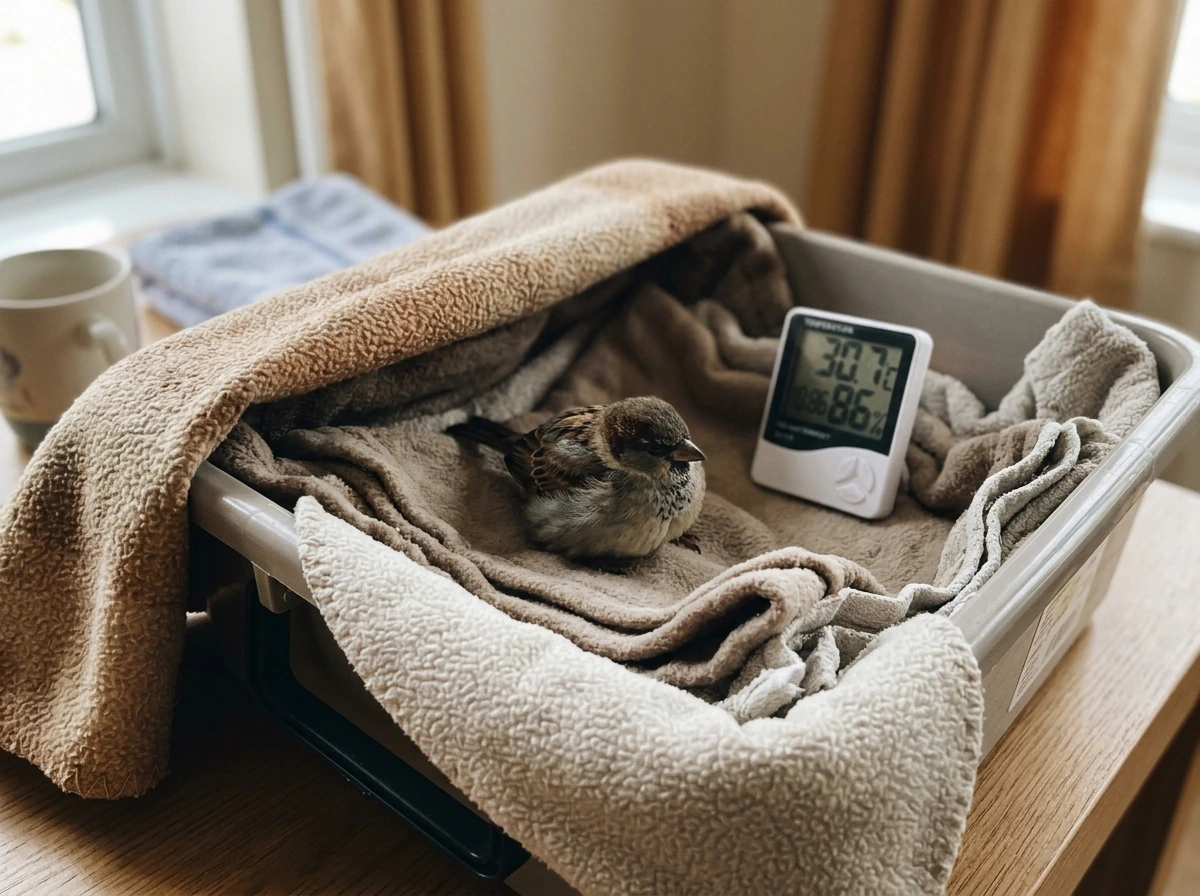
Even indoors, a bird can become hypothermic if it is exposed to a draft, gets wet, or is in a room that drops below 60 degrees Fahrenheit. A bird that is cold will shiver, fluff its feathers, and may become lethargic. If you suspect cold, gently warm the room and offer a heat source at a safe distance (a covered heating pad on the lowest setting placed outside one side of the cage is one option), but do not overheat. If the bird is unresponsive, unable to stand, or showing labored breathing alongside chilling, that is an emergency.
Respiratory illness
Infections affecting the respiratory tract are one of the most common reasons a bird looks sick. Vibrating or shivering alongside sneezing, nasal discharge, open-mouth breathing, or tail bobbing points strongly in this direction. Bacterial, viral, and fungal infections can all cause respiratory disease in pet birds. Chlamydophila (the organism behind psittacosis) is a notable example because it can cause both respiratory and neurological signs at the same time.
Neurological problems
Tremors that are specifically located in the head and neck, or that come with loss of coordination, falling, or seizure-like episodes, suggest a neurological cause. Avian bornavirus (which causes proventricular dilatation disease, or PDD) can produce neurological signs including tremors, weakness, and ataxia, sometimes alongside digestive problems. Avian encephalomyelitis is another condition characterized by fine tremors of the head and neck. These are not things you can treat at home.
Toxic or toxin exposure
Toxins can cause tremors, seizures, disorientation, and sudden collapse in birds. The list of dangerous exposures includes non-stick cookware fumes (PTFE/Teflon), heavy metals like lead and zinc from toys or cage hardware, pesticides, certain houseplants, and even some foods. Tremorgenic mycotoxins (molds on spoiled food) are another possibility. If trembling came on suddenly after any potential exposure, treat it as an emergency.
Pain and systemic illness
Birds hide pain and illness instinctively because showing weakness in the wild makes them a target. By the time a bird looks visibly sick, it has often been unwell for longer than you realize. Systemic disease (organ problems, infections, metabolic disorders) can all cause trembling, weakness, and altered behavior. If your bird is vibrating and just does not seem like itself, trust that instinct.
Hormonal and reproductive causes
Some birds, particularly females during egg-laying season, can shiver or tremble from the physical effort of egg production or from calcium depletion. Hormonal surges can also cause general restlessness and body quivering. If your bird is a female and has been showing nesting behavior or has laid eggs recently, this is worth mentioning to your vet.
Parasites and skin irritation
Feather mites and other external parasites can cause a bird to shiver, shake, or appear uncomfortable. Check for any signs of skin irritation, over-preening in one spot, or feather damage. This is less urgent than respiratory or neurological signs but still warrants a vet visit.
What to do today: safe steps and how to decide on vet care
Here is how to handle the next few hours depending on what you are seeing.
If the vibrating seems mild and behavioral
- Confirm room temperature is between 65 and 80 degrees Fahrenheit at cage level.
- Remove any obvious stressors from the environment.
- Check air quality and ventilate if anything was burned or sprayed recently.
- Observe for 30 to 60 minutes. Note whether the behavior stops or continues.
- Verify the bird is eating, drinking, active, and producing normal droppings.
- If everything normalizes, monitor closely for the next 24 hours and keep a written log of what you saw.
If the bird seems unwell but is stable (no breathing distress)
- Move the bird to a quiet, warm room away from other pets and stressors.
- Maintain a temperature of around 75 to 80 degrees Fahrenheit in the space.
- Do not force-feed or give any medications unless directed by a vet.
- Do not try to diagnose or treat at home beyond temperature support.
- Call an avian vet today, even if just to describe what you are seeing. Many clinics can help you decide by phone whether this needs to be seen urgently or as a next-day appointment.
- Keep monitoring and documenting (see the section below on what to record).
If you see any emergency red flags, go now
Open mouth breathing, tail bobbing with each breath, seizures, inability to stand, or sudden collapse mean you need an avian vet or exotic animal emergency clinic immediately. While in transit, keep the bird in a covered, warm carrier. If you suspect a toxin exposure, bring the suspected source with you or take a photo of it. Some clinics offer 24/7 emergency access for avian patients, so search for an avian or exotic animal emergency hospital in your area before you actually need one.
One practical note for transit: if your bird is in respiratory distress, resist the urge to hold it or handle it more than necessary. Stress during transport can worsen breathing problems rapidly. Keep the carrier covered and calm.
How to prepare for the vet visit
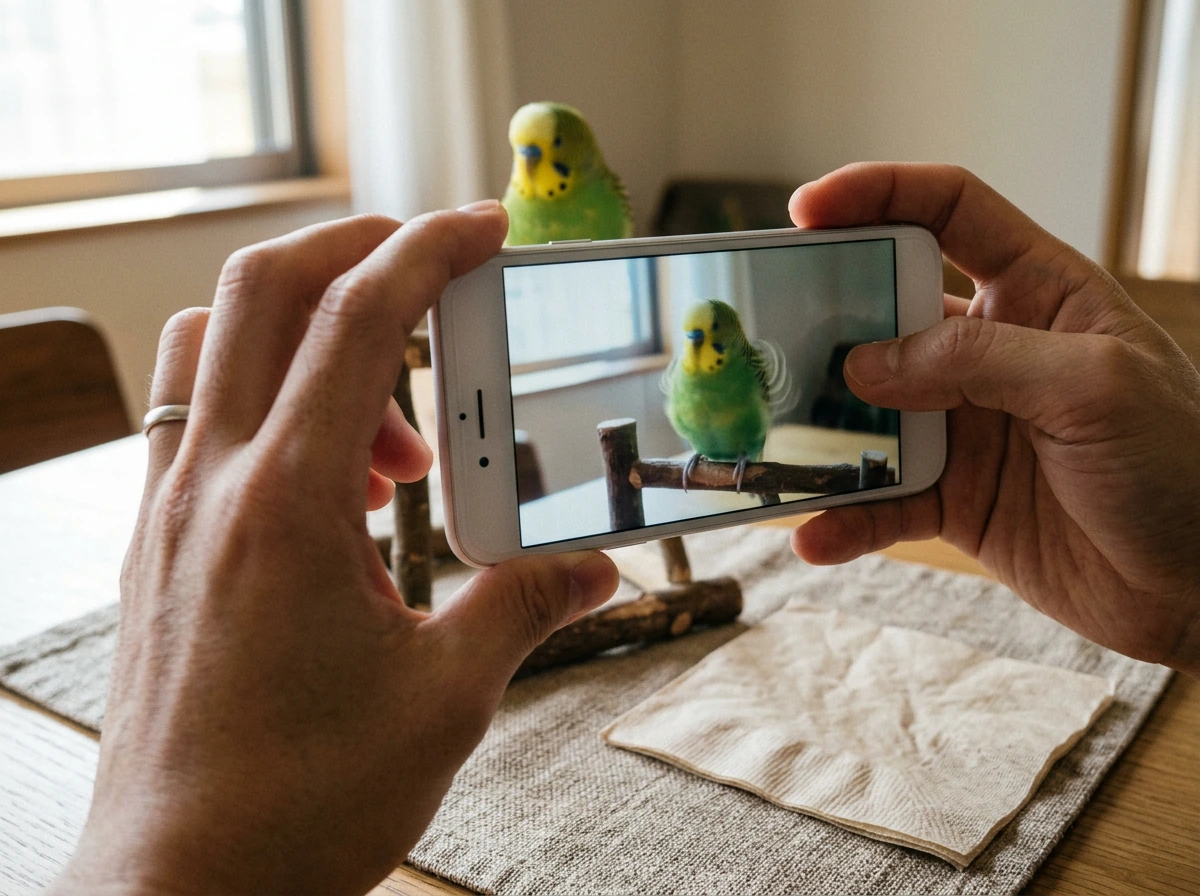
The more information you bring, the faster the vet can help your bird. Start collecting this now, even before you call.
Record a video
This is the single most useful thing you can do. Birds often act differently in a clinic setting, and a short video of the vibrating behavior at home gives the vet something concrete to work with. Even 30 seconds of footage showing the movement, the bird's posture, and its breathing is enormously helpful.
Write down the timeline
- When did you first notice the vibrating?
- Has it been continuous or coming and going?
- Has it gotten better or worse since you first saw it?
- What was happening right before it started?
- Have you noticed any other changes in the past week, even minor ones?
Document the environment and diet
- What is the bird eating and drinking? Has anything changed recently?
- What is the room temperature where the cage is kept?
- What cleaning products, candles, sprays, or cooking has happened nearby recently?
- Are there other pets or birds in the home?
- Has anything changed in the past week: new cage, new perch, new food, new household member, moved furniture, changed schedule?
Bring a droppings sample if you can
Collect a fresh dropping on a clean piece of paper or foil and bring it in a sealed container. Avian vets often want to run a fecal test as part of an initial sick-bird workup. A sample from that morning is ideal.
Note the bird's normal baseline
Think about what your bird is like on a normal day: how vocal it is, how much it eats, how it perches, how often it preens. The vet will ask you to compare today's behavior to the baseline. The more specific you can be, the more useful the information. If you keep a wellness log (which is genuinely worth doing), bring any notes you have.
Vibrating in birds can look alarming, but most owners who catch it early and act quickly get answers and a path forward fast. Whether it turns out to be a chilly draft, a stress response, or something that genuinely needs treatment, you are already doing the right thing by paying attention. If you want to understand related signs more deeply, the behaviors covered in articles on why birds shiver, why birds shake, why birds puff up, and why birds twitch all overlap with what you are seeing here and can help you build a clearer picture of your bird's overall health.
FAQ
How long is “normal” vibrating before I should worry?
If you are unsure whether it is brief excitement or a health issue, use a time check. Behavioral vibrating usually stops on its own and the bird stays alert, with normal eating and upright posture. If the quivering lasts more than a few minutes, returns repeatedly, or you notice fluffed feathers, sitting low, wing hold-away, or quiet behavior, treat it as a possible medical problem and contact an avian vet.
What is the safest way to warm my bird if I suspect it is cold?
Do not warm the bird by placing it directly under a heat source (like an open heat lamp or hot spot) or by heating the whole room aggressively. Instead, warm the environment gradually and provide safe, indirect heat at a distance, so the bird can move away if it gets too warm. If the bird is not responsive, cannot perch, or has labored breathing, focus on emergency care rather than trying to manage it at home.
Can stress vibrating still be an emergency?
Yes, but “shivering” and “tremor” are different from “treatable stress.” If vibrating is happening alongside respiratory signs like tail-bobbing, open-mouth breathing, nasal discharge, or sneezing, assume an illness process until a vet rules it out. Stress can worsen breathing, so waiting for it to “calm down” can be dangerous in birds.
What should I remove from the environment right now if I’m worried about toxins?
Before you run to the vet, remove likely airborne irritants and drafts immediately. Move the cage away from kitchen fumes, candles, sprays, smoke, and plants, then ventilate the room and place the bird in clean air. If vibrating started shortly after a suspected toxin exposure, treat it as urgent even if the bird seems alert.
My bird’s head and neck are vibrating, what should I do?
If you see head-and-neck tremors, coordination problems, falling, or seizure-like episodes, avoid any home treatments. Birds with neurological signs need a prompt avian vet exam, because the causes (including infections or other neurologic disorders) require specific testing and targeted care.
How can I tell if the vibrating is behavioral versus illness when I’m at home?
Track whether it stops when you reduce stimulation and fix obvious triggers. If you cover the carrier, reduce noise, and stabilize temperature and lighting, behavioral shaking should fade. If the vibrating continues unchanged despite fixing stressors, or it is accompanied by fluffed feathers, low perching or floor sitting, appetite changes, or feather texture changes, that pattern points more toward illness.
My bird is eating normally, does that mean it’s probably not sick?
Yes. Even if your bird is eating, illness is still possible. Birds can keep eating early in infections or metabolic problems, but typically there will be at least one additional clue, such as posture changes, quieter voice, droppings changes, breathing changes, or persistent tremor that does not stop.
When should I go to an emergency clinic versus waiting for a regular vet appointment?
Have an emergency plan that starts before you need it. Know the closest avian or exotic emergency clinic hours, and keep a covered, warm carrier ready. Birds in respiratory distress can worsen quickly, and the “decision to go” is usually based on breathing signs, not just the presence of trembling.
What information should I gather for the vet besides the video?
If you can safely capture it, video is often more useful than your description. Record 30 to 60 seconds including posture (upright versus low), breathing pattern (especially tail-bobbing and mouth opening), and whether the shaking stops when you talk to or move away from the bird. Also note the exact time it started and any recent exposures.
Could feather mites cause vibrating, and how do I know?
It can. Feather mites and other parasites may cause shivering, but they usually come with skin irritation, over-preening in a specific area, or visible feather damage. If the vibrating is paired with breathing difficulty, neurologic signs, or sudden collapse, prioritize urgent evaluation rather than assuming mites.
Next Article
Why Is My Bird Shivering? Quick Triage and Fixes Today
Quickly triage bird shivering, fix likely cold drafts or stress, and spot illness signs to know when to call a vet.