If your bird is gasping, stretching its neck forward, opening its beak repeatedly, and seems to be in sudden distress, it may be choking. This is a genuine emergency. Stay calm, do not shake or flip the bird, and call an avian vet or emergency animal clinic right now while you read through what to watch for and what you can safely do at home. Lafeber notes that blank" rel="noopener noreferrer">first aid is not a substitute for qualified avian veterinary medical care, and serious, potentially life-threatening emergencies require immediate veterinary attention.
Is My Bird Choking? How to Tell Fast and What to Do

Marcus Chen
28 Apr 2026
Quick signs your bird might be choking
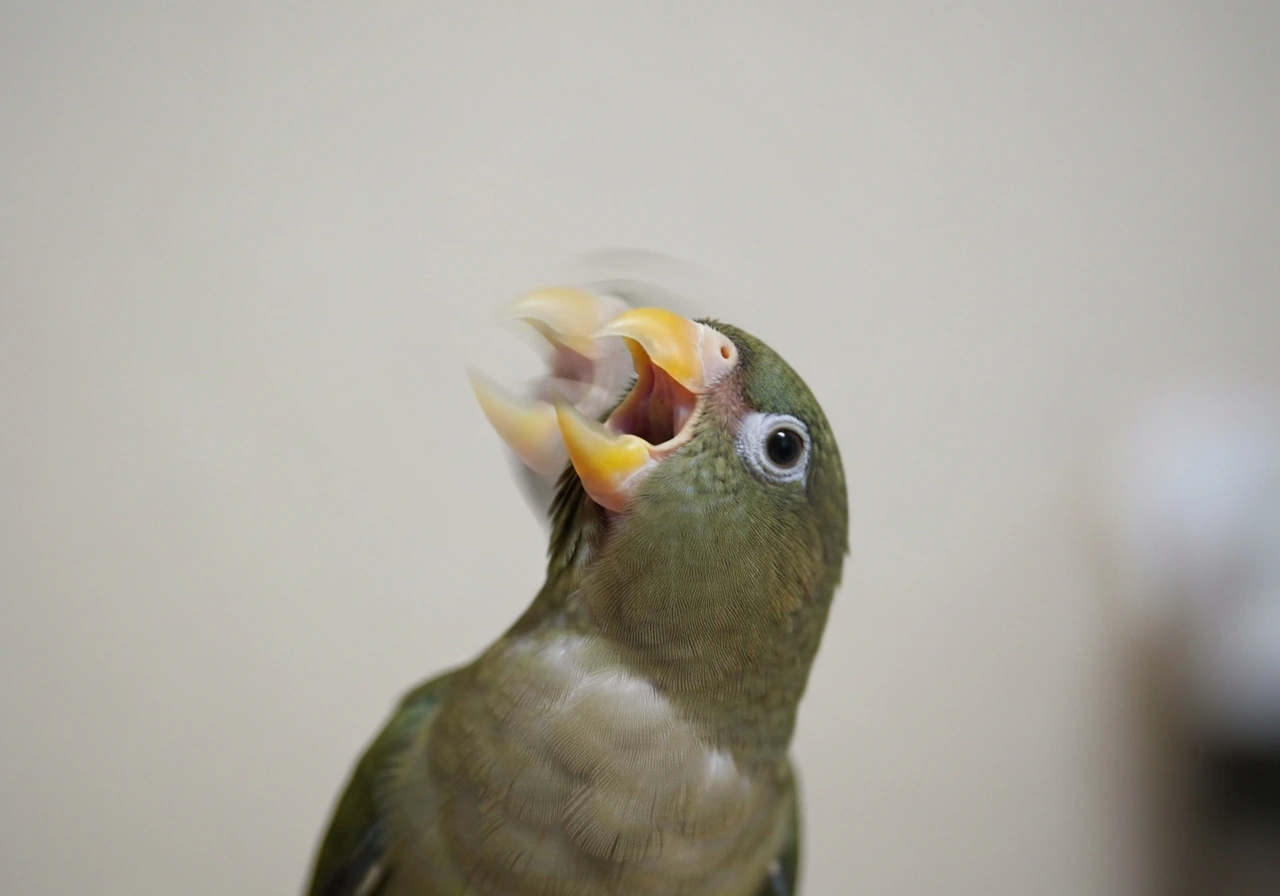
Choking in birds usually comes on suddenly. One moment your bird is fine, and the next it is clearly struggling. The most important thing to recognize is that the distress appears out of nowhere, often right after eating, playing with a toy, or chewing on something it shouldn't.
- Open-mouth breathing or repeated beak opening with no vocalization
- Neck stretching forward or upward, as if trying to clear something
- Gasping or labored breathing with visible effort from the chest and body
- Tail bobbing with each breath (the tail pumps up and down in rhythm with breathing)
- Exaggerated gagging or retching motions
- A high-pitched squeak or whistle sound when breathing (this can mean the airway is nearly blocked)
- Sudden panic, flapping, or loss of balance
- Blue or darkened color around the beak or skin (a very late and serious sign)
The combination of sudden onset plus neck extension plus open-mouth gasping is the classic choking pattern. If you see all three together, treat it as an emergency and act immediately.
How to differentiate choking from other urgent bird breathing problems
This is where it gets tricky, because several serious conditions in birds look almost identical from the outside. Open-mouth breathing and tail bobbing can show up with respiratory infections, aspiration (inhaling a liquid or small particle into the lungs), allergic reactions, heat stress, and even extreme fear. Knowing which you're dealing with matters because the response is slightly different.
| Condition | Onset | Key differences | Sound clues |
|---|---|---|---|
| Choking (airway blockage) | Sudden, often mid-activity | Neck stretching, gagging, exaggerated beak movements | High-pitched squeak or silence where vocalization is normally expected |
| Respiratory infection | Gradual over hours or days | Nasal discharge, clicking, wheezing, lethargy building over time | Clicking or wet sounds while breathing |
| Aspiration | Sudden after eating or drinking | May cough or gag, then seem to improve briefly before worsening | Wet gurgling sound, not a dry squeak |
| Heat stress | After exposure to heat | Panting, wings held away from body, no gagging | No unusual airway sounds |
| Fear or stress response | During handling or loud events | Settles once stress is removed, no ongoing gasping | Normal vocalizations return quickly |
Aspiration is worth calling out specifically because it can look just like choking at first. Hiccups in birds can have different causes too, so it is still worth watching for breathing trouble and contacting an avian vet if it seems persistent or concerning Aspiration is worth calling out specifically because it can look just like choking at first. .
If your bird inhaled something (liquid, food, a small particle) rather than having it stuck in the upper airway, the symptoms may briefly improve and then return as the material causes deeper respiratory problems. If you suspect aspiration, that needs the same urgent vet attention as choking. Similarly, if your bird seems to be gagging repeatedly without an obvious stuck object, that could relate to a crop issue or nausea, which is a different situation entirely.
When you're not sure, default to treating it as an emergency. Waiting to figure out the exact cause is never the safer choice when your bird is struggling to breathe.
Immediate first aid steps you can do right now
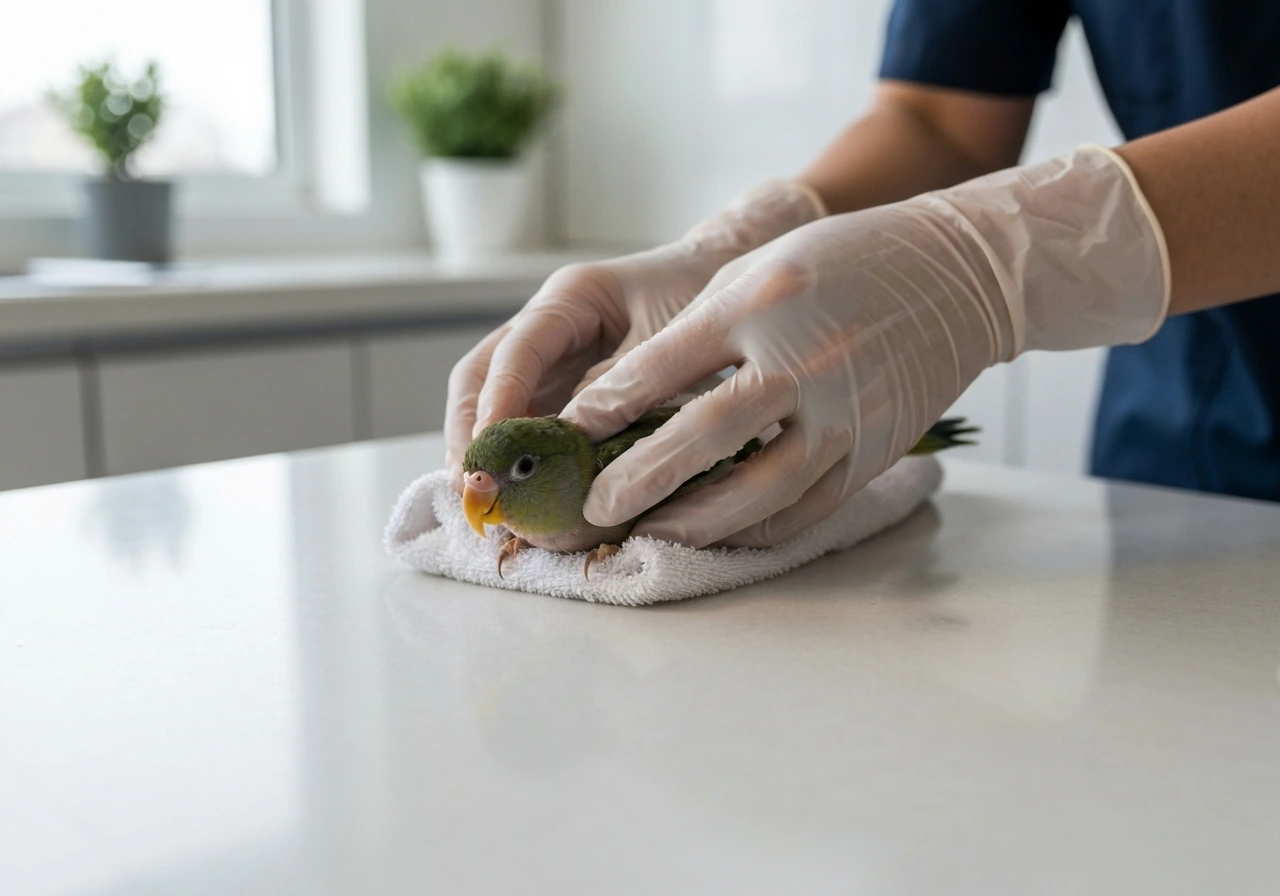
Before anything else: do not try to reach into your bird's beak with a cotton swab, tweezers, or your finger to fish out an object. This is one of the most dangerous things you can do. You risk pushing the object deeper, injuring delicate tissue, or causing your bird to bite down in panic and injure both of you.
- Stay calm. Your bird can sense panic, and your stress will make it more distressed and breathing harder.
- Move the bird to a calm, quiet, dimly lit space to reduce additional stress. Stress increases oxygen demand and makes breathing harder.
- Check the immediate environment: remove any objects, food pieces, or toys that could still be causing the problem.
- If the bird is on a perch, leave it there rather than handling it unless it is about to fall. Rough handling during a breathing crisis worsens the situation.
- Call an avian vet or emergency animal clinic immediately while you watch the bird. Describe exactly what you see, including when it started.
- If the bird becomes unresponsive and you can see an object clearly at the very front of the beak or just inside, and you can remove it without pushing it further, very gently attempt this with two fingers. This is a last resort only.
- Keep the bird warm (around 85 to 90 degrees Fahrenheit) if it seems weak or is losing consciousness, as maintaining body temperature is critical for birds in distress.
- Do not offer food or water while the bird is having trouble breathing.
There is no safe avian equivalent of the Heimlich maneuver that an untrained owner should attempt at home. Birds have a completely different respiratory anatomy than mammals. The hands-on intervention that helps humans can kill a bird. Your job right now is to stabilize the environment and get to a vet as fast as possible.
What to do next: when to call an avian vet or emergency clinic
If your bird is showing any of the signs listed above, call a vet immediately, not after watching for an hour, not after posting in a forum. Call now. Avian emergencies move fast and birds are experts at hiding how sick they are until they are critically ill.
If your regular avian vet is not available, find an emergency animal hospital that has staff experienced with birds. Not all emergency vets have avian expertise, so when you call, ask specifically if they have someone who can treat birds. If the answer is no, keep calling other clinics while you prepare to transport your bird.
When you arrive at the clinic, the vet will likely do a visual assessment first, then may use endoscopy or imaging to locate and remove a blockage. During an upper-airway obstruction, the initial respiration assessment may show open-mouth breathing and squeak-like respiratory sounds originating at the glottis, with cyanosis as a suggestive finding. Oxygen therapy is often started right away for birds in respiratory distress. The process is different from what you'd expect with a dog or cat, and a good avian vet will know how to handle your bird with minimal additional stress.
Do not wait if you see any of these specific red flags: your bird has gone silent and is not reacting to you, it is losing balance or falling off its perch, its color is changing around the beak or skin, or it has been in visible distress for more than a few minutes with no improvement. These are critical warning signs.
Common causes of choking in pet birds and what to check at home
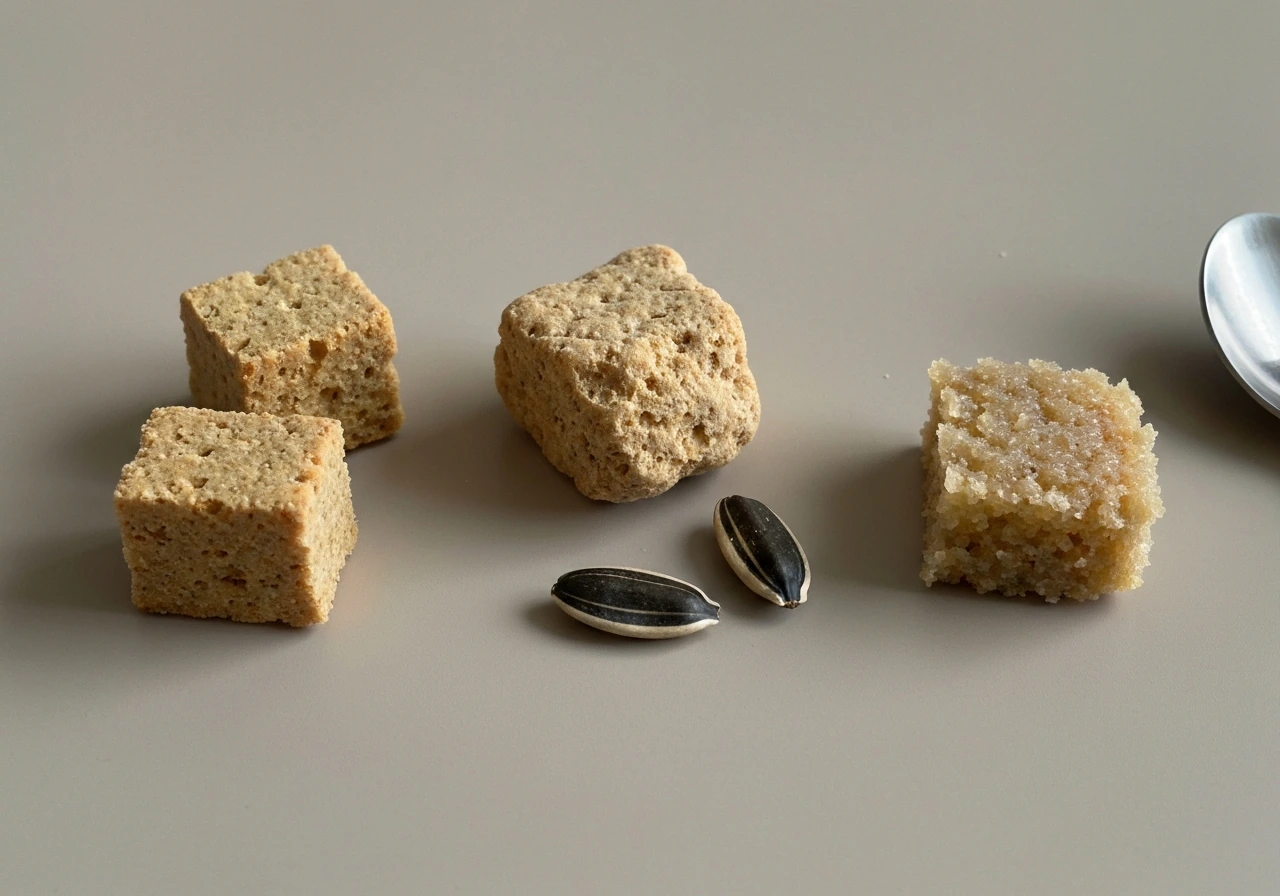
Once the immediate crisis is handled, it's worth understanding how this happens so you can reduce the risk going forward. Most choking incidents in pet birds come down to a handful of common causes.
Food that's the wrong size or texture
Large chunks of hard food, big seeds, pieces of bread or doughy food, and sticky treats are the most common culprits. Birds do not chew the way mammals do. They work food toward the back of their beak and swallow, so anything that doesn't move easily can become a problem. Cut soft fruits and vegetables into small, manageable pieces. Avoid sticky foods like peanut butter straight from the jar (spread thinly on a piece of food instead). Go through your bird's current diet and ask whether any item could be reduced in size.
Toys and cage items
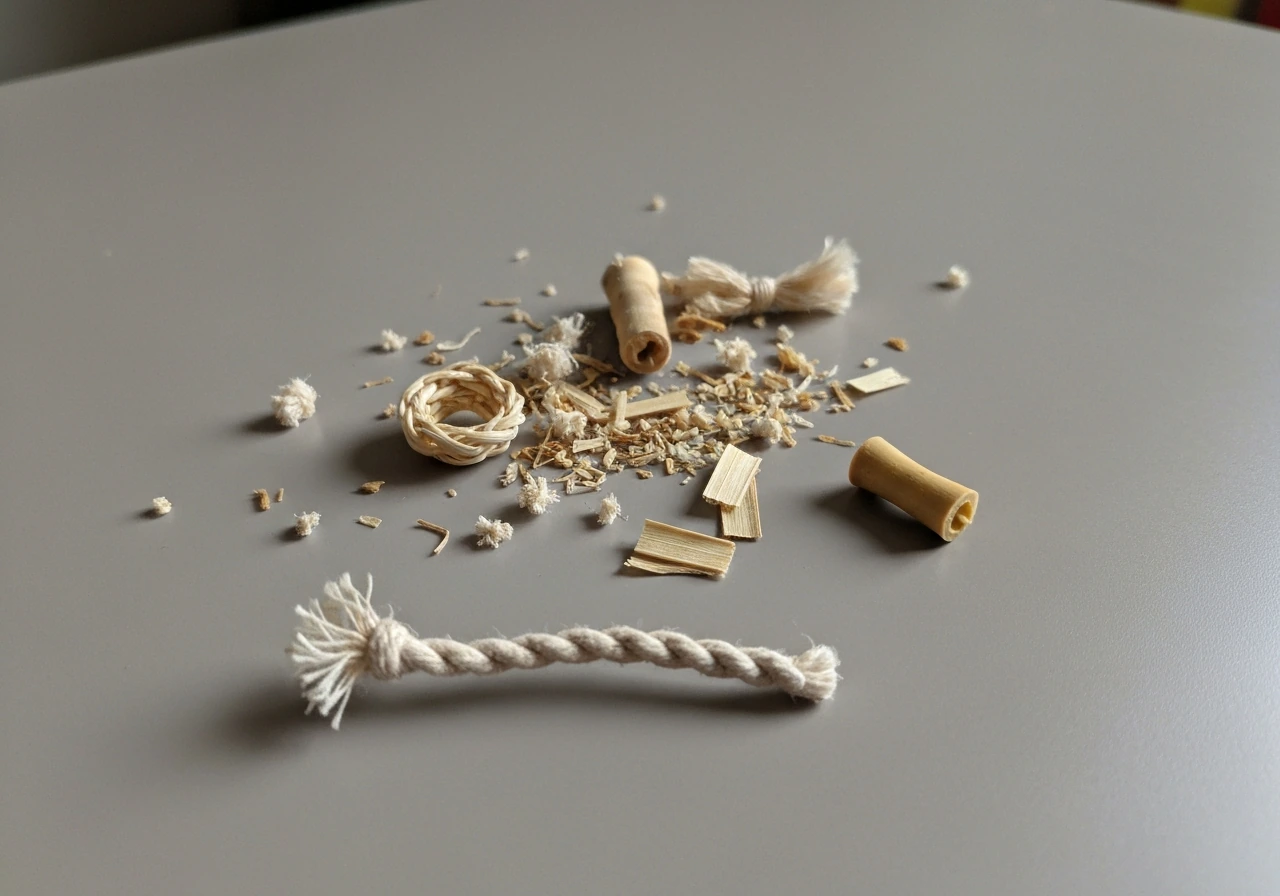
Small toy parts, pieces of rope, string fragments, and bits of wicker or palm leaf are frequent hazards. Birds love to chew and pull things apart, which means toys degrade into smaller pieces over time. Inspect toys weekly. Remove anything that has broken into pieces small enough to swallow. Look for rope toys that are fraying into thread-like strands, which can be inhaled as well as swallowed.
Non-food items birds chew on
Birds that have free roam of a room will investigate everything. Paper, fabric fibers, foam, rubber, and small plastic pieces are all choking risks. If your bird is out of the cage, supervise it closely and bird-proof the space the same way you would child-proof a room for a toddler.
Aerosols, dust, and airborne particles
While these don't cause choking in the traditional sense, inhaled particles (dust from certain substrates, aerosol sprays, smoke, cooking fumes, scented candles, and non-stick cookware fumes) can cause severe respiratory distress that looks identical to choking. Birds have extraordinarily sensitive respiratory systems. Never use aerosol sprays near your bird, always ventilate the kitchen when cooking, and never use PTFE-coated (non-stick) cookware in a home with birds.
Aftercare and preventing future choking hazards
After a choking episode, even if your bird seems to have recovered fully, schedule a follow-up vet visit. Sometimes a small amount of food or debris remains in the airway or crop and causes problems hours or days later. Your vet can confirm the airway is clear and check for any secondary issues.
Watch your bird closely for the next 48 to 72 hours. Any return of breathing difficulty, reduced appetite, lethargy, or unusual posture should send you back to the vet immediately. A bird that had one choking episode is not necessarily at higher risk for another, but it does tell you something about what hazards exist in its environment.
To reduce future risk, do a full audit of your bird's space. Work through this checklist regularly, especially if you add new toys, foods, or household items.
- Cut all soft foods into pieces no larger than the tip of your pinky finger
- Remove toys with small detachable parts or that are breaking apart
- Check rope and fabric toys weekly for fraying
- Never leave hard, large seeds or pellets in a dish without confirming your bird can handle them safely
- Bird-proof any free-roaming areas by removing small objects from the floor and furniture
- Keep aerosol products, scented candles, and strong cleaners out of rooms where your bird spends time
- Replace non-stick cookware with stainless steel or cast iron
- Ensure fresh air circulation in your bird's space without creating cold drafts
Choking is scary, and the first time you see your bird in that kind of distress is genuinely alarming. But knowing what to look for, understanding how it differs from other breathing emergencies like aspiration or respiratory illness, and having a clear action plan makes you a far more prepared and effective caregiver. The most important things to remember are to stay calm, avoid intervening with tools or fingers, call your vet immediately, and get your bird professional care as fast as possible.
FAQ
If I cannot see anything stuck in my bird’s throat, is it still possible my bird is choking?
If your bird is extending its neck and repeatedly opening its beak while gasping, treat it as choking or severe airway distress right away, even if you do not see an object. Birds can struggle internally where you cannot visibly spot the blockage. Call an avian emergency clinic immediately rather than trying to “look first.”
What if my bird has trouble breathing but also seems to be bleeding or looks hurt?
Bleeding from the mouth or a sudden change in voice along with breathing trouble is a strong reason to call emergency care. It can signal injury to the airway, a foreign body that scraped tissue, or a severe secondary problem. Do not attempt to remove anything with tools or your fingers.
How do I tell choking from other causes like infection or heat stress when the signs overlap?
Tail bobbing and open-mouth breathing can happen with several conditions, including respiratory infection and heat stress, but the timing matters. Choking or airway obstruction commonly starts suddenly, often right after eating or a chew/play event. If the onset was abrupt and the bird is in active distress, treat it as an emergency until a vet says otherwise.
Should I give my bird food or water if I suspect it’s choking?
Do not offer food or water while your bird is actively struggling to breathe. Extra swallowing attempts can worsen aspiration risk or keep a bird from getting the oxygen support it needs. Focus on getting veterinary help and reducing stress and drafts in the meantime.
What should I do physically while waiting for the vet, and should I move or flip my bird?
In a true emergency, the goal is calm stabilization, not repositioning. Keep the bird warm and still, reduce noise, and prepare for quick transport. Avoid flipping or shaking, and do not try to force the beak open to inspect it.
My bird seemed to improve briefly, could it still be choking or was it something else?
If you suspect a sharp or chewable object (toy part, string, wicker bits), assume it could be lodged even if the bird sometimes looks “a little better.” Symptoms can temporarily ease while the material shifts or causes deeper airway or respiratory irritation. The safest move is the same, call emergency care and transport.
Is there a Heimlich-type maneuver I can do for my bird at home?
No, there is no safe at-home Heimlich-equivalent for birds. Techniques intended for mammals can tear or obstruct a bird’s airway or damage delicate tissues. Your safest action is to avoid hands-on retrieval and get professional care quickly.
My bird is breathing but seems weak or unsteady, does that change what I should do?
If your bird is breathing but seems weak or off-balance, prioritize emergency evaluation. Balance problems can indicate that the situation has progressed or that oxygenation is failing. Even if the breathing signs look “slightly better,” do not delay veterinary assessment.
Why do I still need a follow-up visit if my bird seems fully recovered after choking?
A follow-up is especially important if the bird improved after the episode, because tiny debris or remaining irritation can cause delayed breathing issues. Plan the recheck even if your bird seems normal, and watch closely for 48 to 72 hours as advised.
What should I check at home to prevent this from happening again, especially after a confirmed episode?
Do a home-risk sweep immediately after the event. Look for broken toy pieces, frayed rope, swallowable small bits, and safe-size food cuts, plus airborne irritants like aerosols and scented products. Fix one hazard at a time and re-check toys and foods after any changes.